Swiss Family Robinson Chapter 32
Chapter 32
The trees which I had chosen for my farmhouse were about a foot in diameter in the trunk. They formed a long square; the long side facing the sea. The dimensions of the whole were about twenty-four feet by sixteen. I cut deep mortices in the trees, about ten feet distant from the ground, and again ten feet higher, to form a second story; I then placed in them strong poles: this was the skeleton of my house solid, if not elegant; I placed over this a rude roof of bark, cut in squares, and placed sloping, that the rain might run off. We fastened these with the thorn of the acacia, as our nails were too precious to be lavished.
We continued our work at the house, which occupied us several days. We formed the walls of thin laths interwoven with long pliant reeds for about six feet from the ground; the rest was merely a sort of light trellis-work, to admit light and air. The door opened on the front to the sea. The interior consisted simply of a series of compartments, proportioned to the guests they were to contain. One small apartment was for ourselves, when we chose to visit our colony. On the upper story was a sort of hayloft for the fodder. We projected plastering the walls with clay; but these finishing touches we deferred to a future time, contented that we had provided a shelter for our cattle and fowls. To accustom them to come to this shelter of themselves, we took care to fill their racks with the food they liked best, mingled with salt; and this we proposed to renew at intervals, till the habit of coming to their houses was fixed. We all laboured ardently, but the work proceeded slowly, from our inexperience; and the provisions we had brought were nearly exhausted. I did not wish to return to Falcon’s Nest till I had completed my new establishment, and therefore determined to send Fritz and Jack to look after the animals at home, and bring back a fresh stock of provisions. Our two young couriers set out, each on his favourite steed, Fritz leading the ass to bring back the load, and Jack urging the indolent animal forward with his whip.
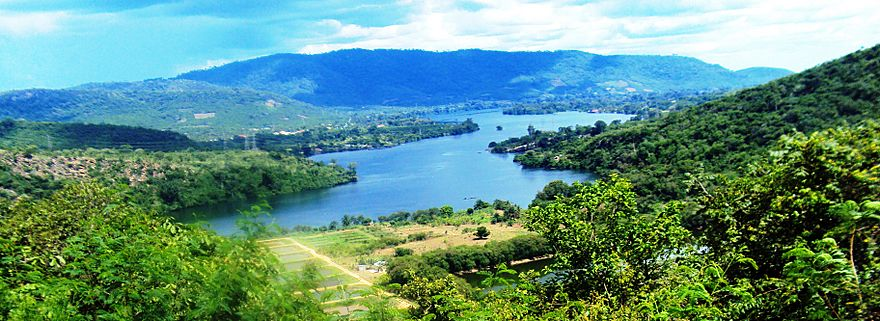
During their absence, Ernest and I made a little excursion, to add to our provision if we could meet with them, some potatoes and cocoa-nuts. We ascended the stream for some time, which led us to a large marsh, beyond which we discovered a lake abounding with water-fowl. This lake was surrounded by tall, thick grass, with ears of a grain, which I found to be a very good, though small, sort of rice. As to the lake itself, it is only a Swiss, accustomed from his infancy to look on such smooth, tranquil waters, that can comprehend the happiness we felt on looking upon this. We fancied we were once more in Switzerland, our own dear land; but the majestic trees and luxuriant vegetation soon reminded us we were no longer in Europe, and that the ocean separated us from our native home.
We proceeded round the lake, which presented a different scene on every side. This was one of the most lovely and fertile parts we had yet seen of this country. Birds of all kinds abounded; but we were particularly struck with a pair of black swans, sailing majestically on the water. Their plumage was perfectly black and glossy, except the extremity of the wings, which was white. Ernest would have tried his skill again, but I forbade him to disturb the profound tranquillity of this charming region.
But Flora, who probably had not the same taste for the beauties of nature that I had, suddenly darted forward like an arrow, pounced upon a creature that was swimming quietly at the edge of the water, and brought it to us. It was a most curious animal. It resembled an otter in form, but was web-footed, had an erect bushy tail like the squirrel, small head, eyes and ears almost invisible. A long, flat bill, like that of a duck, completed its strange appearance. We were completely puzzled even Ernest, the naturalist, could not give its name. I boldly gave it the name of the beast with a bill. I told Ernest to take it, as I wished to stuff and preserve it.
“It will be,” said the little philosopher, “the first natural object for our museum.”
“Exactly,” replied I; “and, when the establishment is fully arranged, we will appoint you curator.”
But, thinking my wife would grow uneasy at our protracted absence, we returned by a direct road to the tent. Our two messengers arrived about the same time, and we all sat down together to a cheerful repast. Every one related his feats. Ernest dwelt on his discoveries, and was very pompous in his descriptions, and I was obliged to promise to take Fritz another time. I learnt, with pleasure, that all was going on well at Falcon’s Nest, and that the boys had had the forethought to leave the animals with provisions for ten days. This enabled me to complete my farmhouse. We remained four days longer, in which time I finished the interior, and my wife arranged in our own apartment the cotton mattresses, to be ready for our visits, and put into the houses the fodder and grain for their respective tenants. We then loaded our cart, and began our march. The animals wished to follow us, but Fritz, on Lightfoot, covered our retreat, and kept them at the farm till we were out of sight.
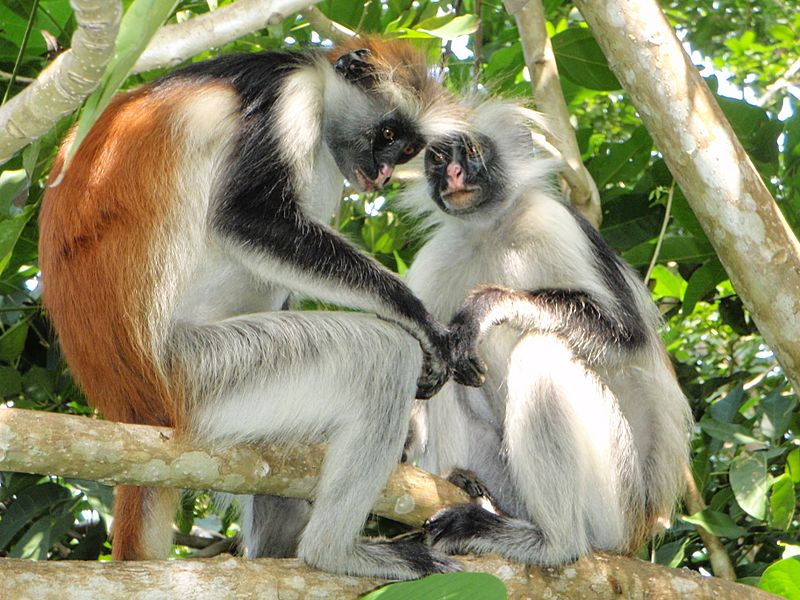
We did not proceed directly, but went towards the wood of monkeys. These mischievous creatures assaulted us with showers of the fir-apples; but a few shots dispersed our assailants.
Fritz collected some of these new fruits they had flung at us, and I recognized them as those of the stone Pine, the kernel of which is good to eat, and produces an excellent oil. We gathered a bag of these, and continued our journey till we reached the neighbourhood of Cape Disappointment. There we ascended a little hill, from the summit of which we looked upon rich plains, rivers, and woods clothed with verdure and brilliant flowers, and gay birds that fluttered among the bushes. “Here, my children,” cried I, “here we will build our summer house. This is truly Arcadia.” Here we placed our tent, and immediately began to erect a new building, formed in the same manner as the Farm House, but now executed more quickly. We raised the roof in the middle, and made four sloped sides. The interior was divided into eating and sleeping apartments, stables, and a store-room for provisions; the whole was completed and provisioned in ten days; and we had now another mansion for ourselves, and a shelter for new colonies of animals. This new erection received the name of Prospect Hill, to gratify Ernest, who thought it had an English appearance.
However, the end for which our expedition was planned was not yet fulfilled. I had not yet met with a tree likely to suit me for a boat. We returned then to inspect the trees, and I fixed on a sort of oak, the bark of which was closer than that of the European oak, resembling more that of the cork-tree. The trunk was at least five feet in diameter, and I fancied its coating, if I could obtain it whole, would perfectly answer my purpose. I traced a circle at the foot, and with a small saw cut the bark entirely through; Fritz, by means of the rope ladder we had brought with us, and attached to the lower branches of the tree, ascended, and cut a similar circle eighteen feet above mine. We then cut out, perpendicularly, a slip the whole length, and, removing it, we had room to insert the necessary tools, and, with wedges, we finally succeeded in loosening the whole. The first part was easy enough, but there was greater difficulty as we advanced. We sustained it as we proceeded with ropes, and then gently let it down on the grass. I immediately began to form my boat while the bark was fresh and flexible. My sons, in their impatience, thought it would do very well if we nailed a board at each end of the roll; but this would have been merely a heavy trough, inelegant and unserviceable; I wished to have one that would look well by the side of the pinnace; and this idea at once rendered my boys patient and obedient. We began by cutting out at each end of the roll of bark a triangular piece of about five feet long; then, placing the sloping parts one over the other, I united them with pegs and strong glue, and thus finished the ends of my boat in a pointed form. This operation having widened it too much in the middle, we passed strong ropes round it, and drew it into the form we required. We then exposed it to the sun, which dried and fixed it in the proper shape.
As many things were necessary to complete my work, I sent Fritz and Jack to Tent House for the sledge, to convey it there, that we might finish it more conveniently. I had the good fortune to meet with some very hard, crooked wood, the natural curve of which would be admirably suitable for supporting the sides of the boat. We found also a resinous tree, which distilled a sort of pitch, easy to manage, and which soon hardened in the sun. My wife and Francis collected sufficient of it for my work. It was almost night when our two messengers returned. We had only time to sup and retire to our rest.
We were all early at work next morning. We loaded the sledge, placing on it the canoe, the wood for the sides, the pitch, and some young trees, which I had transplanted for our plantation at Tent House, and which we put into the boat. But, before we set out, I wished to erect a sort of fortification at the pass of the rock, for the double purpose of securing us against the attacks of wild beasts or of natives, and for keeping enclosed, in the savannah beyond the rocks, some young pigs, that we wished to multiply there, out of the way of our fields and plantations.
The next morning we returned to Tent House, where we immediately set to work on our canoe with such diligence that it was soon completed. It was solid and elegant, lined through with wood, and furnished with a keel. We provided it with brass rings for the oars, and stays for the mast. Instead of ballast, I laid at the bottom a layer of stones covered with clay, and over this a flooring of boards. The benches for the rowers were laid across, and in the midst the bamboo mast rose majestically, with a triangular sail. Behind I fixed the rudder, worked by a tiller; and I could boast now of having built a capital canoe.
Our fleet was now in good condition. For distant excursions we could take the pinnace, but the canoe would be invaluable for the coasting service.
Our cow had, in the mean time, given us a young male calf, which I undertook to train for service, as I had done the buffalo, beginning by piercing its nostrils; and the calf promised to be docile and useful; and, as each of the other boys had his favourite animal to ride, I bestowed the bull on Francis, and intrusted him with its education, to encourage him to habits of boldness and activity. He was delighted with his new charger, and chose to give him the name of Valiant.
We had still two months before the rainy season, and this time we devoted to completing the comforts of our grotto. We made all the partitions of wood, except those which divided us from the stables, which we built of stone, to exclude any smell from the animals. We soon acquired skill in our works; we had a plentiful supply of beams and planks from the ship; and by practice we became very good plasterers. We covered the floors with a sort of well-beaten mud, smoothed it, and it dried perfectly hard. We then contrived a sort of felt carpet. We first covered the floor with sailcloth; we spread over this wool and goats’ hair mixed, and poured over it isinglass dissolved, rolling up the carpet, and beating it well. When this was dry, we repeated the process, and in the end had a felt carpet. We made one of these for each room, to guard against any damp that we might be subject to in the rainy season.
After dinner, our evening occupations commenced; our room was lighted up brilliantly; we did not spare our candles, which were so easily procured, and we enjoyed the reflection in the elegant crystals above us. We had partitioned off a little chapel in one corner of the grotto, which we had left untouched, and nothing could be more magnificent than this chapel lighted up, with its colonnades, portico, and altars. We had divine service here every Sunday. I had erected a sort of pulpit, from which I delivered a short sermon to my congregation, which I endeavoured to render as simple and as instructive as possible.
Jack and Francis had a natural taste for music. I made them instruments from reeds, on which they acquired considerable skill. They accompanied their mother, who had a very good voice; and this music in our lofty grotto had a charming effect.
We had thus made great steps towards civilization; and, though condemned, perhaps, to pass our lives alone on this unknown shore, we might yet be happy. We were placed in the midst of abundance. We were active, industrious, and content; blessed with health, and united by affection, our minds seemed to enlarge and improve every day. We saw around us on every side traces of the Divine wisdom and beneficence; and our hearts overflowed with love and veneration for that Almighty hand which had so miraculously saved, and continued to protect us. I humbly trusted in Him, either to restore us to the world, or send some beings to join us in this beloved island, where for two years we had seen no trace of man. To Him we committed our fate. We were happy and tranquil, looking with resignation to the future.
The story pauses here for a bit. Chapter 33 picks up some time later.





 articlesforchristians