Some forty years ago I passed the winter in the wilderness of northern Maine. I was passionately fond of skating, and the numerous lakes and rivers, frozen by the intense cold, offered an ample field to the lover of this pastime.
Sometimes my skating excursions were made by moonlight; and it was on such an occasion that I met with an adventure which even now I cannot recall without a thrill of horror.
I had left our cabin one evening just before dusk, with the intention of skating a short distance up the Kennebec, which glided directly before the door. The night was beautifully clear with the light of the full moon and millions of stars. Light also came glinting from ice and snow-wreath and incrusted branches, as the eye followed for miles the broad gleam of the river, that like a jeweled zone swept between the mighty forests that bordered its banks.
And yet all was still. The cold seemed to have frozen tree, air, water, and every living thing. Even the ringing of my skates echoed back from the hill with a startling clearness; and the crackle of the ice, as I passed over it in my course, seemed to follow the tide of the river with lightning speed.
I had gone up the river nearly two miles, when, coming to a little stream which flows into the larger, I turned into it to explore its course. Fir and hemlock of a century’s growth met overhead, and formed an archway radiant with frost-work. All was dark within; but I was young and fearless, and I laughed and shouted with excitement and joy.
My wild hurrah rang through the silent woods, and I stood listening to the echoes until all was hushed. Suddenly a sound arose,—it seemed to come from beneath the ice. It was low and tremulous at first, but it ended in one long wild howl.
I was appalled. Never before had such a sound met my ears. Presently I heard the brushwood on shore crash as though from the tread of some animal. The blood rushed to my forehead; my energies returned, and I looked around me for some means of escape.
The moon shone through the opening at the mouth of the creek by which I had entered the forest; and, considering this the best way of escape, I darted toward it like an arrow. It was hardly a hundred yards distant, and the swallow could scarcely have excelled me in flight; yet, as I turned my eyes to the shore, I could see several dark objects dashing through the brushwood at a pace nearly double in speed to my own. By their great speed, and the short yells which they occasionally gave, I knew at once that these were the much-dreaded gray wolves.
The bushes that skirted the shore now seemed to rush past with the velocity of lightning, as I dashed on in my flight to pass the narrow opening. The outlet was nearly gained; a few seconds more, and I would be comparatively safe. But in a moment my pursuers appeared on the bank above me, which here rose to the height of ten or twelve feet. There was no time for thought; I bent my head, and dashed wildly forward. The wolves sprang, but, miscalculating my speed, they fell behind, as I glided out upon the river!
I turned toward home. The light flakes of snow spun from the iron of my skates, and I was some distance from my pursuers, when their fierce howl told me they were still in hot pursuit. I did not look back; I did not feel afraid, or sorry, or glad; one thought of home, of the bright faces awaiting my return, and of their tears if they never should see me,—and then all the energies of body and mind were exerted for escape.
I was perfectly at home on the ice. Many were the days that I had spent on my good skates, never thinking that they would one day prove my only means of safety.
Every half-minute a furious yelp from my fierce attendants made me but too certain that they were in close pursuit. Nearer and nearer they came. At last I heard their feet pattering on the ice; I even felt their very breath, and heard their snuffing scent! Every nerve and muscle in my frame was strained to the utmost.
The trees along the shore seemed to dance in an uncertain light, my brain turned with my own breathless speed, my pursuers hissed forth their breath with a sound truly horrible, when all at once an involuntary motion on my part turned me out of my course. The wolves close behind, unable to stop, and as unable to turn on smooth ice, slipped and fell, still going on far ahead. Their tongues were lolling out, their white tusks were gleaming from their bloody mouths, their dark shaggy breasts were flecked with foam; and as they passed me their eyes glared, and they howled with fury.
The thought flashed on my mind that by turning aside whenever they came too near I might avoid them; for, owing to the formation of their feet, they are unable to run on ice except in a straight line. I immediately acted upon this plan, but the wolves having regained their feet sprang directly toward me.
The race was renewed for twenty yards up the stream; they were almost close at my back, when I glided round and dashed directly past them. A fierce yell greeted this movement, and the wolves, slipping on their haunches, again slid onward, presenting a perfect picture of helplessness and disappointed rage. Thus I gained nearly a hundred yards at each turning. This was repeated two or three times, the baffled animals becoming every moment more and more excited.
At one time, by delaying my turning too long, my bloodthirsty antagonists came so near that they threw their white foam over my coat as they sprang to seize me, and their teeth clashed together like the spring of a fox-trap. Had my skates failed for one instant, had I tripped on a stick, or had my foot been caught in a fissure, the story I am now telling would never have been told.
I thought over all the chances. I knew where they would first seize me if I fell. I thought how long it would be before I died, and then of the search for my body: for oh, how fast man’s mind traces out all the dread colors of death’s picture only those who have been near the grim original can tell!
At last I came opposite the cabin, and my hounds—I knew their deep voices—roused by the noise, bayed furiously from their kennels. I heard their chains rattle—how I wished they would break them!—then I should have had protectors to match the fiercest dwellers of the forest. The wolves, taking the hint conveyed by the dogs, stopped in their mad career, and after a few moments turned and fled.
I watched them until their forms disappeared over a neighboring hill; then, taking off my skates, I wended my way to the cabin with feelings which may be better imagined than described. But even yet I never see a broad sheet of ice by moonlight without thinking of that snuffing breath, and those ferocious beasts that followed me so closely down that frozen river.
At break of day I was waked by the crowing of the cock. I summoned my wife to council, to consider on the business of the day. We agreed that our first duty was to seek for our shipmates, and to examine the country beyond the river before we came to any decisive resolution.
My wife saw we could not all go on this expedition, and courageously agreed to remain with her three youngest sons, while Fritz, as the eldest and boldest, should accompany me. I begged her to prepare breakfast immediately, which she warned me would be scanty, as no soup was provided.
We began our preparation; we each took a game-bag and a hatchet. I gave Fritz a pair of pistols in addition to his gun, equipped myself in the same way, and took care to carry biscuit and a flask of fresh water. The lobster proved so hard at breakfast, that the boys did not object to our carrying off the remainder; and, though the flesh is coarse, it is very nutritious.
I proposed before we departed, to have prayers, and my thoughtless Jack began to imitate the sound of church-bells “Ding, dong! to prayers! to prayers! ding, dong!” I was really angry, and reproved him severely for jesting about sacred things. Then, kneeling down, I prayed God’s blessing on our undertaking, and his pardon for us all, especially for him who had now so grievously sinned. Poor Jack came and kneeled by me, weeping and begging for forgiveness from me and from God. I embraced him, and enjoined him and his brothers to obey their mother. I then loaded the guns I left with them, and charged my wife to keep near the boat, their best refuge. We took leave of our friends with many tears, as we did not know what dangers might assail us in an unknown region. But the murmur of the river, which we were now approaching, drowned the sound of their sobs, and we bent our thoughts on our journey.
The bank of the river was so steep, that we could only reach the bed at one little opening, near the sea, where we had procured our water; but here the opposite side was guarded by a ridge of lofty perpendicular rocks. We were obliged to ascend the river to a place where it fell over some rocks, some fragments of which having fallen, made a sort of stepping-stones, which enabled us to cross with some hazard. We made our way, with difficulty, through the high grass, withered by the sun, directing our course towards the sea, in hopes of discovering some traces of the boats, or the crew. We had scarcely gone a hundred yards, when we heard a loud noise and rustling in the grass, which was as tall as we were. We imagined we were pursued by some wild beast, and I was gratified to observe the courage of Fritz, who, instead of running away, calmly turned round and presented his piece. What was our joy when we discovered that the formidable enemy was only our faithful Turk, whom we had forgotten in our distress, and our friends had doubtless dispatched him after us! I applauded my son’s presence of mind; a rash act might have deprived us of this valuable friend.
We proceeded, and entering a little wood that extended to the sea, we rested in the shade, near a clear stream, and took some refreshment. We were surrounded by unknown birds, more remarkable for brilliant plumage than for the charm of their voice. Fritz thought he saw some monkeys among the leaves, and Turk began to be restless, smelling about, and barking very loud. Fritz was gazing up into the trees,
“We rested in the shade, near a clear stream, and took some refreshment.”
when he fell over a large round substance, which he brought to me, observing that it might be a bird’s nest. I thought it more likely to be a cocoa-nut. The fibrous covering had reminded him of the description he had read of the nests of certain birds; but, on breaking the shell, we found it was indeed a cocoa-nut, but quite decayed and uneatable.
Fritz was astonished; where was the sweet milk that Ernest had talked of?
I told him the milk was only in the half-ripe nuts; that it thickened and hardened as the nut ripened, becoming a kernel. This nut had perished from remaining above ground. If it had been in the earth, it would have vegetated, and burst the shell. I advised my son to try if he could not find a perfect nut.
After some search, we found one, and sat down to eat it, keeping our own provision for dinner. The nut was somewhat rancid; but we enjoyed it, and then continued our journey. We were some time before we got through the wood, being frequently obliged to clear a road for ourselves, through the entangled brushwood, with our hatchets. At last we entered the open plain again, and had a clear view before us. The forest still extended about a stone’s throw to our right, and Fritz, who was always on the look-out for discoveries, observed a remarkable tree, here and there, which he approached to examine; and he soon called me to see this wonderful tree, with wens growing on the trunk.
On coming up, I was overjoyed to find this tree, of which there were a great number, was the gourd-tree, which bears fruit on the trunk. Fritz asked if these were sponges. I told him to bring me one, and I would explain the mystery.
“There is one,” said he, “very like a pumpkin, only harder outside.”
“Of this shell,” said I, “we can make plates, dishes, basins, and flasks. We call it the gourd-tree.”
Fritz leaped for joy. “Now my dear mother will be able to serve her soup properly.” I asked him if he knew why the tree bore the fruit on its trunk, or on the thick branches only. He immediately replied, that the smaller branches would not bear the weight of the fruit. He asked me if this fruit was eatable. “Harmless, I believe,” said I; “but by no means delicate. Its great value to savage nations consists in the shell, which they use to contain their food, and drink, and even cook in it.” Fritz could not comprehend how they could cook in the shell without burning it. I told him the shell was not placed on the fire; but, being filled with cold water, and the fish or meat placed in it, red-hot stones are, by degrees, introduced into the water, till it attains sufficient heat to cook the food, without injuring the vessel.
We then set about making our dishes and plates. I showed Fritz a better plan of dividing the gourd than with a knife. I tied a string tightly round the nut, struck it with the handle of my knife till an incision was made, then tightened it till the nut was separated into two equally-sized bowls. Fritz had spoiled his gourd by cutting it irregularly with his knife. I advised him to try and make spoons of it, as it would not do for basins now. I told him I had learnt my plan from books of travels. It is the practice of the savages, who have no knives, to use a sort of string, made from the bark of trees, for this purpose. “But how can they make bottles,” said he. “That requires some preparation,” replied I. “They tie a bandage round the young gourd near the stalk, so that the part at liberty expands in a round form, and the compressed part remains narrow. They then open the top, and extract the contents by putting in pebbles and shaking it. By this means they have a complete bottle.”
We worked on. Fritz completed a dish and some plates, to his great satisfaction, but we considered, that being so frail, we could not carry them with us. We therefore filled them with sand, that the sun might not warp them, and left them to dry, till we returned.
As we went on, Fritz amused himself with cutting spoons from the rind of the gourd, and I tried to do the same with the fragments of the cocoa-nut; but I must confess my performances were inferior to those I had seen in the museum in London, the work of the South Sea islanders. We laughed at our spoons, which would have required mouths from ear to ear to eat with them. Fritz declared that the curve of the rind was the cause of that defect: if the spoons had been smaller, they would have been flat; and you might as well eat soup with an oyster-shell as with a shovel.
We proceeded towards a pleasant wood of palm-trees; but before reaching it, had to pass through an immense number of reeds, which greatly obstructed our road. We were, moreover, fearful of treading on the deadly serpents who choose such retreats. We made Turk walk before us to give notice, and I cut a long, thick cane as a weapon of defence. I was surprised to see a glutinous juice oozing from the end of the cut cane; I tasted it, and was convinced that we had met with a plantation of sugar-canes. I sucked more of it, and found myself singularly refreshed. I said nothing to Fritz, that he might have the pleasure of making the discovery himself. He was walking a few paces before me, and I called to him to cut himself a cane like mine, which he did, and soon found out the riches it contained. He cried out in ecstasy, “Oh, papa! papa! syrup of sugar-cane! delicious! How delighted will dear mamma, and my brothers be, when I carry some to them!” He went on, sucking pieces of cane so greedily, that I checked him, recommending moderation. He was then content to take some pieces to regale himself as he walked home, loading himself with a huge burden for his mother and brothers.
We now entered the wood of palms to eat our dinner, when suddenly a number of monkeys, alarmed by our approach, and the barking of the dog, fled like lightning to the tops of the trees; and then grinned frightfully at us, with loud cries of defiance. As I saw the trees were cocoa-palms, I hoped to obtain, by means of the monkeys, a supply of the nuts in the half-ripe state, when filled with milk. I held Fritz’s arm, who was preparing to shoot at them, to his great vexation, as he was irritated against the poor monkeys for their derisive gestures; but I told him, that though no patron of monkeys myself, I could not allow it. We had no right to kill any animal except in defence, or as a means of supporting life. Besides, the monkeys would be of more use to us living than dead, as I would show him. I began to throw stones at the monkeys, not being able, of course, to reach the place of their retreat, and they, in their anger, and in the spirit of imitation, gathered the nuts and hurled them on us in such quantities, that we had some difficulty in escaping from them. We had soon a large stock of cocoa-nuts. Fritz enjoyed the success of the stratagem, and, when the shower subsided, he collected as many as he wished.
We then got up, I tied some nuts together by their stems, and threw them over my shoulder. Fritz took his bundle of canes, and we set out homewards.
The child, feeling free and comfortable, started to converse with Peter, and he had to answer many questions. She asked him how many goats he had, and where he led them, what he did with them when he got there, and so forth.
At last the children reached the summit in front of the hut. When Deta saw the little party of climbers she cried out shrilly: “Heidi, what have you done? What a sight you are! Where are your dresses and your shawl? Are the new shoes gone that I just bought for you, and the new stockings that I made myself? Where are they all, Heidi?”
The child quietly pointed down and said “There.” The aunt followed the direction of her finger and descried a little heap with a small red dot in the middle, which she recognized as the shawl.
“Unlucky child!” Deta said excitedly. “What does all this mean? Why have you taken your things all off?”
“Because I do not need them,” said the child, not seeming in the least repentant of her deed.
“How can you be so stupid, Heidi? Have you lost your senses?” the aunt went on, in a tone of mingled vexation and reproach. “Who do you think will go way down there to fetch those things up again? It is half-an-hour’s walk. Please, Peter, run down and get them. Do not stand and stare at me as if you were glued to the spot.” “I am late already,” replied Peter, and stood without moving from the place where, with his hands in his trousers’ pockets, he had witnessed the violent outbreak of Heidi’s aunt.
“There you are, standing and staring, but that won’t get you further,” said Deta.
“I’ll give you this if you go down.” With that she held a five-penny-piece under his eyes. That made Peter start and in a great hurry he ran down the straightest path. He arrived again in so short a time that Deta had to praise him and gave him her little coin without delay. He did not often get such a treasure, and therefore his face was beaming and he laughingly dropped the money deep into his pocket.
“If you are going up to the uncle, as we are, you can carry the pack till we get there,” said Deta. They still had to climb a steep ascent that lay behind Peter’s hut. The boy readily took the things and followed Deta, his left arm holding the bundle and his right swinging the stick. Heidi jumped along gaily by his side with the goats. After three quarters of an hour they reached the height where the hut of the old man stood on a prominent rock, exposed to every wind, but bathed in the full sunlight. From there you could gaze far down into the valley. Behind the hut stood three old fir-trees with great shaggy branches. Further back the old grey rocks rose high and sheer. Above them you could see green and fertile pastures, till at last the stony boulders reached the bare, steep cliffs.
Overlooking the valley the uncle had made himself a bench, by the side of the hut. Here he sat, with his pipe between his teeth and both hands resting on his knees. He quietly watched the children climbing up with the goats and Aunt Deta behind them, for the children had caught up to her long ago. Heidi reached the top first, and approaching the old man she held out her hand to him and said: “Good evening, grandfather!”
“Well, well, what does that mean?” replied the old man in a rough voice. Giving her his hand for only a moment, he watched her with a long and penetrating look from under his bushy brows. Heidi gazed back at him with an unwinking glance and examined him with much curiosity, for he was strange to look at, with his thick, grey beard and shaggy eyebrows, that met in the middle like a thicket. Heidi’s aunt had arrived in the meantime with Peter, who was eager to see what was going to happen.
“Good-day to you, uncle,” said Deta as she approached. “This is Tobias’s and Adelheid’s child. You won’t be able to remember her, because last time you saw her she was scarcely a year old.”
“Why do you bring her here?” asked the uncle, and turning to Peter he said: “Get away and bring my goats. How late you are already!” Peter obeyed and disappeared on the spot; the uncle had looked at him in such a manner that he was glad to go.
“Uncle, I have brought the little girl for you to keep,” said Deta. “I have done my share these last four years and now it is your turn to provide for her.” The old man’s eyes flamed with anger. “Indeed!” he said. “What on earth shall I do, when she begins to whine and cry for you? Small children always do, and then I’ll be helpless.”
“You’ll have to look out for that!” Deta retorted. “When the little baby was left in my hands a few years ago, I had to find out how to care for the little innocent myself and nobody told me anything. I already had mother on my hands and there was plenty for me to do. You can’t blame me if I want to earn some money now. If you can’t keep the child, you can do with her whatever you please. If she comes to harm you are responsible and I am sure you do not want to burden your conscience any further.”
Deta had said more in her excitement than she had intended, just because her conscience was not quite clear. The uncle had risen during her last words and now he gave her such a look that she retreated a few steps. Stretching out his arm in a commanding gesture, he said to her: “Away with you! Begone! Stay wherever you came from and don’t venture soon again into my sight!”
Deta did not have to be told twice. She said “Good-bye” to Heidi and “Farewell” to the uncle, and started down the mountain. Like steam her excitement seemed to drive her forward, and she ran down at a tremendous rate. The people in the village called to her now more than they had on her way up, because they all were wondering where she had left the child. They were well acquainted with both and knew their history. When she heard from door and windows: “Where is the child?” “Where have you left her, Deta?” and so forth, she answered more and more reluctantly: “Up with the Alm-Uncle,—with the Alm-Uncle!” She became much provoked because the women called to her from every side: “How could you do it?” “The poor little creature!” “The idea of leaving such a helpless child up there!” and, over and over again: “The poor little dear!” Deta ran as quickly as she could and was glad when she heard no more calls, because, to tell the truth, she herself was uneasy. Her mother had asked her on her deathbed to care for Heidi. But she consoled herself with the thought that she would be able to do more for the child if she could earn some money. She was very glad to go away from people who interfered in her affairs, and looked forward with great delight to her new place.
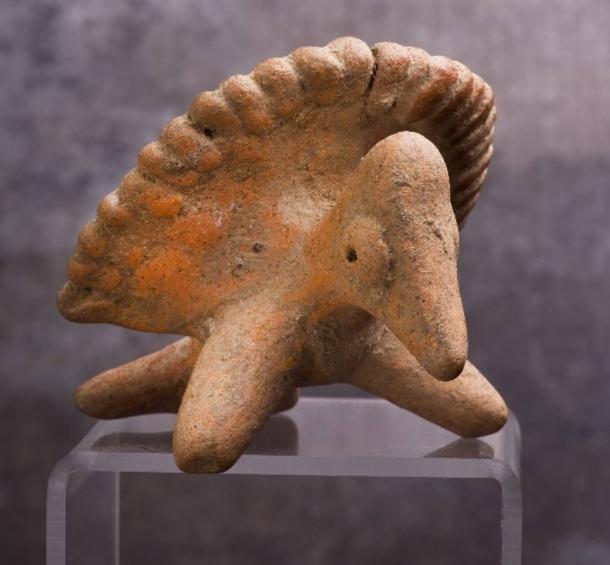
Mayan Music The Indian civilizations of South and Central America had a vibrant musical heritage. The Mayas used a variety of wind and percussion instruments, such as flutes, whistles, trumpets, rattles, bone and gourd rasps, and drums. These instruments are mentioned in texts and illustrated in Maya art. Among the most fascinating discoveries is the Maya whistle.
Maya bird whistle made around 1000 AD. Credit: William Scott / Source: BigStockPhoto
A whistle flute, sometimes called a fipple flute, is a flute blown from the end. Air is sent through a simple mouthpiece against the sharp edge of a hole cut in the pipe below the mouthpiece. It was often made of clay or wood. There is even an example of one made from bird bones. Finger holes make more than one pitch possible. Whistle flutes were common.
Ocarinas are flutes in the shape of animals. The word ocarina comes from the Spanish, who settled in the Central American country of Costa Rica, rich in rainforest animals.
The ancient inhabitants of Costa Rica crafted ocarinas that represented birds, armadillos, owls, bats, tapirs, monkeys, and other rainforest creatures.
Today, modern Latin American artists make ocarinas inspired by the ancient ones. The instruments are played by blowing in the small hole at the end, covering the four holes on the body with your fingers, and leaving the large hole at the end uncovered.
When fingers are lifted off any of the four holes on the body, varying sounds are created. The sounds made are similar to the calls of Costa Rican birds.
For six days Don Quixote lay in bed, sullen and sorrowful because of his overthrow. And all this time Sancho Panza sat beside him and tried to comfort him.
“My master,” he said, “pluck up your head and be of good cheer if you can. Let us go home and quit seeking adventures in lands and places we do not know. And if you will only think, I am the one who loses most, though it is you that are in the worst pickle.”
The squire’s cheerful words gave fresh hope to the knight. Gradually his courage came back to him, and at length the two bade goodbye to Barcelona and started for home. Don Quixote rode on Rozinante. He was unarmed and clad in a traveling coat. Sancho followed him on foot, leading his donkey, which was laden with Don Quixote’s armor.
“I should not have been defeated had it not been for Rozinante’s weakness,” said the knight.
They traveled for many days with their faces turned steadfastly towards La Mancha. But their steeds made slow progress and they stopped often by the way.
At length they got to the top of a hill from which they could see their own peaceful little village lying in the green valley below. At this sight Sancho fell upon his knees and cried out:—
“O thou long-wished-for village, open thy eyes and behold thy child, Sancho Panza. He has come back to thee again, not very rich, yet very well flogged. O village, open thy arms, and receive also thy son, Don Quixote. While he has been vanquished by others, he has gained the victory over himself — and that is the best of all victories.”
“Hush your prattle,” said Don Quixote, “and let us put our best foot foremost to enter our village.”
So they went down the hill, and were soon met by their old friends, the curate and the barber and faithful Samson Carrasco. Don Quixote alighted and embraced them all quite lovingly.
“I have returned home for a year,” he said; “and I have a mind to turn shepherd and enjoy the solitude of the fields. If you have not much to do, I shall be pleased to have you for my companions.”
They answered him pleasantly, and then, surrounded by a troop of boys, they made their way to Don Quixote’s house.
The housekeeper and the niece were at the door to welcome the wanderer.
“My dear niece,” he said, “I have come home for a little while. I think that I shall soon leave you again, to live the simple life of a shepherd. But help me to bed, now, for it seems to me that I am not very well.”
They led him in, and made him as comfortable as they could. They cared most lovingly for him day and night. But all the strength seemed to have gone from his poor body.
The curate, the barber, and Samson Carrasco came often to see him. His good squire, Sancho Panza, sat all the time by his bedside. But in spite of every care he steadily grew more feeble.
On the sixth day the doctor told him that he was in danger and might not live long. Don Quixote asked them to leave him alone a little while, for he thought that he could sleep.
They went out of the room. He soon fell into a deep slumber, and he lay so still, with such a look of peace upon his face, that they thought he would never wake in this world.
At the end of six hours, however, he opened his eyes, and cried out: “Blessed be Almighty God, who has done me so much good. His mercies are without end.”
Then they saw that his madness had left and that his mind was clear and bright.
“Send for my good friends, the curate and the barber and Samson Carrasco,” he said; “for I am at the point of death, and I would make my will.”
But these gentlemen had all the time been waiting at the door, and now they entered the room. Don Quixote was overjoyed to see them. “Welcome, my friends!” he said. “I am no longer Don Quixote de la Mancha, but plain Alonzo Quixana, whom our townspeople used to call The Good. My mind is clear now, and I see the great folly that I was led into through the reading of foolish books. All those vulgar stories of knights and magicians are hateful to me, and I abhor them. But now send for my lawyer, that he may draw up my will, for my hours are numbered.”
They looked at one another, wondering, and Samson Carrasco went to fetch the lawyer. The sick man roused himself and his face brightened when the man of law came and sat down by his bedside.
The will was drawn up in due form. It provided that a small sum of money should be paid to Sancho Panza for his good services, and that all the rest of the estate should go to the niece. It was signed by Alonzo Quixana, and witnessed by the curate and the barber.
Then the sick man fell back in his bed, and lay for three days without knowing anything at all. In the afternoon of the third day he fell into a gentle sleep from which he never awoke.
So ended the adventures of as good a man and as brave as Spain has ever seen.
One morning Don Quixote, fully armed, rode out to the seashore to take the air. He felt very brave, and was in fine fighting humor.
“Arms,” he said, “are my best attire, and combat is my meat and drink.”
Suddenly he saw a strange knight riding towards him. The knight was armed from head to foot, and on his shield a bright moon was painted.
As soon as he was within hearing, he called out: “Most illustrious, most valorous Don Quixote, de la Mancha, I am the Knight of the White Moon. I have come to enter into combat with thee. I have come to make thee confess that my lady, whoever she may be, is more beautiful by far than thy Dulcinea del Toboso.”
“That I will never confess,” answered Don Quixote; “but I will force thee to confess the contrary. Thou hast never seen the illustrious Dulcinea. If thou hadst, the sight of her would have made thee know that there is no beauty like unto hers.”
“I challenge you to prove it in fair combat,” cried the Knight of the White Moon. “If I vanquish you, I shall require of you to go to your home, and for the space of one year give up your arms and your knight-errantry and live there in peace and quiet.”
“But what do you agree to do if I shall vanquish you?” said Don Quixote.
“I agree that my head shall be at your disposal,” answered the knight. “My horse and arms shall be your spoils, and the fame of my deeds shall be added to that of your own achievements.”
“I accept your challenge,” said Don Quixote; “and will faithfully comply with all its conditions; but I am content with the fame of my own deeds, and do not wish to assume yours. Choose whichever side of the field you prefer, and let us settle this business at once.”
The two knights turned their horses and rode apart some distance. Then they again faced each other. The next moment, without waiting for any signal, they made the onset.
The White Moon’s steed was much swifter than Rozinante, and he thundered down upon Don Quixote ere he had run one third of the distance. Our knight had no time to use his spear. The stranger struck him with such force that both he and his steed were hurled helpless to the ground.
Quickly the White Moon dismounted. He held his spear at Don Quixote’s throat and cried: “Yield, knight! Fulfill the conditions of our challenge or your life is forfeit!”
Don Quixote was bruised and stunned. But he answered in a faint and feeble voice, “I maintain that Dulcinea del Toboso is the most beautiful lady in the world, and I am the most unfortunate knight. Press on thy spear, and rid me of life.”
“That I will not do,” said he of the White Moon. “I will not dispute the fame of the beautiful Dulcinea. I shall be satisfied if the great Don Quixote will only return to his home for a year as was agreed to in our challenge.”
“Very well,” answered Don Quixote. “Since you require nothing that will tarnish the fame of the Lady Dulcinea, I will do all the rest as you desire.”
They lifted Don Quixote from the ground and uncovered his face. He was very pale and weak. Rozinante still lay in the sand unable to rise. As for Sancho Panza, he was so sad and dismayed that he did not know what to do.
The Knight of the White Moon galloped away toward the city, and some of those who had seen the combat followed him. They asked him who he was, and why he had dealt so roughly with the famous but harmless Don Quixote.
“My name is Samson Carrasco,” said the knight, “and I am a friend and near neighbor of Don Quixote. All that I wished in this combat was not to harm my friend, but to make him promise to return home. I think that if he can be induced to rest there quietly for a year, this madness about knight-errantry will be cured.”
It was, indeed, Samson Carrasco, the same who once before, as the Knight of the Mirrors, had tried to cure his friend of his folly but had failed.
One morning towards the end of summer Don Quixote surprised the duke by calling for his armor and his steed.
“My Lord Duke, I must away, to seek new adventures,” he said. “I cannot tarry here any longer.”
“But has not your stay with us been agreeable to you?” asked the duke. “Why should you wish to leave us?”
“You have indeed been kind, and I thank you for it,” answered the knight. “But it is wrong to linger here among the dainties and delights which you have provided, while there are so many things in the world that need doing. I shall have to give an account for all these idle days.”
So, bidding the duke and duchess a kind farewell, he mounted his steed and rode away towards Saragossa; and Sancho, on his dappled donkey, followed him as before.
Time would fail me to tell of the many happenings on the road. They traveled leisurely along, making no plans, and letting each day and hour take care of itself. Yet the knight was ever on the alert for some new adventure.
One evening they arrived at an inn on the outskirts of the city, feeling very tired and hungry. The innkeeper met them at the door.
“Have you lodgings for two weary travelers and their beasts?” asked Sancho.
“Yes,” answered the innkeeper, “there are no better lodgings in Saragossa.”
So they alighted. Sancho led the beasts to the stable and gave them their food. Then he returned to the house to wait on his master.
“What have you for supper, my good host?” he asked.
“You may measure your mouth and ask for anything you like,” said the innkeeper. “Here you will find everything in abundance — fowls of the air, birds of the earth, and fishes of the sea.”
“Well,” said Sancho, “if you will roast a couple of chickens for us it will be enough. My master eats but little, and I am not a glutton.”
“I am sorry,” said the innkeeper, “but I have not a single chicken left. The hawks have carried them all away.”
“Why, then, if that is the case, you may roast us a duck,” said Sancho.
“A duck, sir!” cried the innkeeper, “I sent fifty to the market yesterday, and there is not another one. But, aside from ducks and chickens, ask for anything you like.”
“Well,” said Sancho, “a little veal or boiled kid would taste quite good.”
“Next week, my friend, we shall have plenty of both,” said the host, “but now we are just out of such meats.”
“Bring on some fried eggs and bacon, then,” said Sancho.
“You are a good one at guessing,” cried the host. “But I told you that I had neither chickens nor ducks, and so how can I have eggs?”
“Oh, bother!” said Sancho, losing his patience. “Have done with your ramblings, Mr. Landlord, and tell me just what you have.”
“I will do so,” answered the innkeeper. “What I really have is nothing more nor less than a pair of cow heels, dressed with beans, onions, and bacon; and all these are cooked to a turn and even now crying, ‘Eat me, eat me!’ “
“I set my mark on them this minute,” said Sancho. “Let nobody else touch them.”
“Nobody else will wish to touch them,” said the innkeeper; “for all the other guests are of such quality that they take their cook and their larder with them.”
“As for quality,” cried Sancho, “my master is as good as the best, but his profession doesn’t allow him to carry a pantry wherever he goes.”
Presently the host brought in the kettle, and they all sat down to a supper of cow’s heel and onions.
The knight and his squire were used to rough fare, and they had learned to take things as they found them. They rested well that night, and in the morning set forth again upon their travels. But now, instead of going into Saragossa, they took another road and journeyed on to Barcelona.
The fame of Don Quixote had gone before him, and at Barcelona there were those who gladly received him and entertained him. And so they spent some days in that great city, looking at its wonders and most of all at the sea which neither of them had ever before beheld.
The duke and the duchess were so well pleased with the success of their latest jest that they soon formed plans for another; and this time Sancho Panza was to be the chosen hero.
“Sancho Panza,” said the duke one day, “is it true that your master has promised to make you the governor of an island?”
“Aye, so he has,” answered Sancho; “and I am he that deserves it as well as anybody. I have kept my master company many a month; and if he live and I live, there will be no lack of islands for me to govern.”
“Well,” said the duke, “I have a few spare islands of my own lying around, and I will give you one for the sake of my good friend Don Quixote.”
“Down on thy knees, Sancho,” cried Don Quixote, “and kiss the duke’s feet for this favor.”
And Sancho obeyed.
A few days later the duke said to the squire, “Sancho, do you remember the island which I promised you?”
“Most assuredly, sir, I have not forgotten it,” said Sancho.
“Well, you must prepare to take possession of your government tomorrow,” said the duke. “The islanders are longing for you as a farmer longs for rain in summer. They will not be put off any longer.”
Sancho bowed humbly and answered, “Well then, I will do my best. But since I looked down from the sky the other day and saw the earth so very small, I don’t care half so much about being a governor. What does it matter to rule over half-a-dozen men no bigger than hazelnuts?”
“Oh, Sancho,” said the duke, “when once you have had a taste of ruling you will never leave off licking your fingers, you will find it so sweet to command and so pleasant to be obeyed.”
“Indeed it is a dainty thing to command,” said Sancho. “I know it, for I once commanded a flock of sheep.”
“Well, I hope you will be as good a governor as you were a shepherd,” said the duke. “Now get ready to set out for your island tomorrow morning. My servants will furnish you with dress suitable to your high office.”
“Let them dress me as they will, I’ll be Sancho Panza still,” answered the squire.
When Don Quixote heard that Sancho was to leave for his island in the morning he sat down with him and gave him a great deal of good advice. Among a thousand other things, he said:—
“First of all, fear God; for the fear of Him is wisdom.
“Second, make it thy business to know thyself.
“Pride thyself more on being humble and virtuous than proud and vicious.
“Despise not thy poor relations.
“Let the tears of the poor find more compassion than the testimony of the rich.
“Revile not with words him whom thou hast to punish in deed.
“In the trial of a criminal remember the temptations of our depraved nature, and show thyself full of pity and mercy.
“As to the government of thy person, my first command is cleanliness.
“Pare thy nails.
“Keep thy clothes well-fitted about thee.
“Defile not thy breath with onions and garlic.
“Walk softly, speak with deliberation.
“Drink moderately.
“Be careful not to chew on both sides.
“Sleep with moderation.
“As for thy dress, wear long hose, an ample coat, and a cloak a little longer.
“Lastly, do not overlard thy discourse with proverbs, as thou art wont to do.”
Sancho listened quietly to all this advice and promised that he would observe as much of it as he could remember.
“But please let me have it all in black and white,” he said; “for my memory is poor. True, I can neither write nor read, but I will give it to the priest of my island and tell him to hammer it into me as often as I need it.”
“Oh, sinner that I am!” cried Don Quixote. “How scandalous it is that a governor should not be able to read or write! I would have thee at least learn to write thy name.”
“Oh, I can write my name.” answered Sancho. “I used to scrawl a sort of letters, and they told me it was my name. Besides, I can pretend that I’ve hurt my hand, and get somebody else to sign for me. For there is a remedy for all things but death. Let them backbite me to my face, I will bite-back the biters. Let them come for wool and go home shorn. The rich man’s follies pass for wise sayings. What a man has, so much is he worth, said my grandmother.”
“Enough! enough!” said Don Quixote. “We have had enough of your proverbs. They will make your islanders plot against you and pull you down.”
“For pity’s sake, master!” said Sancho, “don’t grudge me the use of my own goods. Proverbs are all my stock. Whether the pitcher hit the stone, or the stone hit the pitcher, it is bad for the pitcher.”
“Well, Sancho,” answered Don Quixote, “you have a good disposition, and you mean well. So let us go to dinner.”
The very next day Sancho set out for his island. He was dressed in fine clothes, and rode a tall mule in gaudy trappings. Behind him was led his own donkey, adorned like a horse of state.
He kissed the hands of the duke and duchess, and bowed his head to receive his master’s blessing. Then he rode tearfully away with a great train of servants, every one of whom had been told how to behave towards him.
It was not a long journey. Soon they came to a little town which belonged to the duke, and Sancho was told that it was his island. Its name was Barataria.
At the gates of the town he was met by the chief officers. The bells rang, and the people shouted their joy. Then he was led to the church, and the keys of the town were put in his hands.
“Hail to our noble governor!” shouted young and old; and Sancho began to feel very much elated.
He was so short and fat, and he looked so funny in his fine clothes, that all who did not know that it was one of the duke’s jokes were puzzled to think what kind of man he was. But still they shouted, “Hail to our lord, Don Sancho Panza!”
Sancho turned to his secretary and asked, “Whom do they call Don Sancho Panza?”
“Why, your lordship, yourself,” answered the secretary.
“Well, friend,” said Sancho, “take notice that Don does not belong to me. Plain Sancho Panza is my name. My father and my grandfather and all of us have been plain Panzas without Dons or Donnas added. Now, I guess the Dons are as thick as stones on this island, but if my government lasts four days I’ll clear them out, like so many flies.”
From the church Sancho was taken with much ceremony to the Hall of Justice. There he was set in a great chair, and all who wished to appeal to him for justice came and made their wants known. The first who came were two men, one dressed like a country fellow, the other like a tailor.
“My lord governor,” said the tailor, “this farmer and I have come for you to settle a dispute between us. Yesterday the farmer came into my shop with a piece of cloth. He asked me if there was enough of it to make a cap. I measured the stuff and answered, Yes. Then he asked if there was enough for two caps, and I again said, Yes. At last, I told him there was enough for five caps. This morning he came for his caps. They were finished and I gave them to him. But he would not pay me. He says I must give him his cloth again, or the price of it.”
Sancho turned to the farmer and said, “Is this true, my friend?”
“Yes,” answered the man, “but let him show you the five caps he has made.”
“With all my heart,” said the tailor; and with that he held up his hand, showing four tiny caps on his fingers and one on his thumb.
“There,” said he, “you see the five caps he asked for, and I have not a snip of cloth left.”
Everybody in the room laughed to see the number of caps and their smallness.
Sancho put his hand to his chin and thought for a little while. Then he said, “It is the judgment of this court that the tailor shall lose his making, and the farmer his cloth. The caps shall be given to the prisoners in jail; and that ends the whole matter.”
All who heard this decision were pleased because of its justice.
Two old men next came before the governor. One of them carried a cane, which he used to help him along.
“My lord,” said the other man, “some time ago I lent this good man ten gold crowns. I did it as an act of kindness, and he was to repay me whenever I asked him. I did not demand it for a long time; but since he seemed so careless about it, I at last said to him that I wanted the money. What do you think? He not only refuses to pay me, but he says I never lent him the money, or if I did, he returned it. I have no witnesses, but I beg you to put him on his oath. If he will swear that he has paid me, I will forgive him.”
“Old man of the staff,” said Sancho, “what say you to this?”
“Sir,” answered the old man, “I own that he lent me the money. And if you will hold out your rod of office, I will swear upon it that I have returned it in full.”
Sancho held out the rod. The old man handed his staff to the other man to hold while he took the oath. Then he put his hands on the cross of the governor’s rod, and swore that it was true that the other had lent him the money, but that he had returned the same sum into his hands.
Sancho turned to the other man and asked, “What do you say to that?” “Well,” said the poor man, “my neighbor is a good Christian, and I don’t believe he would swear falsely. Perhaps I have forgotten when and how he repaid me.”
Then the owner of the staff took his stick, and the two men left the court.
Sancho leaned his head over his breast, he put his forefinger on his eyebrows, and sat silent for a time. Then he suddenly said:— “Where is that man with the staff? Bring him back to me instantly.”
Soon both men were again brought before him.
“Good man,” said he to the one with the staff, “let me see your cane. I have use for it.”
“Certainly, sir. Here it is,” answered the man. Sancho took the staff and immediately gave it to the other man.
“There,” he said, “go your way in peace, for now you are paid.”
“How so, my lord?” cried the man. “Is this cane worth ten gold crowns?”
“Well, if it is not, then I am the greatest fool in the world,” said Sancho. “If you will but return the cane to me for a moment, you shall see with your own eyes.”
He took the staff between his hands and broke it in two; and out fell the ten gold crowns.
Everybody in the court was amazed. They began to think that Sancho was a second Solomon, whose wisdom was past finding out. The truth was, however, that Sancho had once heard of the same kind of trick being played in a distant town. It was an old story, but unknown in Barataria.
The end of the matter was that one old man went away very much ashamed, and the other returned home well satisfied.
Thus, one case after another was brought before the “governor,” and he gave such wise judgment that the people wondered how such wisdom could be contained in a little round head like his. And yet, with all the attention that was shown him, Sancho was not happy in his island.
He was never allowed to eat a good meal; for the doctor always stood by and refused to let him touch anything that would hurt his digestion. He could not even eat roast partridge, although it was set on the table before him, and was of all things the dish which he liked best.
He was wearied, too, with all the tedious ceremonies at court. His fine clothes were irksome. His night’s sleep was broken into by the cares of state. And then, at last, there came a dreadful letter from the duke.
The letter was full of warnings. Some enemies, it said, were marching against the island. Four men had gone to the town for the purpose of killing the governor. The duke therefore advised Sancho to be careful, and not eat anything that was set before him, lest he should be poisoned.
All this was a part of the duke’s great joke, and it frightened Sancho Panza terribly.
Seven days had passed since he came to Barataria. He had had no rest. He was tired and hungry. It was very late when he was at last allowed to go to bed.
He was just dropping off to sleep when he heard a great noise in the street. He was alarmed and jumped up to see what was the matter.
Bells were ringing, drums were beating, men were shouting. Sancho trembled with fear. He put on his slippers, and hurried to the door.
Several men with torches and drawn swords came running up. They shouted:— “Arm, arm, Lord Governor! The enemy have got into the island. Come and lead us against them. We have arms for you!”
“Why, then arm me, and good luck to us all,” said Sancho, trying to be very brave.
They brought two shields and put them over his shirt, one behind and one before. They fastened these shields together with cords drawn as tightly as possible. Then they put a spear in his hand and said, “Lead on, now, Lord Governor!”
“How can I lead on, when I am trussed up like this?” asked Sancho; and indeed he looked much like a turtle between two great shells.
“I cannot so much as bend my legs,” said he. “You must carry me.”
“Nonsense, my Lord Governor,” said one of the men. “It is fear that keeps you from moving. Lead on, for the danger is greater every minute.”
Poor Sancho tried to walk; but he fell to the floor with such a crash that he thought himself broken to pieces. He lay there, helpless and praying for deliverance.
Suddenly all the lights went out. He could hear men fighting all around. Some tripped on him. Some stood on him and shouted. He was never so frightened in his life.
“Oh, that this island were taken,” he moaned, “or that I were dead and out of this trouble.”
Then he heard shouts of “Victory! victory! Where is our lord governor?”
Sancho could only cry in a weak voice, “Here I am. Help me up!”
His shields were taken off, and he was carried into his chamber. There he fell back on his bed in a dead swoon, and those who had been playing this joke upon him became really frightened. By and by, however, he began to come to himself.
“What time is it?” he asked.
“It is near daybreak,” they answered.
He spoke not again, but very quietly began to put on his clothes.
When he was dressed he went out slowly and feebly, for he was too much bruised to move fast. He went to the stable and found the stall where his donkey was standing.
He flung his arms around the beast’s neck and kissed him.
“Oh, my dear Dapple!” he said, while tears fell from his eyes. “My faithful companion, my best friend! When all my cares were only to feed thy little body, my hours, my days, my years were happy. But since I clambered up upon the tower of ambition, I have a thousand woes, a thousand toils, and four thousand tribulations.”
While he was talking he bridled and saddled the donkey. Then he slowly got upon him and took hold of the reins.
“Make way, gentlemen!” he cried to those who were standing around. “Let me return to liberty. I was not born to be a governor, or to defend islands. May heaven bless you, my good people! Tell my lord duke that I have neither won nor lost; for I came into this island without a penny, and without a penny I leave it. Clear the way, then, and let me go!”
So saying, he chirruped to his donkey and rode slowly away to rejoin his master, Don Quixote.
Everybody appeared to be astonished when he finally arrived at the duke’s castle. Yet all welcomed him kindly and heartily, and listened to his story of what had happened to him.
“It is now eight days since I began to govern the island that was given me,” he said. “In all that time I never had enough to eat. I had no leisure either to take bribes or to receive what were my just dues. Enemies trampled over my bones. My life was a burden. But man proposes, and God disposes. Heaven knows what is best for us all. Let no man say, I will not drink of this water. I say no more.”
“Never mind, Sancho, never mind,” said Don Quixote. “If a governor returns rich from his government, they say he has robbed. If he returns poor, then they call him a do-little. But if thy conscience is clear, thou hast nothing to fear.”
“Yes,” said Sancho, “but this time they will be likelier to call me an idiot than a robber.”
When Johnnie Green was younger, it always scared him to hear Solomon Owl’s deep-toned voice calling in the woods after dark.
“Whoo-whoo-whoo, whoo-whoo, to-whoo-ah!” That weird cry was enough to send Johnnie Green hurrying into the farmhouse, though sometimes he paused in the doorway to listen–especially if Solomon Owl happened to be laughing. His “haw-haw-hoo-hoo,” booming across the meadow on a crisp fall evening, when the big yellow moon hung over the fields of corn-shocks and pumpkins, sounded almost as if Solomon were laughing at the little boy he had frightened. There was certainly a mocking, jeering note in his laughter.
Of course, as he grew older, Johnnie Green no longer shivered on hearing Solomon’s rolling call. When Solomon laughed, Johnnie Green would laugh, too. But Solomon Owl never knew that, for often he was half a mile from the farm buildings.
A “hoot owl,” Johnnie Green termed him. And anyone who heard Solomon hooting of an evening, or just before sunrise, would have agreed that it was a good name for him. But he was really a barred owl, for he had bars of white across his feathers.
If you had happened to catch Solomon Owl resting among the thick hemlocks near the foot of Blue Mountain, where he lived, you would have thought that he looked strangely like a human being. He had no “horns,” or ear-tufts, such as some of the other owls wore; and his great pale face, with its black eyes, made him seem very wise and solemn.
In spite of the mild, questioning look upon his face whenever anyone surprised him in the daytime, Solomon Owl was the noisiest of all the different families of owls in Pleasant Valley. There were the barn owls, the long-eared owls, the short-eared owls, the saw-whet owls, the screech owls–but there! there’s no use of naming them all. There wasn’t one of them that could equal Solomon Owl’s laughing and hooting and shrieking and wailing–at night.
During the day, however, Solomon Owl seldom had anything to say — or if he had, he was quiet about it. One reason for his silence then was that he generally slept when the sun was shining. And when most people were sleeping, Solomon Owl was as wide awake as he could be.
He was a night-prowler–if ever there was one. And he could see a mouse on the darkest night, even if it stirred ever so slightly.
That was unfortunate for the mice. But luckily for them, Solomon Owl couldn’t be in more than one place at a time. Otherwise, there wouldn’t have been a mouse left in Pleasant Valley–if he could have had his way.
And though he didn’t help the mice, he helped Farmer Green by catching them. If he did take a fat pullet once in a while, it is certain that he more than paid for it.
So, on the whole, Farmer Green did not object to Solomon Owl’s living in the wood-lot. And for a long time Solomon raised no objection to Farmer Green’s living near Swift River.
But later Solomon Owl claimed that it would be a good thing for the forest folk if they could get rid of the whole Green family–and the hired man, too.




 articlesforchristians