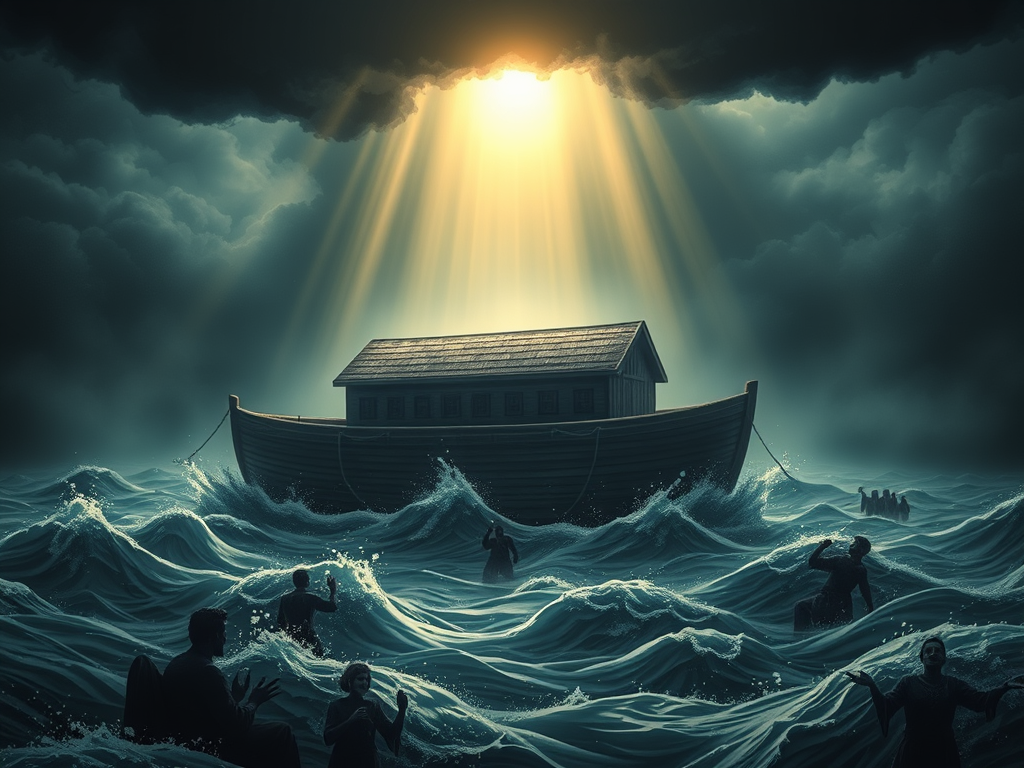
Core takeaway: Jesus used the days of Noah as a prophetic mirror for the last days — not because of dramatic signs, but because of ordinary life lived without God, increasing wickedness, and a world unaware of approaching judgment. The pattern is repeated today.

1. The Days Before the Flood
Humanity lived normally — eating, drinking, marrying — yet without God. Their routines hid their spiritual blindness.
Matthew 24:37–44 shows that the generation before the flood was absorbed in daily life. They were not alert, not spiritually awake, and not prepared.
- Eating and drinking — life centered on physical appetite
- Marrying and giving in marriage — relationships formed without reference to God
- No mention of worship, repentance, or obedience
Paul describes the same pattern in Philippians 3:17–19: people whose “god is their belly” and who “mind earthly things.”
2. The Controversy: Who Were the “Sons of God”?
Two major interpretations exist:
- Seth’s godly line intermarrying with Cain’s ungodly line
- Fallen angels taking human wives (supported by Jude 1:6 and 2 Peter 2:4)
Regardless of interpretation, the point remains: Humanity forgot God’s warnings and lived as though judgment would never come.
3. The Same Pattern in the Last Days
Peter warns that the last generation will repeat Noah’s:
- Scoffers
- Lust-driven living
- Willful ignorance of God’s past judgments
- False confidence that “all things continue as they were”
2 Peter 3:3–7 connects Noah’s flood with the coming fire of final judgment.
4. Jesus Adds the Days of Lot
In Luke 17:26–30, Jesus expands the comparison:
- Eating
- Drinking
- Buying
- Selling
- Planting
- Building
These activities are not sinful in themselves — but they reveal a world busy, distracted, and spiritually numb.
Both Noah’s and Lot’s generations were destroyed the same day the righteous were removed.
5. “They Knew Not” — The Suddenness of Christ’s Return
Jesus emphasizes that His coming will be:
- Unexpected
- Sudden
- Unannounced
Just like lightning flashing across the sky (Matthew 24:27).
People have said “Jesus is coming” for generations, but Scripture says the final generation will be caught unaware — not because God didn’t warn them, but because they weren’t listening.
6. The Same Extreme Wickedness
Paul’s description in 2 Timothy 3:1–4 mirrors Genesis 6:
- Lovers of self
- Lovers of money
- Proud, abusive
- Without natural affection
- Lovers of pleasure rather than lovers of God
Wickedness is not merely present — it is normalized.
7. Noah Prepared — The World Did Not
Noah’s obedience looked foolish to the world. But when judgment came, faith became the dividing line between life and death.
Hebrews 11:7 highlights Noah’s holy fear and faithful preparation.
Those inside the ark were saved. Those outside were destroyed.
8. Jesus’ Call to His Followers
Christ connects Noah’s preparation to discipleship:
- Deny yourself
- Take up your cross
- Follow Him
- Do not be ashamed of Him in a sinful generation
Matthew 16:24–27 shows that readiness for Christ’s return is not passive — it is a life of surrendered obedience.
9. Summary: The Pattern Repeats
The days of Noah teach us:
- Ordinary life can hide spiritual danger
- Wickedness increases when God is forgotten
- Judgment comes suddenly
- Only those who prepare in faith are saved
And Jesus says: “So shall also the coming of the Son of Man be.”

Leave a Reply