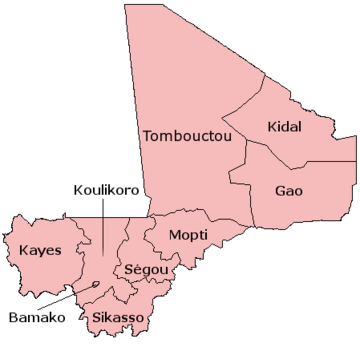
Mali, officially the Republic of Mali, is a country in West Africa. It is a landlocked country, meaning it has no coastline. Mali is the eighth-largest country in Africa. It covers an area of over 1.2 million square kilometers (478,839 sq mi). Mali shares borders with seven other countries. To the north is Algeria, and to the east is Niger. To the northwest, it borders Mauritania. In the south, you’ll find Burkina Faso and Ivory Coast. To the west are Guinea and Senegal. Mali has a population of about 24.5 million people. Its capital and largest city is Bamako. The country has 13 official languages. Bambara is the most widely spoken.
What’s in a Name? The Meaning of Mali
The name Mali comes from the ancient Mali Empire. It means “the place where the king lives.” This name also suggests strength. A traveler named Ibn Battuta visited Mali in the 1300s. He said the empire’s capital was called Mali. Some stories say the first emperor, Sundiata Keita, turned into a hippopotamus when he died. This happened in the Sankarani River. People say there were villages near this river called “old Mali.” There’s even a village called Malikoma, meaning “New Mali.” This suggests Mali might have once been a city’s name. Another idea is that Mali is how the Fulani people say the name of the Mande peoples.
Exploring Mali’s Geography
Mali is the 24th-largest country in the world. It is the eighth-largest country in Africa. Its size is similar to South Africa. Most of Mali is in the southern Sahara Desert. This area is very hot and dusty. Mali is mostly flat with rolling plains covered by sand. The Adrar des Ifoghas mountains are in the northeast.
Mali is one of the hottest countries in the world. Most of Mali gets very little rain. Dry periods are common. The rainy season is from late April to early October in the south. During this time, the Niger River often floods. This creates the Inner Niger Delta.
The northern desert has a hot desert climate. Summers are long and extremely hot. Rainfall is very low and decreases as you go north. The central area has a hot semi-arid climate. It has high temperatures all year. There is a long dry season and a short, irregular rainy season. The southern areas have a tropical wet and dry climate.
Mali has many natural resources. Gold, uranium, phosphates, kaolinite, salt, and limestone are found there. Mali is thought to have over 17,400 tonnes of uranium. In 2012, more uranium was found in the north.
Mali faces several environmental challenges. These include desertification (land turning into desert), deforestation (losing forests), soil erosion, and not enough clean potable water.
Languages Spoken in Mali
In January 2022, the Malian government announced that Bambara would become an official language. In July 2023, French changed from an official language to a working language.
At the same time, 13 national languages became official languages. These include:
- Bambara
- Bobo
- Bozo
- Dogon
- Fula
- Hassaniya Arabic
- Kassonke
- Maninke
- Minyanka
- Senufo
- The Songhay languages
- Soninke
- Tamasheq
Bambara is the most common language for communication in Mali. About 80% of people can speak it. Over 40 other African languages are spoken by different ethnic groups in Mali.
Around 90% of Mali’s population practices Sunni Islam, though traditional religions still hold some influence. Muslims have their own education system. About 1% of the population identifies as Christian. During French colonial rule, Christian missionaries were sent to predominantly Islamic regions.
Adapted from Mali Facts for Kids. Kiddle Encyclopedia.

 articlesforchristians
Comments on: "Facts about Mali for Children" (3)
[…] Facts about Mali for Children […]
[…] Facts about Mali for Children […]
[…] Facts about Mali for Children […]