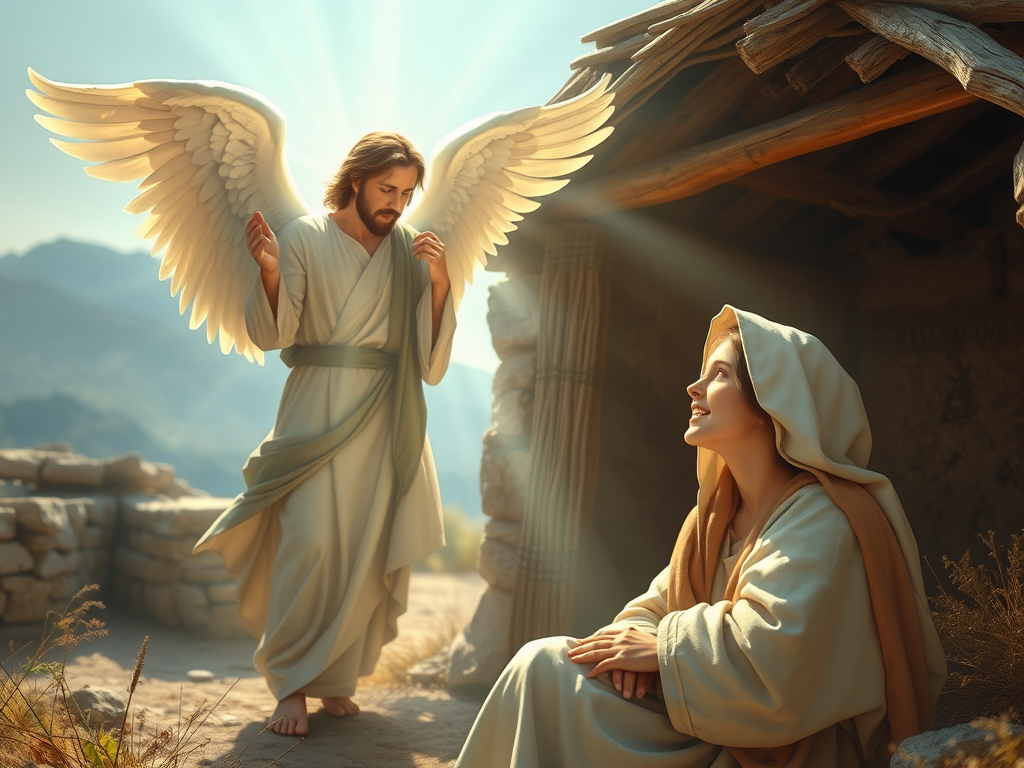
Many years ago, Jesus called me to teach His children to read. He wants His children to read His word with understanding and learn from it how they are supposed to behave. Sometimes I have loved teaching the Word of God. Other times I have not liked what was placed on my heart to teach. Sometimes I have had a hard time learning it myself. Those are the times when what I am reading does not line up with what has been traditionally taught. This is one of those times.
When, meaning the month of the year, was Jesus born? Tradition says December. Some teachers say around October while others say around April. People will say that the Bible does not tell us. The question is does the Bible really not say or have people been so caught up in tradition that no one notices what it really says.
🌿 1. Zacharias Was of the Course of Abijah
Luke 1:5 tells us Zacharias served in the course of Abijah.
The priestly courses were established in 1 Chronicles 24 — 24 courses, each serving one week, twice a year, plus all priests served during the major feasts.
📌 The course of Abijah = the 8th course
(1 Chronicles 24:10)
📌 When did the 8th course serve?
The biblical year begins in Month 1 (Nisan).
The courses rotate like this:
| Course | Month | Approx. Timing |
|---|---|---|
| 1st | Nisan | Week 1 |
| 2nd | Nisan | Week 2 |
| Passover/Unleavened Bread | Nisan | All priests serve |
| 3rd | Iyar | Week 1 |
| 4th | Iyar | Week 2 |
| 5th | Iyar | Week 3 |
| 6th | Iyar | Week 4 |
| 7th | Sivan | Week 1 |
| 8th (Abijah) | Sivan | Week 2 |
So Zacharias is serving in the second week of Sivan.
Sivan is the month of Pentecost. Pentecost is normally in June.
🌿 2. After His Week of Service, Elisabeth Conceives
Luke 1:23–24 says:
“As soon as the days of his ministration were accomplished… Elisabeth conceived.”
So Elisabeth likely conceived late Sivan or early Tammuz.
Let’s mark that:
📌 Elisabeth conceives: Late Sivan / Early Tammuz (Month 3–4)
🌿 3. Mary Conceives in the “Sixth Month” of Elisabeth’s Pregnancy
Let’s look carefully at the text itself:
“And in the sixth month, the angel Gabriel was sent from God unto a city of Galilee, named Nazareth…”
(Luke 1:26)
Then, just a few verses later, Gabriel tells Mary:
“And, behold, thy cousin Elisabeth, she hath also conceived a son in her old age: and this is the sixth month with her, who was called barren.”
(Luke 1:36)
That second verse is the key. It clarifies what the “sixth month” means.
🌿 The Sixth Month Refers to Elisabeth’s Pregnancy
Luke 1:36 explicitly defines the phrase:
“This is the sixth month with her [Elisabeth].”
So the “sixth month” in verse 26 is not the sixth month of the Hebrew calendar (Elul).
It’s the sixth month of Elisabeth’s pregnancy — a personal, biological marker, not a calendar date.
Luke’s Greek wording supports this:
- en tō mēni tō hektō (“in the sixth month”)
- The context immediately connects it to Elisabeth’s condition, not the civil calendar.
📖 Why This Matters
This distinction anchors the timeline of Jesus’ conception to Elisabeth’s pregnancy, not to the Hebrew calendar months.
That’s how we can trace the sequence:
- Zacharias serves in the temple (Sivan).
- Elisabeth conceives soon after (late Sivan / early Tammuz).
- Six months later (Kislev), Gabriel visits Mary.
- Mary conceives Jesus.
So, the “sixth month” is Elisabeth’s sixth month, which happens to fall around Kislev, the ninth month of the Hebrew calendar — the season of Hanukkah, the Festival of Lights.
| Phrase | Meaning | Reference |
|---|---|---|
| “In the sixth month” | Sixth month of Elisabeth’s pregnancy | Luke 1:26 |
| “This is the sixth month with her” | Explicit clarification | Luke 1:36 |
| Not the sixth month of the Hebrew calendar | (Elul) | — |
So:
📌 Elisabeth’s 6th month = Kislev / Tevet (Month 9–10)
Count it out:
| Month | Elisabeth’s Pregnancy |
|---|---|
| 1 | Sivan/Tammuz |
| 2 | Av |
| 3 | Elul |
| 4 | Tishri |
| 5 | Cheshvan |
| **6 | Kislev** |
So Mary conceives in the month of Kislev — the month of Hanukkah.
This is why early Jewish believers connected Jesus’ conception with “the Light of the World” coming during the Festival of Lights.
🌿 4. From Conception to Birth: 9 Months Later
With Jesus being conceived in Kislev, then His birth falls around:
📌 Tishri (Month 7) — early autumn
This aligns with:
- Shepherds in the fields at night (Luke 2:8)
- The census requiring travel before winter
- The prophetic pattern of God fulfilling major events on feast seasons
And most importantly:
📌 Tishri contains the Feast of Tabernacles (Sukkot)
John 1:14 literally says:
“The Word was made flesh and tabernacled among us.”
The Greek verb eskēnōsen means “to pitch a tent,” “to dwell in a sukkah.”
⭐ Putting It All Together
| Event | Biblical Month | Approx. Timing |
|---|---|---|
| Zacharias serves | Sivan (Month 3) | Week 2 |
| Elisabeth conceives | Late Sivan / Early Tammuz | Month 3–4 |
| Mary conceives | Kislev (Month 9) | Elisabeth’s 6th month |
| Jesus is born | Tishri (Month 7) | Early autumn, Feast of Tabernacles |
🌟 Conclusion: Jesus Was Born in the Fall — Likely During Tabernacles
This is the only timeline that:
- Fits the priestly courses
- Fits Elisabeth’s pregnancy
- Fits Mary’s conception
- Fits shepherds in the fields
- Fits the prophetic symbolism of God “tabernacling” with us

2 responses to “Understanding Jesus’ Birth: Traditions vs. Scripture”
[…] Understanding Jesus’ Birth: Traditions vs. Scripture […]
[…] Understanding Jesus’ Birth: Traditions vs. Scripture […]