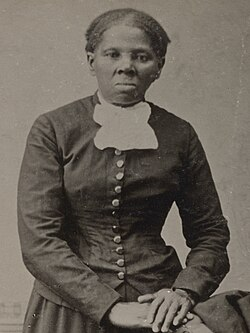
Harriet Tubman (1820? –1913) was an African American whose brave rescues helped hundreds of enslaved people escape to freedom. She became the most famous leader of the Underground Railroad, a network that aided those fleeing to free states or Canada. Many called her Moses, after the Biblical figure who led the Jews out of Egypt.
Early Life
Harriet Tubman was born into slavery in Bucktown, Maryland, near Cambridge. Originally named Araminta Ross, she began going by her mother’s name, Harriet, as a child. Her father taught her valuable knowledge of the woods, which later proved essential in her rescue missions. At 13, she stepped in to protect another slave from punishment, prompting an angry overseer to strike her in the head with a 2-pound (0.9-kilogram) weight. Though she recovered, she endured lifelong blackouts as a result. In 1844, she married John Tubman, a freed slave.
Underground Railroad
In 1849, Harriet Tubman escaped from slavery and traveled to Philadelphia via the Underground Railroad, without her husband. She vowed to return to Maryland to help other enslaved people gain their freedom. Her first trip back was shortly after Congress passed the Fugitive Slave Act of 1850, which made it a crime to assist runaway slaves. During the 1850s, Tubman returned 18 more times and helped about 300 enslaved individuals escape.
On one rescue mission, Tubman realized pursuers were close behind, so she and the fugitives hopped on a southbound train to throw them off. Another time in Bucktown, after buying some live chickens, she spotted her former master approaching. Without missing a beat, she released the chickens and chased after them, giving herself cover before he could recognize her.
In 1857, Tubman guided her parents to freedom in Auburn, New York. Remarkably, she was never caught and never lost a single person on any of her 19 rescue missions. Armed with a gun, she warned that she would shoot anyone who tried to turn back. At one point, the rewards for her capture reached about $40,000.
Women’s Rights Movements
In the late 1850s, Tubman met the radical abolitionist John Brown, who shared his plan to free enslaved people. She saw Brown as the true liberator of her race. Shortly after, Tubman became involved in the women’s rights movement in New England and New York.
Civil War
During the Civil War (1861–1865), Tubman worked as a nurse, scout, and spy for the Union Army in South Carolina, and in one campaign, she played a key role in freeing over 750 enslaved people.
After the War
After the war, Tubman went back to Auburn, where she worked to raise money for Black schools. In 1869, author Sarah H. Bradford published “Scenes in the Life of Harriet Tubman”, highlighting her fight against slavery. In 1908, Tubman opened a home in Auburn for elderly and needy Black people, later known as the Harriet Tubman Home. The town honored her with a plaque, and in 1978, the U.S. issued a postage stamp featuring her portrait.

 articlesforchristians
Comments on: "Harriet Tubman: a Moses to her People" (1)
[…] Sojourner Truth George Washington Carver: Pioneer of Agricultural Innovation ROSA LEE PARKS Harriet Tubman: a Moses to her People Martin Luther King, Jr. “I have a Dream Speech” The Legacy of […]