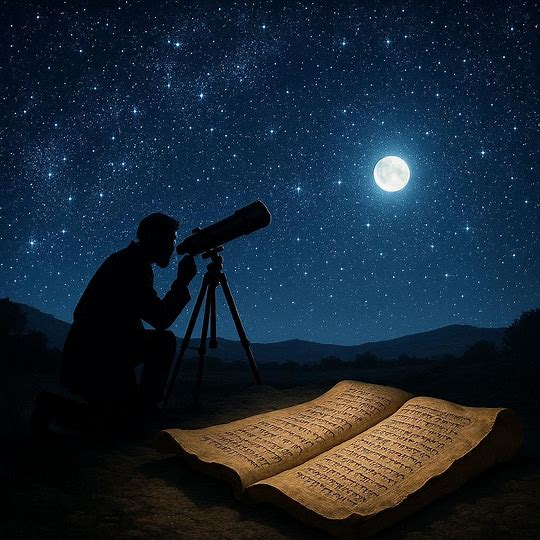
All the way back and the being of time we have wonder about the say, today people who study the Night Sky are called Astronomers. Some people think the wise men who came to see Jesus were Astronomers.
- Words to know
- What Star means in the Bible
- How Virgo tells of Jesus birth
- When star was made in the Bible
- How the scientist thinks the star were made
- The Stars praise God
- Name of Constellations in the Bible
- Scientists’ Perspectives on Faith and Science
- Conclusion
Words to know
- Astronomers: are people who Study the stars, planets, Sun, and moons.
- Stars: Sun: are big balls of gas that burns in the sky,
- Planets Some are big balls, of rock and others of Gas.
- Moons: are big balls of rock gas, some moons are mix of rock and gas
What Star means in the Bible
- Star
- Star
- Star
- Star
How Virgo tells of Jesus birth
Let Start on the Constellation that is called, Virgo [the – Virgin, In Gensis 3:15 God told the serpent: -“I will out enmity between thee and the woman, and between thy seed and her seed: it shall bruise head and thou shalt bruise His heel. After Adam & Eva
left the garden of Eden, they had children. Cain and Abel were two of their children. Eve thought that one of her sons was going to bruise the Serpent’s head, but it was years after that before the right one came. Mary, she was a Virgin. She had a son by the Holy Ghost. [See Isaiah 7:14, Matthew 1:20-23, Luke 1:34-35] Then Mary got married to Joseph and Jesus, the one who bruise the head of the Serpent, was born.
Virgo is represented as a woman with a branch in her right hand, and some ears of corn in her left hand. Thus giving a two-fold testimony of the Coming One. The name of this sign in the Hebrew is Bethulah, which means a virgin, and in the Arabic a branch. The two words are connected, as in Latin—Virgo, which means a virgin; and virga, which means a branch. Another name is Sunbul, Arabic, an ear of corn.
When star was made in the Bible
Let Start by go through what God made and when He made it See Genesis 1:1-2
- Day one 1
- God Made Day & Night
- Day two 2
- God Made the Sky
- Day three 3
- God Made the Seas, the dry land and the plants
- Day Four 4
- God Made the Moon, Sun, Planets, and Stars
- Day Five 5
- God Made the Sea Animals and the Bird
- Day Six 6
- God Made the land Animals, Man, Woman
- Day Seven 7
- God Rested.
How the scientist thinks the star were made
The first stars, called Population III stars, formed about 200 to 400 million years after the Big Bang. At that point, the universe was full of hydrogen and helium gas—the simplest elements produced by nucleosynthesis during the Big Bang. Other types of stars were created from material that wasn’t incorporated into Earth.
The Stars praise God
The Scientist have proven that the Star make noise, they don’t know why. I can tell them. In the Bible, it tells us that everything, Praise, God, the creator of all.
- Psalm 148 1-14
- Praise ye the Lord. Praise ye the Lord from the heavens: praise him in the heights.
- Praise ye him, all his angels: praise ye him, all his hosts.
- Praise ye him, sun and moon: praise him, all ye stars of light.
- Praise him, ye heavens of heavens, and ye waters that be above the heavens.
- Let them praise the name of the Lord: for he commanded, and they were created.
- He hath also stablished them for ever and ever: he hath made a decree which shall not pass.
- Praise the Lord from the earth, ye dragons, and all deeps:
- Fire, and hail; snow, and vapours ; stormy wind fulfilling his word:
- Mountains, and all hills; fruitful trees, and all cedars:
- Beasts, and all cattle; creeping things, and flying fowl:
- Kings of the earth, and all people; princes, and all judges of the earth:
- Both young men, and maidens; old men, and children:
- Let them praise the name of the Lord: for his name alone is excellent; his glory is above the earth and heaven.
- He also exalteth the horn of his people, the praise of all his saints; even of the children of Israel, a people near unto him. Praise ye the Lord.
- Luke 19:39-40
- And some of the Pharisees from among the multitude said unto him, Master, rebuke thy disciples. And he answered and said unto them, I tell you that, if these should hold their peace, the stones would immediately cry out.
- Job 38:7
- When the morning stars sang together, and all the sons of God shouted for joy?
As you can read everything praise here are one more that have something about the Stars, and Moon praising God
Name of Constellations in the Bible
Scientists know the new names for the Heavenly works of God, but God knows both names. God knows the names of Constellations. Who has always known the Constellations by names? God knew all of them by name.
- Psalm 147:4
- He telleth the number of the stars; he calleth them all by their names
- Isaiah 40:26
- Lift up your eyes on high, and behold who hath created these things, that bringeth out their host by number: he calleth them all by names by the greatness of his might, for that he is strong in power; not one faileth.
- Genesis 1:16-18 –Sun, Moon, Planet
- And God made two great lights; the greater light to rule the day, and the lesser light to rule the night: he made the stars also. And God set them in the firmament of the heaven to give light upon the earth, And to rule over the day and over the night, and to divide the light from the darkness: and God saw that it was good.
- God call the Sun the Greater light
- God call the moons, Stars, & the planet the lesser light.
- And God made two great lights; the greater light to rule the day, and the lesser light to rule the night: he made the stars also. And God set them in the firmament of the heaven to give light upon the earth, And to rule over the day and over the night, and to divide the light from the darkness: and God saw that it was good.
- Job 9:9 – Arcturus, Orion, and Pleiades
- Which maketh Arcturus, Orion, and Pleiades, and the chambers of the south.
- Job 38:31-32 – Pleiades, Orion, Arcturus
- Canst thou bind the sweet influences of Pleiades, or loose the bands of Orion?
- Canst, thou bring forth Mazzaroth in his season? or canst thou guide Arcturus with his sons?
- Amos 5:8 – Orion
- Seek him that maketh the seven stars and Orion, and turneth the shadow of death into the morning, and maketh the day dark with night: that calleth for the waters of the sea, and poureth them out upon the face of the earth: The Lord is his name:
Scientists’ Perspectives on Faith and Science
Today most Scientists believe that their no God -Jesus but their fours farther did. Here are a few of them that believed in God- Jesus.
Scientists
Isaac Newton (1643–1727)
Isaac Newton, often regarded as the father of classical physics, maintained a deep interest in theology throughout his life. He wrote extensively on biblical topics and believed in a creator who designed and governed the universe. Newton’s scientific achievements were intertwined with his conviction that the universe’s order was a reflection of divine intention.
Albert Einstein (1879–1955)
Albert Einstein’s perspective on God was complex and nuanced. He frequently expressed a sense of wonder about the universe, which he believed revealed a higher power through its harmonious and orderly nature. Einstein’s statements reflect his belief in something greater than human understanding, rooted in the awe inspired by the cosmos.
George Washington Carver (1864–1943)
George Washington Carver, renowned for his contributions to agricultural science and invention, highlighted the harmony between faith and scientific discovery. He often attributed his breakthroughs and discoveries to divine inspiration, blending his belief in God with his pursuit of scientific knowledge.
Max Planck (1858–1947)
As the founder of quantum theory, Max Planck was a devout Christian who believed that science and religion could coexist. He famously stated that “Religion is the link that binds man to God,” emphasizing his view that scientific exploration did not conflict with religious faith, but rather complemented it.
Werner Heisenberg (1901–1976)
Werner Heisenberg, a pivotal figure in the development of quantum mechanics, approached the question of God and existence through scientific inquiry. He suggested that the complexity and intricacy of the universe point toward a higher intelligence, indicating his openness to the idea of a divine presence revealed through science.
Charles Darwin (1809–1882)
Although Charles Darwin is often linked with atheism due to his theory of evolution, his personal views were more nuanced. Darwin described himself as an agnostic and acknowledged a belief in a creator, demonstrating a thoughtful and complex relationship between his scientific work and his views on faith.
Robert Millikan (1868–1953)
Robert Millikan, an American physicist and Nobel Prize winner for his research on the elementary electric charge, was an active Christian. He saw religious significance in his scientific studies and believed that his work in physics was compatible with his faith
James Clerk Maxwell (1831 )
James Clerk Maxwell, one of the greatest physicists in history, approached science with a deep and sincere Christian faith. Best known for formulating the equations that describe electricity and magnetism, Maxwell believed that studying the natural world was a way of discovering the order and wisdom of its Creator.
Maxwell saw no conflict between faith and scientific inquiry. Instead, he viewed them as partners. His scientific work was driven by the conviction that God designed the universe with beauty, structure, and purpose. Because of this, Maxwell believed that careful observation, honest questioning, and mathematical precision were acts of stewardship—ways to honor God by understanding His creation more clearly
He prayed regularly over his work, asking God for clarity and humility. Maxwell once wrote that true science should lead a person toward “a true view of God’s work,” reminding us that curiosity and worship can walk hand in hand.
In Maxwell’s life, faith shaped his character, guided his research, and grounded his discoveries. His legacy stands as a powerful example of how a scientist can pursue truth with both intellectual rigor and deep devotion to God.
He also put a Bible verse on the doors of his lab. Specifically, he inscribed the Latin text from Psalm 111: “Magni sunt opera Domini; inspecta in omnes voluntates ejus” (Great are the works of the Lord; they are pondered by all who delight in them).
Astronomers
Galileo Galilei (1564–1642)
Known as the father of modern observational astronomy, he maintained a belief in God throughout his life.
Johannes Kepler (157-1630 )
An astronomer who formulated the laws of planetary motion, he saw his work as a way to understand God’s creation.
Conclusion
If all of the Scientist’s forefathers believe there is a God, why don’t the Scientists today? James Clerk Maxwell put God’s word in his heart and on his door. All of God’s creation praise him, from the rocks to the stars, all of his creation praises him.
So why don’t the Scientists today believe that God is real?
- Psalm 19:1
- The heavens declare the glory of God; and the firmament sheweth his handywork
God loves all his Creation even if you don’t love him, God keeps loving you.

 articlesforchristians
Comments on: "Understanding Astronomers and Biblical Verses about Stars" (2)
[…] Astronomers and Biblical Verses about Stars: The content discusses the significance of stars and astronomy, connecting biblical […]
[…] Astronomers and Biblical Verses about Stars – Written by […]