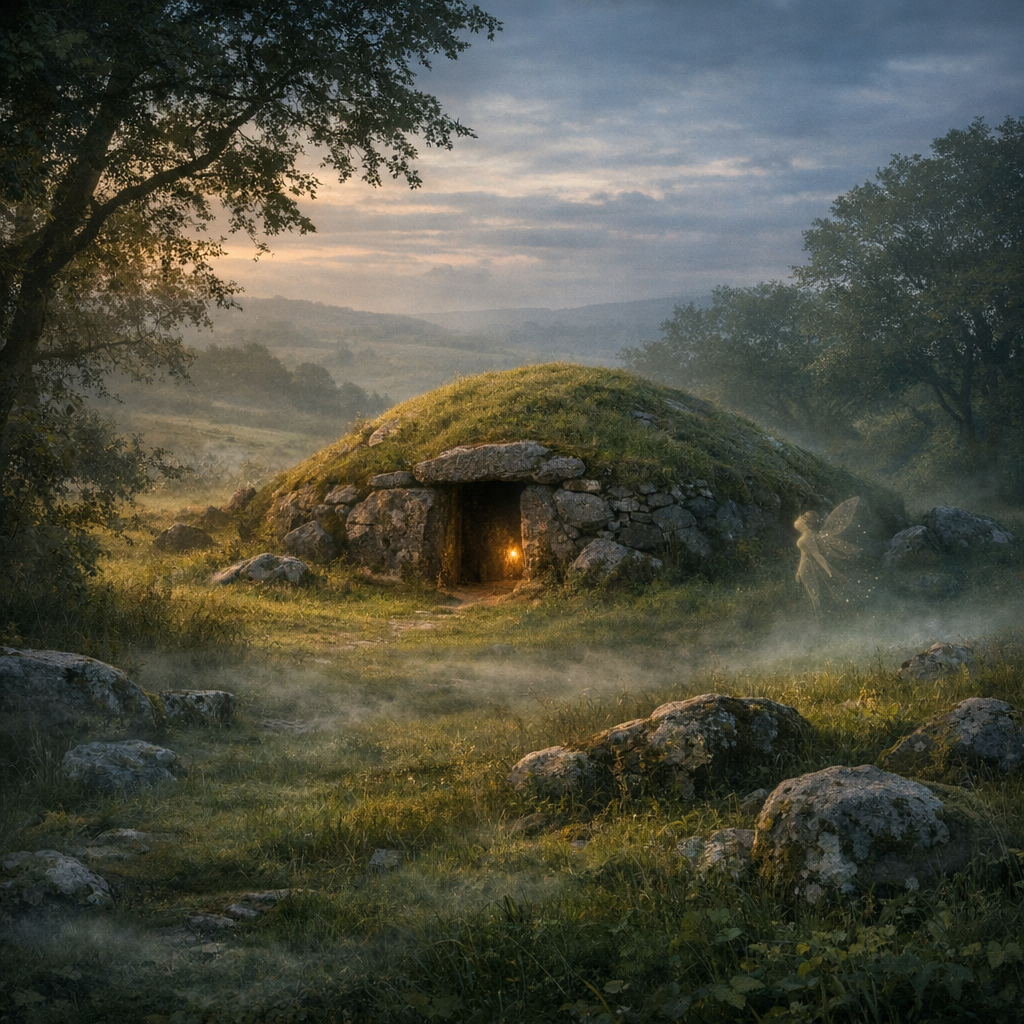
Old Irish🧚♀️ folklore
Ireland is an island off the coast of Great Britain, Because it rains a lot, Ireland is famous for its lush greenery thanks to frequent rain. It’s so green that it’s nicknamed the Emerald Isle, after the sparkling deep green gemstone. People often see rainbows stretch over its rolling hills and valleys, adding to its charm. Long ago, many people in Ireland believed in fairies, saying they danced in gardens on summer nights. If dust swirled down the road, they’d remark, “The fairies are riding their horses today.” Even the sound of leaves rustling could be imagined as tiny fairy feet running through the woods. Fairy tales are a treasured part of Irish folklore, which includes stories passed down through generations about the “wee folk” — magical beings like mischievous leprechauns and beautiful fairies said to live in glittering kingdoms beneath the hills. Fairies are also known as the good folk or the gentle folk.
Irish storytelling is woven with mist, music, and memory. Long before written history, families gathered around hearth fires to share tales of unseen realms—stories meant to explain the mysteries of nature, to teach wisdom, and to remind listeners that the world is more enchanted than it appears. Among these tales, the fairies—known in Irish as the Aos Sí—held a special place. They were not tiny winged creatures of modern cartoons, but ancient beings connected to the land, the seasons, and the spiritual imagination of the Irish people.
As Christians, we can appreciate these stories not as spiritual authorities, but as glimpses into how earlier generations tried to understand creation, beauty, and the unseen. They remind us that humanity has always sensed there is more to life than what our eyes can see.
“For with You is the fountain of life; in Your light we see light.” — Psalm 36:9

The Irish oral☘️ tradition
Many Irish fairy tales were first told by the Celts (KELTZ), who came from mainland Europe and settled in Ireland over two thousand years ago. Although they were fierce warriors, the Celts loved storytelling, poetry, music, and dance. They spoke an ancient language called Irish, or Gaelic (GAY-lik). Today, Irish storytellers are known as seanachie (SHAN-uh-kee), meaning “tellers of ancient tales.”
Since the early Celts didn’t have books and did not write, they shared stories by word of mouth, a practice called the oral tradition. This tradition has been a cornerstone of Irish culture for thousands of years, earning the Irish a worldwide reputation for storytelling. Around sixteen hundred years ago, Christian monks and priests arrived in Ireland, bringing Christianity and recording many old Celtic myths and stories. These writings later became valuable resources for studying ancient Irish folklore.
What are🧚♀️ fairies?
When the Celts converted to Christianity, some stories say their old gods and goddesses, known as the Tuatha Dé Danann (TOO-ha JAY DAN-uhn), transformed into fairies and went into hiding. Others believe fairies were fallen angels who came to live on earth, settling wherever they landed—whether in water or on land. In Irish folklore, fairies are divided into two types, and one of these is the solitary fairy. “Solitary” means living or being alone, and since leprechauns always live by themselves, they’re solitary fairies.
Some fairies live together in groups called trooping fairies. The term “trooping” means traveling together in groups. These fairies follow special trails known as fairy paths when they move around, and sometimes they gallop along roads and across fields on horseback. Most often, trooping fairies make their homes in kingdoms deep under hills, in caves, or in rivers, and some even dwell beneath the seas.
Fairies generally don’t trust humans and usually stay invisible. Occasionally, though, people and fairies cross paths. When they do, the wee folk might be friendly—or they might cause all sorts of mischief, like tripping people or making them sneeze.
Fairies are believed to live forever. The Irish word for fairies is sí (SHEE), sometimes spelled shee or, in old Irish, sidhe.
🧚 Where Did Irish Fairy Stories Come From?
🌄 1. Ancient Celtic Beliefs
The earliest Irish fairy traditions grew from pre-Christian Celtic mythology. The Aos Sí were thought to be a supernatural race connected to nature—dwelling in hills, mounds, forests, and lakes.
🛡 2. The Tuatha Dé Danann
Many fairy stories trace back to the legendary Tuatha Dé Danann, a powerful people described in early Irish literature. After being defeated, they were said to retreat into the earth, becoming the “fair folk.”
🌬 3. Nature as Sacred and Alive
Ireland’s landscape—its mists, bogs, winds, and ancient stones—shaped a worldview where the natural world felt alive with mystery. Fairy stories helped explain sudden storms, strange lights, or unexplainable happenings.
📖 4. Christian Influence Over Time
As Christianity spread, fairy stories softened. They became moral tales, cautionary stories, or simple entertainment. Some storytellers even used them to teach virtues like humility, kindness, and respect.
By Bell
