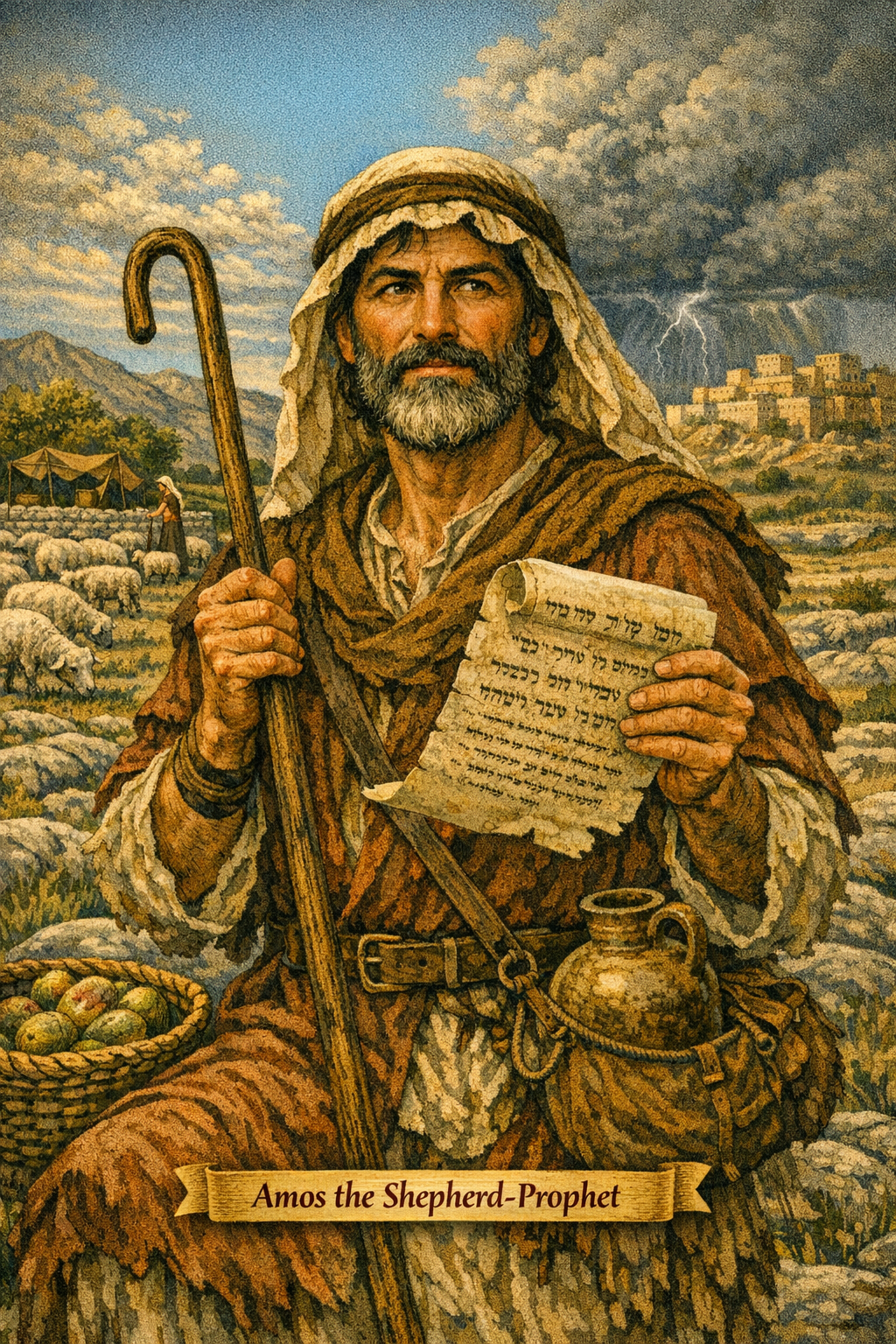
🐑 Amos the Shepherd: Called from the Flock to Speak for God
Amos was not born into a prophetic lineage or priestly tradition. He was a humble shepherd from Tekoa, a small town in Judah, and a gatherer of sycamore fruit. Yet God called him to deliver a powerful message to the northern kingdom of Israel.
“I was no prophet, neither was I a prophet’s son; but I was a herdman, and a gatherer of sycamore fruit: and the Lord took me as I followed the flock, and the Lord said unto me, Go, prophesy unto my people Israel.” — Amos 7:14–15
Amos’ background as a shepherd gave him a unique perspective. He understood justice, care, and the weight of responsibility. His prophetic words were bold and uncompromising, calling out the corruption, idolatry, and injustice of Israel’s leaders. Though he came from humble beginnings, his message thundered with divine authority.
Amos reminds us that God often calls ordinary people from quiet places to speak truth. His life echoes the pattern seen in other shepherds—God prepares in the pasture before sending to the pulpit.
“Surely the Lord God will do nothing, but he revealeth his secret unto his servants the prophets.” — Amos 3:7
🐑 God Uses the Humble to Speak Truth
In every generation, God has chosen unlikely voices to deliver His message. Shepherds, farmers, fishermen, and women in quiet places—those overlooked by the world—have often been the ones entrusted with divine truth. Amos is a striking example.
Amos was not a prophet by lineage or training. He was a shepherd from Tekoa and a gatherer of sycamore fruit. Yet God called him to speak boldly to the northern kingdom of Israel:
“I was no prophet, neither was I a prophet’s son; but I was a herdman, and a gatherer of sycamore fruit: and the Lord took me as I followed the flock, and the Lord said unto me, Go, prophesy unto my people Israel.” — Amos 7:14–15
Amos’ message was clear and uncompromising. He spoke against injustice, idolatry, and spiritual complacency. His words thundered with authority—not because of his background, but because of the One who sent him.
This pattern is seen throughout Scripture:
- David, a shepherd boy, became a king and psalmist.
- Moses, tending sheep in Midian, was called to lead a nation.
- Mary, a young woman from Nazareth, was chosen to bear the Messiah.
- Peter, a fisherman, became a pillar of the early church.
God delights in using the humble to confound the proud. He equips those who are willing, not necessarily those who are qualified by worldly standards.
“Surely the Lord God will do nothing, but he revealeth his secret unto his servants the prophets.” — Amos 3:7
Amos reminds us that obedience matters more than pedigree. When God calls, He also empowers. The shepherd became a prophet because he followed the voice of the Lord.
🌿 Personal Reflection
- Where might God be calling you to speak truth?
- Are you willing to be used, even if you feel unqualified?
- How can you cultivate humility and readiness in your daily walk?
