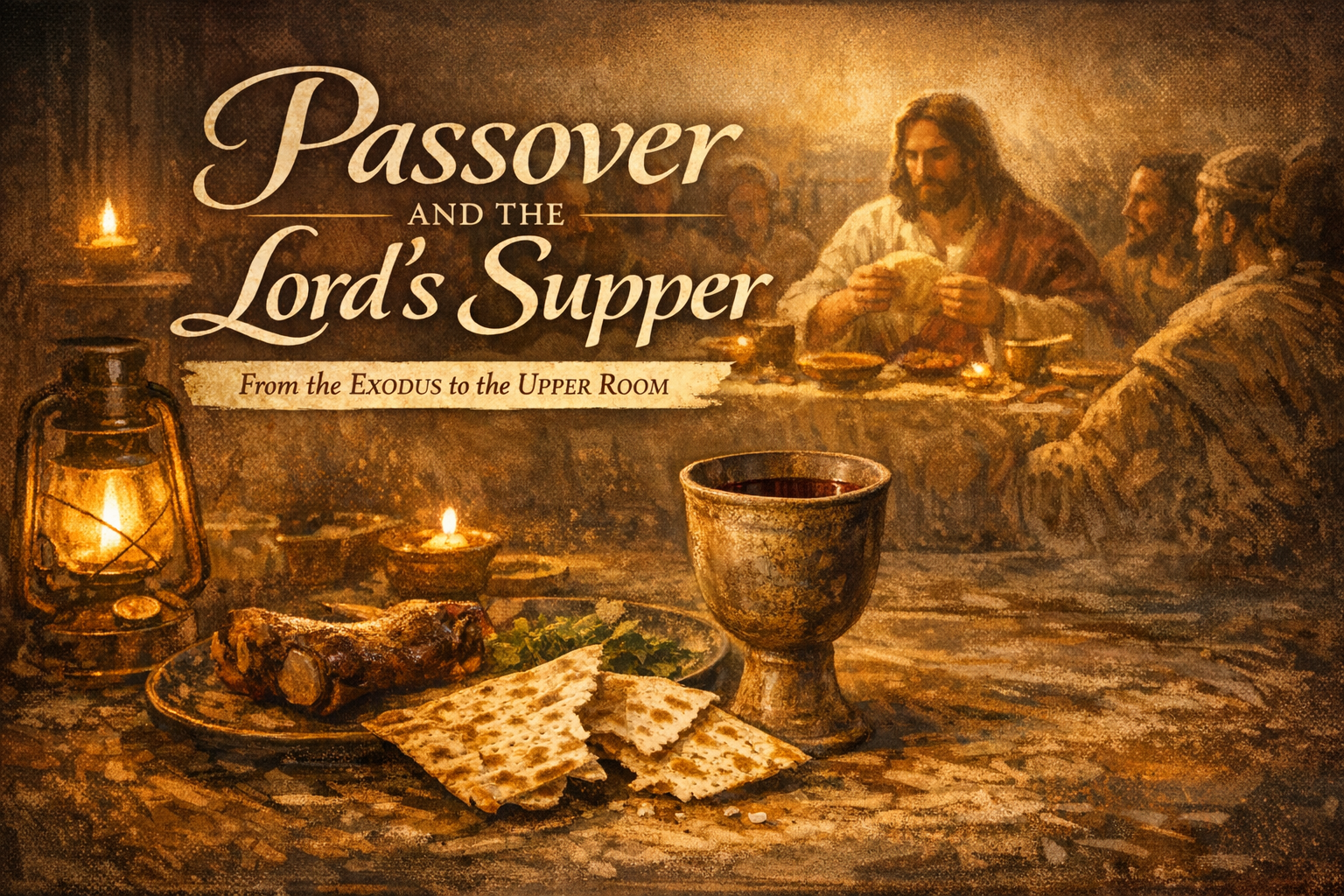
✨ Passover and the Lord’s Supper
There is a rhythm to God’s redemption story—a rhythm He began in Egypt and fulfilled in the upper room. Passover was never meant to be rushed. It was a night of remembering, retelling, tasting, and slowing down long enough to see the mighty hand of God stretched out in salvation. When Jesus gathered with His disciples for His final Passover, He stepped into that same rhythm. He broke the bread with intention. He shared the meal with longing. He lifted the cup with meaning. Nothing was hurried. Nothing was small. Nothing was casual.
Yet today, many Christians approach communion with a tiny piece of bread and a quick sip of juice, often swallowed in silence and haste. But this small moment was once part of a much larger story—a story of deliverance, covenant, sacrifice, and redemption. When we rush through communion, we risk missing the weight of what Jesus was doing that night. We forget that He was fulfilling centuries of promise and placing Himself at the center of God’s great rescue.
This teaching is an invitation to slow down. To step back into the Passover pattern Jesus honored. To see the Lord’s Supper not as a brief ritual, but as a sacred remembrance woven into the fabric of God’s redeeming love. Passover teaches us how to remember; Jesus teaches us whom we remember. And when we linger at His table, the bread and the cup speak more clearly than ever of the Lamb who was given for us.
1. Passover: God’s Appointed Memorial of Redemption
Key Scriptures: Exodus 12; Exodus 13:3–10
- God establishes Passover as a yearly remembrance of His deliverance.
- The lamb, the blood, the unleavened bread, and the bitter herbs all carry symbolic meaning.
- Passover teaches Israel to remember salvation with urgency, gratitude, and obedience.
- Exodus 12:11 sets the tone: “It is the LORD’s Passover.”
2. The Passover Pattern: Bread → Meal → Cup
Key Scriptures: Exodus 12; Luke 22:15–20
- Bread (matzah) is broken early in the evening.
- The meal is eaten in the middle.
- The cup—especially the Cup of Redemption—is taken after the meal.
This is the exact pattern Jesus follows.
3. Jesus Celebrates Passover With His Disciples
Key Scriptures: Luke 22:15–16
- Jesus expresses deep desire to eat this Passover before His suffering.
- He declares that Passover will find its fulfillment in the Kingdom of God.
- He positions Himself as the center of the Passover story.
4. The Bread: “This Is My Body”
Key Scripture: Luke 22:19
- Jesus breaks the bread before the meal.
- He gives new meaning to the broken matzah: His body given for us.
- He commands: “Do this in remembrance of Me.”
5. The Meal: The Passover Supper Itself
Key Scripture: Luke 22:20 (“after supper”)
- Luke intentionally notes the meal between the bread and the cup.
- This preserves the Passover structure and highlights the significance of the cup that follows.
6. The Cup: “The New Covenant in My Blood”
Key Scripture: Luke 22:20
- Jesus takes the cup after supper, aligning with the Cup of Redemption.
- He declares it the New Covenant in His blood.
- This fulfills God’s promise in Exodus 6:6:
“I will redeem you with an outstretched arm.”
7. Old Testament Passover vs. New Testament Fulfillment
| Passover (OT) | Lord’s Supper (NT) |
|---|---|
| Lamb without blemish | Jesus, the spotless Lamb of God |
| Blood on the doorposts | Blood of Christ on the cross |
| Deliverance from Egypt | Deliverance from sin and death |
| Covenant with Israel | New Covenant for all believers |
| Yearly remembrance | Continual remembrance |
| Foreshadowing | Fulfillment |
8. Slowing Down: Recovering the Heart of Communion
Key Scriptures: Luke 22:15, 19–20; 1 Corinthians 11:23–26
- In many churches, communion has become a tiny piece of bread and a quick sip of juice.
- The moment is often hurried, quiet, and compressed into a few seconds.
- But neither Jesus nor the Passover meal were rushed.
- Jesus lingered. He taught. He gave thanks. He broke. He shared. He explained.
- Traditional Passover is slow, thoughtful, and filled with meaning.
- Communion is only a small part of the full Passover picture—yet we often treat it as if it were disposable.
Teaching Focus:
Communion deserves time, attention, and reflection.
We are remembering the Lamb who gave His body and shed His blood.
We are proclaiming His death until He comes.
We are participating in a covenant meal that cost heaven everything.
Exhortation:
If Jesus did not hurry through the bread, the meal, or the cup, why do we?
Communion is not meant to be swallowed quickly—it is meant to be entered, considered, and cherished.
9. Why Christians Remember the Lord’s Supper
Key Scriptures: 1 Corinthians 5:7–8; 1 Corinthians 11:23–26
- We proclaim the Lord’s death until He comes.
- We remember the Lamb who was slain.
- We celebrate redemption, covenant, and hope.
- We look forward to the Marriage Supper of the Lamb.
10. Application for Believers Today
- Approach the Lord’s Table with gratitude and reverence.
- Slow down and remember what you are doing.
- Let the bread and cup speak of sacrifice, covenant, and love.
- Celebrate the unity of the body of Christ.
- Live as people who have been delivered.
- Look forward to the Kingdom feast Jesus promised.
11. Closing Reflection
Passover tells the story of a God who rescues His people with power and compassion.
The Lord’s Supper reveals that this same God came in the flesh, became the Lamb, and redeemed us with His own blood.
“Christ our Passover is sacrificed for us.” — 1 Corinthians 5:7

Leave a Reply