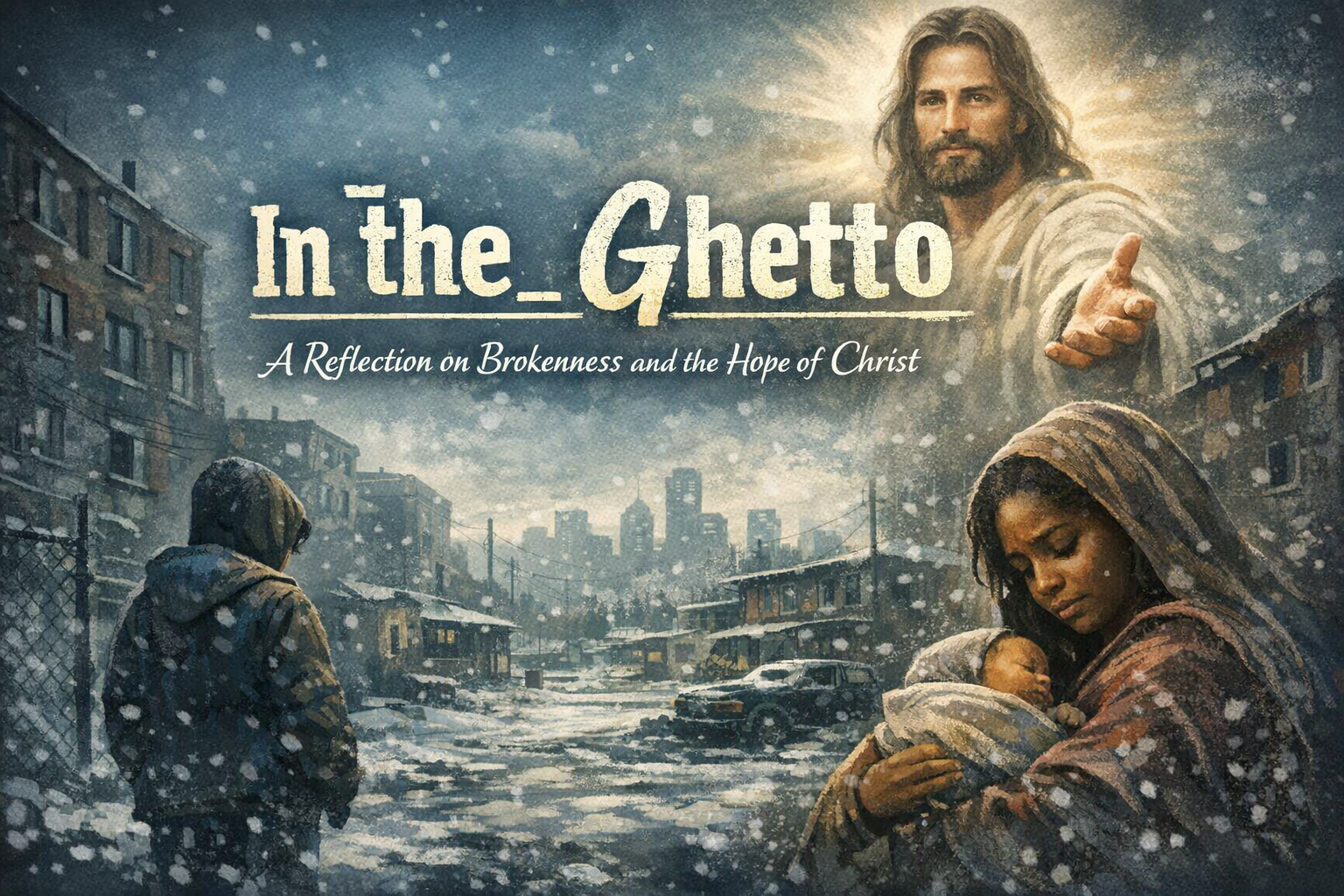
🌨️ In the Ghetto
A Reflection on Cycles of Brokenness, Compassion, and the Need to Be Made Right with God
Some songs hold up a mirror to the world—not to entertain us, but to wake us up. In the Ghetto is one of those songs. It tells the story of a child born into poverty, raised in hardship, shaped by hunger, neglect, and the cold indifference of those who look away. His life becomes a cycle of desperation, violence, and tragedy. And as he dies, another child is born into the same brokenness.
It is a haunting picture of what happens when sin, suffering, and hopelessness go unchallenged.
The Bible speaks directly to this kind of world—one where people are hurting, families are struggling, and cycles of sin repeat themselves unless something greater breaks in.
“The poor is hated even of his own neighbour: but the rich hath many friends.”
— Proverbs 14:20 (KJV)
“But whoso hath this world’s good, and seeth his brother have need, and shutteth up his bowels of compassion from him, how dwelleth the love of God in him?”
— 1 John 3:17 (KJV)
The song asks a piercing question:
“Do we simply turn our heads and look the other way?”
Scripture answers with a resounding no. God calls His people to see, to care, to act, and to love. But the deeper truth is this: poverty alone is not the root problem—sin is. And unless the heart is changed, the cycle continues.
The young man in the song grows up angry, hungry, and hardened. His choices lead him down a dark path, but those choices were shaped by a world that offered him little hope. The Bible never excuses sin, but it does explain how sin multiplies when people live without God, without guidance, and without love.
“There is a way which seemeth right unto a man, but the end thereof are the ways of death.”
— Proverbs 14:12 (KJV)
The tragedy of the song is not just the young man’s death—it’s the repeating cycle. Another baby is born. Another mother cries. Nothing changes.
Unless God steps in.
Unless hearts are made new.
Unless someone hears the warning and turns to Christ.
The gospel is the only power strong enough to break generational patterns of anger, violence, despair, and hopelessness. Jesus came to bind up the brokenhearted, to set captives free, and to give beauty for ashes. He alone can rewrite a story that seems destined to repeat.
“Except a man be born again, he cannot see the kingdom of God.”
— John 3:3 (KJV)
This song reminds us that every soul—rich or poor, strong or weak—must get right with God before meeting Him. Poverty may shape a life, but sin destroys it. And only Christ can save it.
It also reminds us that we are called to be part of God’s rescue mission. To see the hurting. To care for the vulnerable. To refuse to look away. To offer hope where the world offers none.
Because when Christ enters a life, the cycle breaks.
When Christ enters a home, the story changes.
When Christ enters a community, light pushes back the darkness.
In the ghetto—or anywhere—Jesus is still the answer.
