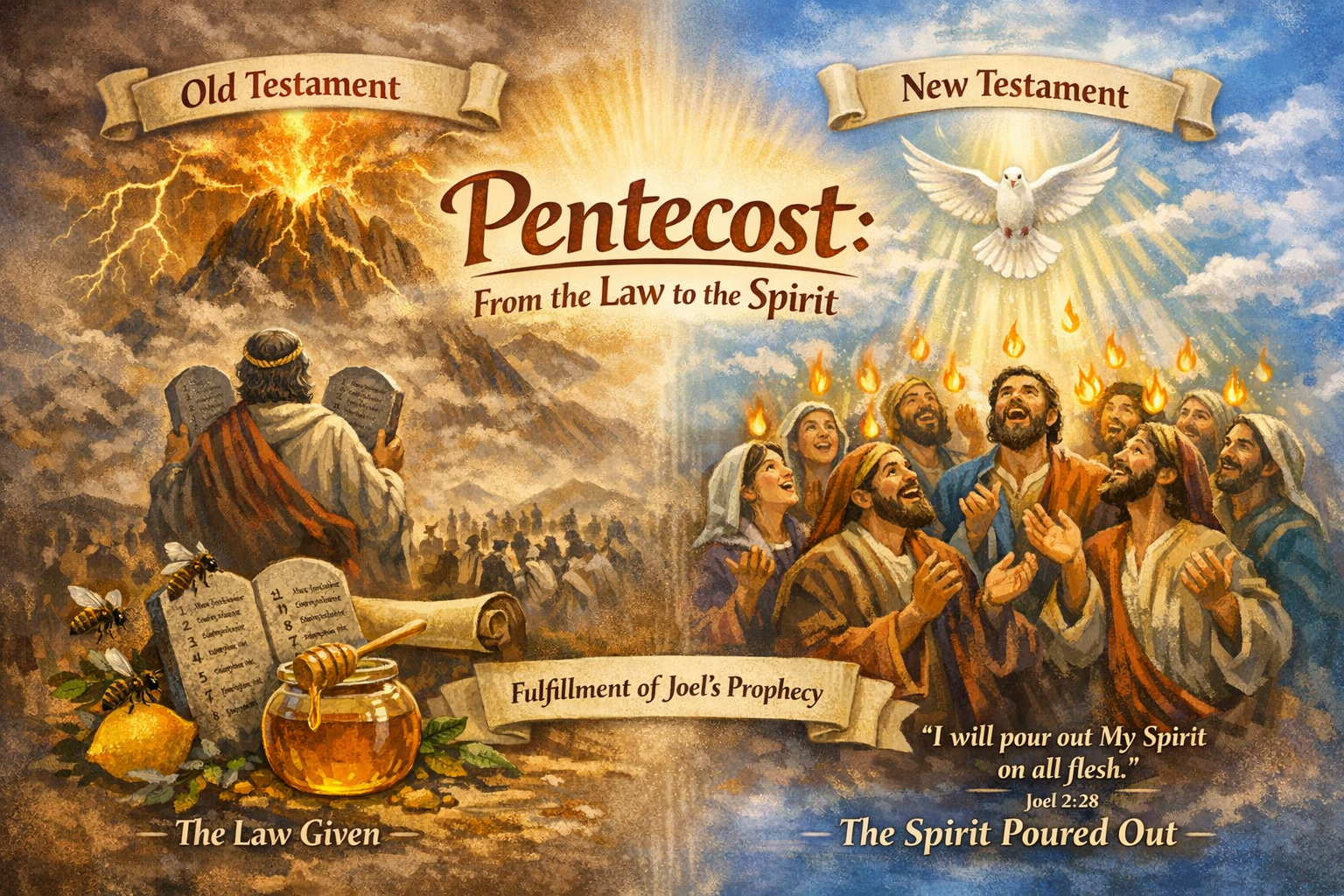
A Single Story of God Giving Himself to His People
🌿 1. Old Testament Pentecost (Shavuot): God Gives His Word
Pentecost (Shavuot) originally celebrated:
- The wheat harvest
- The giving of the Torah at Mount Sinai
At Sinai:
- God descended in fire
- His voice thundered
- The Law was written on tablets of stone
- About 3,000 people died because of sin (Exodus 32)
This feast became a yearly reminder:
- “God speaks.”
- “God teaches His people.”
- “God’s Word is sweet, life-giving, and holy.”
🍯 Why Jews Eat Honey on Pentecost
In Jewish tradition, children were taught the Torah by tasting honey while reciting Scripture.
It symbolized:
“Your words are sweeter than honey.” — Psalm 119:103
So on Shavuot, eating honey and reviewing the Ten Commandments is a way of saying:
- “We receive God’s Word with joy.”
- “His commands are sweet, not burdensome.”
This tradition becomes incredibly meaningful when we look at the New Testament fulfillment.
🔥 2. New Testament Pentecost: God Gives His Spirit
In Acts 2, the same feast arrives — but now the fulfillment breaks open.
At Pentecost:
- God again descends in fire
- Not on a mountain, but on people
- Not writing on stone, but writing on hearts
- Not killing 3,000, but saving 3,000 (Acts 2:41)
This is the moment Joel prophesied:
“I will pour out My Spirit on all flesh.” — Joel 2:28
The Law given at Sinai becomes the Spirit given in Jerusalem.
🕊️ What changes?
- The Word moves from external commands to internal transformation
- God’s presence moves from a mountain to believers themselves
- The covenant shifts from stone tablets to living hearts
📜 3. The Sweetness of Honey Finds Its Fulfillment
Here’s the beautiful connection:
- In the Old Testament, honey symbolized the sweetness of God’s written Word.
- In the New Testament, the Spirit makes that Word alive, understood, and obeyed from the heart.
The sweetness becomes internal, not just symbolic.
Pentecost becomes the moment when:
- The Word and the Spirit meet
- The Law and the Gospel kiss
- The covenant moves from instruction to indwelling
🔗 4. The Two Pentecosts Side-by-Side
| Theme | Old Testament Pentecost (Sinai) | New Testament Pentecost (Acts 2) |
|---|---|---|
| Gift | Law (Torah) | Holy Spirit |
| Location | Mountain | Upper Room / Jerusalem |
| Medium | Stone tablets | Human hearts |
| Sign | Fire on the mountain | Tongues of fire on believers |
| Result | 3,000 die | 3,000 saved |
| Purpose | Form a nation | Birth the Church |
| Symbol | Honey (sweet Word) | Spirit (living Word) |
❤️ 5. In One Sentence
Old Testament Pentecost gave God’s Word to His people; New Testament Pentecost gave God’s Spirit to His people — fulfilling Joel’s prophecy and completing the sweetness symbolized by honey.

Leave a Reply