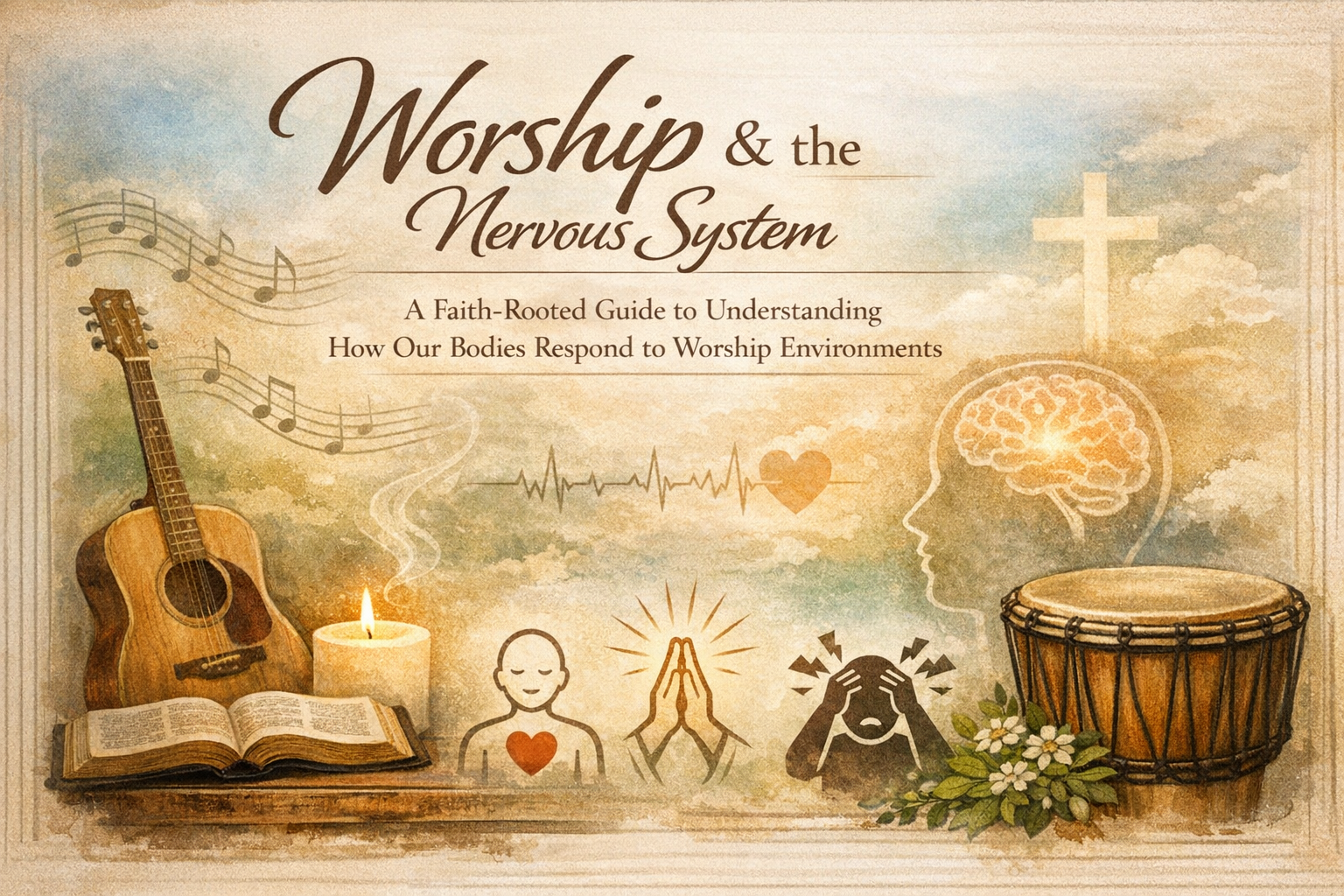
A gentle, faith-rooted guide to understanding how our bodies respond to worship environments
✨ 1. Introduction
- God created us as whole beings — body, mind, and spirit.
- Worship is not just spiritual; it is embodied.
- Our nervous system responds to sound, rhythm, volume, and atmosphere.
- Understanding this helps us worship with wisdom, not shame.
Key idea:
Your body is not your enemy in worship. It is a God-designed instrument responding to the environment around you.
🧠 2. What Is the Nervous System? (Simple, Non‑Medical Explanation)
- The nervous system is the part of us that reacts to sound, movement, and emotion.
- It has two main modes:
- Calm & Connected (rest, peace, worship)
- Fight, Flight, or Freeze (stress, overwhelm, sensory overload)
- Loud or fast rhythms can activate the “alert” mode.
- Gentle rhythms help us stay grounded in peace.
Key idea:
Your body reacts before your mind has time to think — and that’s normal.
🎶 3. How Worship Music Affects the Body
- Rhythm influences breathing and heart rate.
- Volume affects the sense of safety.
- Repetition can soothe or overwhelm.
- Fast tempos energize; slow tempos calm.
- Certain drum patterns can activate fight‑or‑flight.
Key idea:
Worship environments shape our physical experience of God’s presence.
🥁 4. Why Some Rhythms Feel Peaceful and Others Feel Overwhelming
- Peaceful rhythms feel steady, spacious, and grounding.
- Overwhelming rhythms feel driving, sharp, or repetitive.
- The body may interpret certain beats as urgency or danger.
- This is not spiritual immaturity — it’s sensory response.
Key idea:
Not all rhythms are spiritually neutral, because not all rhythms affect the body the same way.
🕊️ 5. Biblical Foundations for Embodied Worship
- “Love the Lord… with all your strength.” (Deut. 6:5)
- David’s harp soothing Saul (1 Sam. 16:23)
- Paul and Silas singing in prison (Acts 16:25–26)
- “Be still and know…” (Ps. 46:10)
Key idea:
God meets us in our bodies, not apart from them.
🌱 6. Why Some Believers Feel Overwhelmed in Modern Worship
- Worship styles have changed (louder, faster, more drum‑driven).
- Many adults carry accumulated stress.
- Sensory sensitivity increases with age.
- Some rhythms activate the nervous system more strongly.
- People may feel shame for reacting — but shouldn’t.
Key idea:
You’re not “too sensitive.” You’re responding to real sensory input.
🌤️ 7. How to Stay Grounded During Worship
- Slow breathing
- Grounding through touch
- Choosing a calmer seat
- Using Scripture as an anchor
- Stepping out when needed
- Setting your own internal rhythm
Key idea:
Grounding is not avoidance — it’s stewardship.
💛 8. How Churches Can Create Peaceful Worship Environments
- Offer dynamic range (soft and loud moments)
- Use drums thoughtfully
- Provide quiet spaces
- Mix sound with sensitivity
- Honor different nervous systems
Key idea:
Worship should be accessible to every body, not just every soul.
✨ 9. A Closing Reflection
- God delights in your worship, not your tolerance for noise.
- Your body is a temple, not a barrier.
- Peace is a fruit of the Spirit — not a luxury.
- You can worship with your whole self, safely and joyfully.
