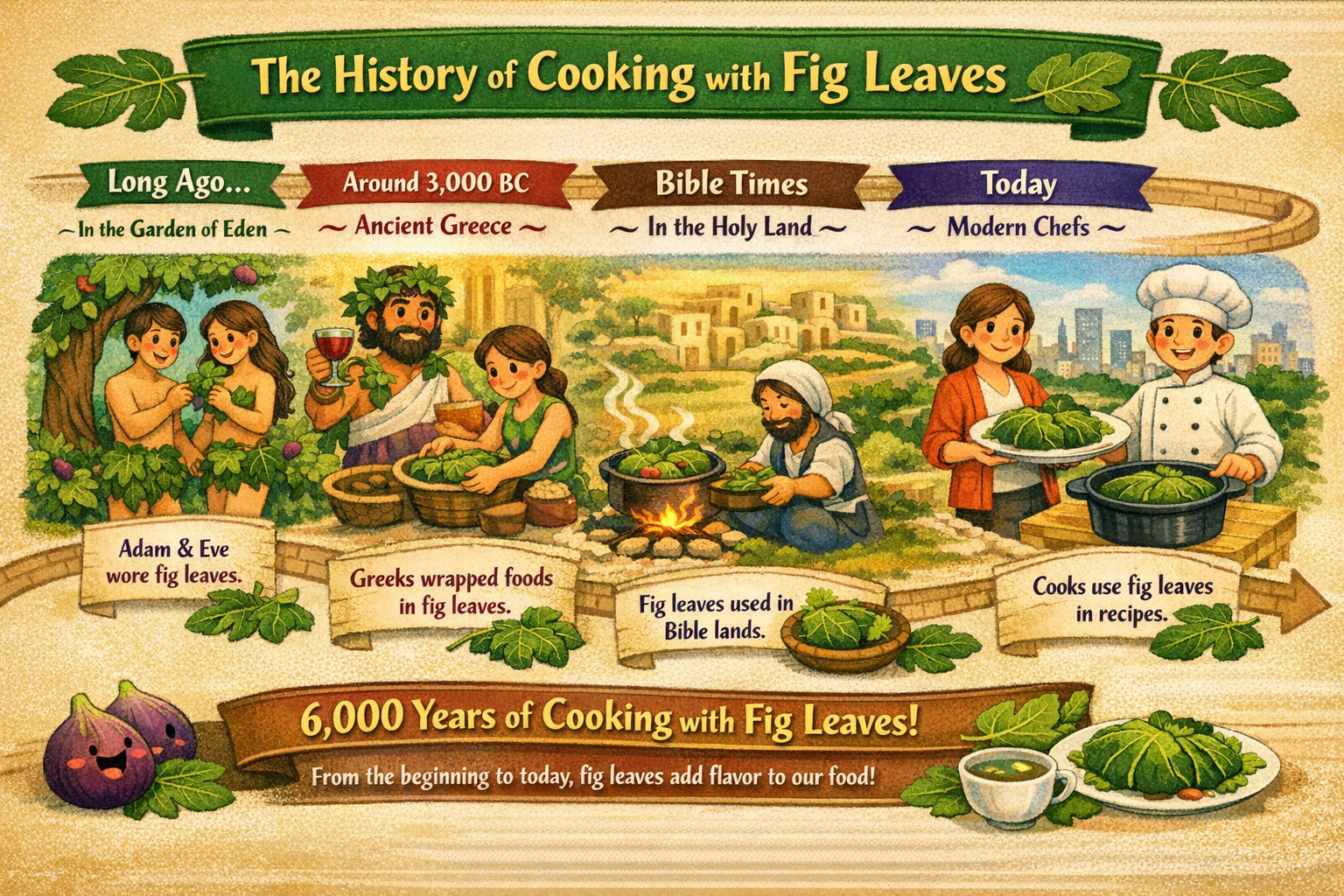
Cooking with fig leaves began thousands of years ago in the Mediterranean region—especially in ancient Greece—where people used them to wrap and flavor foods.
Stories from early Greek culture mention Dionysus, the god of agriculture and wine, who shared the gift of figs with humankind.
🌿 Historical Origins
- Ancient Greece (around 3,000 BC):
People in Greece discovered that fig leaves could be used to wrap meats, grains, and fish for steaming or baking—much like grape leaves in dolmas.- Dionysus was called “friend of the fig” and honored with garlands of fig leaves during festivals.
- The practice likely began as a way to infuse food with the leaf’s gentle, coconut‑vanilla aroma.
- Bible Lands (Middle East):
Fig trees grew abundantly in the lands of Scripture. Families used fig leaves for cooking and healing, and the fig tree was often seen as a symbol of peace and fruitfulness.- Cooking with fig leaves spread through the Mediterranean as people discovered their flavor and usefulness.
- Modern Revival:
Today, chefs in Greece, Turkey, Israel, and even the United States use fig leaves to flavor rice, fish, and desserts. The leaves are steeped in cream for ice cream or used to line baking dishes for aroma.
🍃 Why They Were Cooked
- Flavor: Adds a tropical, coconut‑like scent.
- Function: Serves as a natural wrapper for steaming or baking.
- Safety: Cooking removes the sticky sap that can irritate skin.
🌍 Cultural Continuity
From ancient Greek feasts and biblical meals to modern kitchens, fig leaves have remained a symbol of fruitfulness, knowledge, and flavor—a gentle reminder of how creation provides both nourishment and beauty.
