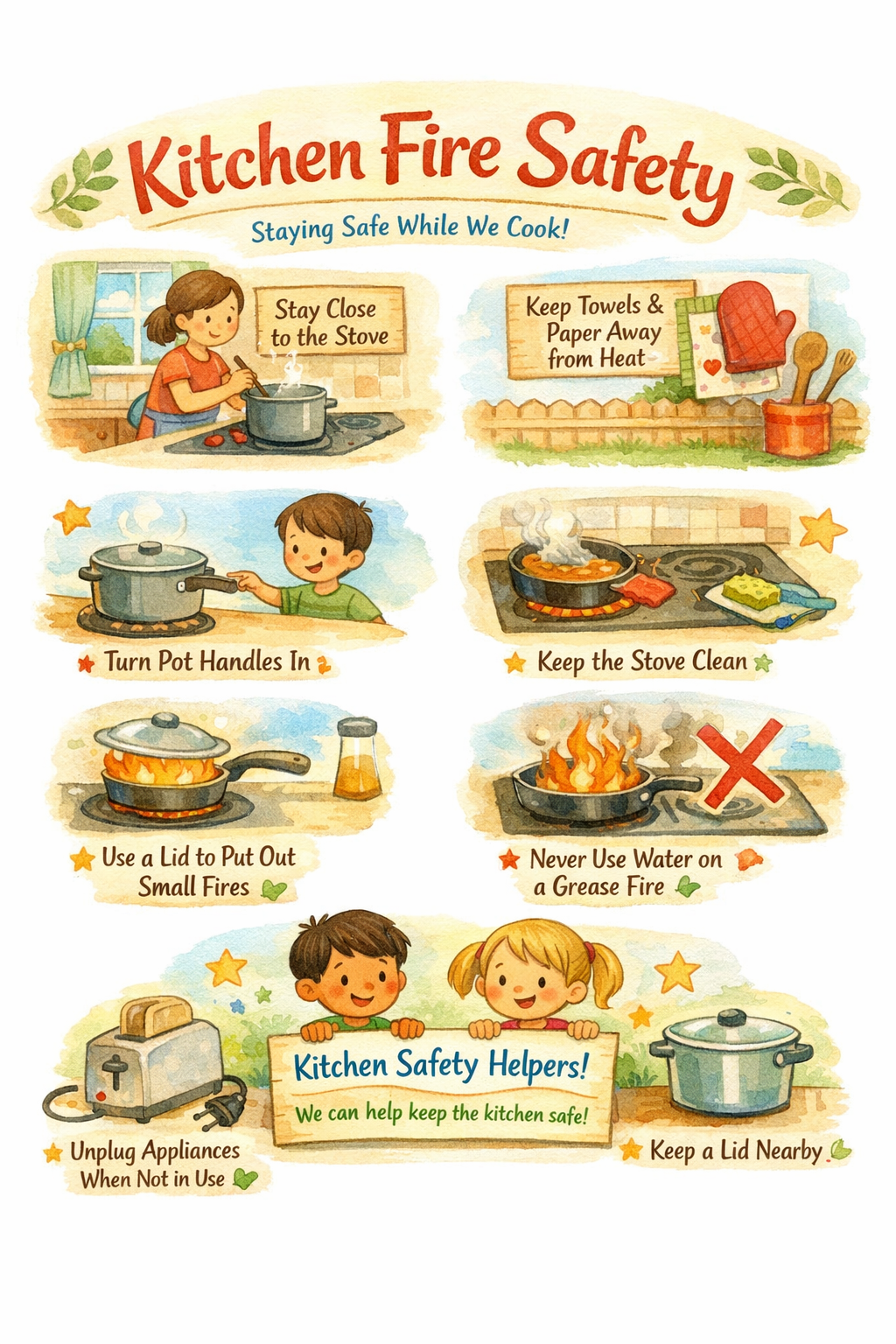
The kitchen is where families gather, learn, and share life — and because so much warmth and activity happens here, it’s also the place where most home fires begin. Practicing simple, steady habits helps keep this space peaceful and safe for everyone.
Why it matters
Kitchen safety isn’t about fear. It’s about protecting the place where meals are shared, conversations unfold, and children learn by watching us. When we model calm, careful habits, we teach our families that wisdom and joy can live side by side.
Practical Ways to Prevent Kitchen Fires
- Stay close when cooking.
Most kitchen fires start when food is left unattended. Even stepping away “for a moment” can be enough time for something to overheat. - Keep flammable items away from heat.
Dish towels, paper towels, oven mitts, and even wooden utensils can catch fire quickly if left near a burner. - Use the back burners when possible.
This keeps hot pots farther from curious hands and reduces the chance of accidental spills. - Turn pot handles inward.
A simple habit that prevents bumps, spills, and burns. - Clean stovetops regularly.
Built‑up grease can ignite easily. A quick wipe after cooking goes a long way. - Keep a lid nearby when cooking.
If a small pan fire starts, sliding a lid over the flames can smother it safely. - Never use water on a grease fire.
Water spreads the flames. Instead, turn off the heat and cover the pan if it’s safe to do so. Salt is also useful for throwing onto a fire. The salt will help smoother the fire. - Be mindful with appliances.
Unplug toasters, air fryers, and slow cookers when not in use, and keep cords away from hot surfaces.
Family Practice
Invite your children to help create a “Kitchen Safety Helper” list. Let them draw pictures of safe habits — turning pot handles, wiping spills, or keeping towels away from the stove. When children feel included, they learn without fear.
