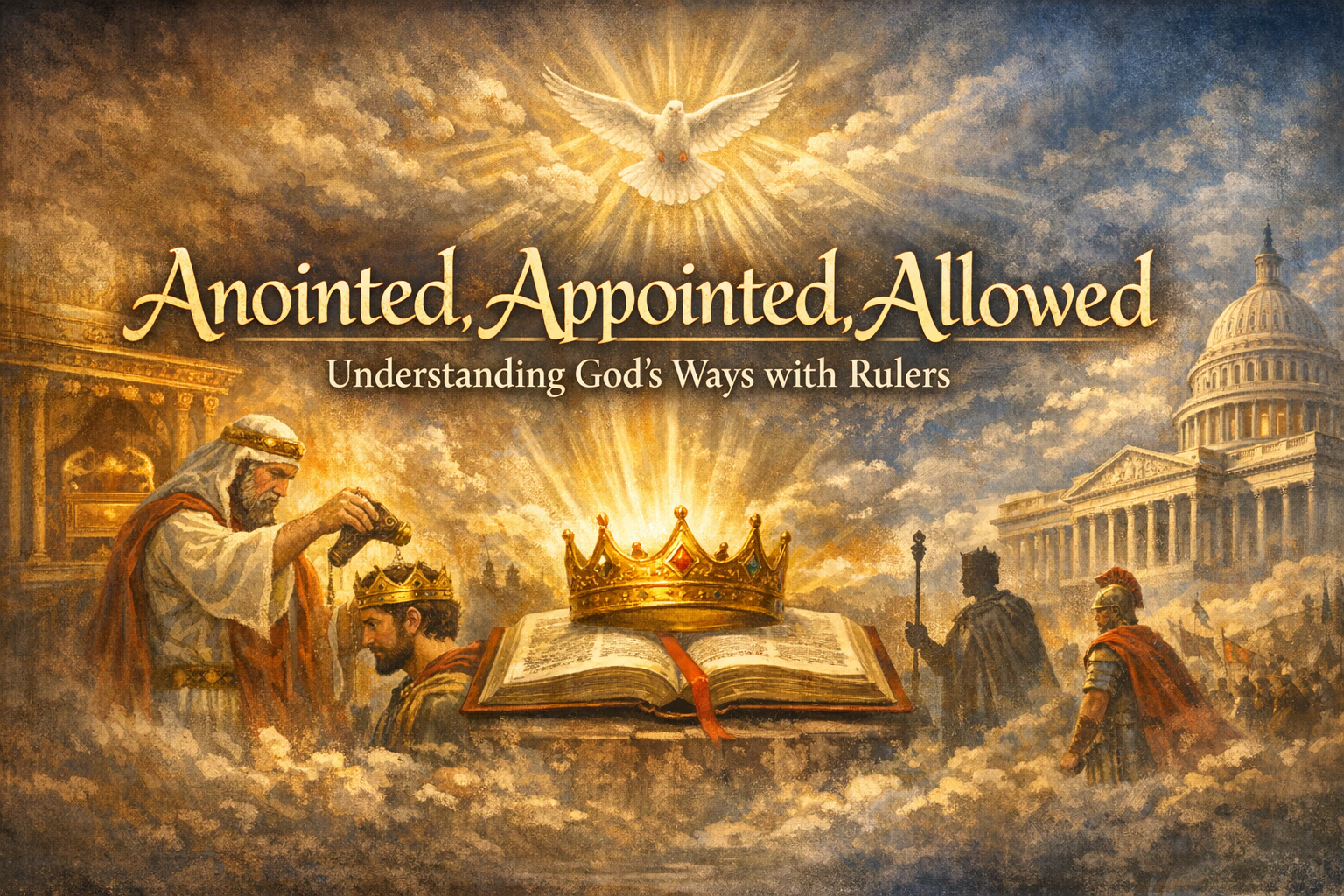
Throughout Scripture, God’s relationship with earthly leadership is described with remarkable nuance. The Bible uses different words—anointed, appointed, and allowed—to describe how God interacts with rulers, and each carries its own meaning, purpose, and weight. These terms are sometimes blended together in modern conversations, but in the biblical story they are distinct, carefully used, and deeply rooted in God’s covenant work with His people.
Understanding these differences helps us read the Bible faithfully and speak wisely about leadership today. The Old Testament uses the word mashiach (“anointed”) for kings, priests, and prophets who were set apart through a sacred ritual for a covenant role—ultimately pointing to Jesus, the true and final Anointed One. Scripture also shows that God appoints certain rulers to carry out His purposes in history, whether they know Him or not. And at times, God simply allows leaders to rise as part of His sovereignty, reflecting the spiritual condition of a nation or the consequences of its choices.
The following is meant to help believers think with clarity, humility, and with reverence as we consider how God works through leaders—both in the pages of Scripture and in the world around us.
1. “Anointed” — mashiach (Old Testament) / christos (New Testament)
Meaning:
Someone set apart by God through anointing with oil for a specific covenant role.
Scripture References
- Kings anointed:
- Saul — 1 Samuel 10:1
- David — 1 Samuel 16:12–13
- Solomon — 1 Kings 1:39
- Priests anointed:
- Aaron — Exodus 28:41; Exodus 29:7
- His sons — Leviticus 8:12
- Prophets anointed:
- Elisha — 1 Kings 19:16
- Cyrus called “His anointed”:
- Isaiah 45:1
- This one was unusual
- Isaiah 45:1
- Jesus as the Anointed One (Messiah/Christ):
- Luke 4:18
- Acts 10:38
- John 1:41
- Matthew 16:16
Key idea:
Anointed = consecrated for a covenant office.
This category does not apply to modern political leaders.
2. “Appointed” — God raises up rulers for His purposes
Meaning:
God places or establishes leaders to accomplish His purposes — blessing, discipline, protection, or judgment.
Scripture References
- God sets up and removes kings:
- Daniel 2:21 — “He removes kings and sets up kings.”
- Daniel 4:17 — “The Most High rules the kingdom of men and gives it to whom He will.”
- God appoints rulers for His purposes:
- Jeremiah 27:5–7 — God gives nations into the hands of Nebuchadnezzar.
- Isaiah 45:1–6 — God appoints Cyrus for Israel’s sake.
- Government authority is established by God:
- Romans 13:1–2 — “There is no authority except from God.”
Key idea:
Appointed = God uses a leader for a purpose, whether they know Him or not.
3. “Allowed” — God permits rulers as part of His sovereignty
Meaning:
God allows leaders to rise because He honors human choices, national conditions, and the moral state of a people.
Scripture References
- God gives nations leaders according to their desires:
- Hosea 13:11 — “I gave you a king in my anger, and took him away in my wrath.”
- 1 Samuel 8:7–9 — God allows Israel to choose a king, even though it is not His ideal.
- God allows wicked rulers as judgment or discipline:
- Habakkuk 1:6 — God raises up the Chaldeans as judgment.
- Isaiah 10:5–7 — Assyria is the rod of God’s anger.
- God permits human free will in leadership:
- Proverbs 16:9 — “A man’s heart plans his way, but the Lord directs his steps.”
- Proverbs 21:1 — “The king’s heart is in the hand of the Lord.”
Key idea:
Allowed = God permits a leader to rise, even if they are not righteous.
Side‑by‑Side Summary (with Scripture)
| Category | Meaning | Scripture | What It Implies | What It Does Not Imply |
|---|---|---|---|---|
| Anointed (mashiach) | Consecrated for a covenant role | 1 Sam 10:1; 1 Sam 16:13; Ex 29:7; Isa 45:1; Luke 4:18 | Sacred office, divine mission | Modern political leaders |
| Appointed | God raises up a leader for His purposes | Dan 2:21; Dan 4:17; Jer 27:5–7; Rom 13:1 | God is using them | That the leader is holy or approved |
| Allowed | God permits a leader to rise | Hos 13:11; 1 Sam 8:7–9; Isa 10:5–7; Hab 1:6 | God is sovereign | That God endorses the leader’s actions |
