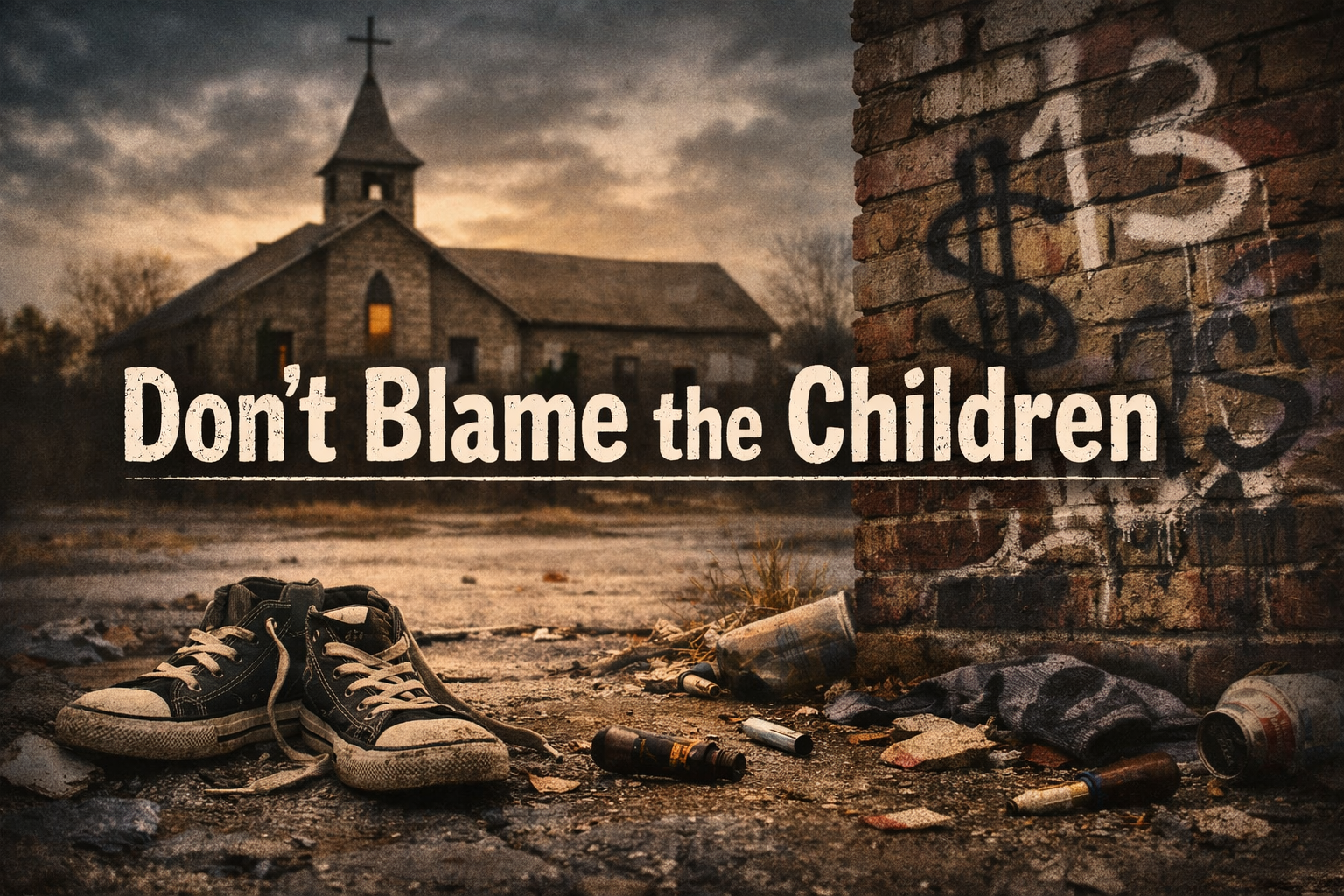
The Song Don’t Blame It on the Children, is a piercing mirror for our times — and its message fits hand‑in‑glove with Scripture. It exposes a pattern that’s as old as humanity: adults lamenting the sins of youth while ignoring the seeds they themselves have sown.
1. The Song’s Message in Today’s Context
The lyrics describe a society quick to condemn “delinquent teenagers” while forgetting who built the environment that shaped them — the media, the money, the neglect, the greed.
That’s exactly what we see now:
- Adults lamenting “lost generations” while modeling compromise and distraction.
- Churches blaming culture for youth decline while failing to disciple or include them.
- Communities outsourcing moral formation to screens and schools instead of homes and faith.
The song’s refrain — “Don’t blame it on the children” — is prophetic. It reminds us that broken systems and absent guidance are adult creations. The young are inheriting what we’ve allowed.
2. The Biblical Parallels
Scripture consistently warns against hypocrisy and misplaced blame.
Matthew 7:3–5 — “Why do you look at the speck in your brother’s eye, but do not consider the plank in your own eye?”
John 8:7 — “He that is without sin among you, let him first cast a stone.”
Proverbs 22:6 — “Train up a child in the way he should go: and when he is old, he will not depart from it.”
The Bible doesn’t excuse sin, but it places responsibility on those who lead, teach, and influence. When adults fail to model righteousness, the next generation reflects that failure. The song’s line “The title delinquent fits older folks too” echoes Romans 3:23 — “For all have sinned.”
3. The Modern Church Connection
The church often laments youth rebellion while ignoring its own neglect:
- Charging for programs that should be free.
- Prioritizing entertainment over discipleship.
- Failing to create safe, welcoming spaces for teens.
- Modeling division, hypocrisy, and materialism.
The song’s critique — that adults create the conditions for youth corruption — parallels Jesus’ rebuke in Matthew 18:6:
“But whoso shall offend one of these little ones which believe in me, it were better for him that a millstone were hanged about his neck…”
That’s not condemnation; it’s accountability. The church must repent of its own distractions and return to shepherding children with love and truth.
4. The Call to Repentance and Renewal
Both the song and Scripture call for humility:
- Stop blaming the young.
- Start rebuilding the example.
- Restore the home and the church as places of guidance.
- Remove greed, neglect, and hypocrisy from leadership.
When adults take responsibility, children find stability. When the church takes responsibility, the next generation finds hope.
5. The Takeaway
The song says, “Don’t blame it on the children.”
The Bible says, “Suffer the little children to come unto Me.”
Together they say: the problem isn’t the children — it’s the adults who forgot how to lead them.
