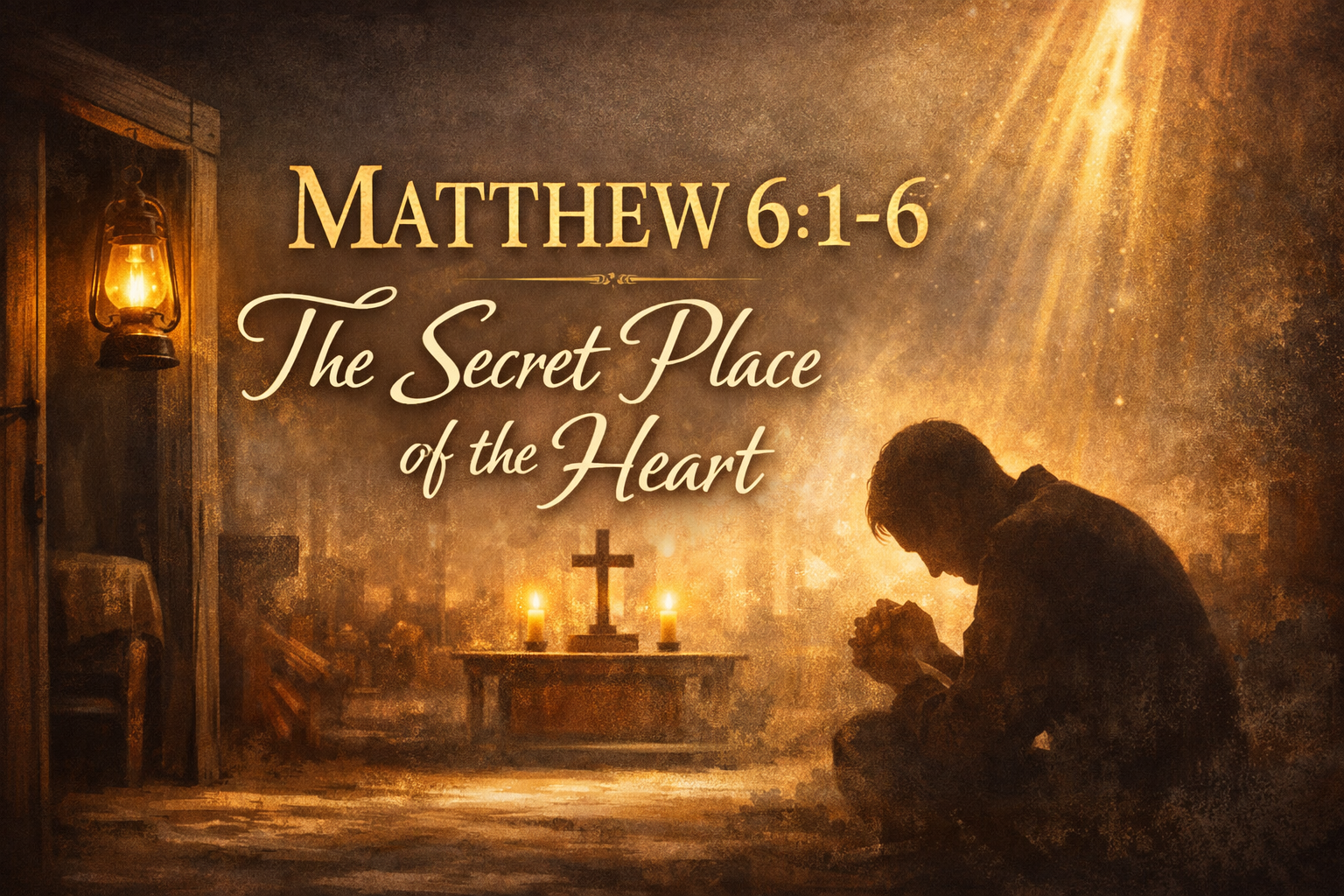
Matthew 6
- Take heed that ye do not your alms before men, to be seen of them: otherwise ye have no reward of your Father which is in heaven.
- Therefore when thou doest thine alms, do not sound a trumpet before thee, as the hypocrites do in the synagogues and in the streets, that they may have glory of men. Verily I say unto you, They have their reward.
- But when thou doest alms, let not thy left hand know what thy right hand doeth:
- That thine alms may be in secret: and thy Father which seeth in secret himself shall reward thee openly.
- And when thou prayest, thou shalt not be as the hypocrites are: for they love to pray standing in the synagogues and in the corners of the streets, that they may be seen of men. Verily I say unto you, They have their reward.
- But thou, when thou prayest, enter into thy closet, and when thou hast shut thy door, pray to thy Father which is in secret; and thy Father which seeth in secret shall reward thee openly.
Key idea:
Jesus is not condemning being seen.
He is condemning doing things in order to be seen.
Matthew 6:1–6 calls believers back to a life where the Father’s eyes matter more than human eyes.
🌿 1. Jesus Teaches Us to Examine Our Motives
- Hidden motives — Jesus begins with “Take heed,” meaning pay close attention to yourself. The danger is not the act of giving or praying, but the desire for applause.
- Audience of One — The question becomes: Who am I doing this for? God or people?
- Reward from the Father — Jesus promises that the Father sees the hidden things and rewards them openly. The reward is not earthly praise but divine approval.
Behavior shaped by this:
We learn to check our hearts before we act.
🌿 2. Jesus Calls Us to Practice Quiet Generosity
- Secret giving — “Let not thy left hand know what thy right hand doeth” teaches us to give without self‑promotion.
- Avoiding spiritual performance — We resist the urge to announce our good deeds, post them, or seek recognition.
- Protecting the dignity of those we help — True generosity never uses people as props for our righteousness.
Behavior shaped by this:
We give quietly, privately, and without needing credit.
🌿 3. Jesus Teaches Us to Pray Without an Audience
- Private prayer — “Enter into thy closet” is an invitation to intimacy with God, not isolation from others.
- Avoiding public display — Jesus warns against praying to be seen, not against praying in public.
- The heart of prayer — Prayer is conversation with the Father, not a performance for people.
Behavior shaped by this:
We cultivate a hidden prayer life that does not depend on being noticed.
🌿 4. Jesus Warns Us About Hypocrisy
- Hypocrisy defined — A hypocrite is not someone who struggles; it is someone who performs righteousness for applause.
- Spiritual showmanship — Trumpets, announcements, and public displays of devotion are signs of misplaced motives.
- The danger of living for approval — When we seek human praise, we lose the deeper reward of God’s presence.
Behavior shaped by this:
We refuse to turn worship, giving, or prayer into a show.
🌿 5. Jesus Calls Us to Protect Sacred Moments
- Sacred privacy — Some moments are meant only for God’s eyes: tears, repentance, confession, surrender.
- Guarding the altar — The altar is not a stage; it is a place of healing.
- Respecting others’ dignity — We do not film, expose, or broadcast the vulnerable moments of others.
Behavior shaped by this:
We protect the privacy of worship, both for ourselves and for others.
🌿 6. Jesus Teaches Us to Live Differently From the Culture
- Countercultural humility — The world says, “Show your good deeds.” Jesus says, “Hide them.”
- Quiet faithfulness — We choose the hidden path, the quiet path, the faithful path.
- Resisting the pressure to broadcast — We do not need to post, record, or display our righteousness.
Behavior shaped by this:
We live a life that is real before God, not curated for people.
🌿 7. The Heart of Matthew 6:1–6
Jesus is forming a people who:
- give without applause
- pray without performance
- serve without recognition
- worship without an audience
- live for the Father’s eyes alone
This is the life that shines — not because it is seen, but because it is true.
