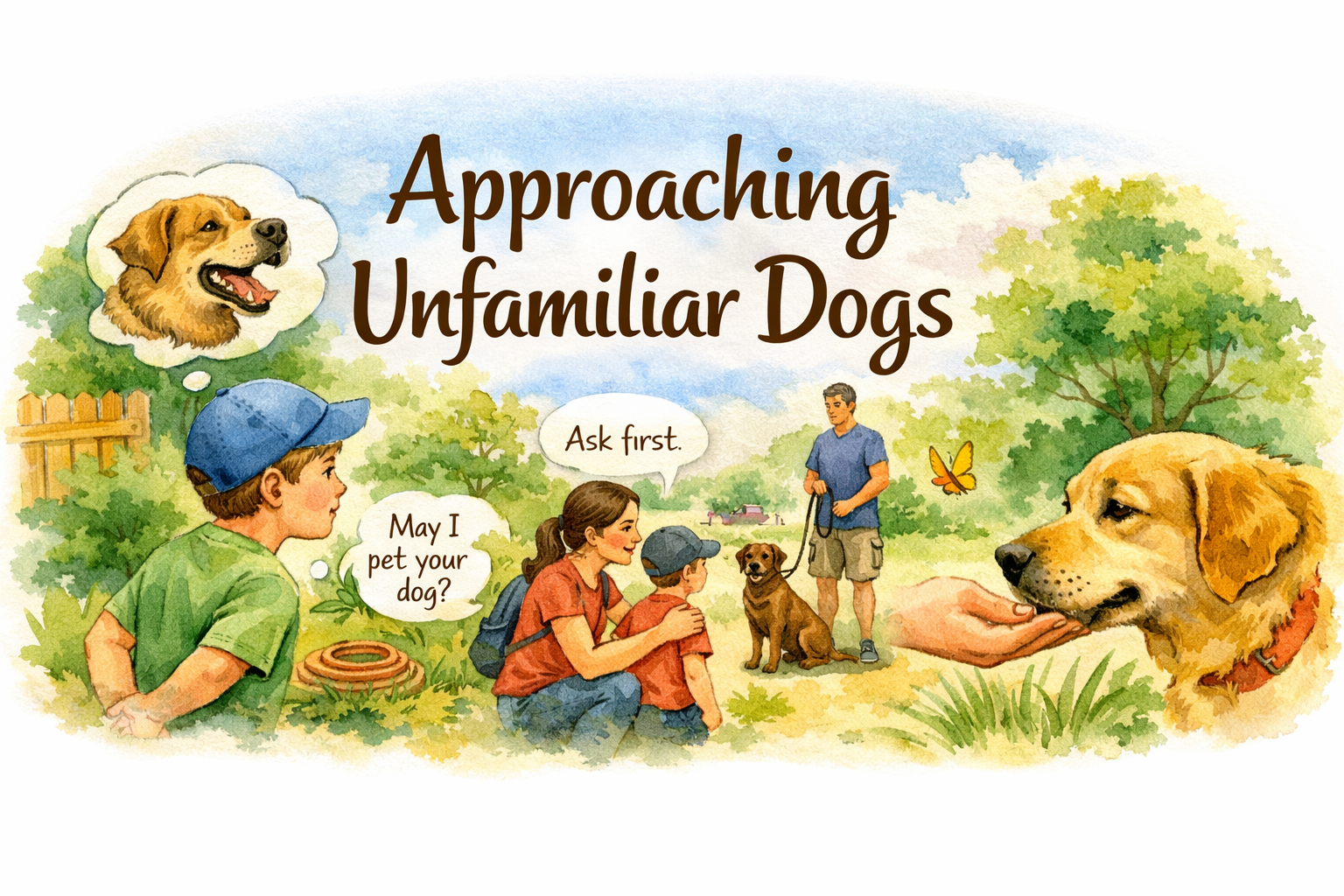
Teaching children wisdom and respect around unfamiliar dogs
Many years ago, my son asked a lady, “Does the dog bite?” he voiced what every child wonders. The lady’s answer — “If it has a mouth and teeth, it can bite.” — was honest and wise. It reminds us that even the friendliest dog can react if startled, scared, or protecting its owner.
👀 Observe Before You Approach
A calm heart sees more clearly
- Watch the dog’s body language: tail, ears, posture, and eyes
- Look for signs of comfort — loose tail, relaxed stance, soft eyes
- Avoid dogs that seem tense, bark sharply, or pull away
- Teach children to stand still and wait for the dog to come closer
Phrase for little ones:
“Look first, move slow, ask before you go.”
🗣️ Ask the Owner First
Respect builds trust between people and pets
- Always ask, “May I pet your dog?” — never assume it’s okay
- Listen carefully to the owner’s answer and follow their directions
- If the owner says no, thank them kindly and move on
- Teach children that “no” means safety, not rejection
Family practice:
Role‑play with stuffed animals or your own dog to practice asking permission.
🤲 Approach Slowly and Gently
Let the dog choose the pace
- Walk calmly, no running or squealing
- Offer your hand slowly, palm down, for the dog to sniff
- Pet along the back or shoulder — never the face or tail
- Stop if the dog backs away or stiffens
Teaching moment:
Explain that dogs use smell to “say hello,” and we show kindness by waiting.
💬 What to Say When You’re Unsure
Turning curiosity into caution
If your child asks, “Does the dog bite?” — affirm their instinct for safety.
You can reply:
“That’s a smart question. Let’s ask if we can pet the dog first.”
This teaches discernment — not fear, but awareness.
