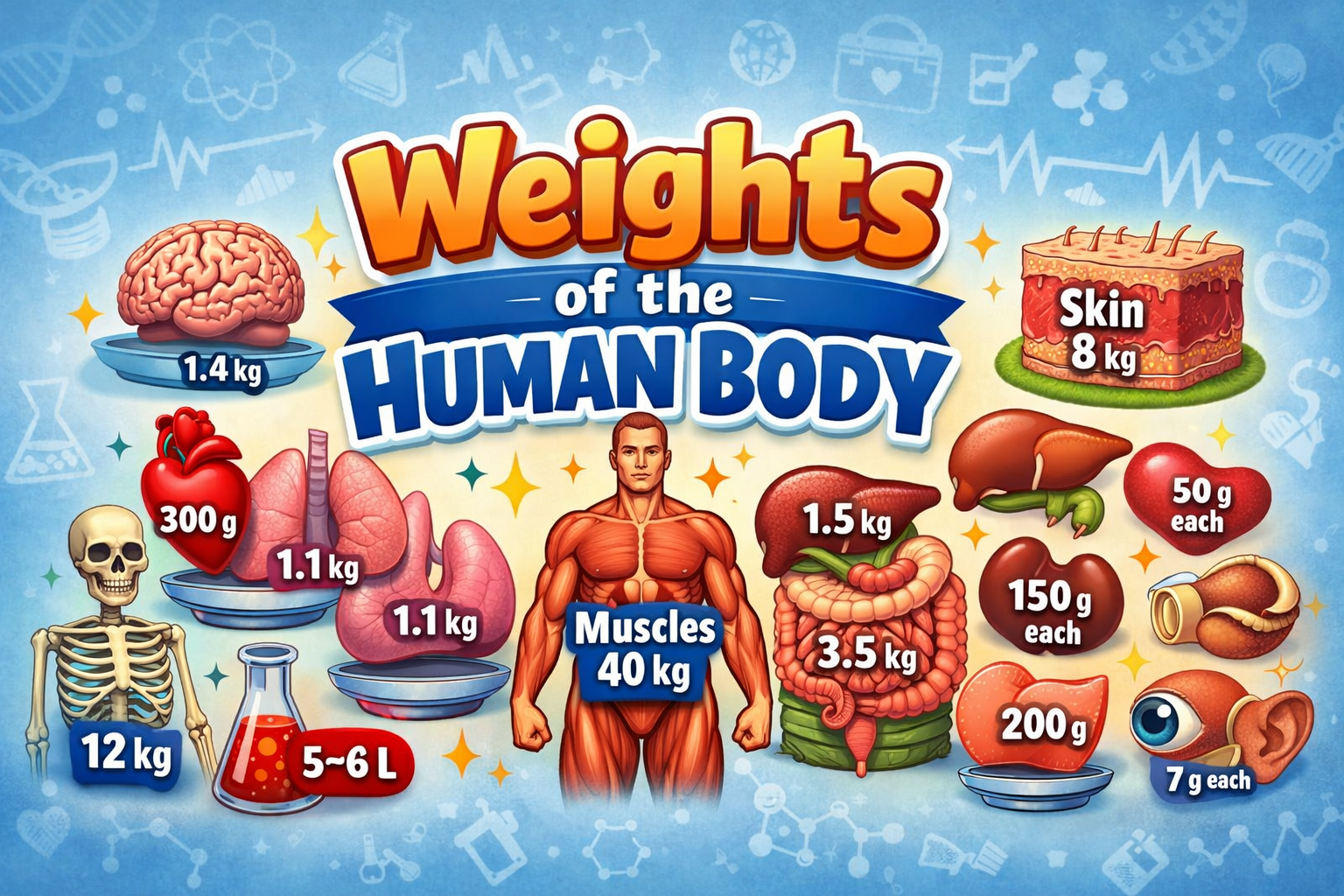
Here’s an accurate breakdown of how much the major organs and body systems weigh, using the best available data from recent sources. I’ve group them by system so you can compare them easily.
(All weights are for an average adult; kids’ organs are smaller but follow the same proportions.)
🧠 Nervous System
- Brain — 1.3–1.4 kg (2.9–3.1 lbs) {biologyinsights.com}
The brain is only ~2% of body weight but uses a lot of energy.
❤️ Circulatory System
- Heart — 250–350 g (8.8–12.3 oz) {biologyinsights.com}
- Blood — 7–8% of total body weight (about 5–6 liters in adults) {biologyinsights.com}
🌬️ Respiratory System
- Right lung — ~600 g (1.3 lbs)
- Left lung — ~550 g (1.2 lbs) {biologyinsights.com}
(Right lung is bigger because the heart sits on the left.)
🍽️ Digestive System
- Liver — 1.4–1.6 kg (3.1–3.5 lbs) {biologyinsights.com}
- Stomach — 150–200 g (0.33–0.44 lbs) {LinkedIn}
- Small + large intestines — 3.5–4 kg (7.7–8.8 lbs) (the whole intestinal system) {LinkedIn}
- Pancreas — 80–100 g (0.18–0.22 lbs) {LinkedIn}
- Spleen — ~150 g (0.33 lbs) {LinkedIn}
🚽 Urinary System
- Kidneys — 125–175 g (4.4–6.2 oz) each {biologyinsights.com}
- Bladder — ~60 g (0.13 lbs) empty {LinkedIn}
🦴 Skeletal System
- Bones — 10–15 kg (22–33 lbs), about 15% of body weight {biologyinsights.com}
💪 Muscular System
- Muscles — 36–45 kg (80–100 lbs) in an average adult
(This is the heaviest system in the body.) {LinkedIn}
🧴 Integumentary System (Skin)
- Skin — 3.5–10 kg (7.7–22 lbs), about 15% of body weight
(This is the heaviest single organ.) {biologyinsights.com}
👁️ Sensory Organs
- Eyes — ~8 g each
- Ears — ~7 g each {LinkedIn}
⭐ Quick Comparison Table
| System / Organ | Weight |
|---|---|
| Muscles | 36–45 kg |
| Skeleton | 10–15 kg |
| Skin | 3.5–10 kg |
| Intestines | 3.5–4 kg |
| Brain | 1.3–1.4 kg |
| Liver | 1.4–1.6 kg |
| Lungs | ~1.1–1.2 kg combined |
| Heart | 250–350 g |
| Kidneys | 125–175 g each |
| Stomach | 150–200 g |
