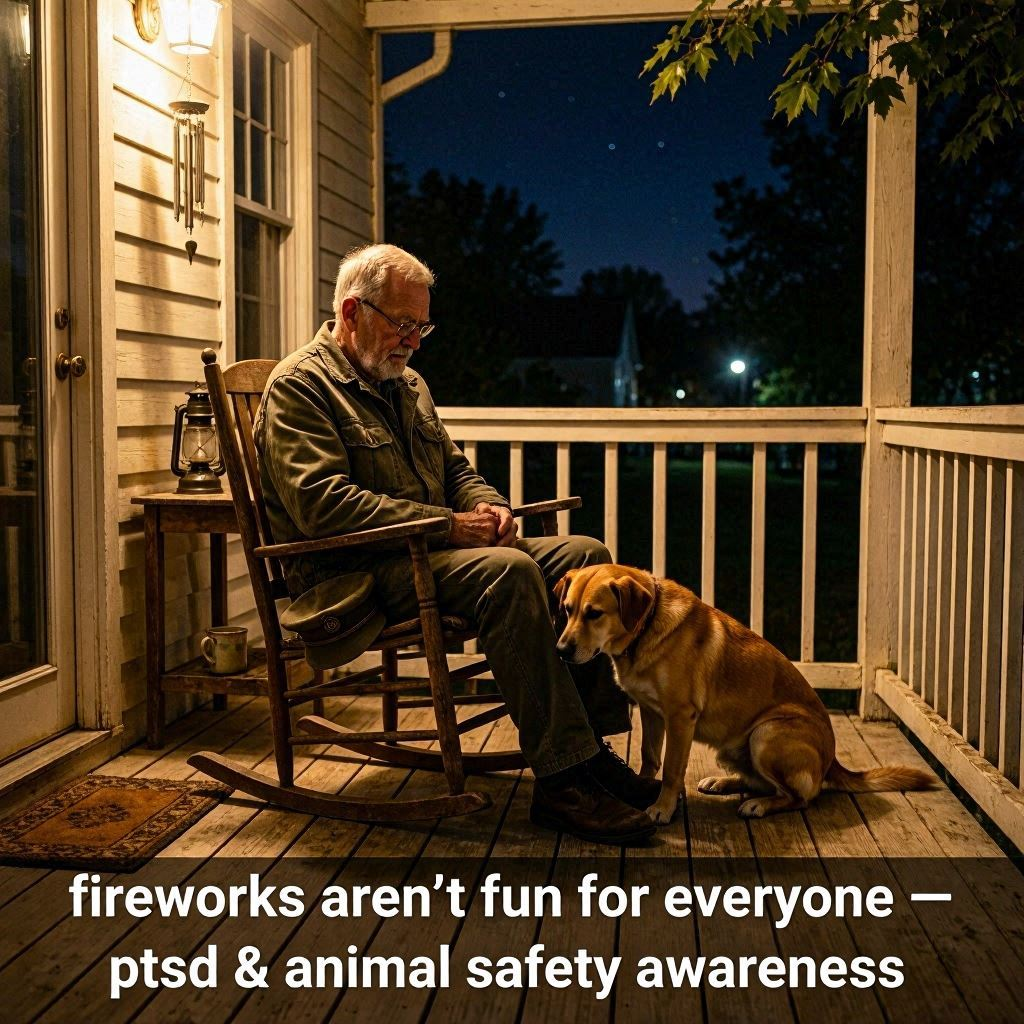
Fireworks are often seen as symbols of joy, freedom, and celebration. But for many people and animals, those same explosions bring fear, confusion, and real physical and emotional harm. As communities prepare for holidays and events, it’s important to understand that fireworks are not harmless entertainment for everyone.
Fireworks as Trauma Triggers for People With PTSD
For individuals living with Post‑Traumatic Stress Disorder (PTSD), fireworks can act as powerful trauma reminders. The National Center for PTSD notes that the sounds, flashes, smoke, and burning smells closely resemble the sensory cues of combat, explosions, gunfire, or fires. Even when a person knows they are safe, their body may react as if danger has returned. PTSD: National Center for PTSD
Common reactions include:
- Feeling jumpy or easily startled
- Flashbacks or intrusive memories
- Panic attacks or intense fear
- Emotional numbness during celebrations
- Hypervigilance that lasts for days
- Sleep disruption
- Using alcohol or substances to cope
A recent PTSD UK report found that unpredictability is the biggest trigger—over 90% of respondents said random neighborhood fireworks were far more distressing than scheduled displays. Many reported symptoms lasting days or weeks, sometimes requiring medical or therapeutic support. PTSD UK
The Overlooked Impact on Animals
Animals—pets, livestock, and wildlife—experience fireworks as sudden, inexplicable threats. Their hearing is far more sensitive than ours, and they cannot understand the cause of the explosions.
Research shows:
- Up to 50% of dogs are afraid of fireworks.
- Cats may hide, shake, or flee in panic.
- Horses can bolt, crash through fences, or injure handlers; several deaths have been documented.
- Wildlife, especially birds, may flee en masse, crash into buildings, or abandon their young. The MIT Press Reader
These reactions are not misbehavior—they are instinctive survival responses.
Why This Matters for Communities
Fireworks don’t just last a few minutes. Their effects ripple outward:
- People with PTSD may experience days of heightened anxiety.
- Pets run away, get injured, or become lost.
- Livestock can harm themselves or others.
- Wildlife populations suffer long‑term disruption.
- Emergency services face increased calls.
These harms are preventable with awareness and compassion.
How Communities Can Reduce Harm
1. Support Predictable, Scheduled Displays
Advance notice allows veterans, trauma survivors, and pet owners to prepare. PTSD UK’s research shows predictability dramatically reduces distress. PTSD UK
2. Encourage Alternatives
Laser shows, drone displays, and “quiet fireworks” offer celebration without trauma.
3. Promote Firework‑Free Zones
Areas near farms, wildlife habitats, and residential neighborhoods can be designated as no‑firework zones.
4. Educate Neighbors
Many people simply don’t know the harm fireworks cause. Public awareness campaigns can change that.
5. Offer Supportive Spaces
Churches, community centers, and veteran organizations can provide quiet rooms or alternative gatherings.
A Call for Compassionate Celebration
Fireworks may last only moments, but their impact can linger long after the smoke clears. By choosing awareness over assumption and compassion over tradition, communities can celebrate in ways that honor everyone’s safety—people, pets, and wildlife alike.
Celebration should never come at the cost of someone else’s peace.
