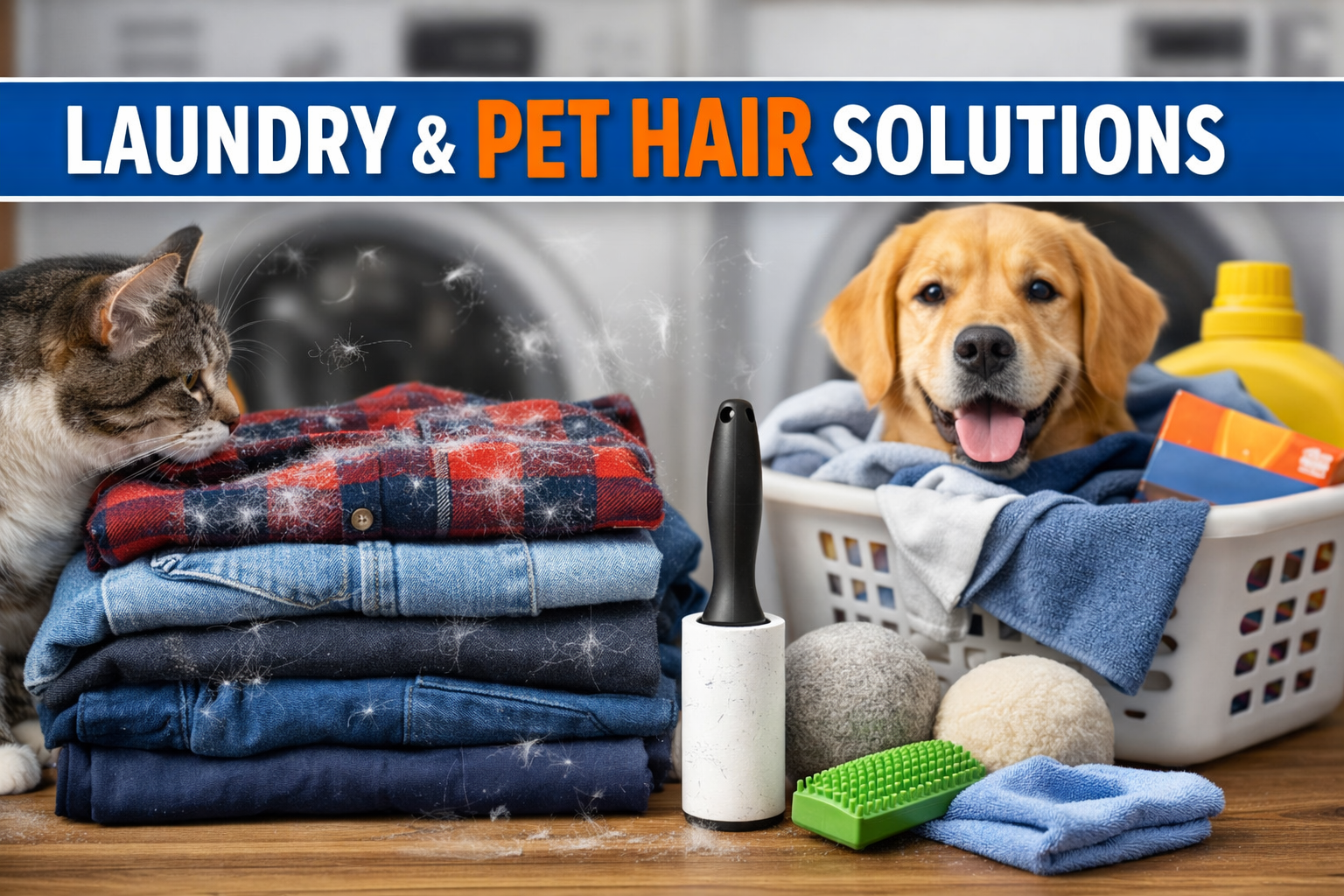
When a product like Bounce Pet Hair & Lint Guard doesn’t deliver on its promises, you’re left needing real solutions — not marketing claims. After years of managing laundry in a multi‑pet household, I’ve learned that the only methods that consistently work rely on mechanical removal, static control, and fabric prep, not chemical coatings.
Below are the alternatives that truly make a difference, especially if you’re dealing with multiple cats, a dog, and a husband who needs clean, hair‑free clothes for work.
⭐ 1. The Pre‑Dryer “Air‑Fluff Purge”
This is the single most effective method I’ve ever used.
Run clothes in the dryer for 10 minutes on air‑fluff/no heat with:
- 3–6 wool dryer balls
- 1–2 damp microfiber cloths
The balls lift and separate the fabric.
The microfiber grabs hair like a magnet.
The lint trap fills up fast — that’s how you know it’s working.
This removes 70–90% of hair before the wash even starts.
⭐ 2. Rubber Tools (The Secret Weapon)
Rubber is magic for pet hair. It creates friction that pulls hair out of the weave.
The best tools are:
- Rubber grooming gloves
- Rubber pet‑hair brushes
- Rubber squeegee tools
Use them on:
- flannel
- fleece
- leggings
- blankets
- cotton pants
- anything textured
This removes the hair that dryer sheets can’t touch.
⭐ 3. Microfiber Cloths in the Wash
This is a game‑changer.
Throw 1–2 microfiber cloths into the washing machine with the load. They attract hair during agitation and trap it.
They work because:
- microfiber has a high static pull
- the fibers grab hair better than cotton
- they don’t release the hair back into the load
This is far more effective than dryer sheets.
⭐ 4. Vinegar in the Rinse Cycle
Vinegar reduces static without leaving residue — the opposite of dryer sheets.
Add ½ cup white vinegar to the rinse compartment.
Benefits:
- reduces cling
- softens fabric naturally
- helps release embedded hair
- removes dryer‑sheet buildup
This is especially important if Bounce left residue on your clothes.
⭐ 5. Low‑Heat Drying With Dryer Balls
High heat bakes hair into fabric. Low heat keeps it moving toward the lint trap.
Use:
- low heat
- 3–6 wool dryer balls
- 1 damp microfiber cloth (optional)
This keeps hair airborne long enough to get caught in the lint trap.
Set it up: Pet hair removal dryer cycle
⭐ 6. Lint Rolling While Clothes Are Still Warm
This is the finishing touch.
When clothes come out of the dryer:
- shake them
- lint roll immediately while warm
Warm fibers release hair more easily.
This is how you get painter‑level perfection for your husband’s clothes.
⭐ 7. Fabric Strategy (The Hidden Factor)
Some fabrics attract hair no matter what.
Worst offenders:
- flannel
- fleece
- microfiber
- polyester blends
Best fabrics for pet homes:
- smooth cotton
- denim
- bamboo
- tightly woven blends
If your husband has to look hair‑free, keeping his work clothes in the “best fabrics” category helps tremendously.
⭐ 8. A Weekly “Lint Trap Deep Clean”
Pet hair builds up behind the lint trap and reduces airflow, which reduces hair removal.
Once a week:
- remove lint trap
- vacuum the cavity
- wipe with a microfiber cloth
This restores the dryer’s ability to pull hair out of clothes.
Final Thoughts
These methods work because they rely on physics, not promises:
- friction
- airflow
- static control
- mechanical removal
In a multi‑pet home, these are the only things that consistently beat pet hair.

Leave a Reply