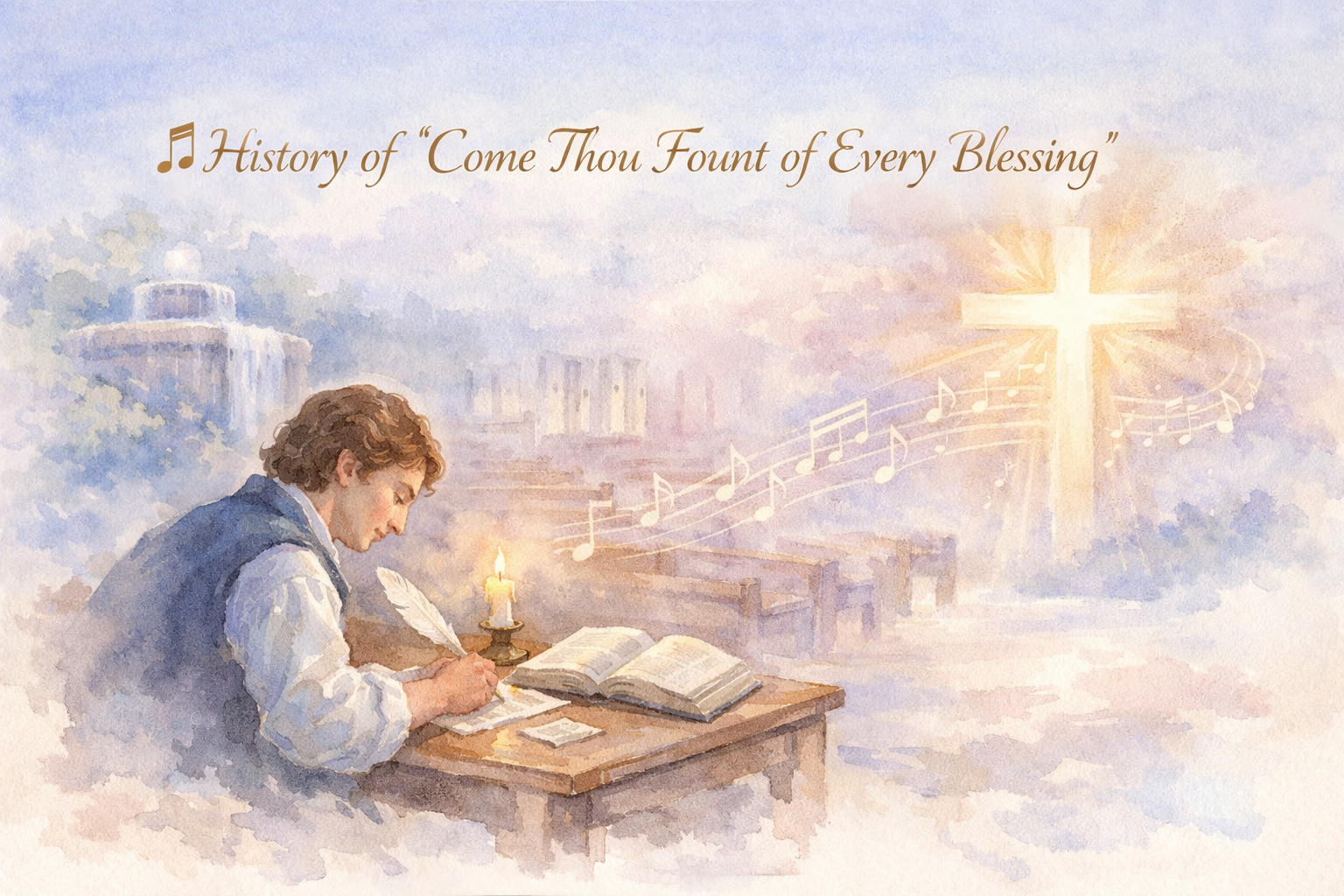
Robert Robinson was a trouble making youth transformed by faith, who wrote “Come Thou Fount of Every Blessing” at 22, reflecting his spiritual journey and struggles with wandering, remaining a beloved hymn today.
Written: 1757–1758 Writer: Robert Robinson (1735–1790), a young British pastor
🌱 1. The writer had a rough, rebellious youth
Robert Robinson grew up poor, lost his father at age 8, and was sent to London as a barber’s apprentice. He fell in with a gang and lived wildly.
A turning point came when he heard the famous preacher George Whitefield preach on Matthew 3:7. The message broke him, and he began seeking God seriously.
✝️ 2. Robinson was saved in 1755
He described finding “full and free forgiveness through the precious blood of Jesus Christ.” This deep spiritual change is what later shaped the hymn.
🖋️ 3. He wrote the hymn at age 22
Around 1757–1758, Robinson wrote “Come Thou Fount of Every Blessing.” It first appeared in a 1759 hymn collection used by a church in Whitechapel, London.
The hymn is partly autobiographical — especially the line:
“Prone to wander, Lord, I feel it…”
This reflects his own early struggles and spiritual wandering.
🎶 4. The tune “Nettleton” came later
In the U.S., the hymn is almost always sung to the tune Nettleton, which appeared in 1813 in Wyeth’s Repository of Sacred Music.
This tune is what makes the hymn sound the way we know it today.
🕊️ 5. A missing 4th stanza
Originally, Robinson wrote four stanzas, but most hymnals removed the last one.
The missing stanza is about heaven:
“O that day when freed from sinning, I shall see Thy lovely face…”
Some editors regret removing it because it completes the hymn’s spiritual journey.
🔄 6. Robinson later struggled in his faith
Historical accounts say that later in life, Robinson drifted spiritually. One story says a young woman quoted his own hymn to him, and it moved him deeply.
This makes the line “Prone to wander” even more meaningful.
🌟 Why this hymn still matters
It is beloved because it is:
- honest about human weakness
- rich in Scripture
- full of gratitude for grace
- centered on Jesus’ saving blood
- hopeful about heaven
It’s a testimony in song — the story of a young man rescued by grace and held by God.
More Information
Come, Thou Fount of Every Blessing
