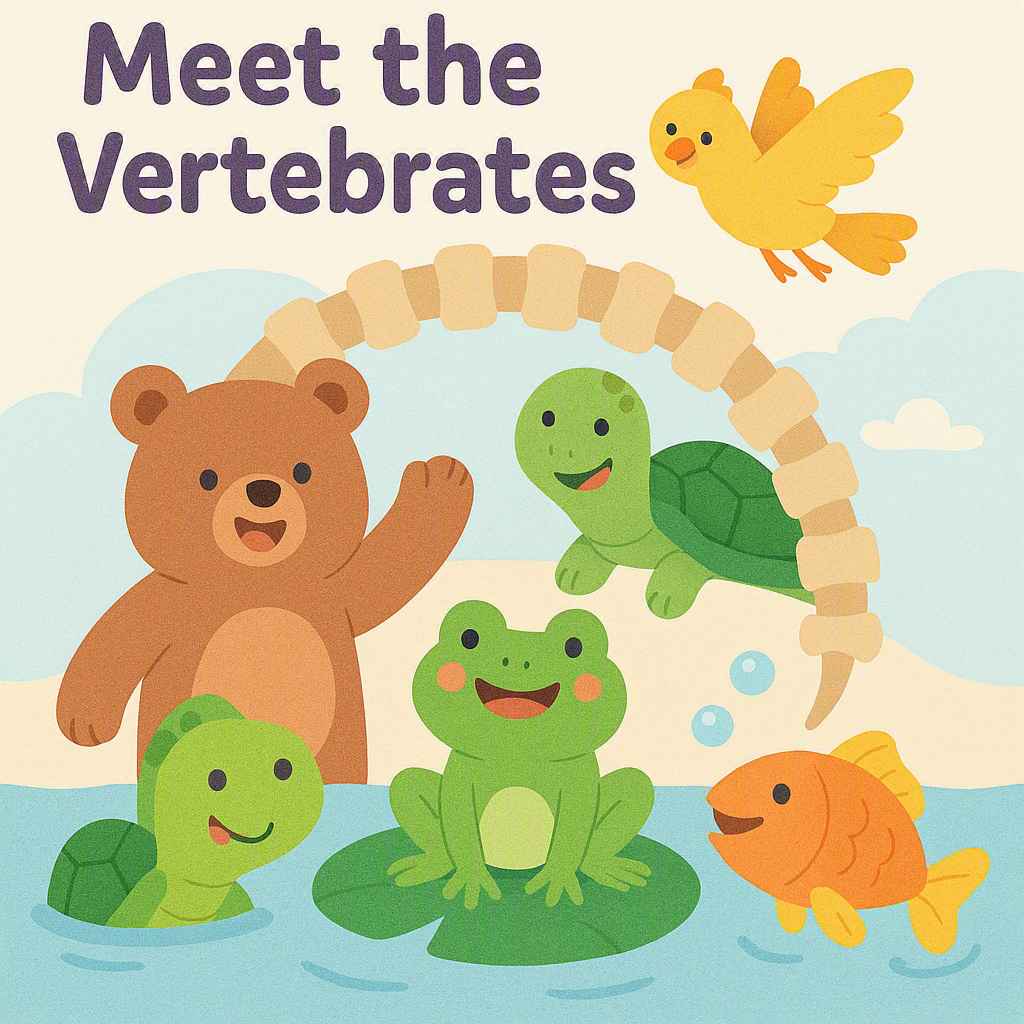
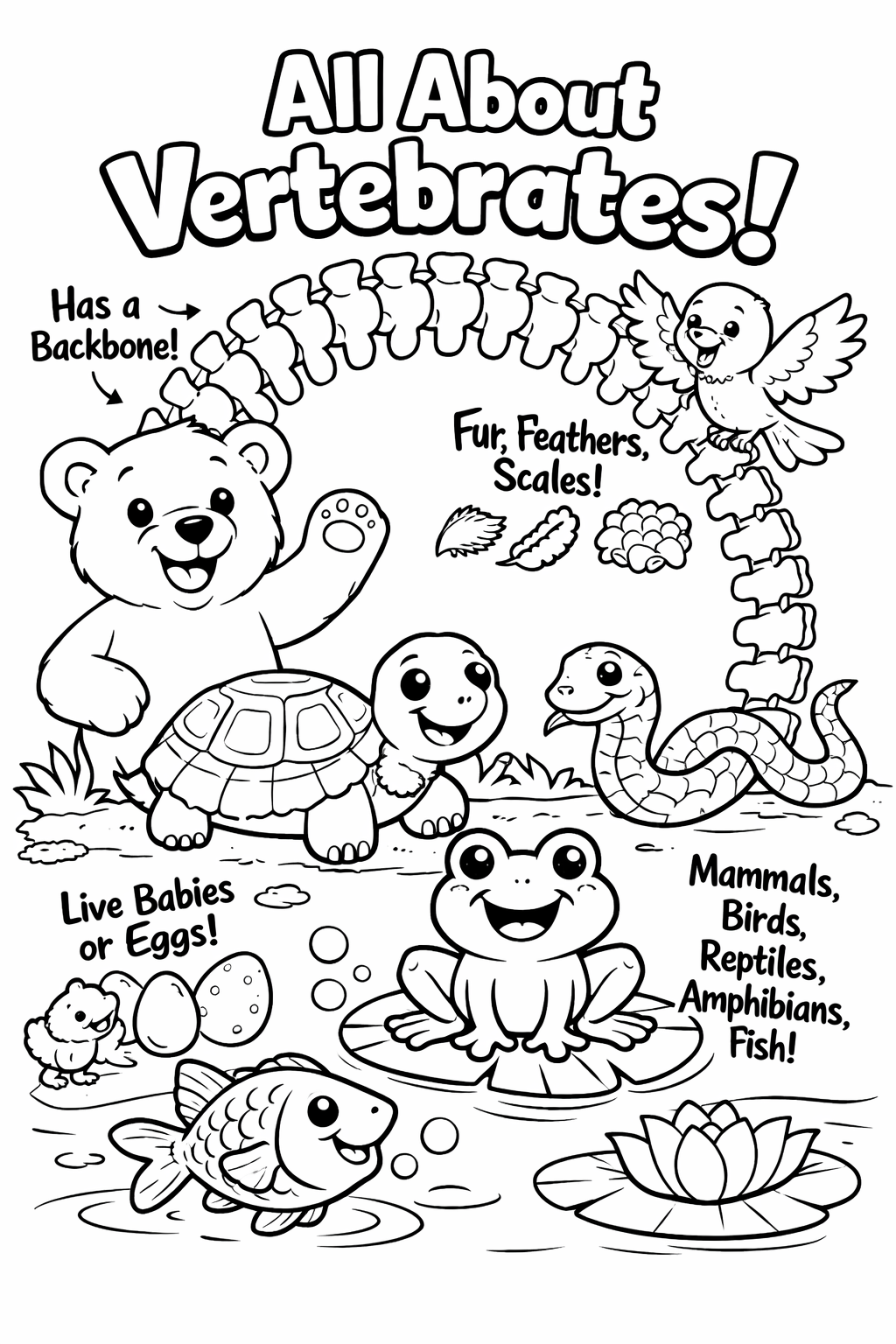
Vertebrates are animals with a spine/backbone. If you gently feel your back, you can find the little bumps of your backbone — because humans are vertebrates too.
🌡️ Warm or Cold?
- Some vertebrates are warm‑blooded like mammals and birds. Their bodies stay warm even when it’s chilly outside.
- Others are cold‑blooded like reptiles, amphibians, and fish. Their body temperature changes with the weather.
🧥 What Do They Wear?
Vertebrates can be dressed in all kinds of “animal outfits”:
- Hair or fur (like dogs, cats, and bears)
- Feathers (birds, of course!)
- Scales (snakes, lizards, and fish)
🥚 Babies or Eggs?
Vertebrates grow their families in different ways:
- Some have live babies (like humans and most mammals).
- Some lay eggs (like birds, reptiles, amphibians, and many fish).
🐾 The Five Big Groups of Vertebrates
- Mammals — warm‑blooded, have hair or fur, and most have live babies.
- Birds — have feathers and lay eggs.
- Reptiles — dry scales and cold‑blooded.
- Amphibians — start life in water, grow up to live on land.
- Fish — live in water and breathe with gills.
🎉 Super Silly Vertebrate Facts
- A giraffe’s neck has the same number of bones as your neck — just bigger.
- Birds have hollow bones to help them fly.
- Some fish glow in the dark like tiny underwater lanterns.
- Frogs can drink water through their skin.
- Snakes have backbones, even though they look bendy like noodles.
🧠 Try This!
Put your hand on your back and feel the little bumps. That’s your spine, and it makes you part of the vertebrate family. Welcome to the club!

Leave a Reply