🌿 What Electrolytes Are
Electrolytes are charged minerals (ions) that dissolve in your body’s fluids and help regulate chemical reactions, fluid balance, and muscle/nerve activity. According to the Cleveland Clinic, electrolytes are “substances that have a natural positive or negative electrical charge when dissolved in water” and help maintain fluid balance inside and outside your cells .
The major electrolytes include:
- Sodium (Na⁺)
- Potassium (K⁺)
- Magnesium (Mg²⁺)
- Calcium (Ca²⁺)
- Chloride (Cl⁻)
- Phosphate (PO₄³⁻)
- Bicarbonate (HCO₃⁻)
💧 Why Electrolytes Matter for Hydration
Electrolytes help your body hold onto water and move it into your cells where it’s actually needed. Medical sources explain that electrolytes regulate fluid balance, muscle contractions, nerve signals, and pH levels — all of which affect hydration and how your body feels during heat or migraines .
This is why:
- You can drink tons of plain water and still feel thirsty
- Heat + sweating can drain electrolytes
- Adding electrolytes (or eating fruit with electrolytes) can make you feel better quickly
🌿 Why Electrolytes Help During a Migraine
- Restore minerals lost in heat — In Louisiana humidity, you lose sodium and potassium even when you don’t feel sweaty.
- Support hydration balance — Electrolytes help your body hold onto the water you drink instead of flushing it out.
- Ease migraine-related dehydration — Migraines often increase thirst and fluid loss.
- Reduce fatigue from heat stress — Electrolytes support muscle and nerve function when you’re tired and overheated.
- Help with cycle shifts — Low estrogen can make your body more sensitive to dehydration and mineral imbalance.
🌼 Gentle Ways People Use Electrolytes (non‑medical, general ideas)
These are not personalized medical instructions — just common approaches people use:
- Add a small amount of electrolyte powder to water — Helps slow down that “chugging” urge.
- Sip electrolyte water slowly — Your body absorbs it better than big gulps.
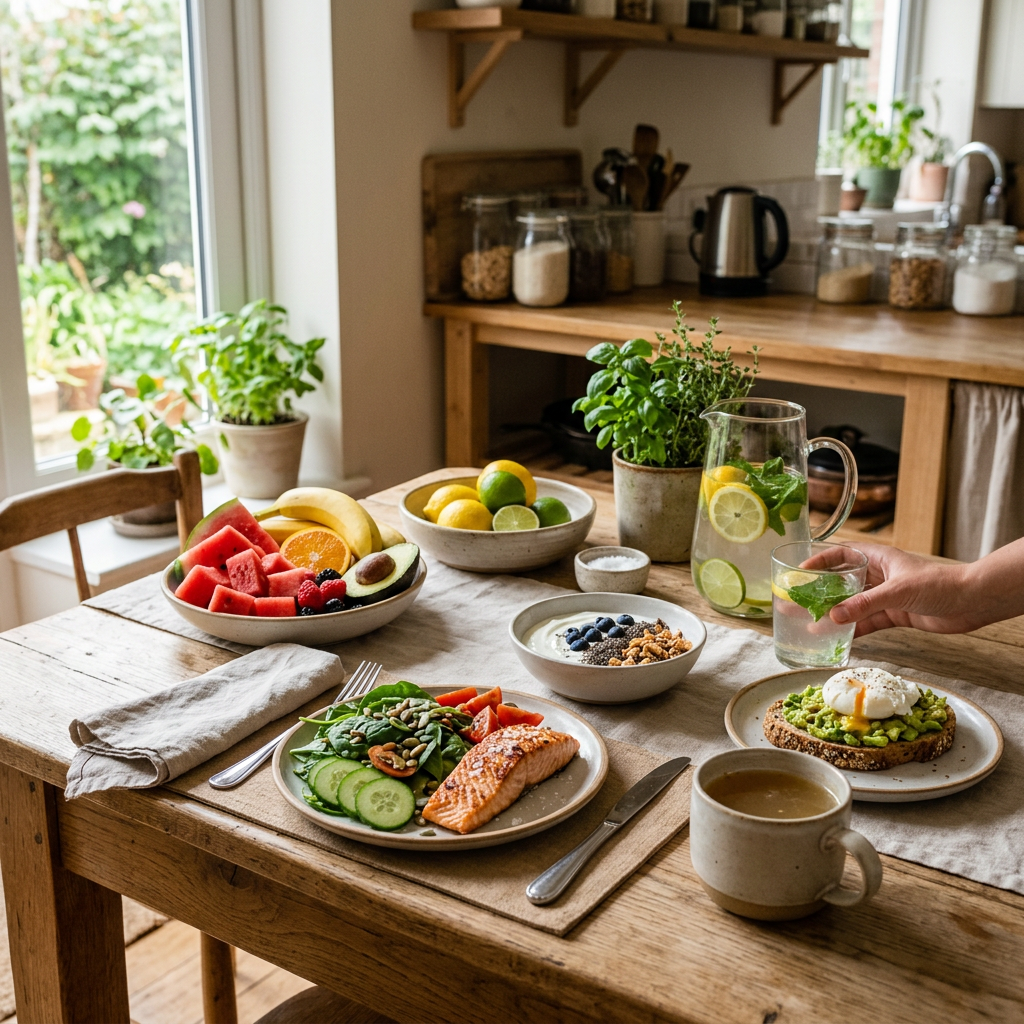
- Eat hydrating fruits with natural electrolytes — Watermelon, cantaloupe, oranges, and cucumbers are great.
- Use electrolytes during heat spikes — Especially when the heat index is above 100°.
- Pair electrolytes with airflow — A fan or cool air helps your body regulate temperature so hydration “sticks.”
🌧️ When to check with a clinician
If you notice:
- extreme thirst that doesn’t improve
- dizziness or confusion
- very dark urine or very little urine
- worsening headache despite hydration
…a healthcare professional should evaluate you. These symptoms can have many causes, and only a clinician can sort them out safely.
A simple List of Foods
🟢 POTASSIUM — supports heart & muscle function
| Food | Serving Size | Approx. Amount |
| Banana | 1 medium | ~422 mg |
| Avocado | ½ fruit | ~487 mg |
| Baked Potato (with skin) | 1 medium | ~926 mg |
| Sweet Potato | 1 medium | ~542 mg |
| Spinach (cooked) | ½ cup | ~420 mg |
| White Beans | ½ cup | ~502 mg |
| Salmon | 3 oz | ~414 mg |
| Orange Juice | 8 oz | ~496 mg |
| Tomato (canned, crushed) | ½ cup | ~265 mg |
| Lentil Soup | 1 cup | ~365 mg |
💡 Quick Tip:Add banana slices to oatmeal or eat a baked potato as a simple side for a big potassium boost.
🔵 SODIUM — regulates fluid balance & nerve signals
| Food | Serving Size | Approx. Amount |
| Dill Pickles | 1 spear | ~500 mg |
| Chicken Broth / Soup | 1 cup | ~860–900 mg |
| Canned Tomato Soup | 1 cup | ~700–900 mg |
| Cottage Cheese | ½ cup | ~450 mg |
| Olives | 10 medium | ~735 mg |
| Cheddar Cheese | 1 oz | ~174 mg |
| Vegetable Broth | 1 cup | ~940 mg |
| Saltine Crackers | 5 crackers | ~200 mg |
| Canned Beans (rinsed) | ½ cup | ~200 mg |
| Table Salt | ¼ tsp | ~575 mg |
💡 Quick Tip:A bowl of chicken or vegetable soup is one of the easiest ways to replenish sodium, especially on hot days or after exercise.
🟣 MAGNESIUM — supports energy, sleep & muscle relaxation
| Food | Serving Size | Approx. Amount |
| Spinach (cooked) | ½ cup | ~78 mg |
| Pumpkin Seeds | 1 oz | ~156 mg |
| Almonds | 1 oz | ~80 mg |
| Black Beans | ½ cup | ~60 mg |
| Brown Rice (cooked) | 1 cup | ~84 mg |
| Avocado | ½ fruit | ~29 mg |
| Banana | 1 medium | ~32 mg |
| Dark Chocolate (70%+) | 1 oz | ~65 mg |
| Edamame | ½ cup | ~50 mg |
| Salmon | 3 oz | ~26 mg |
💡 Quick Tip:Toss pumpkin seeds or almonds onto a salad or oatmeal for a magnesium-rich crunch
🟡 CALCIUM — builds strong bones & supports nerve function
| Food | Serving Size | Approx. Amount |
| Milk (whole or low-fat) | 1 cup | ~300 mg |
| Yogurt (plain) | 6 oz | ~258 mg |
| Cheddar Cheese | 1 oz | ~204 mg |
| Cottage Cheese | ½ cup | ~138 mg |
| Spinach (cooked) | ½ cup | ~123 mg |
| Tofu (calcium-set) | ½ cup | ~258 mg |
| Okra (cooked) | 1 cup | ~135 mg |
| Kale (cooked) | 1 cup | ~94 mg |
| Sardines (canned) | 3 oz | ~325 mg |
| Broccoli (cooked) | 1 cup | ~62 mg |
💡 Quick Tip:A cup of yogurt with fruit makes a quick calcium-packed breakfast or snack.
🟠 PHOSPHORUS — aids bone health & energy production
| Food | Serving Size | Approx. Amount |
| Chicken Breast | 3 oz | ~220 mg |
| Canned Tuna | 3 oz | ~240 mg |
| Milk | 1 cup | ~246 mg |
| Yogurt | 6 oz | ~215 mg |
| Lentils (cooked) | ½ cup | ~178 mg |
| Eggs | 1 large | ~99 mg |
| Pumpkin Seeds | 1 oz | ~332 mg |
| Quinoa (cooked) | 1 cup | ~281 mg |
| Brown Rice | 1 cup | ~162 mg |
| Sunflower Seeds | 1 oz | ~200 mg |
💡 Quick Tip:A tuna or chicken meal at lunch is a simple, filling way to hit a large portion of your daily phosphorus.
💧 Hydration Tip: Staying hydrated helps electrolytes work better. Aim for 6–8 glasses of water daily.
Source: USDA Food Data Central & NIH Dietary Reference Intakes. Amounts are approximate. Printed for personal reference — always consult your healthcare provider for personalized nutrition advice.

Leave a Reply