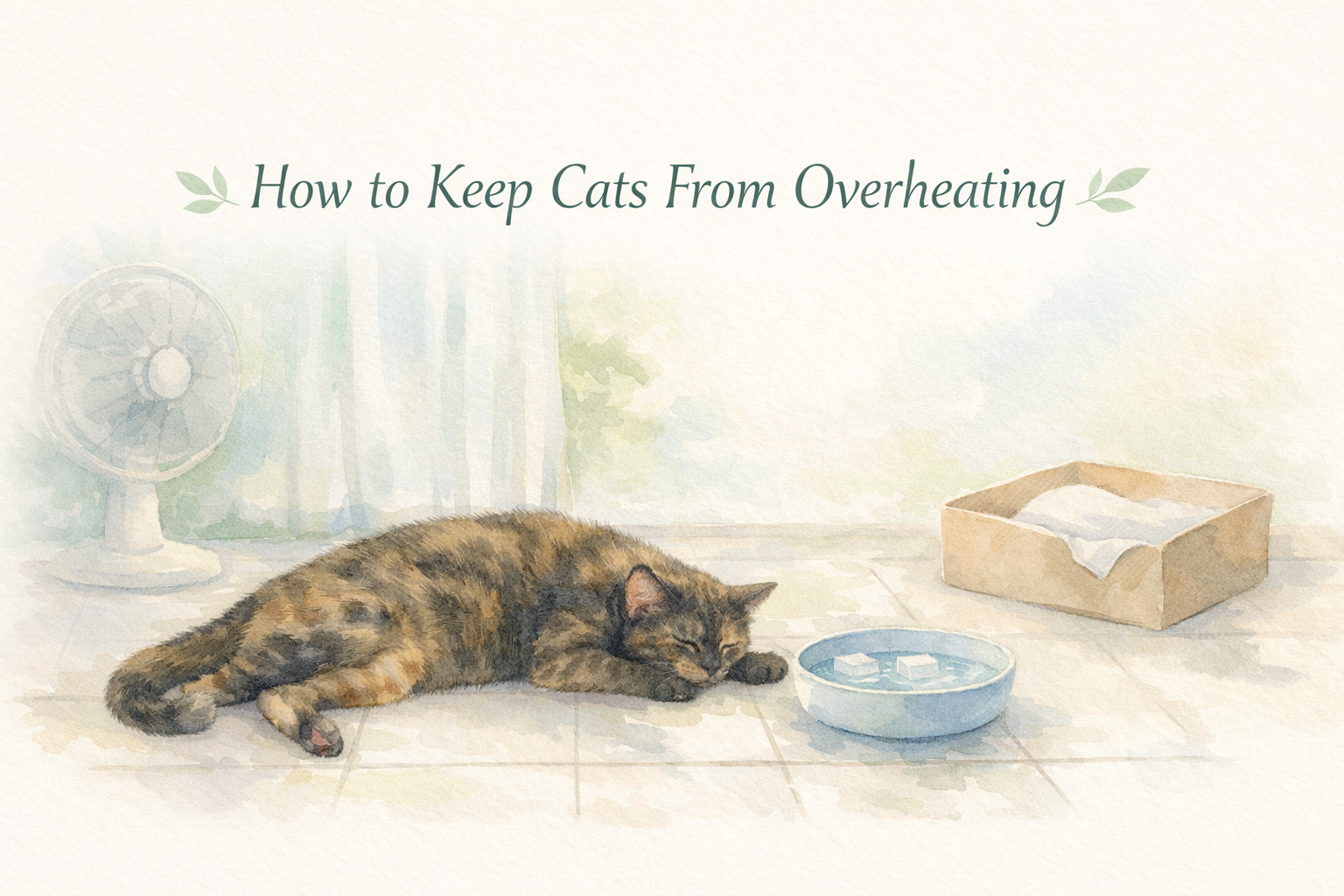
1. Cool, dehumidified spaces
Humidity makes it harder for cats to cool themselves.
- Keep at least one room AC-cooled and dry
- Use fans to circulate air, but don’t aim them directly at the cat.
2. Fresh, cool water available everywhere
Cats drink more when water is:
- Cool (not cold)
- In multiple bowls
- In wide, shallow dishes
- Near their resting spots You can even float one or two ice cubes in the bowl—just not enough to chill the water too much.
3. Create “cool zones”
Cats naturally seek cool surfaces. Make them easy to find:
- Tile floors
- Bathtubs
- A damp towel laid out
- Cooling mats (gel-based, no electricity)
- A cardboard box with a cool towel inside
4. Brush regularly
Matted fur traps heat. Short brushing sessions help long-haired or thick-coated cats stay cooler.
5. Keep them indoors during peak heat
From 10 AM–6 PM, the heat is brutal. Indoor-only cats are safest, especially heat-sensitive ones like Bell.
6. Avoid enclosed spaces
Never let a cat stay in:
- A closed room with no airflow
- A laundry room with running appliances
- A car (even for a minute)
- A garage in summer These spaces trap heat quickly.
7. Offer cooling treats
Safe options:
- Frozen broth cubes (unsalted chicken broth)
- Frozen tuna water
- Chilled wet food These encourage hydration and help regulate temperature.
8. Watch for early overheating signs
- Panting
- Hot ears
- Lethargy
- Restlessness
- Seeking cool surfaces
- Bright red gums If you see any of these, move them to a cool room immediately.
9. Use gentle cooling methods
If your cat seems too warm:
- Dampen paws and ears
- Use a cool cloth on belly/armpits
- Offer cool water
- Reduce activity Never use ice baths—they cause shock.
