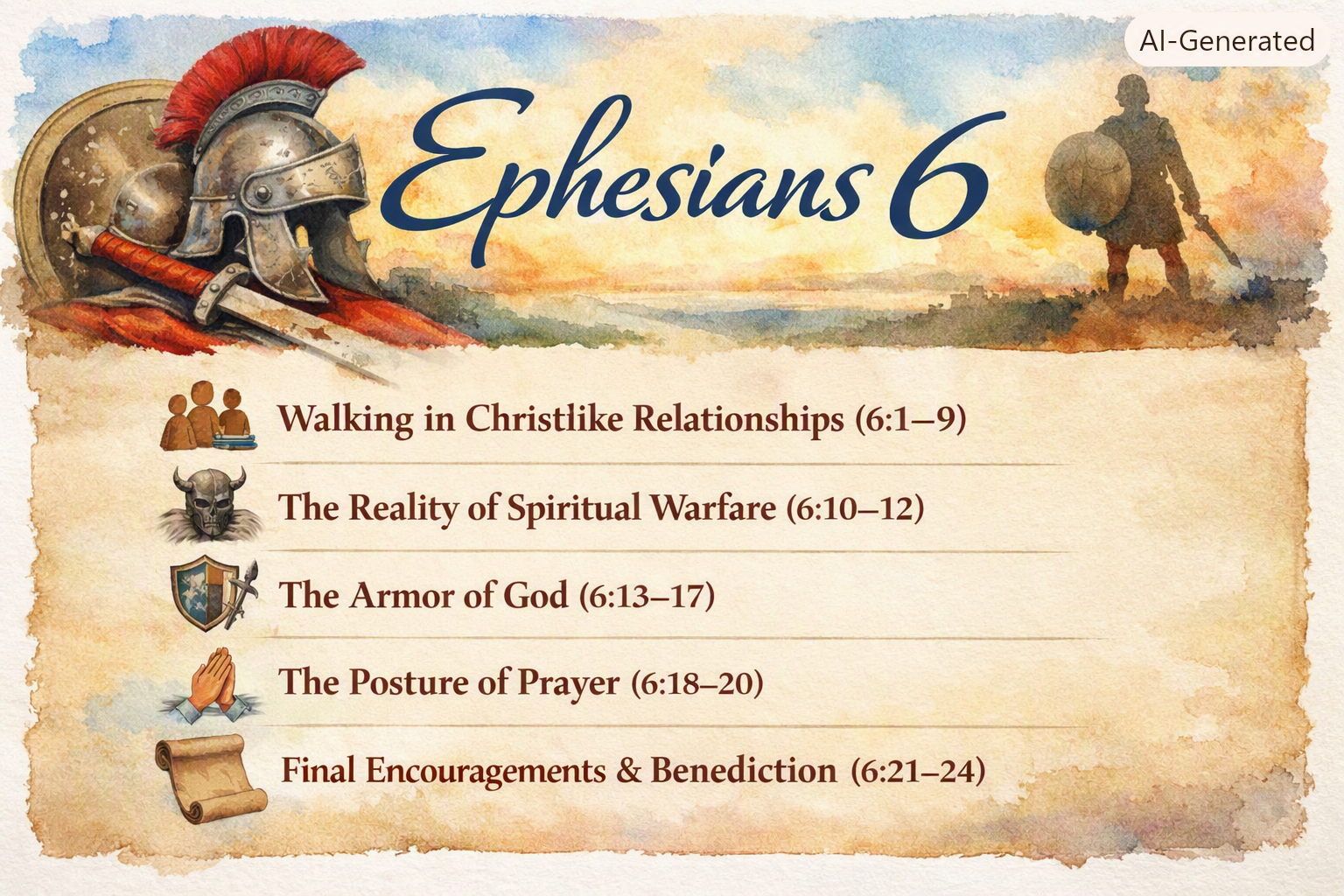
I. Walking in Christlike Relationships (6:1–9)
Paul continues the household code from chapter 5, applying the gospel to everyday authority structures.
A. Children and Parents (vv. 1–4)
- Children’s calling: obedience “in the Lord” — obedience as an act of worship, not mere compliance.
- Promise connection: Paul cites the commandment with promise (long life, well-being).
- Parents’ calling: not provoking, but nurturing — discipline + instruction rooted in Christ.
B. Servants and Masters (vv. 5–9)
- Servants: sincerity, integrity, wholehearted work “as unto Christ.”
- Masters: accountability before God — no partiality, no threats, shared Master in heaven.
- Modern application: workplace relationships, stewardship of authority, Christ-centered work ethic.
✨ II. The Reality of Spiritual Warfare (6:10–12)
A. Strength in the Lord (v. 10)
- Not self-strength; divine empowerment.
- “Be strengthened” — ongoing dependence.
B. The Enemy’s Strategies (v. 11)
- “Schemes” = organized, intelligent, deceptive tactics.
- Warfare is not random; it is targeted.
C. The True Battlefield (v. 12)
- Not flesh and blood — the conflict is spiritual, not personal.
- Layers of spiritual opposition: rulers, authorities, cosmic powers, spiritual forces of evil.
- The believer’s life is lived in contested territory.
✨ III. The Armor of God (6:13–17)
Paul uses Roman armor imagery to illustrate spiritual realities. Each piece is a gospel truth applied.
A. Belt of Truth
- Truth holds everything together.
- Integrity, doctrinal clarity, honesty before God.
B. Breastplate of Righteousness
- Protection of the heart.
- Christ’s righteousness + practical holiness.
C. Gospel Shoes of Peace
- Stability, readiness, mobility.
- Peace with God → peace in spiritual battle.
D. Shield of Faith
- Extinguishes “fiery darts”: lies, accusations, fears, temptations.
- Faith = active trust in God’s character and promises.
E. Helmet of Salvation
- Protects the mind.
- Assurance, identity, hope, future glory.
F. Sword of the Spirit
- The only offensive weapon.
- Scripture applied with precision — Jesus in the wilderness.
✨ IV. The Posture of Prayer (6:18–20)
A. Praying at All Times
- Prayer saturates the battle.
- All kinds of prayer: worship, intercession, petition, thanksgiving.
B. Alertness and Perseverance
- Watchfulness against spiritual drift.
- Perseverance in prayer for the saints.
C. Boldness in Gospel Witness
- Paul asks for boldness — even as a prisoner.
- The gospel is the central mission in spiritual warfare.
✨ V. Final Encouragements and Benediction (6:21–24)
A. Tychicus’ Role
- Faithful servant delivering encouragement and updates.
B. Blessing of Peace, Love, Faith, Grace
- Paul ends with the same themes he began with: grace and peace.
- Love “with incorruptibility” — undying devotion to Christ.
✨ Suggested Teaching Flow
- Start with relationships — the gospel shapes the home and workplace.
- Move to warfare — the gospel prepares believers for spiritual conflict.
- Walk through the armor — each piece is a lived-out gospel truth.
- End with prayer — the believer’s constant posture.
- Close with blessing — Christ’s peace and grace.
