I. Introduction
- Babylon is one of the most persistent symbols in Scripture — from Genesis to Revelation.
- It represents humanity’s organized rebellion against God, both literal and spiritual.
- Revelation 17–18 shows Babylon as a global influence touching every nation, economy, and religion.
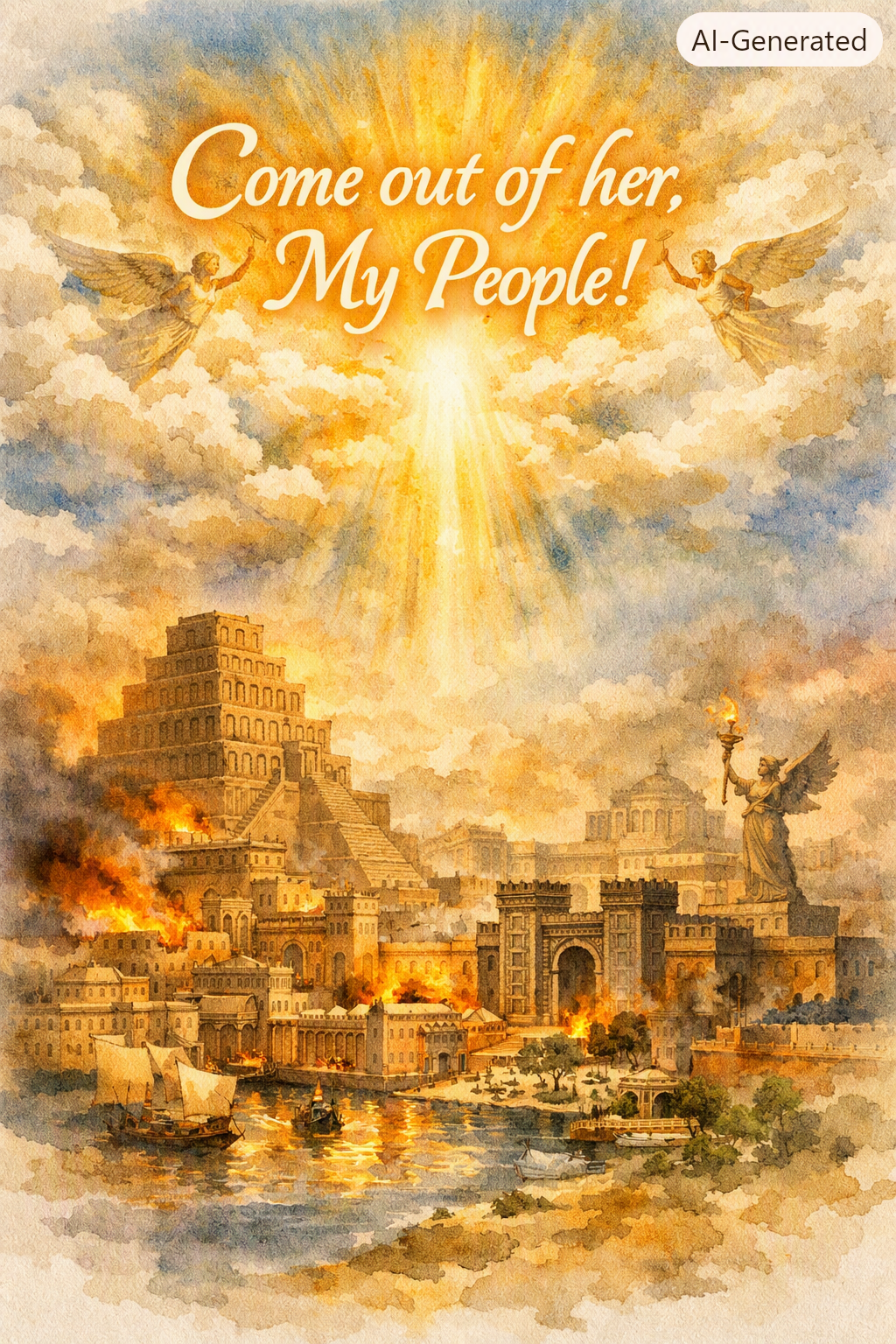
- The call “Come out of her, my people” (Rev 18:4) is not just geographical — it’s spiritual separation from her values.
II. Babylon in the Bible
A. Genesis 11 — The Tower of Babel
- Humanity united in pride and self‑exaltation.
- Babel means “confusion.”
- God scattered the nations — the origin of worldly systems built on rebellion.
B. Historical Babylon
- Founded by Nimrod (Gen 10:8–10).
- Became the empire that conquered Judah (Dan 1).
- Known for idolatry, astrology, and pride (Isa 14:4–23).
- Judged and destroyed (Jer 50–51).
Babylon began as a literal city, but its spirit continued through history.
III. Babylon as a Place
- Revelation 18 calls Babylon a great city that rules over kings and nations.
- Merchants mourn her fall — showing she’s a center of global commerce.
- Some interpret this as a revived literal Babylon or a future world capital.
- The command “Come out of her” echoes Jeremiah’s call to leave physical Babylon before judgment.
IV. Babylon as a Religious System
- Revelation 17 portrays Babylon as a woman riding the beast, “the mother of harlots.”
- She wears purple and scarlet, holds a golden cup, and is drunk with the blood of saints.
- This symbolizes false religion — spiritual corruption that seduces nations.
- It’s not limited to one denomination; it represents apostate worship that mixes truth with idolatry.
V. Babylon as an Economic Power
- Revelation 18 lists gold, silver, precious stones, and luxury goods.
- Kings and merchants mourn her destruction.
- Babylon represents materialism and greed — the world’s economic system built on exploitation.
- Her fall shows God’s judgment on global corruption and self‑indulgence.
VI. Babylon as a Spiritual Principle
- Babylon’s essence is pride and rebellion — the same spirit that built the Tower of Babel.
- It’s the world system opposing God’s kingdom:
- Political power without righteousness
- Economic wealth without justice
- Religious worship without truth
- This is why believers are told to “come out of her” — to reject her values, not just her geography.
VII. Babylon’s Global Influence
- Revelation 17:15 — “She sits on many waters,” meaning peoples, nations, and tongues.
- Babylon’s reach is universal — political, economic, and spiritual.
- Her influence prepares the world for the final confrontation with God’s kingdom.
- Every culture touched by pride, greed, and false worship reflects Babylon’s spirit.
VIII. Summary Table
| Aspect | Description | Key Scriptures |
|---|---|---|
| Place | Historical or future city | Isaiah 13–14; Jeremiah 50–51; Revelation 18 |
| Religious System | False worship, spiritual corruption | Revelation 17 |
| Economic Power | Global wealth and trade | Revelation 18 |
| Spiritual Principle | Pride, rebellion, idolatry | Genesis 11; Revelation 17–18 |
Babylon is both literal and symbolic — a city, a system, and a spirit united in opposition to God.
IX. The Call to God’s People
“Come out of her, my people, that ye be not partakers of her sins.” — Revelation 18:4
This is a call to:
- Separate from Babylon’s values
- Reject her pride and idolatry
- Live as citizens of the heavenly Jerusalem
X. Key Takeaway
Babylon is not just a city — it’s the spirit of rebellion that influences the entire world. God’s people are called to stand apart, reflecting His kingdom rather than the world’s system.
