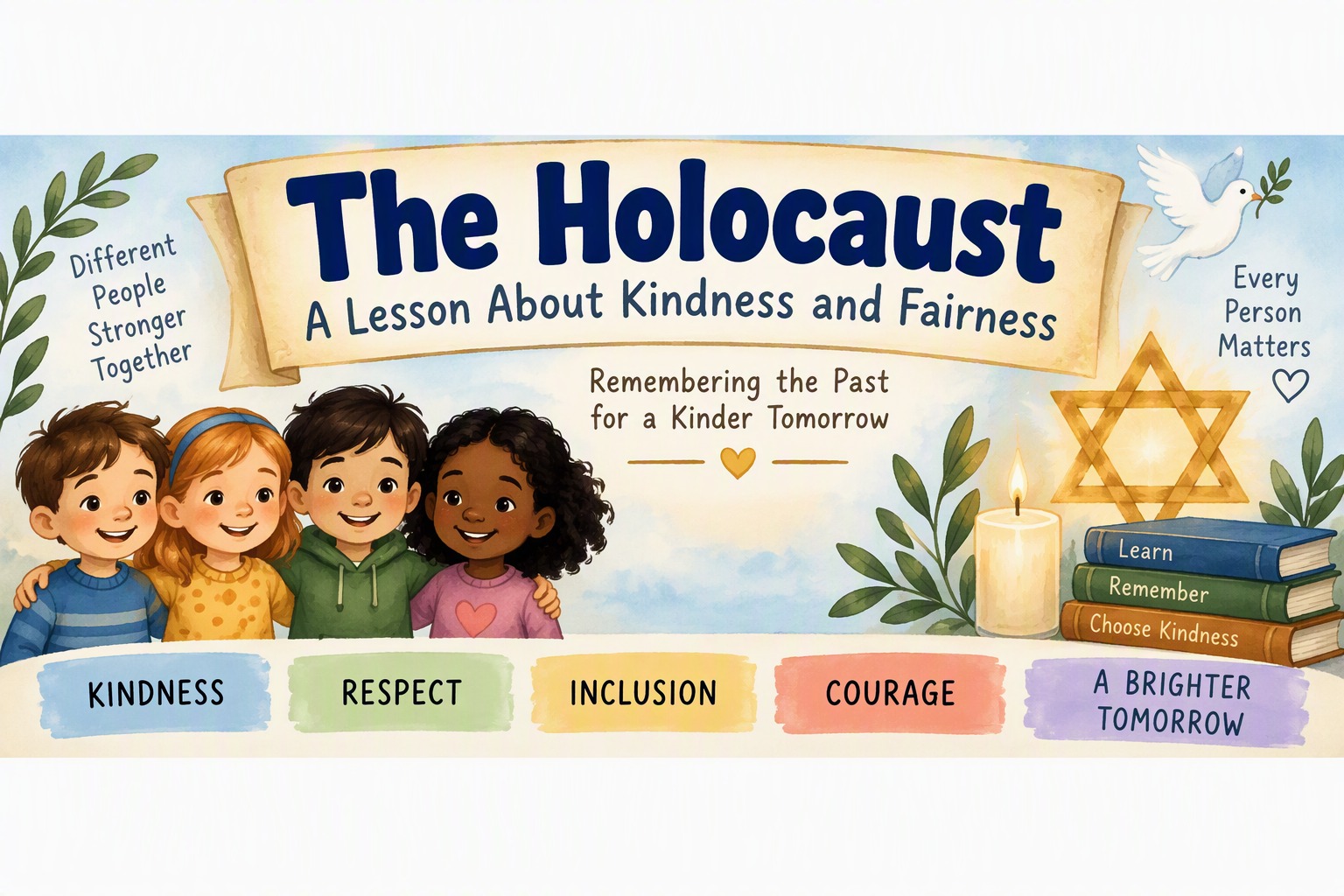
Teacher Discussion Guide
Grades 1-2
Before You Begin
The goal of this lesson is not to teach young children about the horrific details of the Holocaust. Instead, focus on the important lessons that children can understand:
- Everyone deserves respect.
- Treating people unfairly because they are different is wrong.
- Kind people can make a difference.
- We can choose to help others.
If students ask difficult questions, answer briefly and gently. Focus on safety, kindness, and the importance of learning from history.
Teacher Introduction
You might say:
“Today we are going to learn about a time in history called the Holocaust. During this time, some leaders made unfair rules and treated certain people badly because they were different. Many people were hurt by these unfair rules.
Even during this difficult time, there were brave people who helped others, shared what they had, and stood up for what was right. We remember this history so we can learn to be kind, fair, and respectful to everyone.”
Discussion Questions
Understanding Fairness
- What does it mean to be fair?
- How would you feel if someone told you that you could not play a game because you were different?
- Why is it important for everyone to have the same rights and opportunities?
Understanding Kindness
- What are some ways you can show kindness to others?
- Have you ever helped someone who felt left out?
- How can a small act of kindness make a big difference?
Being an Upstander
Explain:
An upstander is a person who helps others and speaks up when something is wrong.
Ask:
- What can you do if you see someone being left out?
- What can you do if someone is being treated unfairly?
- Why is it important to help others when they need support?
Focus on the Helpers
Explain:
During the Holocaust, many brave people helped their neighbors. Some shared food, offered safe places to stay, and protected families who were in danger.
Ask:
- Why do you think people chose to help?
- What are some ways we can be helpers today?
Activity: Kindness Circle
Have students sit in a circle.
Ask each student to finish this sentence:
“I can be kind by _______________________.”
Examples:
- Sharing my toys.
- Helping a friend.
- Including someone in a game.
- Saying kind words.
- Helping a new student feel welcome.
Activity: Fairness Sort
Read each situation and ask students whether it is Fair or Unfair.
- Everyone gets a turn on the playground. ✅ Fair
- Only some children are allowed to play because of how they look. ❌ Unfair
- A teacher gives every student a chance to answer. ✅ Fair
- A child is excluded from a game because they are different. ❌ Unfair
Reflection
Ask students:
“What is one thing you learned from this lesson?”
Possible answers:
- Everyone should be treated fairly.
- Kindness matters.
- We should help others.
- Differences should be respected.
- One person can make a positive difference.
Closing Message
Finish with:
“The Holocaust reminds us that treating people unfairly can hurt many lives. It also teaches us that kindness, courage, and helping others are powerful choices. Every person matters, and everyone deserves to be treated with dignity and respect.”
Key Vocabulary
Fairness – Treating people equally and respectfully.
Kindness – Showing care and concern for others.
Respect – Treating people as valuable and important.
Upstander – A person who helps others and stands up for what is right.
Holocaust – A tragic event in history when many people, especially Jewish people, were treated unfairly and harmed by a government that promoted hatred and discrimination. We remember it so that we can build a kinder and more just world.

Leave a Reply