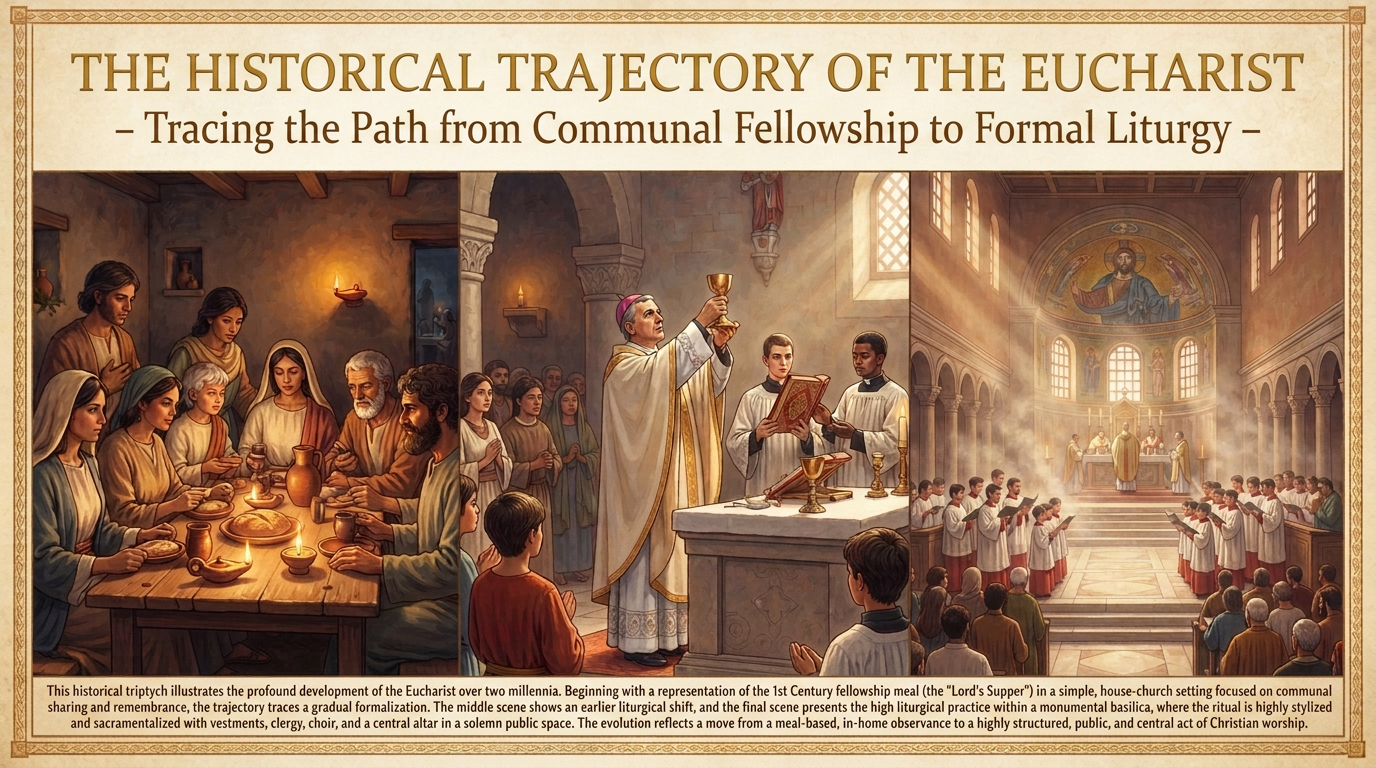
The Eucharist’s evolution into formal liturgy is one of the most fascinating transformations in church history — a journey from simple home gatherings to structured worship that shaped Christian identity for centuries.
🍞 From Shared Meal to Sacred Rite
In the first century, the Eucharist was part of a communal meal — believers gathered in homes, prayed, read Scripture, and shared bread and wine in remembrance of Jesus. Over time, as the church grew and persecution scattered believers, the meal became symbolic rather than social. The focus shifted from fellowship to sacramental meaning — the bread and wine representing Christ’s body and blood.
🕊️ Separation from the Agape Meal
Originally, the Eucharist was celebrated alongside the Agape (love feast) — a full meal expressing unity. By the late 2nd century, abuses and disorder during these meals led leaders like Tertullian and Ignatius of Antioch to separate the Eucharist from ordinary dining. The Eucharist became a distinct act of worship, celebrated with reverence and prayer rather than casual eating.
📜 Emergence of Structure
As communities expanded, bishops and presbyters organized worship to preserve unity and doctrine. By the mid‑2nd century, Justin Martyr described a recognizable pattern:
- Reading of Scripture
- Homily or exhortation
- Prayers of the faithful
- Presentation of bread and wine
- Thanksgiving prayer (Eucharistia)
- Distribution to those present and sending portions to the absent
This description is the earliest record of a formal liturgy — remarkably similar to modern Christian worship.
🕯️ Symbolism and Reverence
The Eucharist became the centerpiece of Sunday worship, replacing the Sabbath meal.
- The altar replaced the home table.
- Vestments and ritual gestures developed to express holiness.
- The language of sacrifice emerged — not a repetition of Christ’s death, but a memorial participation in it.
- The prayers emphasized thanksgiving, unity, and the hope of resurrection.
🏛️ Transition to Public Worship
After persecution eased in the 3rd century, Christians built dedicated spaces for worship. The Eucharist moved from private homes to basilicas, accompanied by incense, processions, and choirs. This shift marked the beginning of liturgical tradition — structured, communal, and enduring.
✨ Why It Matters
The evolution of the Eucharist reflects the church’s growth from family to institution, from memory to theology. Yet its heart remained the same: thanksgiving for salvation and unity in Christ.

Leave a Reply