A place to grow your relationship with God

Archive for the ‘The Story of Mankind’ Category

The Story of Mankind: The Crusades

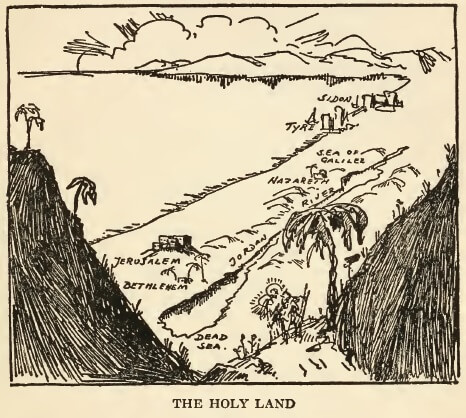
During three centuries there had been peace between Christians and Muslims except in Spain and in the eastern Roman Empire, the two states defending the gateways of Europe. The Muslims having conquered Syria in the seventh century were in possession of the Holy Land. But they regarded Jesus as a great prophet (though not quite as great as Mohammed), and they did not interfere with the pilgrims who wished to pray in the church which Saint Helena, the mother of the Emperor Constantine, had built on the spot of the Holy Grave. But early in the eleventh century, a Tartar tribe from the wilds of Asia, called the Seljuks or Turks, became masters of the Muslim state in western Asia and then the period of tolerance came to an end. The Turks took all of Asia Minor away from the eastern Roman Emperors and they made an end to the trade between east and west.

Alexis, the Emperor, who rarely saw anything of his Christian neighbors of the west, appealed for help and pointed to the danger which threatened Europe should the Turks take Constantinople.

The Italian cities which had established colonies along the coast of Asia Minor and Palestine, in fear for their possessions, reported terrible stories of Turkish atrocities and Christian suffering. All Europe got excited.

Pope Urban II, a Frenchman from Reims, who had been educated at the same famous cloister of Cluny which had trained Gregory VII, thought that the time had come for action. The general state of Europe was far from satisfactory. The primitive agricultural methods of that day (unchanged since Roman times) caused a constant scarcity of food. There was unemployment and hunger and these are apt to lead to discontent and riots. Western Asia in older days had fed millions. It was an excellent field for the purpose of immigration.

Therefore at the council of Clermont in France in the year 1095 the Pope arose, described the terrible horrors which the infidels had inflicted upon the Holy Land, gave a glowing description of this country which ever since the days of Moses had been overflowing with milk and honey, and exhorted the knights of France and the people of Europe in general to leave wife and child and deliver Palestine from the Turks.

A wave of religious hysteria swept across the continent. All reason stopped. Men would drop their hammer and saw, walk out of their shop and take the nearest road to the east to go and kill Turks. Children would leave their homes to “go to Palestine” and bring the terrible Turks to their knees by the mere appeal of their youthful zeal and Christian piety. Fully ninety percent of those enthusiasts never got within sight of the Holy Land. They had no money. They were forced to beg or steal to keep alive. They became a danger to the safety of the highroads and they were killed by the angry country people.

An unofficial crusade, a wild mob of honest Christians, defaulting bankrupts, penniless noblemen and fugitives from justice, following the lead of half-crazy Peter the Hermit and Walter-without-a-Cent, began their campaign against the Infidels by murdering all the Jews whom they met by the way. They got as far as Hungary and then they were all killed.

This experience taught the Church a lesson. Enthusiasm alone would not set the Holy Land free. Organization was as necessary as good-will and courage. A year was spent in training and equipping an army of 200,000 men. They were placed under command of Godfrey of Bouillon, Robert, duke of Normandy, Robert, count of Flanders, and a number of other noblemen, all experienced in the art of war.

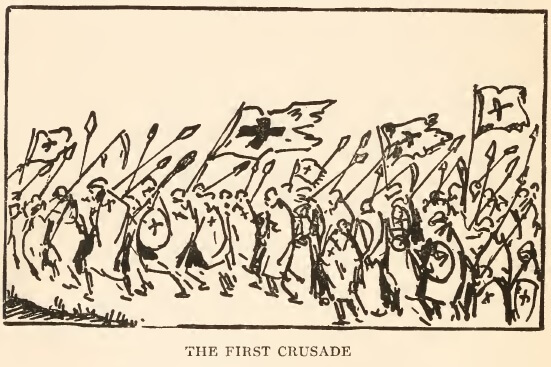
In the year 1096 this official First Crusade started upon its long voyage. At Constantinople the knights did homage to the Emperor. (For as I have told you, traditions die hard, and a Roman Emperor, however poor and powerless, was still held in great respect). Then they crossed into Asia, killed all the Muslims who fell into their hands, stormed Jerusalem, massacred the Muslim population, and marched to the Holy Sepulcher to give praise and thanks amidst tears of piety and gratitude. But soon the Turks were strengthened by the arrival of fresh troops. Then they retook Jerusalem and in turn killed the faithful followers of the Cross.

During the next two centuries, seven other crusades took place. Gradually the Crusaders learned the technique of the trip. The land voyage was too tedious and too dangerous. They preferred to cross the Alps and go to Genoa or Venice where they took ship for the east. The Genoese and the Venetians made this trans-Mediterranean passenger service a very profitable business. They charged exorbitant rates, and when the Crusaders (most of whom had very little money) could not pay the price, these Italian “profiteers” kindly allowed them to “work their way across.” In return for a fare from Venice to Acre, the Crusader undertook to do a stated amount of fighting for the owners of their vessel. In this way Venice greatly increased her territory along the coast of the Adriatic and in Greece, where Athens became a Venetian colony, and in the islands of Cyprus and Crete and Rhodes.

All this, however, helped little in settling the question of the Holy Land. After the first enthusiasm had worn off, a short crusading trip became part of the liberal education of every well-bred young man, and there never was any lack of candidates for service in Palestine. But the old zeal was gone. The Crusaders, who had begun their warfare with deep hatred for the Muslims and great love for the Christian people of the eastern Roman Empire and Armenia, suffered a complete change of heart. They came to despise the Greeks of Byzantium, who cheated them and frequently betrayed the cause of the Cross, and the Armenians and all the other Levantine races, and they began to appreciate the virtues of their enemies who proved to be generous and fair opponents.

Of course, it would never do to say this openly. But when the Crusader returned home, they were likely to imitate the manners which he had learned from their foe, compared to whom the average western knight was still a good deal of a country bumpkin. They also brought with them several new food-stuffs, such as peaches and spinach which he planted in their garden and grew for their own benefit. They gave up the barbarous custom of wearing a load of heavy armor and appeared in the flowing robes of silk or cotton which were the traditional habit of the followers of the Prophet and were originally worn by the Turks. Indeed the Crusades, which had begun as a punitive expedition against their religious adversaries, became a course of general instruction in civilization for millions of young Europeans.

From a military and political point of view the Crusades were a failure. Jerusalem and a number of cities were taken and lost. A dozen little kingdoms were established in Syria and Palestine and Asia Minor, but they were re-conquered by the Turks and after the year 1244 (when Jerusalem became definitely Turkish) the status of the Holy Land was the same as it had been before 1095.

But Europe had undergone a great change. The people of the west had been allowed a glimpse of the light and the sunshine and the beauty of the east. Their dreary castles no longer satisfied them. They wanted a broader life. Neither Church nor State could give this to them.

They found it in the cities.

The Story of Mankind: Pope vs. Emperor

It is very difficult to understand the people of bygone ages. Your own grandfather, whom you see every day, is a mysterious being who lives in a different world of ideas and clothes and manners. I am now telling you the story of some of your grandfathers who are twenty-five generations removed, and I do not expect you to catch the meaning of what I write without re-reading this chapter a number of times.

The average person of the Middle Ages lived a very simple and uneventful life. Even free citizens, able to come and go at will, rarely left their own neighborhoods. There were no printed books and only a few manuscripts. Here and there, a small band of industrious monks taught reading and writing and some arithmetic. But science and history and geography lay buried beneath the ruins of Greece and Rome.

Whatever people knew about the past they had learned by listening to stories and legends. Such information, which goes from parent to child, is often slightly incorrect in details, but it will preserve the main facts of history with astonishing accuracy. After more than two thousand years, the mothers of India still frighten their naughty children by telling them that “Iskander will get them,” and Iskander is none other than Alexander the Great, who visited India in the year 330 before the birth of Christ, but whose story has lived through all these ages.

The people of the early Middle Ages never saw a textbook of Roman history. They were ignorant of many things which every schoolboy today knows before he has entered the third grade. But the Roman Empire, which is merely a name to you, was to them something very much alive. They felt it. They willingly recognized the Pope as their spiritual leader because he lived in Rome and represented the idea of the Roman superpower. And they were profoundly grateful when Charlemagne, and afterwards Otto the Great, revived the idea of a world-empire and created the Holy Roman Empire, that the world might again be as it always had been.

But the fact that there were two different heirs to the Roman tradition placed the faithful burghers of the Middle Ages in a difficult position. The theory behind the medieval political system was both sound and simple. While the worldly master (the emperor) looked after the physical well-being of his subjects, the spiritual master (the Pope) guarded their souls.

In practice, however, the system worked very badly. The Emperor invariably tried to interfere with the affairs of the church and the Pope retaliated and told the Emperor how he should rule his domains. Then they told each other to mind their own business in very unceremonious language and the inevitable end was war.

Under those circumstances, what were the people to do, A good Christian obeyed both the Pope and his King. But the Pope and the Emperor were enemies. Which side should a dutiful subject and an equally dutiful Christian take?

It was never easy to give the correct answer. When the Emperor happened to be a man of energy and was sufficiently well provided with money to organize an army, he was very apt to cross the Alps and march on Rome, besiege the Pope in his own palace if need be, and force His Holiness to obey the imperial instructions or suffer the consequences.

But more frequently the Pope was the stronger. Then the Emperor or the King together with all his subjects was excommunicated. This meant that all churches were closed, that no one could be baptized, that no dying person could be given absolution—in short, that half of the functions of medieval government came to an end.

More than that, the people were absolved from their oath of loyalty to their sovereign and were urged to rebel against their master. But if they followed this advice of the distant Pope and were caught, they were hanged by their nearby Liege Lord and that too was very unpleasant.

Indeed, the poor fellows were in a difficult position and none fared worse than those who lived during the latter half of the eleventh century, when the Emperor Henry IV of Germany and Pope Gregory VII fought a two-round battle which decided nothing and upset the peace of Europe for almost fifty years.

In the middle of the eleventh century there had been a strong movement for reform in the church. The election of the Popes, thus far, had been a most irregular affair. It was to the advantage of the Holy Roman Emperors to have a well-disposed priest elected to the Holy See. They frequently came to Rome at the time of election and used their influence for the benefit of one of their friends.

In the year 1059 this had been changed. By a decree of Pope Nicholas II, the principal priests and deacons of the churches in and around Rome were organized into the so-called College of Cardinals, and this gathering of prominent churchmen (the word “Cardinal” meant principal) was given the exclusive power of electing the future Popes.

In the year 1073 the College of Cardinals elected a priest by the name of Hildebrand, the son of very simple parents in Tuscany, as Pope, and he took the name of Gregory VII. His energy was unbounded. His belief in the supreme powers of his Holy Office was built upon a granite rock of conviction and courage. In the mind of Gregory, the Pope was not only the absolute head of the Christian church, but also the highest Court of Appeal in all worldly matters. The Pope who had elevated simple German princes to the dignity of Emperor could depose them at will. He could veto any law passed by duke or king or emperor, but whosoever should question a papal decree, let him beware, for the punishment would be swift and merciless.

Gregory sent ambassadors to all the European courts to inform the potentates of Europe of his new laws and asked them to take due notice of their contents. William the Conqueror promised to be good, but Henry IV, who since the age of six had been fighting with his subjects, had no intention of submitting to the Papal will. He called together a college of German bishops, accused Gregory of every crime under the sun and then had him deposed by the council of Worms.

The Pope answered with excommunication and a demand that the German princes rid themselves of their unworthy ruler. The German princes, only too happy to be rid of Henry, asked the Pope to come to Augsburg and help them elect a new Emperor.

Gregory left Rome and travelled northward. Henry, who was no fool, appreciated the danger of his position. At all costs he must make peace with the Pope, and he must do it at once. In the midst of winter, he crossed the Alps and hastened to Canossa where the Pope had stopped for a short rest. Three long days, from the 25th to the 28th of January of the year 1077, Henry, dressed as a penitent pilgrim (but with a warm sweater underneath his monkish garb), waited outside the gates of the castle of Canossa. Then he was allowed to enter and was pardoned for his sins. But the repentance did not last long. As soon as Henry had returned to Germany, he behaved exactly as before. Again, he was excommunicated. For the second time a council of German bishops deposed Gregory, but this time, when Henry crossed the Alps, he was at the head of a large army, besieged Rome and forced Gregory to retire to Salerno, where he died in exile. This first violent outbreak decided nothing. As soon as Henry was back in Germany, the struggle between Pope and Emperor was continued.

The Hohenstaufen family which got hold of the Imperial German Throne shortly afterwards, were even more independent than their predecessors. Gregory had claimed that the Popes were superior to all kings because they (the Popes) at the Day of Judgement would be responsible for the behavior of all the sheep of their flock, and in the eyes of God, a king was one of that faithful herd.

Frederick of Hohenstaufen, commonly known as Barbarossa or Red Beard, set up the counter-claim that the Empire had been bestowed upon his predecessor “by God himself” and as the Empire included Italy and Rome, he began a campaign which was to add these “lost provinces” to the northern country. Barbarossa was accidentally drowned in Asia Minor during the second Crusade, but his son Frederick II, a brilliant young man who in his youth had been exposed to the civilization of the Muslims of Sicily, continued the war. The Popes accused him of heresy. It is true that Frederick seems to have felt a deep and serious contempt for the rough Christian world of the North, for the boorish German Knights and the intriguing Italian priests. But he held his tongue, went on a Crusade and took Jerusalem from the infidel and was duly crowned as King of the Holy City. Even this act did not placate the Popes. They deposed Frederick and gave his Italian possessions to Charles of Anjou, the brother of that King Louis of France who became famous as Saint Louis. This led to more warfare. Conrad V, the son of Conrad IV, and the last of the Hohenstaufens, tried to regain the kingdom, and was defeated and decapitated at Naples. But twenty years later, the French who had made themselves thoroughly unpopular in Sicily were all murdered during the so-called Sicilian Vespers, and so it went.

The quarrel between the Popes and the Emperors was never settled, but after a while the two enemies learned to leave each other alone.

In the year 1278, Rudolph of Hapsburg was elected Emperor. He did not take the trouble to go to Rome to be crowned. The Popes did not object and in turn they kept away from Germany. This meant peace but two entire centuries which might have been used for the purpose of internal organization had been wasted in useless warfare.

It is an ill wind however that bloweth no good to someone. The little cities of Italy, by a process of careful balancing, had managed to increase their power and their independence at the expense of both Emperors and Popes. When the rush for the Holy Land began, they were able to handle the transportation problem of the thousands of eager pilgrims who were clamoring for passage, and at the end of the Crusades they had built themselves such strong defenses of brick and of gold that they could defy Pope and Emperor with equal indifference.

Church and State fought each other and a third party—the medieval city—ran away with the spoils.

The Story of Mankind: Chivalry

It was quite natural that the professional fighting-men of the Middle Ages should try to establish some sort of organization for their mutual benefit and protection. Out of this need for close organization, Knighthood or Chivalry was born.

We know very little about the origins of Knighthood. But as the system developed, it gave the world something which it needed very badly—a definite rule of conduct which softened the barbarous customs of that day and made life more livable than it had been during the five hundred years of the Dark Ages. It was not an easy task to civilize the rough frontiersmen who had spent most of their time fighting Muslims and Huns and Norsemen. Often, they were guilty of backsliding and having vowed all sorts of oaths about mercy and charity in the morning, they would murder all their prisoners before evening. But progress is ever the result of slow and ceaseless labor, and finally the most unscrupulous of knights was forced to obey the rules of his “class” or suffer the consequences.

These rules were different in the various parts of Europe, but they all made much of “service” and “loyalty to duty.” The Middle Ages regarded service as something very noble and beautiful. It was no disgrace to be a servant, provided you were a good servant and did not slacken on the job. As for loyalty, at a time when life depended upon the faithful performance of many unpleasant duties, it was the chief virtue of the fighting man.

A young knight therefore was asked to swear that he would be faithful as a servant to God and as a servant to his King. Furthermore, he promised to be generous to those whose need was greater than his own. He pledged his word that he would be humble in his personal behavior and would never boast of his own accomplishments and that he would be a friend of all those who suffered, (with the exception of the Muslims, whom he was expected to kill on sight).

Around these vows, which were merely the Ten Commandments expressed in terms which the people of the Middle Ages could understand, there developed a complicated system of manners and outward behavior. The knights tried to model their own lives after the example of those heroes of Arthur’s Round Table and Charlemagne’s court of whom the troubadours had told them and of whom you may read in many delightful books which are enumerated at the end of this volume. They hoped that they might prove as brave as Lancelot and as faithful as Roland. They carried themselves with dignity and they spoke careful and gracious words that they might be known as True Knights, however humble the cut of their coat or the size of their purse.

In this way the order of Knighthood became a school of those good manners which are the oil of the social machinery. Chivalry came to mean courtesy and the feudal castle showed the rest of the world what clothes to wear, how to eat, how to ask a lady for a dance and the thousand and one little things of every-day behavior which help to make life interesting and agreeable.

Like all human institutions, Knighthood was doomed to perish as soon as it had outlived its usefulness.

The crusades, about which one of the next chapters tells, were followed by a great revival of trade. Cities grew overnight. The townspeople became rich, hired good school teachers and soon were the equals of the knights. The invention of gunpowder deprived the heavily armed “Chevalier” of his former advantage and the use of mercenaries made it impossible to conduct a battle with the delicate niceties of a chess tournament. The knight became superfluous. Soon he became a ridiculous figure, with his devotion to ideals that had no longer any practical value. It was said that the literary character of the noble Don Quixote de la Mancha represented the last of the true knights. In the story, after his death, his trusted sword and his armor were sold to pay his debts.

But somehow or other that sword seems to have fallen into the hands of a number of real men in history. General George Washington carried it during the hopeless days of Valley Forge amid the American Revolution. It was the only defense of British Army officer Major-General Charles George Gordon, when he had refused to desert the people who had been entrusted to his care, and stayed to meet his death in the besieged fortress of Khartoum in Sudan.

And I am not quite sure but that it proved of invaluable strength in winning the Great War.

The Story of Mankind: Feudalism

The following, then, is the state of Europe in the year one thousand, when most people were so unhappy that they welcomed the prophecy foretelling the approaching end of the world and rushed to the monasteries, that the Day of Judgement might find them engaged upon devout duties.

At an unknown date, the Germanic tribes had left their old home in Asia and had moved westward into Europe. By sheer pressure of numbers they had forced their way into the Roman Empire. They had destroyed the great western empire, but the eastern part, being off the main route of the great migrations, had managed to survive and feebly continued the traditions of Rome’s ancient glory.

During the days of disorder which had followed, (the true “dark ages” of history, the sixth and seventh centuries of our era,) the German tribes had been persuaded to accept the Christian religion and had recognized the Bishop of Rome as the Pope or spiritual head of the world. In the ninth century, the organizing genius of Charlemagne had revived the Roman Empire and had united the greater part of western Europe into a single state. During the tenth century this empire had gone to pieces. The western part had become a separate kingdom, France. The eastern half was known as the Holy Roman Empire of the German nation, and the rulers of this federation of states then pretended that they were the direct heirs of Caesar and Augustus.

Unfortunately the power of the kings of France did not stretch beyond the moat of their royal residence, while the Holy Roman Emperor was openly defied by his powerful subjects whenever it suited their fancy or their profit.

To increase the misery of the masses of the people, the triangle of western Europe was forever exposed to attacks from three sides. On the south lived the ever-dangerous Muslims. The western coast was ravaged by the Northmen. The eastern frontier (defenseless except for the short stretch of the Carpathian Mountains) was at the mercy of hordes of Huns, Hungarians, Slavs and Tartars.

The peace of Rome was a thing of the remote past, a dream of the “Good Old Days” that were gone forever. It was a question of “fight or die,” and quite naturally people preferred to fight. Forced by circumstances, Europe became an armed camp and there was a demand for strong leadership. Both King and Emperor were far away. The frontiersmen (and most of Europe in the year 1000 was “frontier”) must help themselves. They willingly submitted to the representatives of the king who were sent to administer the outlying districts, provided they could protect them against their enemies.

Soon central Europe was dotted with small principalities, each one ruled by a duke or a count or a baron or a bishop, as the case might be, and organized as a fighting unit. These dukes and counts and barons had sworn to be faithful to the king who had given them their “feudum” (hence our word “feudal,”) in return for their loyal services and a certain amount of taxes. But travel in those days was slow and the means of communication were exceedingly poor. The royal or imperial administrators therefore enjoyed great independence, and within the boundaries of their own province they assumed most of the rights which in truth belonged to the king.

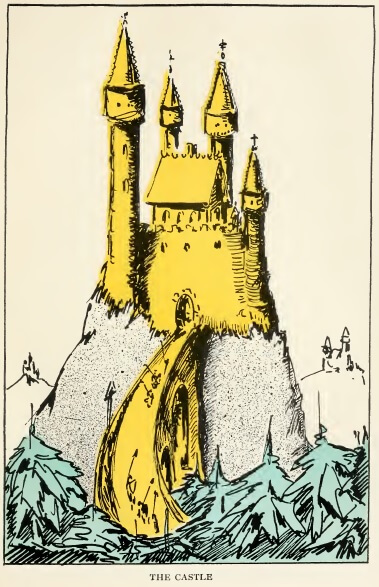
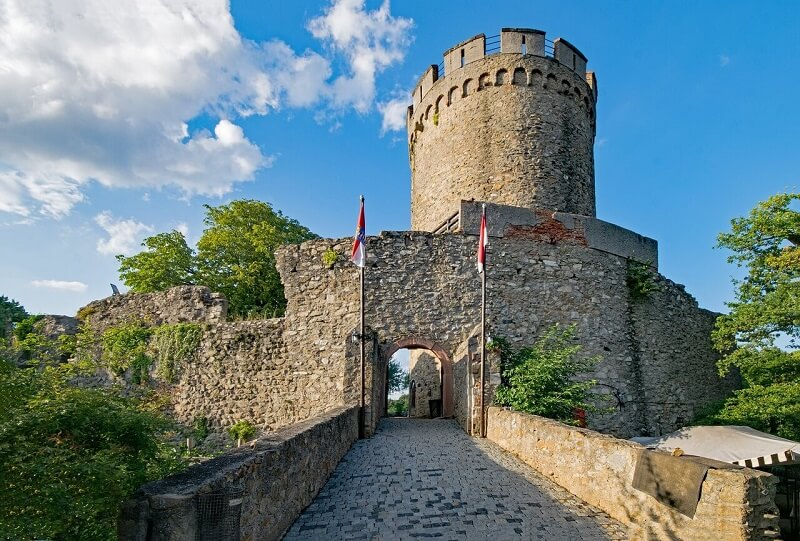
But you would make a mistake if you supposed that the people of the eleventh century objected to this form of government. They supported Feudalism because it was a very practical and necessary institution. Their Lord and Master usually lived in a big stone house erected on the top of a steep rock or built between deep moats, but within sight of their subjects. In case of danger the subjects found shelter behind the walls of the baronial stronghold. That is why they tried to live as near the castle as possible and it accounts for the many European cities which began their career around a feudal fortress.

But the knight of the early middle ages was much more than a professional soldier. He was the civil servant of that day. He was the judge of his community and he was the chief of police. He caught the highwaymen and protected the wandering peddlers who were the merchants of the eleventh century. He looked after the dikes so that the countryside should not be flooded (just as the first noblemen had done in the valley of the Nile four thousand years before). He encouraged the troubadours who wandered from place to place telling the stories of the ancient heroes who had fought in the great wars of the migrations. Besides, he protected the churches and the monasteries within his territory, and although he could neither read nor write, (it was considered unmanly to know such things,) he employed a number of priests who kept his accounts and who registered the marriages and the births and the deaths which occurred within the baronial or ducal domains.

In the fifteenth century the kings once more became strong enough to exercise those powers which belonged to them because they were “anointed of God.” Then the feudal knights lost their former independence. Reduced to the rank of country squires, they no longer filled a need and soon they became a nuisance. But Europe would have perished without the “feudal system” of the dark ages. There were many bad knights as there are many bad people today. But generally speaking, the rough-fisted barons of the twelfth and thirteenth century were hard-working administrators who rendered a most useful service to the cause of progress. During that era the noble torch of learning and art which had illuminated the world of the Egyptians and the Greeks and the Romans was burning very low. Without the knights and their good friends, the monks, civilization would have been extinguished entirely, and the human race would have been forced to begin once more where the caveman had left off.

The Story of Mankind: The Norsemen

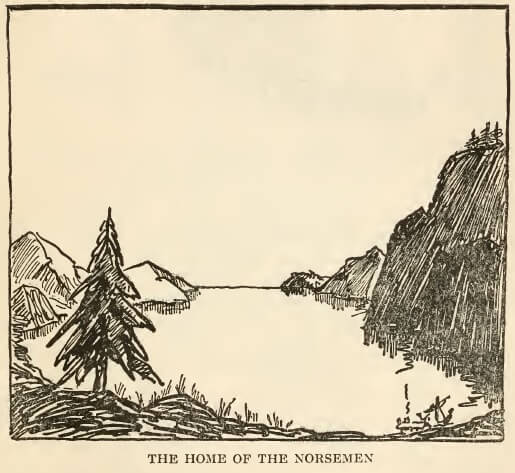
In the third and fourth centuries, the Germanic tribes of central Europe had broken through the defenses of the Empire that they might plunder Rome and live on the fat of the land. In the eighth century it became the turn of the Germans to be the “plundered-ones.” They did not like this at all, even if their enemies were their first cousins, the Norsemen, who lived in Denmark and Sweden and Norway.

What forced these hardy sailors to turn pirate we do not know, but once they had discovered the advantages and pleasures of a buccaneering career there was no one who could stop them. They would suddenly descend upon a peaceful Frankish or Frisian village, situated on the mouth of a river. They would kill all the men and steal all the women. Then they would sail away in their fast-sailing ships and when the soldiers of the king or emperor arrived upon the scene, the robbers were gone and nothing remained but a few smoldering ruins.

During the days of disorder which followed the death of Charlemagne, the Northmen developed great activity. Their fleets made raids upon every country and their sailors established small independent kingdoms along the coast of Holland and France and England and Germany, and they even found their way into Italy. The Northmen were very intelligent. They soon learned to speak the language of their subjects and gave up the uncivilized ways of the early Vikings (or Sea-Kings) who had been very picturesque but also very unwashed and terribly cruel.

Early in the tenth century a Viking by the name of Rollo had repeatedly attacked the coast of France. The king of France, too weak to resist these northern robbers, tried to bribe them into “being good.” He offered them the province of Normandy, if they would promise to stop bothering the rest of his domains. Rollo accepted this bargain and became “Duke of Normandy.”

But the passion of conquest was strong in the blood of his children. Across the channel, only a few hours away from the European mainland, they could see the white cliffs and the green fields of England. Poor England had passed through difficult days. For two hundred years it had been a Roman colony.

After the Romans left, it had been conquered by the Angles and the Saxons, two German tribes from Schleswig. Next the Danes had taken the greater part of the country and had established the kingdom of Cnut. The Danes had been driven away and now (it was early in the eleventh century) another Saxon king, Edward the Confessor, was on the throne. But Edward was not expected to live long and he had no children. The circumstances favored the ambitious dukes of Normandy.

In 1066 Edward died. Immediately William of Normandy crossed the channel, defeated and killed Harold of Wessex (who had taken the crown) at the battle of Hastings, and proclaimed himself king of England.

In another chapter I have told you how in the year 800 a German chieftain had become a Roman Emperor. Now in the year 1066 the grandson of a Norse pirate was recognized as King of England.

Why should we ever read fairy stories, when the truth of history is so much more interesting and entertaining?

The Story of Mankind: Charlemagne

The battle of Poitiers had saved Europe from the Muslims. But the enemy within—the hopeless disorder which had followed the disappearance of the Roman police officer—that enemy remained. It is true that the new converts of the Christian faith in Northern Europe felt a deep respect for the mighty Bishop of Rome. But that poor bishop did not feel any too safe when he looked toward the distant mountains. Heaven knew what fresh hordes of barbarians were ready to cross the Alps and begin a new attack on Rome. It was necessary—very necessary—for the spiritual head of the world to find an ally with a strong sword and a powerful fist who was willing to defend His Holiness in case of danger.


And so, the Popes, who were not only very holy but also very practical, cast about for a friend, and presently they made overtures to the most promising of the Germanic tribes who had occupied north-western Europe after the fall of Rome. They were called the Franks. One of their earliest kings, called Merovech, had helped the Romans in the battle of the Catalaunian fields in the year 451 when they defeated the Huns. His descendants, the Merovingians, had continued to take little bits of imperial territory until the year 486 when king Clovis (the old French word for “Louis”) felt himself strong enough to beat the Romans in the open. But his descendants were weak men who left the affairs of state to their Prime minister, the “Major Domus” or Master of the Palace.

Frankish Pepin the Short, the son of the famous Charles Martel, who succeeded his father as Master of the Palace, hardly knew how to handle the situation. His royal master was a devout theologian, without any interest in politics. Pepin asked the Pope for advice. The Pope, who was a practical person, answered that the “power in the state belonged to him who was actually possessed of it.” Pepin took the hint. He persuaded Childeric, the last of the Merovingians to become a monk and then made himself king with the approval of the other Germanic chieftains. But this did not satisfy the shrewd Pepin. He wanted to be something more than a barbarian chieftain. He staged an elaborate ceremony at which Boniface, the great missionary of the European northwest, anointed him and made him a “King by the grace of God.” It was easy to slip those words, “Del gratia,” into the coronation service. It took almost fifteen hundred years to get them out again.

Pepin was sincerely grateful for this kindness on the part of the church. He made two expeditions to Italy to defend the Pope against his enemies. He took Ravenna and several other cities away from the Longobards and presented them to His Holiness, who incorporated these new domains into the so-called Papal State, which remained an independent country until half a century ago.

After Pepin’s death, the relations between Rome and Aix-la-Chapelle or Nymwegen or Ingelheim, (the Frankish Kings did not have one official residence, but travelled from place to place with all their ministers and court officers,) became more and more cordial. Finally, the Pope and the King took a step which was to influence the history of Europe in a most profound way.

Charles, commonly known as Carolus Magnus or Charlemagne, succeeded Pepin in the year 768. He had conquered the land of the Saxons in eastern Germany and had built towns and monasteries all over the greater part of northern Europe. At the request of certain enemies of Abd-ar-Rahman, he had invaded Spain to fight the Moors. But in the Pyrenees he had been attacked by the wild Basques and had been forced to retire. It was upon this occasion that Roland, the great Margrave of Breton, showed what a Frankish chieftain of those early days meant when he promised to be faithful to his King, and gave his life and that of his trusted followers to safeguard the retreat of the royal army.

During the last ten years of the eighth century, however, Charles was obliged to devote himself exclusively to affairs of the South. The Pope, Leo III, had been attacked by a band of Roman rowdies and had been left for dead in the street. Some kind people had bandaged his wounds and had helped him to escape to the camp of Charles, where he asked for help. An army of Franks soon restored quiet and carried Leo back to the Lateran Palace which ever since the days of Constantine, had been the home of the Pope. That was in December of the year 799. On Christmas day of the next year, Charlemagne, who was staying in Rome, attended the service in the ancient church of St. Peter. When he arose from prayer, the Pope placed a crown upon his head, called him Emperor of the Romans and hailed him once more with the title of “Augustus” which had not been heard for hundreds of years.

Once more Northern Europe was part of a Roman Empire, but the dignity was held by a German chieftain who could read just a little and never learned to write. But he could fight and for a short while there was order and even the rival emperor in Constantinople sent a letter of approval to his “dear Brother.”

Unfortunately, this splendid old man died in the year 814. His sons and his grandsons at once began to fight for the largest share of the imperial inheritance. Twice the Carolingian lands were divided, by the treaties of Verdun in the year 843 and by the treaty of Mersen-on-the-Meuse in the year 870. The latter treaty divided the entire Frankish Kingdom into two parts. Charles the Bold received the western half. It contained the old Roman province called Gaul where the language of the people had become thoroughly Romanized. The Franks soon learned to speak this language, and this accounts for the strange fact that a purely Germanic land like France should speak a Latin tongue.

The other grandson got the eastern part, the land which the Romans had called Germania. Those inhospitable regions had never been part of the old Empire. Augustus had tried to conquer this “far east,” but his legions had been annihilated in the Teutoburg Wood in the year 9 and the people had never been influenced by the higher Roman civilization. They spoke the popular Germanic tongue. The Teuton word for “people” was “thiot.” The Christian missionaries therefore called the German language the “lingua theotisca” or the “lingua teutisca,” the “popular dialect” and this word “teutisca” was changed into “Deutsch” which accounts for the name “Deutschland.”

As for the famous Imperial Crown, it very soon slipped off the heads of the Carolingian successors and rolled back onto the Italian plain, where it became a sort of plaything of a number of little potentates who stole the crown from each other amidst much bloodshed and wore it (with or without the permission of the Pope) until it was the turn of some more ambitious neighbor. The Pope, once more sorely beset by his enemies, sent north for help. He did not appeal to the ruler of the west-Frankish kingdom, this time. His messengers crossed the Alps and addressed themselves to Otto, a Saxon Prince who was recognized as the greatest chieftain of the different Germanic tribes.

Otto, who shared his people’s affection for the blue skies and the gay and beautiful people of the Italian peninsula, hastened to the rescue. In return for his services, the Pope, Leo VIII, made Otto “Emperor,” and the eastern half of Charles’ old kingdom was henceforth known as the “Holy Roman Empire of the German Nation.”

This strange political creation managed to live to the ripe old age of eight hundred and thirty-nine years. In the year 1801, (during the presidency of Thomas Jefferson,) it was most unceremoniously relegated to the historical scrapheap. The brutal fellow who destroyed the old Germanic Empire was the son of a Corsican notary-public who had made a brilliant career in the service of the French Republic. He was ruler of Europe by the grace of his famous Guard Regiments, but he desired to be something more. He sent to Rome for the Pope and the Pope came and stood by while General Napoleon placed the imperial crown upon his own head and proclaimed himself heir to the tradition of Charlemagne. For history is like life. The more things change, the more they remain the same.

The Story of Mankind: Mohammed

Since the days of Carthage and Hannibal we have said nothing of the Semitic people. You will remember how they filled all the chapters devoted to the story of the Ancient World. The Babylonians, the Assyrians, the Phoenicians, the Jews, the Arameans, the Chaldeans, all of them Semites, had been the rulers of western Asia for thirty or forty centuries. They had been conquered by the Indo-European Persians who had come from the east and by the Indo-European Greeks who had come from the west. A hundred years after the death of Alexander the Great, Carthage, a colony of Semitic Phoenicians, had fought the Indo-European Romans for the mastery of the Mediterranean. Carthage had been defeated and destroyed and for eight hundred years the Romans had been masters of the world. In the seventh century, however, another Semitic tribe appeared upon the scene and challenged the power of the west. They were the Arabs, peaceful shepherds who had roamed through the desert since the beginning of time without showing any signs of imperial ambitions.

Then they listened to Mohammed, mounted their horses and in less than a century they had pushed to the heart of Europe and proclaimed the glories of Allah, “the only God,” and Mohammed, “the prophet of the only God,” to the frightened peasants of France.

The story of Ahmed, the son of Abdallah and Aminah (usually known as Mohammed, or “he who will be praised,”); reads like a chapter in the “Thousand and One Nights.” He was a camel-driver, born in Mecca. He seems to have been an epileptic and he suffered from spells of unconsciousness when he dreamed strange dreams and heard the voice of the angel Gabriel, whose words were afterwards written down in a book called the Koran. His work as a caravan leader carried him all over Arabia and he was constantly falling in with Jewish merchants and with Christian traders, and he came to see that the worship of a single God was a very excellent thing. His own people, the Arabs, still revered queer stones and trunks of trees as their ancestors had done, tens of thousands of years before. In Mecca, their holy city, stood a little square building, the Kaaba, full of idols and strange odds and ends of Hoo-doo worship.

Mohammed decided to be the Moses of the Arab people. He could not well be a prophet and a camel-driver at the same time. So he made himself independent by marrying his employer, the rich widow Chadija. Then he told his neighbors in Mecca that he was the long-expected prophet sent by Allah to save the world. The neighbors laughed most heartily and when Mohammed continued to annoy them with his speeches they decided to kill him. They regarded him as a lunatic and a public bore who deserved no mercy. Mohammed heard of the plot and in the dark of night he fled to Medina together with Abu Bekr, his trusted pupil. This happened in the year 622. It is the most important date in Muslim history and is known as the Hegira—the year of the Great Flight.

In Medina, Mohammed, who was a stranger, found it easier to proclaim himself a prophet than in his home city, where everyone had known him as a simple camel-driver. Soon he was surrounded by an increasing number of followers, or Muslims, who accepted the Islam, “the submission to the will of God,” which Mohammed praised as the highest of all virtues. For seven years he preached to the people of Medina. Then he believed himself strong enough to begin a campaign against his former neighbors who had dared to sneer at him and his Holy Mission in his old camel-driving days. At the head of an army of Medinese he marched across the desert. His followers took Mecca without great difficulty, and having slaughtered a number of the inhabitants, they found it quite easy to convince the others that Mohammed was really a great prophet.

From that time on until the year of his death, Mohammed was fortunate in everything he undertook.

There are two reasons for the success of Islam. In the first place, the creed which Mohammed taught to his followers was very simple. The disciples were told that they must love Allah, the Ruler of the World, the Merciful and Compassionate. They must honor and obey their parents. They were warned against dishonesty in dealing with their neighbors and were admonished to be humble and charitable, to the poor and to the sick. Finally, they were ordered to abstain from strong drink and to be very frugal in what they ate. That was all. There were no priests, who acted as shepherds of their flocks and asked that they be supported at the common expense. The Muslim churches or mosques were merely large stone halls without benches or pictures, where the faithful could gather (if they felt so inclined) to read and discuss chapters from the Koran, the Holy Book. But the average Muslim carried his religion with him and never felt himself hemmed in by the restrictions and regulations of an established church. Five times a day he turned his face towards Mecca, the Holy City, and said a simple prayer. For the rest of the time he let Allah rule the world as he saw fit and accepted whatever fate brought him with patient resignation.

Of course such an attitude towards life did not encourage the Faithful to go forth and invent electrical machinery or bother about railroads and steamship lines. But it gave every Muslim a certain amount of contentment. It bade him be at peace with himself and with the world in which he lived and that was a very good thing.

The second reason which explains the success of the Muslims in their warfare upon the Christians, had to do with the conduct of those Muslim soldiers who went forth to do battle for the true faith. The Prophet promised that those who fell, facing the enemy, would go directly to Heaven. This made sudden death in the field preferable to a long but dreary existence upon this earth. It gave the Muslims an enormous advantage over the Crusaders who were in constant dread of a dark hereafter, and who stuck to the good things of this world as long as they possibly could. Incidentally it explains why even today Muslim soldiers will charge into the fire of European machine guns quite indifferent to the fate that awaits them and why they are such dangerous and persistent enemies.

Having put his religious house in order, Mohammed now began to enjoy his power as the undisputed ruler of a large number of Arab tribes. But success has been the undoing of a large number of men who were great in the days of adversity. He tried to gain the good will of the rich people by a number of regulations which could appeal to those of wealth. He allowed the Faithful to have four wives. As one wife was a costly investment in those olden days when brides were bought directly from the parents, four wives became a positive luxury except to those who possessed camels and dromedaries and date orchards beyond the dreams of avarice. A religion which at first had been meant for the hardy hunters of the high skied desert was gradually transformed to suit the needs of the smug merchants who lived in the bazaars of the cities. It was a regrettable change from the original program and it did very little good to the cause of Muslimism. As for the prophet himself, he went on preaching the truth of Allah and proclaiming new rules of conduct until he died, quite suddenly, of a fever on June the seventh of the year 632.

His successor as Caliph (or leader) of the Muslims was his father-in-law, Abu-Bekr, who had shared the early dangers of the prophet’s life. Two years later, Abu-Bekr died and Omar ibn Al-Khattab followed him. In less than ten years he conquered Egypt, Persia, Phoenicia, Syria and Palestine and made Damascus the capital of the first Muslim world empire.

Omar was succeeded by Ali, the husband of Mohammed’s daughter, Fatima, but a quarrel broke out upon a point of Muslim doctrine and Ali was murdered. After his death, the caliphate was made hereditary and the leaders of the faithful who had begun their career as the spiritual head of a religious sect became the rulers of a vast empire. They built a new city on the shores of the Euphrates, near the ruins of Babylon and called it Bagdad, and organizing the Arab horsemen into regiments of cavalry, they set forth to bring the happiness of their Muslim faith to all unbelievers. In the year 700 A.D. a Muslim general by the name of Tarik crossed the old gates of Hercules and reached the high rock on the European side which he called the Gibel-al-tarik, the Hill of Tarik or Gibraltar.

Eleven years later in the battle of Xeres de la Frontera, he defeated the king of the Visigoths and then the Muslim army moved northward and following the route of Hannibal, they crossed the passes of the Pyrenees. They defeated the Duke of Aquitania, who tried to halt them near Bordeaux, and marched upon Paris. But in the year 732 (one hundred years after the death of the prophet,) they were beaten in a battle between Tours and Poitiers. On that day, Charles Martel (Charles with the Hammer) the Frankish chieftain, saved Europe from a Muslim conquest. He drove the Muslims out of France, but they maintained themselves in Spain where Abd-ar-Rahman founded the Caliphate of Cordova, which became the greatest center of science and art of medieval Europe.

This Moorish kingdom, so-called because the people came from Mauretania in Morocco, lasted seven centuries. It was only after the capture of Granada, the last Muslim stronghold, in the year 1492, that Columbus received the royal grant which allowed him to go upon a voyage of discovery. The Muslims soon regained their strength in the new conquests which they made in Asia and Africa. Today, the number of followers of Mohammed are second in number only to that of Christ.

Rise of the Church

The average intelligent Roman who lived under the Empire had taken very little interest in the gods of his fathers. A few times a year he went to the temple, but merely as a matter of custom. He looked on patiently when the people celebrated a religious festival with a solemn procession. But he regarded the worship of Jupiter and Minerva and Neptune as something rather childish, a survival from the crude days of the early republic and not a fit subject of study for a person who had mastered the works of the Stoics and the Epicureans and the other great philosophers of Athens.

This attitude made the Roman a very tolerant man. The government insisted that all people, Romans, foreigners, Greeks, Babylonians, Jews, should pay a certain outward respect to the image of the Emperor which was supposed to stand in every temple, just as a picture of the President of the United States is apt to hang in an American Post Office. But this was a formality without any deeper meaning. Generally speaking everybody could honor, revere and adore whatever gods he pleased, and as a result, Rome was filled with all sorts of queer little temples and synagogues, dedicated to the worship of Egyptian and African and Asiatic divinities.

When the first disciples of Jesus reached Rome and began to preach their new doctrine of a universal concord of humanity, nobody objected. The person in the street stopped and listened. Rome, the capital of the world, had always been full of wandering preachers, each proclaiming their own “mystery.” Most of the self-appointed priests appealed to the senses—promised golden rewards and endless pleasure to the followers of their own particular god. Soon the crowd in the street noticed that the so-called Christians (the followers of the Christ or “anointed”) spoke a very different language. They did not appear to be impressed by great riches or a noble position. They extolled the beauties of poverty and humility and meekness. These were not exactly the virtues which had made Rome the mistress of the world. It was rather interesting to listen to a “mystery” which told people in the hey-day of their glory that their worldly success could not possibly bring them lasting happiness.

Besides, the preachers of the Christian mystery told dreadful stories of the fate that awaited those who refused to listen to the words of their god. It was never wise to take chances. Of course, the old Roman gods still existed, but were they strong enough to protect their friends against the powers of this new deity who had been brought to Europe from distant Asia? People began to have doubts. They returned to listen to further explanations of the new creed. After a while they began to meet the men and women who preached the words of Jesus. They found them very different from the average Roman priests. They were all dreadfully poor. They were kind to slaves and to animals. They did not try to gain riches, but gave away whatever they had. The example of their unselfish lives forced many Romans to forsake the old religion. They joined the small communities of Christians who met in the back rooms of private houses or somewhere in an open field, and the temples were deserted.

This went on year after year and the number of Christians continued to increase. Presbyters or priests (the original Greek meant “elder”) were elected to guard the interests of the small churches. A bishop was made the head of all the communities within a single province. Peter, who had followed Paul to Rome, was the first Bishop of Rome. In due time his successors (who were addressed as Father or Papa) came to be known as Popes.

The church became a powerful institution within the Empire. The Christian doctrines appealed to those who despaired of this world. They also attracted many strong men who found it impossible to make a career under the Imperial government, but who could exercise their gifts of leadership among the humble followers of the Nazarene teacher. At last the state was obliged to take notice. The Roman Empire (I have said this before) was tolerant through indifference. It allowed everybody to seek salvation after his or her own fashion. But it insisted that the different sects keep the peace among themselves and obey the wise rule of “live and let live.”

The Christian communities however, refused to practice any sort of tolerance. They publicly declared that their God, and their God alone, was the true ruler of Heaven and Earth, and that all other gods were imposters. This seemed unfair to the other sects and the police discouraged such utterances. The Christians persisted.

Soon there were further difficulties. The Christians refused to go through the formalities of paying homage to the emperor. They refused to appear when they were called upon to join the army. The Roman magistrates threatened to punish them. The Christians answered that this miserable world was only the ante-room to a very pleasant Heaven and that they were more than willing to suffer death for their principles. The Romans, puzzled by such conduct, sometimes killed the offenders, but more often they did not. There was a certain amount of lynching during the earliest years of the church, but this was the work of that part of the mob which accused their meek Christian neighbors of every conceivable crime, (such as slaughtering and eating babies, bringing about sickness and pestilence, betraying the country in times of danger) because it was a harmless sport and devoid of danger, as the Christians refused to fight back.

Meanwhile, Rome continued to be invaded by the Barbarians and when her armies failed, Christian missionaries went forth to preach their gospel of peace to the wild Teutons. They were strong men without fear of death. They spoke a language which left no doubt as to the future of unrepentant sinners. The Teutons were deeply impressed. They still had a deep respect for the wisdom of the ancient city of Rome. Those men were Romans. They probably spoke the truth. Soon the Christian missionary became a power in the savage regions of the Teutons and the Franks. Half a dozen missionaries were as valuable as a whole regiment of soldiers. The Emperors began to understand that the Christian might be of great use to them. In some of the provinces they were given equal rights with those who remained faithful to the old gods. The great change however came during the last half of the fourth century.

Constantine, sometimes (Heaven knows why) called Constantine the Great, was emperor. He was a terrible ruffian, but people of tender qualities could hardly hope to survive in that hard-fighting age. During a long and checkered career, Constantine had experienced many ups and downs. Once, when almost defeated by his enemies, he thought that he would try the power of this new Asiatic deity of whom everybody was talking. He promised that he too would become a Christian if he were successful in the coming battle. He won the victory and thereafter he was convinced of the power of the Christian God and allowed himself to be baptized.

From that moment on, the Christian church was officially recognized and this greatly strengthened the position of the new faith.

But the Christians still formed a very small minority of all the people, (not more than five or six percent,) and in order to win, they were forced to refuse all compromise. The old gods must be destroyed. For a short spell the emperor Julian, a lover of Greek wisdom, managed to save the pagan Gods from further destruction. But Julian died of his wounds during a campaign in Persia and his successor Jovian re-established the church in all its glory. One after the other the doors of the ancient temples were then closed. Then came the emperor Justinian (who built the church of Saint Sophia in Constantinople), who discontinued the school of philosophy at Athens which had been founded by Plato.

That was the end of the old Greek world, in which people had been allowed to think their own thoughts and dream their own dreams according to their desires. The somewhat vague rules of conduct of the philosophers had proved a poor compass by which to steer the ship of life after a deluge of savagery and ignorance had swept away the established order of things. There was need of something more positive and more definite. This the Church provided.

During an age when nothing was certain, the church stood like a rock and never receded from those principles which it held to be true and sacred. This steadfast courage gained the admiration of the multitudes and carried the church of Rome safely through the difficulties which destroyed the Roman state.

The Fall of Rome

The textbooks of ancient History give the date 476 as the year in which Rome fell, because in that year the last emperor was driven off his throne. But Rome, which was not built in a day, took a long time falling. The process was so slow and so gradual that most Romans did not realize how their old world was coming to an end. They complained about the unrest of the times—they grumbled about the high prices of food and about the low wages of the workmen—they cursed the profiteers who had a monopoly of the grain and the wool and the gold coin. Occasionally they rebelled against an unusually rapacious governor. But the majority of the people during the first four centuries of our era ate and drank (whatever their purse allowed them to buy) and hated or loved (according to their nature) and went to the theater (whenever there was a free show of fighting gladiators) or starved in the slums of the big cities, utterly ignorant of the fact that their empire had outlived its usefulness and was doomed to perish.

How could they realize the threatened danger? Rome made a fine showing of outward glory. Well-paved roads connected the different provinces, the imperial police were active and showed little tenderness for highwaymen. The frontier was closely guarded against the savage tribes who seemed to be occupying the waste lands of northern Europe. The whole world was paying tribute to the mighty city of Rome, and a score of able men were working day and night to undo the mistakes of the past and bring about a return to the happier conditions of the early Republic.

But the underlying causes of the decay of the State, of which I have told you in a former chapter, had not been removed and reform therefore was impossible.

Rome was, first and last and all the time, a city-state as Athens and Corinth had been city-states in ancient Hellas. It had been able to dominate the Italian peninsula. But Rome as the ruler of the entire civilized world was a political impossibility and could not endure. Her young men were killed in her endless wars. Her farmers were ruined by long military service and by taxation. They either became professional beggars or hired themselves out to rich landowners who gave them board and lodging in exchange for their services and made them “serfs,” those unfortunate human beings who are neither slaves nor freemen, but who have become part of the soil upon which they work, like so many cows, and the trees.

The Empire, the State, had become everything. The common citizen had dwindled down to less than nothing. As for the slaves, they had heard the words that were spoken by Paul. They had accepted the message of the humble carpenter of Nazareth. They did not rebel against their masters. On the contrary, they had been taught to be meek and they obeyed their superiors. But they had lost all interest in the affairs of this world which had proved such a miserable place of abode. They were willing to fight the good fight that they might enter into the Kingdom of Heaven. But they were not willing to engage in warfare for the benefit of an ambitious emperor who aspired to glory by way of a foreign campaign in the land of the Parthians or the Numidians or the Scots.

And so conditions grew worse as the centuries went by. The first Emperors had continued the tradition of “leadership” which had given the old tribal chieftains such a hold upon their subjects. But the Emperors of the second and third centuries were Barrack-Emperors, professional soldiers, who existed by the grace of their bodyguards, the so-called Praetorians. They succeeded each other with terrifying rapidity, murdering their way into the palace and being murdered out of it as soon as their successors had become rich enough to bribe the guards into a new rebellion.

Meanwhile the barbarians were hammering at the gates of the northern frontier. As there were no longer any native Roman armies to stop their progress, foreign mercenaries had to be hired to fight the invader. As the foreign soldier happened to be of the same blood as his supposed enemy, he was apt to be quite lenient when he engaged in battle. Finally, by way of experiment, a few tribes were allowed to settle within the confines of the Empire. Others followed. Soon these tribes complained bitterly of the greedy Roman tax-gatherers, who took away their last penny. When they got no redress, they marched to Rome and loudly demanded that they be heard.

This made Rome very uncomfortable as an Imperial residence. Constantine (who ruled from 323 to 337) looked for a new capital. He chose Byzantium, the gateway for the commerce between Europe and Asia. The city was renamed Constantinople, and the court moved eastward. When Constantine died, his two sons, for the sake of a more efficient administration, divided the Empire between them. The elder lived in Rome and ruled in the west. The younger stayed in Constantinople and was master of the east.

Then came the fourth century and the terrible visitation of the Huns, those mysterious Asiatic horsemen who for more than two centuries maintained themselves in Northern Europe and continued their career of bloodshed until they were defeated near Chalons-sur-Marne in France in the year 451. As soon as the Huns had reached the Danube they had begun to press hard upon the Goths. The Goths, in order to save themselves, were thereupon obliged to invade Rome. The Emperor Valens tried to stop them, but was killed near Adrianople in the year 378. Twenty-two years later, under their king, Alaric, these same West Goths marched westward and attacked Rome. They did not plunder, and destroyed only a few palaces. Next came the Vandals, and showed less respect for the venerable traditions of the city. Then the Burgundians. Then the East Goths. Then the Alemanni. Then the Franks. There was no end to the invasions. Rome at last was at the mercy of every ambitious highway robber who could gather a few followers.

In the year 402 the Emperor fled to Ravenna, which was a sea-port and strongly fortified, and there, in the year 475, Odoacer, commander of a regiment of the German mercenaries, who wanted the farms of Italy to be divided among themselves, gently but effectively pushed Romulus Augustulus, the last of the emperors who ruled the western division, from his throne, and proclaimed himself Patriarch or ruler of Rome. The eastern Emperor, who was very busy with his own affairs, recognized him, and for ten years Odoacer ruled what was left of the western provinces.

A few years later, Theodoric, King of the East Goths, invaded the newly formed Patriciat, took Ravenna, murdered Odoacer at his own dinner table, and established a Gothic Kingdom amidst the ruins of the western part of the Empire. This Patriciate state did not last long. In the sixth century a motley crowd of Longobards and Saxons and Slavs and Avars invaded Italy, destroyed the Gothic kingdom, and established a new state of which Pavia became the capital.

Then at last the imperial city sank into a state of utter neglect and despair. The ancient palaces had been plundered time and again. The schools had been burned down. The teachers had been starved to death. The rich people had been thrown out of their villas which were now inhabited by evil-smelling and hairy barbarians. The roads had fallen into decay. The old bridges were gone and commerce had come to a standstill. Civilization—the product of thousands of years of patient labor on the part of Egyptians and Babylonians and Greeks and Romans, which had lifted people high above the most daring dreams of their earliest ancestors, threatened to perish from the western continent.

It is true that in the far east, Constantinople continued to be the center of an Empire for another thousand years. But it hardly counted as a part of the European continent. Its interests lay in the east. It began to forget its western origin. Gradually the Roman language was given up for the Greek. The Roman alphabet was discarded and Roman law was written in Greek characters and explained by Greek judges. The Emperor became an Asiatic despot, worshipped as the god-like kings of Thebes had been worshipped in the valley of the Nile, three thousand years before. When missionaries of the Byzantine church looked for fresh fields of activity, they went eastward and carried the civilization of Byzantium into the vast wilderness of Russia.

As for the west, it was left to the mercies of the Barbarians. For twelve generations, murder, war, arson, plundering were the order of the day. One thing—and one thing alone—saved Europe from complete destruction, from a return to the days of cave-men and the hyena.

This was the church—the flock of men and women who for many centuries had confessed themselves the followers of Jesus, the carpenter of Nazareth, who had been killed that the mighty Roman Empire might be saved the trouble of a street-riot in a little city (Jerusalem) somewhere along the Syrian frontier.

Joshua of Nazareth (Jesus)

Instructor Note: No such letters as included in this lesson exist. This chapter features imaginary letters written by the book author, Van Loon, to convey his personal retelling of the story of Jesus.

In the autumn of the year of the city 783 (which would be 62 A.D., in our way of counting time) Aesculapius Cultellus, a Roman physician, wrote to his nephew who was with the army in Syria as follows:

My dear Nephew,

A few days ago I was called in to prescribe for a sick man named Paul. He appeared to be a Roman citizen of Jewish parentage, well-educated and of agreeable manners. I had been told that he was here in connection with a lawsuit, an appeal from one of our provincial courts, Caesarea or some such place in the eastern Mediterranean. He had been described to me as a “wild and violent” fellow who had been making speeches against the People and against the Law. I found him very intelligent and of great honesty.

A friend of mine who used to be with the army in Asia Minor tells me that he heard something about him in Ephesus where he was preaching sermons about a strange new god. I asked my patient if this were true and whether he had told the people to rebel against the will of our beloved Emperor. Paul answered me that the Kingdom of which he had spoken was not of this world and he added many strange utterances which I did not understand, but which were probably due to his fever.

His personality made a great impression upon me and I was sorry to hear that he was killed on the Ostian Road a few days ago. Therefore, I am writing this letter to you. When next you visit Jerusalem, I want you to find out something about my friend Paul and the strange Jewish prophet, who seems to have been his teacher. Our slaves are getting much excited about this so-called Messiah, and a few of them, who openly talked of the new kingdom (whatever that means) have been crucified. I would like to know the truth about all these rumors and I am

Your devoted Uncle,

AESCULAPIUS CULTELLUS.

Six weeks later, Gladius Ensa, the nephew, a captain of the VII Gallic Infantry, answered as follows:

My dear Uncle,

I received your letter and I have obeyed your instructions.

Two weeks ago our brigade was sent to Jerusalem. There have been several revolutions during the last century and there is not much left of the old city. We have been here now for a month and tomorrow we shall continue our march to Petra, where there has been trouble with some of the Arab tribes. I shall use this evening to answer your questions, but pray do not expect a detailed report.

I have talked with most of the older men in this city but few have been able to give me any definite information. A few days ago, a peddler came to the camp. I bought some of his olives and I asked him whether he had ever heard of the famous Messiah who was killed when he was young. He said that he remembered it very clearly, because his father had taken him to Golgotha (a hill just outside the city) to see the execution, and to show him what became of the enemies of the laws of the people of Judaea. He gave me the address of one Joseph, who had been a personal friend of the Messiah and told me that I had better go and see him if I wanted to know more.

This morning I went to call on Joseph. He was quite an old man. He had been a fisherman on one of the fresh-water lakes. His memory was clear, and from him at last I got a fairly definite account of what had happened during the troublesome days before I was born.

Tiberius, our great and glorious emperor, was on the throne, and an officer of the name of Pontius Pilatus was governor of Judaea and Samaria. Joseph knew little about this Pilatus. He seemed to have been an honest enough official who left a decent reputation as procurator of the province. In the year 755 or 756 (Joseph had forgotten when) Pilatus was called to Jerusalem on account of a riot. A certain young man (the son of a carpenter of Nazareth) was said to be planning a revolution against the Roman government. Strangely enough our own intelligence officers, who are usually well informed, appear to have heard nothing about it, and when they investigated the matter they reported that the carpenter was an excellent citizen and that there was no reason to proceed against him. But the old-fashioned leaders of the Jewish faith, according to Joseph, were much upset. They greatly disliked his popularity with the masses of the poorer Hebrews. The “Nazarene” (so they told Pilatus) had publicly claimed that a Greek or a Roman or even a Philistine, who tried to live a decent and honorable life, was quite as good as a Jew who spent his days studying the ancient laws of Moses. Pilatus does not seem to have been impressed by this argument, but when the crowds around the temple threatened to lynch Jesus, and kill all his followers, he decided to take the carpenter into custody to save his life.

He does not appear to have understood the real nature of the quarrel. Whenever he asked the Jewish priests to explain their grievances, they shouted “heresy” and “treason” and got terribly excited. Finally, so Joseph told me, Pilatus sent for Joshua (that was the name of the Nazarene, but the Greeks who live in this part of the world always refer to him as Jesus) to examine him personally. He talked to him for several hours. He asked him about the “dangerous doctrines” which he was said to have preached on the shores of the sea of Galilee. But Jesus answered that he never referred to politics. He was not so much interested in the bodies of men as in Man’s soul. He wanted all people to regard their neighbors as their brothers and to love one single god, who was the father of all living beings.

Pilatus, who seems to have been well versed in the doctrines of the Stoics and the other Greek philosophers, does not appear to have discovered anything seditious in the talk of Jesus. According to my informant he made another attempt to save the life of the kindly prophet. He kept putting the execution off. Meanwhile the Jewish people, lashed into fury by their priests, got frantic with rage. There had been many riots in Jerusalem before this and there were only a few Roman soldiers within calling distance. Reports were being sent to the Roman authorities in Caesarea that Pilatus had “fallen a victim to the teachings of the Nazarene.” Petitions were being circulated all through the city to have Pilatus recalled, because he was an enemy of the Emperor. You know that our governors have strict instructions to avoid an open break with their foreign subjects. To save the country from civil war, Pilatus finally sacrificed his prisoner, Joshua, who behaved with great dignity and who forgave all those who hated him. He was crucified amidst the howls and the laughter of the Jerusalem mob.

That is what Joseph told me, with tears running down his old cheeks. I gave him a gold piece when I left him, but he refused it and asked me to hand it to one poorer than himself. I also asked him a few questions about your friend Paul. He had known him slightly. He seems to have been a tent maker who gave up his profession that he might preach the words of a loving and forgiving god, who was so very different from that Jehovah of whom the Jewish priests are telling us all the time. Afterwards, Paul appears to have travelled much in Asia Minor and in Greece, telling the slaves that they were all children of one loving Father and that happiness awaits all, both rich and poor, who have tried to live honest lives and have done good to those who were suffering and miserable.

I hope that I have answered your questions to your satisfaction. The whole story seems very harmless to me as far as the safety of the state is concerned. But then, we Romans never have been able to understand the people of this province. I am sorry that they have killed your friend Paul. I wish that I were at home again, and I am, as ever,

Your dutiful nephew,

GLADIUS ENSA.