A place to grow your relationship with God

Archive for the ‘books’ Category

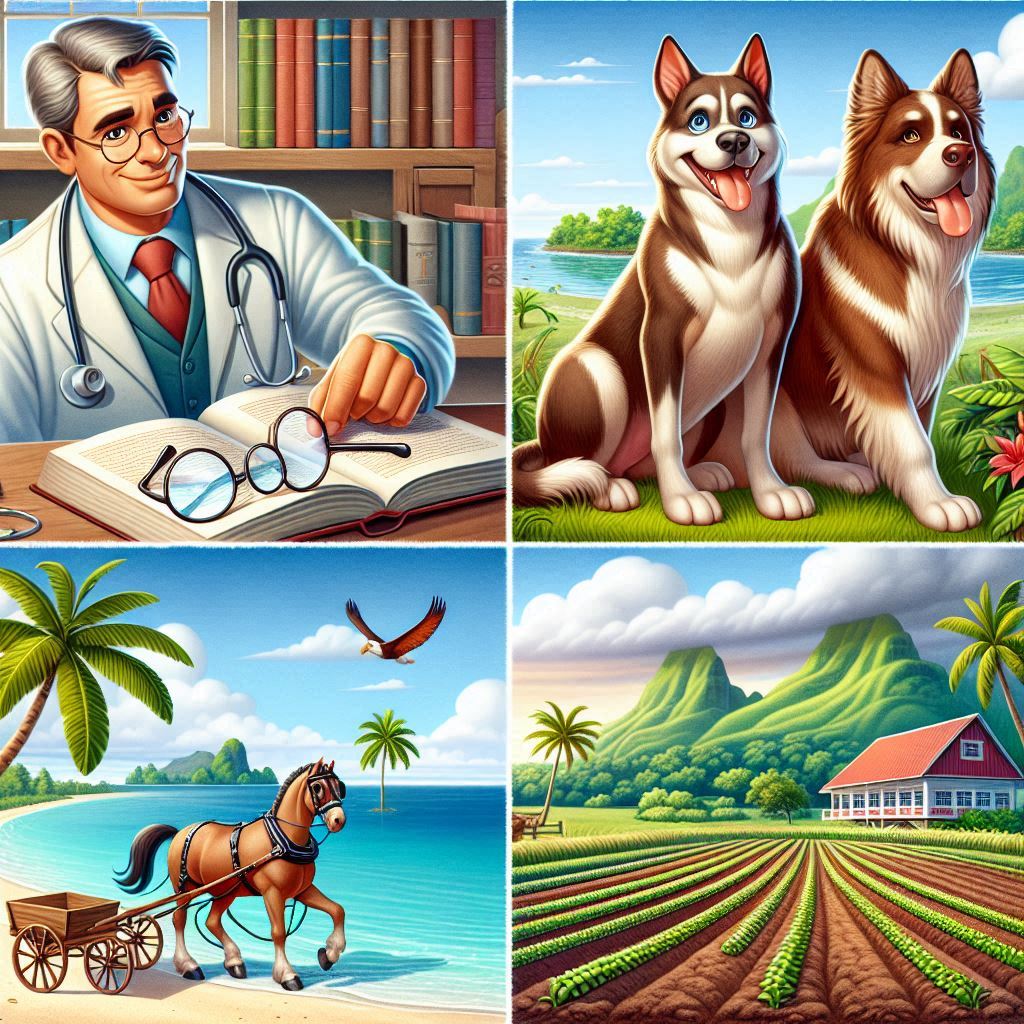
The Story of Doctor Dolittle Chapter 3: More Money Troubles

Chapter 3: More Money Troubles

And soon now the Doctor began to make money again; and his sister, Sarah, bought a new dress and was happy.

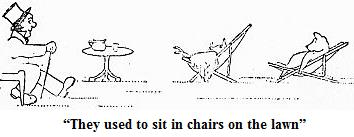
Some of the animals who came to see him were so sick that they had to stay at the Doctor’s house for a week. And when they were getting better they used to sit in chairs on the lawn.

And often even after they got well, they did not want to go away-they liked the Doctor and his house very much. And he never had the heart to refuse them when they asked if they could stay with him. So in this way he went on getting more and more pets.

Once when he was sitting on his garden wall, smoking a pipe in the evening, an Italian organ-grinder came round with a monkey on a string. The Doctor saw at once that the monkey’s collar was too tight and that he was dirty and unhappy. So he took the monkey away from the Italian, gave the man a shilling and told him to go. The organ-grinder got awfully angry and said that he wanted to keep the monkey. But the Doctor told him that if he didn’t go away he would punch him on the nose. John Dolittle was a strong man, though he wasn’t very tall. So the Italian went away saying rude things and the monkey stayed with Doctor Dolittle and had a good home. The other animals in the house called him “Chee-Chee”-which is a common word in monkey-language, meaning “ginger.”

And another time, when the circus came to Puddleby, the crocodile who had a bad toothache escaped at night and came into the Doctor’s garden. The Doctor talked to him in crocodile-language and took him into the house and made his tooth better. But when the crocodile saw what a nice house it was-with all the different places for the different kinds of animals-he too wanted to live with the Doctor. He asked couldn’t he sleep in the fish-pond at the bottom of the garden, if he promised not to eat the fish. When the circus-men came to take him back he got so wild and savage that he frightened them away. But to everyone in the house he was always as gentle as a kitten.

But now the old ladies grew afraid to send their lap-dogs to Doctor Dolittle because of the crocodile; and the farmers wouldn’t believe that he would not eat the lambs and sick calves they brought to be cured. So the Doctor went to the crocodile and told him he must go back to his circus. But he wept such big tears, and begged so hard to be allowed to stay, that the Doctor hadn’t the heart to turn him out.

So then the Doctor’s sister came to him and said,

“John, you must send that creature away. Now the farmers and the old ladies are afraid to send their animals to you-just as we were beginning to be well off again. Now we shall be ruined entirely. This is the last straw. I will no longer be housekeeper for you if you don’t send away that alligator.”

“It isn’t an alligator,” said the Doctor-“it’s a crocodile.”

“I don’t care what you call it,” said his sister. “It’s a nasty thing to find under the bed. I won’t have it in the house.”

“But he has promised me,” the Doctor answered, “that he will not bite any one. He doesn’t like the circus; and I haven’t the money to send him back to Africa where he comes from. He minds his own business and on the whole is very well behaved. Don’t be so fussy.”

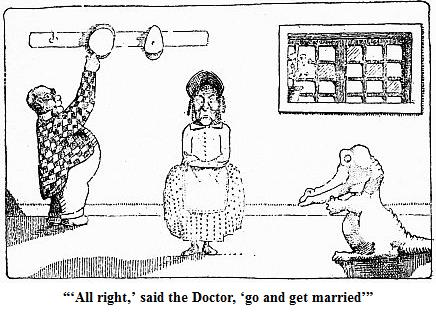
“I tell you I will not have him around,” said Sarah. “He eats the linoleum. If you don’t send him away this minute I’ll-I’ll go and get married!”

“All right,” said the Doctor, “go and get married. It can’t be helped.” And he took down his hat and went out into the garden.

So, Sarah Dolittle packed up her things and went off; and the Doctor was left all alone with his animal family.

And very soon he was poorer than he had ever been before. With all these mouths to feed, and the house to look after, and no one to do the mending, and no money coming in to pay the butcher’s bill, things began to look very difficult. But the Doctor didn’t worry at all.

“Money is a nuisance,” he used to say. “We’d all be much better off if it had never been invented. What does money matter, so long as we are happy?”

But soon the animals themselves began to get worried. And one evening when the Doctor was asleep in his chair before the kitchen-fire they began talking it over among themselves in whispers. And the owl, Too-Too, who was good at arithmetic, figured it out that there was only money enough left to last another week-if they each had one meal a day and no more.

Then the parrot said, “I think we all ought to do the housework ourselves. At least we can do that much. After all, it is for our sakes that the old man finds himself so lonely and so poor.”

So it was agreed that the monkey, Chee-Chee, was to do the cooking and mending; the dog was to sweep the floors; the duck was to dust and make the beds; the owl, Too-Too, was to keep the accounts, and the pig was to do the gardening. They made Polynesia, the parrot, housekeeper and laundress, because she was the oldest.

Of course at first they all found their new jobs very hard to do-all except Chee-Chee, who had hands, and could do things like a man. But they soon got used to it; and they used to think it great fun to watch Jip, the dog, sweeping his tail over the floor with a rag tied onto it for a broom. After a little they got to do the work so well that the Doctor said that he had never had his house kept so tidy or so clean before.

In this way things went along all right for a while; but without money they found it very hard.

Then the animals made a vegetable and flower stall outside the garden-gate and sold radishes and roses to the people that passed by along the road.

But still they didn’t seem to make enough money to pay all the bills-and still the Doctor wouldn’t worry. When the parrot came to him and told him that the fishmonger wouldn’t give them anymore fish, he said,

“Never mind. So long as the hens lay eggs and the cow gives milk we can have omelettes and junket. And there are plenty of vegetables left in the garden. The Winter is still a long way off. Don’t fuss. That was the trouble with Sarah-she would fuss. I wonder how Sarah’s getting on-an excellent woman-in some ways-Well, well!”

But the snow came earlier than usual that year; and although the old lame horse hauled in plenty of wood from the forest outside the town, so they could have a big fire in the kitchen, most of the vegetables in the garden were gone, and the rest were covered with snow; and many of the animals were really hungry.

The Story of Doctor Dolittle Chapter 2 Vocabulary    

Chapter 2: Animal Language

Vocabulary

Veterinarian: A person qualified to treat diseased or injured animals.
Spectacles: Glasses.
Plow-horse: A horse used to pull a plow, a large bladed farming implement used to turn soil over in preparation for the planting of seeds.
Polynesia: A subregion containing 1000 southern Pacific Ocean islands.
Acre: A unit of land area.

The Children’s Six Minutes: Come

COME

There is not a girl or boy here this morning who does not feel within the desire to do good. The drawing power of good—in other words, the drawing power of God. He it is who says to you, “Come.”

I want to illustrate this by a few things which I have here. The first is this magnet. And here are some small nails. These tiny nails represent girls and boys of about eleven or twelve years of age. I apply the magnet to these nails and I lift up—can you see me—twenty-five or thirty nails. You see it is a great deal easier to respond to the drawing power of good, to answer the great “Come,” in girlhood and boyhood.

Now here are some nails that are a little larger. I can lift up only five or six of these larger nails. They represent young people of eighteen or nineteen. As one gets older he does not hear as readily, at least he does not answer, Christ’s blessed “Come.”

Next we have some nails still larger. The magnet will lift up only one or two of these. They stand for men and women in mature life. Oh, if one has not responded to Christ’s call in childhood or youth, it becomes increasingly difficult as the years pass. How seldom, how very seldom, does an aged one answer the divine call and give his heart to the Lord!

Here is a very large nail, and it is rusty. Indeed it is literally coated with rust. This represents the life that is deep in sin. For long years this life has been persisting in his evil ways. As the magnet must be very strong to penetrate the rust and grip the nail, so Christ’s call must be strong and loving to reach the sinful soul. Christ can save “from the uttermost,” but how much better it is to say in early youth, “I hear thy voice, my Lord. Gladly I come.”

MEMORY VERSE, Matthew 11: 28

“Come unto me, all ye that labor and are heavy laden, and I will give you rest.”

MEMORY HYMN

“In heavenly rest abiding.”

Chapter 2: The Open Road Vocabulary Words

The Wind in the Willows by Kenneth Grahame     

Chapter 2: The Open Road Vocabulary Words

Fitments: Fixed item of furniture.
Voluble: Talkative.
Paddock: A small field or enclosure where horses are kept.
Nosebags: A strong canvas or leather bag containing grain, fastened over a horse’s muzzle for feeding.
Wayfarers: A person who travels on foot.
Henceforth: From this time on.

The Story of Dr. Dolittle Chapter 1 Resources

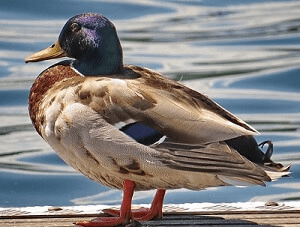
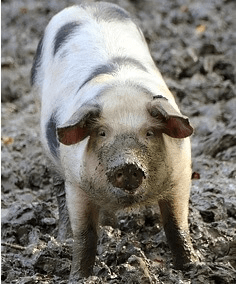
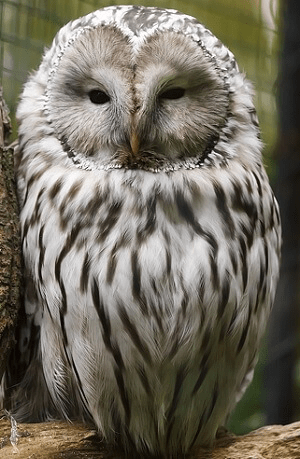
Dr. Dolittle’s favorite pets.

Dab-Dab the Duck
Gub-Gub the Pig
Too-Too the Owl
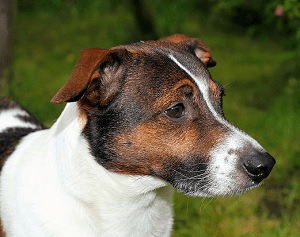
Jip the Dog
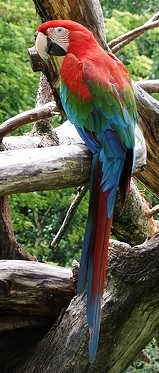
Polynesia the Parrot

The Story of Mankind: Feudalism

The following, then, is the state of Europe in the year one thousand, when most people were so unhappy that they welcomed the prophecy foretelling the approaching end of the world and rushed to the monasteries, that the Day of Judgement might find them engaged upon devout duties.

At an unknown date, the Germanic tribes had left their old home in Asia and had moved westward into Europe. By sheer pressure of numbers they had forced their way into the Roman Empire. They had destroyed the great western empire, but the eastern part, being off the main route of the great migrations, had managed to survive and feebly continued the traditions of Rome’s ancient glory.

During the days of disorder which had followed, (the true “dark ages” of history, the sixth and seventh centuries of our era,) the German tribes had been persuaded to accept the Christian religion and had recognized the Bishop of Rome as the Pope or spiritual head of the world. In the ninth century, the organizing genius of Charlemagne had revived the Roman Empire and had united the greater part of western Europe into a single state. During the tenth century this empire had gone to pieces. The western part had become a separate kingdom, France. The eastern half was known as the Holy Roman Empire of the German nation, and the rulers of this federation of states then pretended that they were the direct heirs of Caesar and Augustus.

Unfortunately the power of the kings of France did not stretch beyond the moat of their royal residence, while the Holy Roman Emperor was openly defied by his powerful subjects whenever it suited their fancy or their profit.

To increase the misery of the masses of the people, the triangle of western Europe was forever exposed to attacks from three sides. On the south lived the ever-dangerous Muslims. The western coast was ravaged by the Northmen. The eastern frontier (defenseless except for the short stretch of the Carpathian Mountains) was at the mercy of hordes of Huns, Hungarians, Slavs and Tartars.

The peace of Rome was a thing of the remote past, a dream of the “Good Old Days” that were gone forever. It was a question of “fight or die,” and quite naturally people preferred to fight. Forced by circumstances, Europe became an armed camp and there was a demand for strong leadership. Both King and Emperor were far away. The frontiersmen (and most of Europe in the year 1000 was “frontier”) must help themselves. They willingly submitted to the representatives of the king who were sent to administer the outlying districts, provided they could protect them against their enemies.

Soon central Europe was dotted with small principalities, each one ruled by a duke or a count or a baron or a bishop, as the case might be, and organized as a fighting unit. These dukes and counts and barons had sworn to be faithful to the king who had given them their “feudum” (hence our word “feudal,”) in return for their loyal services and a certain amount of taxes. But travel in those days was slow and the means of communication were exceedingly poor. The royal or imperial administrators therefore enjoyed great independence, and within the boundaries of their own province they assumed most of the rights which in truth belonged to the king.

But you would make a mistake if you supposed that the people of the eleventh century objected to this form of government. They supported Feudalism because it was a very practical and necessary institution. Their Lord and Master usually lived in a big stone house erected on the top of a steep rock or built between deep moats, but within sight of their subjects. In case of danger the subjects found shelter behind the walls of the baronial stronghold. That is why they tried to live as near the castle as possible and it accounts for the many European cities which began their career around a feudal fortress.

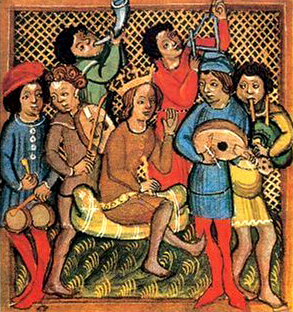
But the knight of the early middle ages was much more than a professional soldier. He was the civil servant of that day. He was the judge of his community and he was the chief of police. He caught the highwaymen and protected the wandering peddlers who were the merchants of the eleventh century. He looked after the dikes so that the countryside should not be flooded (just as the first noblemen had done in the valley of the Nile four thousand years before). He encouraged the troubadours who wandered from place to place telling the stories of the ancient heroes who had fought in the great wars of the migrations. Besides, he protected the churches and the monasteries within his territory, and although he could neither read nor write, (it was considered unmanly to know such things,) he employed a number of priests who kept his accounts and who registered the marriages and the births and the deaths which occurred within the baronial or ducal domains.

In the fifteenth century the kings once more became strong enough to exercise those powers which belonged to them because they were “anointed of God.” Then the feudal knights lost their former independence. Reduced to the rank of country squires, they no longer filled a need and soon they became a nuisance. But Europe would have perished without the “feudal system” of the dark ages. There were many bad knights as there are many bad people today. But generally speaking, the rough-fisted barons of the twelfth and thirteenth century were hard-working administrators who rendered a most useful service to the cause of progress. During that era the noble torch of learning and art which had illuminated the world of the Egyptians and the Greeks and the Romans was burning very low. Without the knights and their good friends, the monks, civilization would have been extinguished entirely, and the human race would have been forced to begin once more where the caveman had left off.

The Story of Doctor Dolittle Chapter 2: Animal Language

Chapter 2: Animal Language

It happened one day that the Doctor was sitting in his kitchen talking with the Cat’s-meat-Man who had come to see him with a stomach-ache.

“Why don’t you give up being a people’s doctor, and be an animal-doctor?” asked the Cat’s-meat-Man.

The parrot, Polynesia, was sitting in the window looking out at the rain and singing a sailor-song to herself. She stopped singing and started to listen.

“You see, Doctor,” the Cat’s-meat-Man went on, “you know all about animals-much more than what these here vets do. That book you wrote-about cats, why, it’s wonderful! I can’t read or write myself-or maybe I’d write some books. But my wife, Theodosia, she’s a scholar, she is. And she read your book to me. Well, it’s wonderful-that’s all can be said-wonderful. You might have been a cat yourself. You know the way they think. And listen: you can make a lot of money doctoring animals. Do you know that? You see, I’d send all the old women who had sick cats or dogs to you. And if they didn’t get sick fast enough, I could put something in the meat I sell ’em to make ’em sick, see?”

“Oh, no,” said the Doctor quickly. “You mustn’t do that. That wouldn’t be right.”

“Oh, I didn’t mean real sick,” answered the Cat’s-meat-Man. “Just a little something to make them droopy-like was what I had reference to. But as you say, maybe it ain’t quite fair on the animals. But they’ll get sick anyway, because the old women always give ’em too much to eat. And look, all the farmers round about who had lame horses and weak lambs-they’d come. Be an animal-doctor.”

When the Cat’s-meat-Man had gone the parrot flew off the window on to the Doctor’s table and said,

“That man’s got sense. That’s what you ought to do. Be an animal-doctor. Give the silly people up-if they haven’t brains enough to see you’re the best doctor in the world. Take care of animals instead-they’ll soon find it out. Be an animal-doctor.”

“Oh, there are plenty of animal-doctors,” said John Dolittle, putting the flower-pots outside on the window-sill to get the rain.

“Yes, there are plenty,” said Polynesia. “But none of them are any good at all. Now listen, Doctor, and I’ll tell you something. Did you know that animals can talk?”

“I knew that parrots can talk,” said the Doctor.

“Oh, we parrots can talk in two languages-people’s language and bird-language,” said Polynesia proudly. “If I say, ‘Polly wants a cracker,’ you understand me. But hear this: Ka-ka oi-ee, fee-fee?”

“Good Gracious!” cried the Doctor. “What does that mean?”

“That means, ‘Is the porridge hot yet?’-in bird-language.”

“My! You don’t say so!” said the Doctor. “You never talked that way to me before.”

“What would have been the good?” said Polynesia, dusting some cracker-crumbs off her left wing. “You wouldn’t have understood me if I had.”

“Tell me some more,” said the Doctor, all excited; and he rushed over to the dresser-drawer and came back with the butcher’s book and a pencil. “Now don’t go too fast-and I’ll write it down. This is interesting-very interesting-something quite new. Give me the Birds’ A.B.C. first-slowly now.”

So that was the way the Doctor came to know that animals had a language of their own and could talk to one another. And all that afternoon, while it was raining, Polynesia sat on the kitchen table giving him bird words to put down in the book.

At tea-time, when the dog, Jip, came in, the parrot said to the Doctor, “See, he’s talking to you.”

“Looks to me as though he were scratching his ear,” said the Doctor.

“But animals don’t always speak with their mouths,” said the parrot in a high voice, raising her eyebrows. “They talk with their ears, with their feet, with their tails-with everything. Sometimes they don’t want to make a noise. Do you see now the way he’s twitching up one side of his nose?”

“What’s that mean?” asked the Doctor.

“That means, ‘Can’t you see that it has stopped raining?'” Polynesia answered. “He is asking you a question. Dogs nearly always use their noses for asking questions.”

After a while, with the parrot’s help, the Doctor got to learn the language of the animals so well that he could talk to them himself and understand everything they said. Then he gave up being a people’s doctor altogether.

As soon as the Cat’s-meat-Man had told everyone that John Dolittle was going to become an animal-doctor, old ladies began to bring him their pet pugs and poodles who had eaten too much cake; and farmers came many miles to show him sick cows and sheep.

One day a plow-horse was brought to him; and the poor thing was terribly glad to find a man who could talk in horse-language.

“You know, Doctor,” said the horse, “that vet over the hill knows nothing at all. He has been treating me six weeks now-for spavins. What I need is spectacles. I am going blind in one eye. There’s no reason why horses shouldn’t wear glasses, the same as people. But that stupid man over the hill never even looked at my eyes. He kept on giving me big pills. I tried to tell him; but he couldn’t understand a word of horse-language. What I need is spectacles.”

“Of course-of course,” said the Doctor. “I’ll get you some at once.”

“I would like a pair like yours,” said the horse-“only green. They’ll keep the sun out of my eyes while I’m plowing the Fifty-Acre Field.”

“Certainly,” said the Doctor. “Green ones you shall have.”

“You know, the trouble is, Sir,” said the plow-horse as the Doctor opened the front door to let him out-“the trouble is that anybody thinks he can doctor animals-just because the animals don’t complain. As a matter of fact it takes a much cleverer man to be a really good animal-doctor than it does to be a good people’s doctor. My farmer’s boy thinks he knows all about horses. I wish you could see him-his face is so fat he looks as though he had no eyes-and he has got as much brain as a potato-bug. He tried to put a mustard-plaster on me last week.”

“Where did he put it?” asked the Doctor.

“Oh, he didn’t put it anywhere-on me,” said the horse. “He only tried to. I kicked him into the duck-pond.”

“Well, well!” said the Doctor.

“I’m a pretty quiet creature as a rule,” said the horse-“very patient with people-don’t make much fuss. But it was bad enough to have that vet giving me the wrong medicine. And when that red-faced booby started to monkey with me, I just couldn’t bear it anymore.”

“Did you hurt the boy much?” asked the Doctor.

“Oh, no,” said the horse. “I kicked him in the right place. The vet’s looking after him now. When will my glasses be ready?”

“I’ll have them for you next week,” said the Doctor. “Come in again Tuesday-Good morning!”

Then John Dolittle got a fine, big pair of green spectacles; and the plow-horse stopped going blind in one eye and could see as well as ever.

And soon it became a common sight to see farm-animals wearing glasses in the country round Puddleby; and a blind horse was a thing unknown.

And so it was with all the other animals that were brought to him. As soon as they found that he could talk their language, they told him where the pain was and how they felt, and of course it was easy for him to cure them.

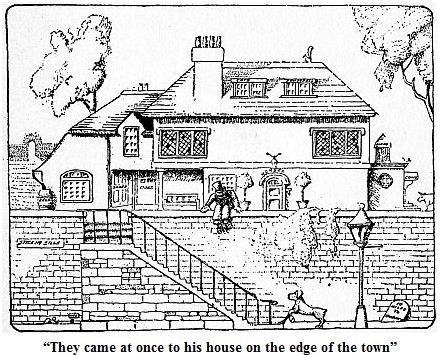
Now all these animals went back and told their brothers and friends that there was a doctor in the little house with the big garden who really was a doctor. And whenever any creatures got sick-not only horses and cows and dogs-but all the little things of the fields, like harvest-mice and water-voles, badgers and bats, they came at once to his house on the edge of the town, so that his big garden was nearly always crowded with animals trying to get in to see him.

There were so many that came that he had to have special doors made for the different kinds. He wrote “HORSES” over the front door, “COWS” over the side door, and “SHEEP” on the kitchen door. Each kind of animal had a separate door-even the mice had a tiny tunnel made for them into the cellar, where they waited patiently in rows for the Doctor to come round to them.

And so, in a few years’ time, every living thing for miles and miles got to know about John Dolittle, M.D. And the birds who flew to other countries in the winter told the animals in foreign lands of the wonderful doctor of Puddleby-on-the-Marsh, who could understand their talk and help them in their troubles. In this way he became famous among the animals-all over the world-better known even than he had been among the folks of the West Country, And he was happy and liked his life very much.

One afternoon when the Doctor was busy writing in a book, Polynesia sat in the window-as she nearly always did-looking out at the leaves blowing about in the garden. Presently she laughed aloud.

“What is it, Polynesia?” asked the Doctor, looking up from his book.

“I was just thinking,” said the parrot; and she went on looking at the leaves.

“What were you thinking?”

“I was thinking about people,” said Polynesia. “People make me sick. They think they’re so wonderful. The world has been going on now for thousands of years, hasn’t it? And the only thing in animal-language that people have learned to understand is that when a dog wags his tail he means ‘I’m glad!’-It’s funny, isn’t it? You are the very first man to talk like us. Oh, sometimes people annoy me dreadfully-such airs they put on-talking about ‘the dumb animals.’ Dumb!-Huh! Why I knew a macaw once who could say ‘Good morning!’ in seven different ways without once opening his mouth. He could talk every language-and Greek. An old professor with a gray beard bought him. But he didn’t stay. He said the old man didn’t talk Greek right, and he couldn’t stand listening to him teach the language wrong. I often wonder what’s become of him. That bird knew more geography than people will ever know.-People, Golly! I suppose if people ever learn to fly-like any common hedge-sparrow-we shall never hear the end of it!”

“You’re a wise old bird,” said the Doctor. “How old are you really? I know that parrots and elephants sometimes live to be very, very old.”

“I can never be quite sure of my age,” said Polynesia. “It’s either a hundred and eighty-three or a hundred and eighty-two. But I know that when I first came here from Africa, King Charles was still hiding in the oak-tree-because I saw him. He looked scared to death.”

Evidence of the Ice Age in the Bible: Key Verses

Is there evidence of a possible ice age in the bible? Yes! Look at these verses. Job lived in a desert yet he is talking about ice.

  • Job 37:10
    • By the breath of God frost is given: and the breadth of the waters is straitened.
  • Job 6:16
    • Which are blackish by reason of the ice, and wherein the snow is hid:
  • Job 38:29
    • Out of whose womb came the ice? and the hoary frost of heaven, who hath gendered it?

Even in the book of Psalm it makes reference to ice.

  • Psalm 147:17
    • He casteth forth his ice like morsels: who can stand before his cold?

During the flood the waters covered the highest part of the earth.

  • Genesis 7:10-12 And it came to pass after seven days, that the waters of the flood were upon the earth.
    •  In the six hundredth year of Noah’s life, in the second month, the seventeenth day of the month, the same day were all the fountains of the great deep broken up, and the windows of heaven were opened.
    • And the rain was upon the earth forty days and forty nights.
  • Genesis 7:17-20
    • And the flood was forty days upon the earth; and the waters increased, and bare up the ark, and it was lift up above the earth.
    • And the waters prevailed, and were increased greatly upon the earth; and the ark went upon the face of the waters.
    • And the waters prevailed exceedingly upon the earth; and all the high hills, that were under the whole heaven, were covered.
    • Fifteen cubits upward did the waters prevail; and the mountains were covered.
      • A cubit is about 18 inches.
      • 15 cubits would be equal to about 270 inches or 22.5 feet.

All that water had to go somewhere. It makes sense that God would have simply cooled the earth and caused ice to form in many places such as the north and the south poles.

The Wind in the Willows Chapter 2: The Open Road

Chapter 2: The Open Road

Ratty,’ said the Mole suddenly, one bright summer morning, ‘if you please, I want to ask you a favour.’

The Rat was sitting on the river bank, singing a little song. He had just composed it himself, so he was very taken up with it, and would not pay proper attention to Mole or anything else. Since early morning he had been swimming in the river, in company with his friends the ducks. And when the ducks stood on their heads suddenly, as ducks will, he would dive down and tickle their necks, just under where their chins would be if ducks had chins, till they were forced to come to the surface again in a hurry, spluttering and angry and shaking their feathers at him, for it is impossible to say quite ALL you feel when your head is under water. At last they implored him to go away and attend to his own affairs and leave them to mind theirs. So the Rat went away, and sat on the river bank in the sun, and made up a song about them, which he called

‘THE DUCKS’ DITTY.’

All along the backwater,

Through the rushes tall,

Ducks are a-dabbling,

Up tails all!

Ducks’ tails, drakes’ tails,

Yellow feet a-quiver,

Yellow beaks all out of sight

Busy in the river!

Slushy green undergrowth

Where the roach swim-

Here we keep our larder,

Cool and full and dim.

Everyone for what he likes!

We like to be

Heads down, tails up,

Dabbling free!

High in the blue above

Swifts whirl and call-

We are down a-dabbling

Uptails all!

‘I don’t know that I think so VERY much of that little song, Rat,’ observed the Mole cautiously. He was no poet himself and didn’t care who knew it; and he had a candid nature.

‘Nor don’t the ducks neither,’ replied the Rat cheerfully. ‘They say, “WHY can’t fellows be allowed to do what they like WHEN they like and AS they like, instead of other fellows sitting on banks and watching them all the time and making remarks and poetry and things about them? What NONSENSE it all is!” That’s what the ducks say.’

‘So it is, so it is,’ said the Mole, with great heartiness.

‘No, it isn’t!’ cried the Rat indignantly.

‘Well then, it isn’t, it isn’t,’ replied the Mole soothingly. ‘But what I wanted to ask you was, wouldn’t you take me to call on Mr. Toad? I’ve heard so much about him, and I do so want to make his acquaintance.’

‘Why, certainly,’ said the good-natured Rat, jumping to his feet and dismissing poetry from his mind for the day. ‘Get the boat out, and we’ll paddle up there at once. It’s never the wrong time to call on Toad. Early or late he’s always the same fellow. Always good-tempered, always glad to see you, always sorry when you go!’

‘He must be a very nice animal,’ observed the Mole, as he got into the boat and took the sculls, while the Rat settled himself comfortably in the stern.

‘He is indeed the best of animals,’ replied the Rat. ‘So simple, and so good-natured, and so affectionate. Perhaps he’s not very clever-we can’t all be geniuses; and it may be that he is both boastful and conceited. But he has got some very great qualities, has Toady.’

Rounding a bend in the river, they came in sight of a handsome, dignified old house of mellowed red brick, with well-kept lawns reaching down to the water’s edge.

‘That’s Toad Hall,’ said the Rat; ‘and that creek on the left, where the notice-board says, “Private. No landing allowed,” leads to his boat-house, where we’ll leave the boat. The stables are over there to the right. That’s the banqueting-hall you’re looking at now-very old, it is. Toad is rather rich, you know, and this is really one of the nicest houses in these parts, though we never admit as much to Toad.’

They glided up the creek, and the Mole shipped his sculls as they passed into the shadow of a large boat-house. Here they saw many handsome boats, slung from the cross beams or hauled up on a slip, but none in the water; and the place had an unused and a deserted air.

The Rat looked around him. ‘I understand,’ said he. ‘Boating is played out. He’s tired of it, and done with it. I wonder what new fad he has taken up now? Come along, let’s look him up. We shall hear all about it quite soon enough.’

They disembarked, and strolled across the gay flower-decked lawns in search of Toad, whom they presently happened upon resting in a wicker garden-chair, with a pre-occupied expression of face, and a large map spread out on his knees.

‘Hooray!’ he cried, jumping up on seeing them both, ‘this is splendid!’ He shook the paws of both of them warmly, never waiting for an introduction to the Mole. ‘How KIND of you!’ he went on, dancing round them. ‘I was just going to send a boat down the river for you, Ratty, with strict orders that you were to be fetched up here at once, whatever you were doing. I want to see you badly-both of you. Now what will you take? Come inside and have something! You don’t know how lucky it is, your turning up just now!’

‘Let’s just sit quiet a bit, Toady!’ said the Rat, throwing himself into an easy chair, while the Mole took another by the side of him and made some civil remark about the Toad’s ‘delightful residence.’

‘Finest house on the whole river,’ cried Toad boisterously. ‘Or anywhere else, for that matter,’ he could not help adding.

Here the Rat nudged the Mole. Unfortunately the Toad saw him do it, and turned very red. There was a moment’s painful silence. Then Toad burst out laughing. ‘All right, Ratty,’ he said. ‘It’s only my way, you know. And it’s not such a very bad house, is it? You know you rather like it yourself. Now, look here. Let’s be sensible. You are the very animals I wanted. You’ve got to help me. It’s most important!’

‘It’s about your rowing, I suppose,’ said the Rat, with an innocent air. ‘You’re getting on fairly well, though you splash a good bit still. With a great deal of patience, and any quantity of coaching, you may–‘

‘O, pooh! boating!’ interrupted the Toad, in great disgust. ‘Silly boyish amusement. I’ve given that up LONG ago. Sheer waste of time, that’s what it is. It makes me downright sorry to see you fellows, who ought to know better, spending all your energies in that aimless manner. No, I’ve discovered the real thing, the only genuine occupation for a life time. I propose to devote the remainder of mine to it, and can only regret the wasted years that lie behind me, squandered in trivialities. Come with me, my dear Ratty, and your amiable friend also, if he will be so very good, just as far as the stable-yard, and you shall see what you shall see!’

He led the way to the stable-yard accordingly, the Rat following with a most mistrustful expression; and there, drawn out of the coach house into the open, they saw a gypsy caravan, shining with newness, painted a canary-yellow picked out with green, and red wheels.

‘There you are!’ cried the Toad, straddling and expanding himself. ‘There’s real life for you, embodied in that little cart. The open road, the dusty highway, the heath, the common, the hedgerows, the rolling downs! Camps, villages, towns, cities! Here today, up and off to somewhere else tomorrow! Travel, change, interest, excitement! The whole world before you, and a horizon that’s always changing! And mind! this is the very finest cart of its sort that was ever built, without any exception. Come inside and look at the arrangements. Planned ’em all myself, I did!’

The Mole was tremendously interested and excited, and followed him eagerly up the steps and into the interior of the caravan. The Rat only snorted and thrust his hands deep into his pockets, remaining where he was.

It was indeed very compact and comfortable. Little sleeping bunks-a little table that folded up against the wall-a cooking-stove, lockers, bookshelves, a bird-cage with a bird in it; and pots, pans, jugs and kettles of every size and variety.

‘All complete!’ said the Toad triumphantly, pulling open a locker. ‘You see-biscuits, potted lobster, sardines-everything you can possibly want. Soda-water here-baccy there-letter-paper, bacon, jam, cards and dominoes-you’ll find,’ he continued, as they descended the steps again, ‘you’ll find that nothing whatsoever has been forgotten, when we make our start this afternoon.’

‘I beg your pardon,’ said the Rat slowly, as he chewed a straw, ‘but did I overhear you say something about “WE,” and “START,” and “THIS AFTERNOON?”‘

‘Now, you dear good old Ratty,’ said Toad, imploringly, ‘don’t begin talking in that stiff and sniffy sort of way, because you know you’ve GOT to come. I can’t possibly manage without you, so please consider it settled, and don’t argue-it’s the one thing I can’t stand. You surely don’t mean to stick to your dull fusty old river all your life, and just live in a hole in a bank, and BOAT? I want to show you the world! I’m going to make an ANIMAL of you, my boy!’

‘I don’t care,’ said the Rat, doggedly. ‘I’m not coming, and that’s flat. And I AM going to stick to my old river, AND live in a hole, AND boat, as I’ve always done. And what’s more, Mole’s going to stick to me and do as I do, aren’t you, Mole?’

‘Of course I am,’ said the Mole, loyally. ‘I’ll always stick to you, Rat, and what you say is to be-has got to be. All the same, it sounds as if it might have been-well, rather fun, you know!’ he added, wistfully. Poor Mole! The Life Adventurous was so new a thing to him, and so thrilling; and this fresh aspect of it was so tempting; and he had fallen in love at first sight with the canary-colored cart and all its little fitments.

The Rat saw what was passing in his mind, and wavered. He hated disappointing people, and he was fond of the Mole, and would do almost anything to oblige him. Toad was watching both of them closely.

‘Come along in, and have some lunch,’ he said, diplomatically, ‘and we’ll talk it over. We needn’t decide anything in a hurry. Of course, I don’t really care. I only want to give pleasure to you fellows. “Live for others!” That’s my motto in life.’

During luncheon-which was excellent, of course, as everything at Toad Hall always was-the Toad simply let himself go. Disregarding the Rat, he proceeded to play upon the inexperienced Mole as on a harp. Naturally a voluble animal, and always mastered by his imagination, he painted the prospects of the trip and the joys of the open life and the roadside in such glowing colors that the Mole could hardly sit in his chair for excitement. Somehow, it soon seemed taken for granted by all three of them that the trip was a settled thing; and the Rat, though still unconvinced in his mind, allowed his good-nature to over-ride his personal objections. He could not bear to disappoint his two friends, who were already deep in schemes and anticipations, planning out each day’s separate occupation for several weeks ahead.

When they were quite ready, the now triumphant Toad led his companions to the paddock and set them to capture the old grey horse, who, without having been consulted, and to his own extreme annoyance, had been told off by Toad for the dustiest job in this dusty expedition. He frankly preferred the paddock, and took a deal of catching. Meantime Toad packed the lockers still tighter with necessaries, and hung nosebags, nets of onions, bundles of hay, and baskets from the bottom of the cart. At last the horse was caught and harnessed, and they set off, all talking at once, each animal either trudging by the side of the cart or sitting on the shaft, as the humor took him. It was a golden afternoon. The smell of the dust they kicked up was rich and satisfying; out of thick orchards on either side the road, birds called and whistled to them cheerily; good-natured wayfarers, passing them, gave them ‘Good-day,’ or stopped to say nice things about their beautiful cart; and rabbits, sitting at their front doors in the hedgerows, held up their fore-paws, and said, ‘O my! O my! O my!’

Late in the evening, tired and happy and miles from home, they drew up on a remote common far from habitations, turned the horse loose to graze, and ate their simple supper sitting on the grass by the side of the cart. Toad talked big about all he was going to do in the days to come, while stars grew fuller and larger all around them, and a yellow moon, appearing suddenly and silently from nowhere in particular, came to keep them company and listen to their talk. At last they turned in to their little bunks in the cart; and Toad, kicking out his legs, sleepily said, ‘Well, good night, you fellows! This is the real life for a gentleman! Talk about your old river!’

‘I DON’T talk about my river,’ replied the patient Rat. ‘You KNOW I don’t, Toad. But I THINK about it,’ he added rather pathetically, in a lower tone: ‘I think about it-all the time!’

The Mole reached out from under his blanket, felt for the Rat’s paw in the darkness, and gave it a squeeze. ‘I’ll do whatever you like, Ratty,’ he whispered. ‘Shall we run away tomorrow morning, quite early-VERY early-and go back to our dear old hole on the river?’

‘No, no, we’ll see it out,’ whispered back the Rat. ‘Thanks awfully, but I ought to stick by Toad till this trip is ended. It wouldn’t be safe for him to be left to himself. It won’t take very long. His fads never do. Now good night!’

The end was indeed nearer than even the Rat suspected.

After so much open air and excitement the Toad slept very soundly, and no amount of shaking could rouse him out of bed the next morning. So the Mole and Rat turned to, quietly and manfully, and while the Rat saw to the horse, and lit a fire, and cleaned up last night’s cups and platters, and got things ready for breakfast, the Mole trudged off to the nearest village, a long way off, for milk and eggs and various necessaries the Toad had, of course, forgotten to provide. The hard work had all been done, and the two animals were resting, thoroughly exhausted, by the time Toad appeared on the scene, fresh and gay, remarking what a pleasant easy life it was they were all leading now, after the cares and worries and fatigues of housekeeping at home.

They had a pleasant ramble that day over grassy downs and along narrow by-lanes, and camped as before, on a common, only this time the two guests took care that Toad should do his fair share of work. In consequence, when the time came for starting next morning, Toad was by no means so rapturous about the simplicity of the primitive life, and indeed attempted to resume his place in his bunk, whence he was hauled by force. Their way lay, as before, across country by narrow lanes, and it was not till the afternoon that they came out on the high-road, their first high-road; and there disaster, fleet and unforeseen, sprang upon them-disaster momentous indeed to their expedition, but simply overwhelming in its effect on the after-career of Toad.

They were strolling along the high-road easily, the Mole by the horse’s head, talking to him, since the horse had complained that he was being frightfully left out of it all, and no one considered him in the least; the Toad and the Water Rat walking behind the cart talking together-at least Toad was talking, and Rat was saying at intervals, ‘Oh yes, precisely; and what did YOU say to HIM?’-and thinking all the time of something very different, when far behind them they heard a faint warning hum; like the drone of a distant bee. Glancing back, they saw a small cloud of dust, with a dark center of energy, advancing on them at incredible speed, while from out the dust a faint ‘Poop-poop!’ wailed like an uneasy animal in pain. Hardly regarding it, they turned to resume their conversation, when in an instant (as it seemed) the peaceful scene was changed, and with a blast of air and a whirl of sound that made them jump for the nearest ditch, It was on them! The ‘Poop-poop’ rang with a brazen shout in their ears, they had a moment’s glimpse of an interior of glittering plate-glass and rich morocco, and the magnificent motorcar, immense, breath-snatching, passionate, with its pilot tense and hugging his wheel, possessed all earth and air for the fraction of a second, flung an enveloping cloud of dust that blinded and enwrapped them utterly, and then dwindled to a speck in the far distance, changed back into a droning bee once more.

The old grey horse, dreaming, as he plodded along, of his quiet paddock, in a new raw situation such as this simply abandoned himself to his natural emotions. Rearing, plunging, backing steadily, in spite of all the Mole’s efforts at his head, and all the Mole’s lively language directed at his better feelings, he drove the cart backwards towards the deep ditch at the side of the road. It wavered an instant-then there was a heartrending crash-and the canary-colored cart, their pride and joy, lay on its side in the ditch, an irredeemable wreck.

The Rat danced up and down in the road, simply transported with passion. ‘You villains!’ he shouted, shaking both fists, ‘You scoundrels, you highwaymen, you-you-roadhogs!-I’ll have the law of you! I’ll report you! I’ll take you through all the Courts!’ His home-sickness had quite slipped away from him, and for the moment he was the skipper of the canary-colored vessel driven on a shoal by the reckless jockeying of rival mariners, and he was trying to recollect all the fine and biting things he used to say to masters of steam-launches when their wash, as they drove too near the bank, used to flood his parlor-carpet at home.

Toad sat straight down in the middle of the dusty road, his legs stretched out before him, and stared fixedly in the direction of the disappearing motorcar. He breathed short, his face wore a placid satisfied expression, and at intervals he faintly murmured ‘Poop-poop!’

The Mole was busy trying to quiet the horse, which he succeeded in doing after a time. Then he went to look at the cart, on its side in the ditch. It was indeed a sorry sight. Panels and windows smashed, the axles hopelessly bent, one wheel off, sardine-tins scattered over the wide world, and the bird in the bird-cage sobbing pitifully and calling to be let out.

The Rat came to help him, but their united efforts were not sufficient to right the cart. ‘Hi! Toad!’ they cried. ‘Come and bear a hand, can’t you!’

The Toad never answered a word, or budged from his seat in the road; so they went to see what was the matter with him. They found him in a sort of a trance, a happy smile on his face, his eyes still fixed on the dusty wake of their destroyer. At intervals he was still heard to murmur ‘Poop-poop!’

The Rat shook him by the shoulder. ‘Are you coming to help us, Toad?’ he demanded sternly.

‘Glorious, stirring sight!’ murmured Toad, never offering to move. ‘The poetry of motion! The REAL way to travel! The ONLY way to travel! Here today-in next week tomorrow! Villages skipped, towns and cities jumped-always someone else’s horizon! O bliss! O poop-poop! O my! O my!’

‘O STOP being an ass, Toad!’ cried the Mole despairingly.

‘And to think I never KNEW!’ went on the Toad in a dreamy monotone. ‘All those wasted years that lie behind me, I never knew, never even DREAMT! But NOW-but now that I know, now that I fully realise! O what a flowery track lies spread before me, henceforth! What dusty-clouds shall spring up behind me as I speed on my reckless way! What carts I shall fling carelessly into the ditch in the wake of my magnificent onset! Horrid little carts-common carts-canary-colored carts!’

‘What are we to do with him?’ asked the Mole of the Water Rat.

‘Nothing at all,’ replied the Rat firmly. ‘Because there is really nothing to be done. You see, I know him from of old. He is now possessed. He has got a new craze, and it always takes him that way, in its first stage. He’ll continue like that for days now, like an animal walking in a happy dream, quite useless for all practical purposes. Never mind him. Let’s go and see what there is to be done about the cart.’

A careful inspection showed them that, even if they succeeded in righting it by themselves, the cart would travel no longer. The axles were in a hopeless state, and the missing wheel was shattered into pieces.

The Rat knotted the horse’s reins over his back and took him by the head, carrying the bird cage and its hysterical occupant in the other hand. ‘Come on!’ he said grimly to the Mole. ‘It’s five or six miles to the nearest town, and we shall have to walk it. The sooner we make a start the better.’

‘But what about Toad?’ asked the Mole anxiously, as they set off together. ‘We can’t leave him here, sitting in the middle of the road by himself, in the distracted state he’s in! It’s not safe. Supposing another Thing were to come along?’

‘O, BOTHER Toad,’ said the Rat savagely; ‘I’ve done with him!’

They had not proceeded very far on their way, however, when there was a pattering of feet behind them, and Toad caught them up and thrust a paw inside the elbow of each of them; still breathing short and staring into vacancy.

‘Now, look here, Toad!’ said the Rat sharply: ‘as soon as we get to the town, you’ll have to go straight to the police-station, and see if they know anything about that motorcar and who it belongs to, and lodge a complaint against it. And then you’ll have to go to a blacksmith’s or a wheelwright’s and arrange for the cart to be fetched and mended and put to rights. It’ll take time, but it’s not quite a hopeless smash. Meanwhile, the Mole and I will go to an inn and find comfortable rooms where we can stay till the cart’s ready, and till your nerves have recovered their shock.’

‘Police-station! Complaint!’ murmured Toad dreamily. ‘Me COMPLAIN of that beautiful, that heavenly vision that has been vouchsafed me! MEND THE CART! I’ve done with carts forever. I never want to see the cart, or to hear of it, again. O, Ratty! You can’t think how obliged I am to you for consenting to come on this trip! I wouldn’t have gone without you, and then I might never have seen that-that swan, that sunbeam, that thunderbolt! I might never have heard that entrancing sound, or smelt that bewitching smell! I owe it all to you, my best of friends!’

The Rat turned from him in despair. ‘You see what it is?’ he said to the Mole, addressing him across Toad’s head: ‘He’s quite hopeless. I give it up-when we get to the town we’ll go to the railway station, and with luck we may pick up a train there that’ll get us back to riverbank tonight. And if ever you catch me going a-pleasuring with this provoking animal again!’-He snorted, and during the rest of that weary trudge addressed his remarks exclusively to Mole.

On reaching the town they went straight to the station and deposited Toad in the second-class waiting-room, giving a porter twopence to keep a strict eye on him. They then left the horse at an inn stable, and gave what directions they could about the cart and its contents. Eventually, a slow train having landed them at a station not very far from Toad Hall, they escorted the spell-bound, sleep-walking Toad to his door, put him inside it, and instructed his housekeeper to feed him, undress him, and put him to bed. Then they got out their boat from the boat-house, sculled down the river home, and at a very late hour sat down to supper in their own cozy riverside parlor, to the Rat’s great joy and contentment.

The following evening the Mole, who had risen late and taken things very easy all day, was sitting on the riverbank, when the Rat, who had been looking up his friends and gossiping, came strolling along to find him. ‘Heard the news?’ he said. ‘There’s nothing else being talked about, all along the river bank. Toad went up to Town by an early train this morning. And he has ordered a large and very expensive motorcar.’
The Story of Mankind: The Norsemen

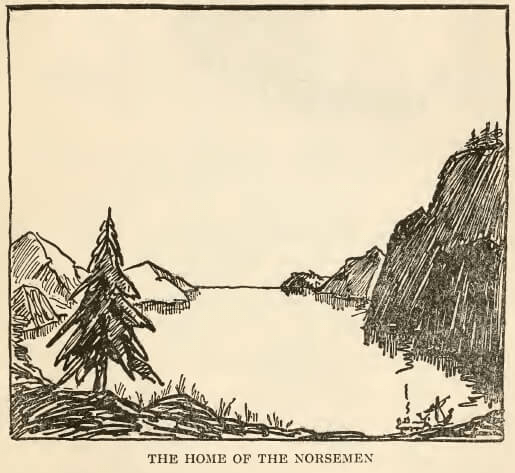
In the third and fourth centuries, the Germanic tribes of central Europe had broken through the defenses of the Empire that they might plunder Rome and live on the fat of the land. In the eighth century it became the turn of the Germans to be the “plundered-ones.” They did not like this at all, even if their enemies were their first cousins, the Norsemen, who lived in Denmark and Sweden and Norway.

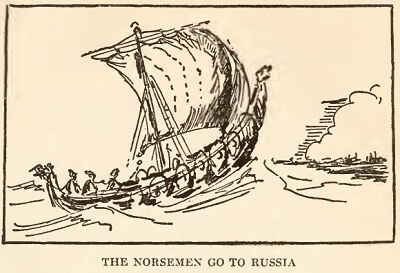
What forced these hardy sailors to turn pirate we do not know, but once they had discovered the advantages and pleasures of a buccaneering career there was no one who could stop them. They would suddenly descend upon a peaceful Frankish or Frisian village, situated on the mouth of a river. They would kill all the men and steal all the women. Then they would sail away in their fast-sailing ships and when the soldiers of the king or emperor arrived upon the scene, the robbers were gone and nothing remained but a few smoldering ruins.

During the days of disorder which followed the death of Charlemagne, the Northmen developed great activity. Their fleets made raids upon every country and their sailors established small independent kingdoms along the coast of Holland and France and England and Germany, and they even found their way into Italy. The Northmen were very intelligent. They soon learned to speak the language of their subjects and gave up the uncivilized ways of the early Vikings (or Sea-Kings) who had been very picturesque but also very unwashed and terribly cruel.

Early in the tenth century a Viking by the name of Rollo had repeatedly attacked the coast of France. The king of France, too weak to resist these northern robbers, tried to bribe them into “being good.” He offered them the province of Normandy, if they would promise to stop bothering the rest of his domains. Rollo accepted this bargain and became “Duke of Normandy.”

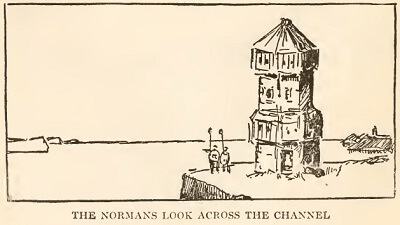
But the passion of conquest was strong in the blood of his children. Across the channel, only a few hours away from the European mainland, they could see the white cliffs and the green fields of England. Poor England had passed through difficult days. For two hundred years it had been a Roman colony.

After the Romans left, it had been conquered by the Angles and the Saxons, two German tribes from Schleswig. Next the Danes had taken the greater part of the country and had established the kingdom of Cnut. The Danes had been driven away and now (it was early in the eleventh century) another Saxon king, Edward the Confessor, was on the throne. But Edward was not expected to live long and he had no children. The circumstances favored the ambitious dukes of Normandy.

In 1066 Edward died. Immediately William of Normandy crossed the channel, defeated and killed Harold of Wessex (who had taken the crown) at the battle of Hastings, and proclaimed himself king of England.

In another chapter I have told you how in the year 800 a German chieftain had become a Roman Emperor. Now in the year 1066 the grandson of a Norse pirate was recognized as King of England.

Why should we ever read fairy stories, when the truth of history is so much more interesting and entertaining?