A place to grow your relationship with God

Archive for the ‘1st grade math’ Category

Math: Subtract Numbers from Up to 16

STEP 1

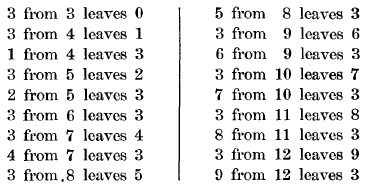
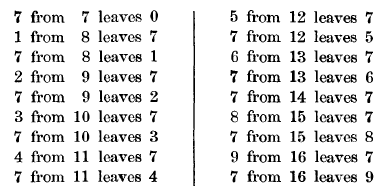
  • Children separate a larger group of up to 16 objects into two smaller groups.
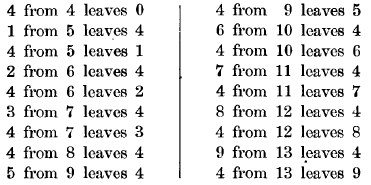
  • Repeatedly separate a group of objects into smaller groups per the table below. For example, 7 pencils from 7 pencils leaves 0 pencils, 7 coins from 9 coins leaves 2 coins, and 9 cars from 16 cars leaves 7 cars, etc.
  • When children are ready, have them separate the object groups themselves.
  • Children must perfectly master the operations listed in the table before proceeding to the next phase of the lesson.

STEP 2

  • Children separate groups of objects they can’t see, but can imagine (bears, mountains, trees).
  • Using the table above as a guide, ask children to call out the answer to questions such as, ‘How many are one shoe from eight shoes?’ and ‘How many are four frogs from eleven frogs?’
  • Give numerous exercises on each number, with constant reviews, until children can recite each operation in the table with great accuracy and rapidity.

STEP 3

  • In this phase, do not mention objects. Children subtract numbers directly.
  • Using the table above as a guide, ask children to call out the answer to questions such as, ‘How many are one from eight?’ and ‘How many are four from eleven?’
  • Give numerous exercises on each number, with constant reviews, until children can perform each operation with great accuracy and rapidity.

STEP 4

  • Direct children to practice writing and reciting the subtraction problems listed in the table above. For example, they would write and then recite:
  • 7 from 16 leaves 9
  • 16 minus 7 is 9
  • 16 – 7 = 9
  • Repeat for each combination in the table until the children master the tasks.

STEP 5

Have children copy, solve, and recite the following table:

  • 15 + 1 or 1 + 15 = ; therefore 16 – 1 = ; 16 – 15 =
  • 14 + 2 or 2 + 14 = ; therefore 16 – 2 = ; 16 – 14 =
  • 13 + 3 or 3 + 13 = ; therefore 16 – 3 = ; 16 – 13 =
  • 12 + 4 or 4 + 12 = ; therefore 16 – 4 = ; 16 – 12 =
  • 11 + 5 or 5 + 11 = ; therefore 16 – 5 = ; 16 – 11 =
  • 10 + 6 or 6 + 10 = ; therefore 16 – 6 = ; 16 – 10 =
  • 9 + 7 or 7 + 9 = ; therefore 16 – 7 = ; 16 – 9 =
  • 8 + 8 = ; therefore 16 – 8 =

STEP 6

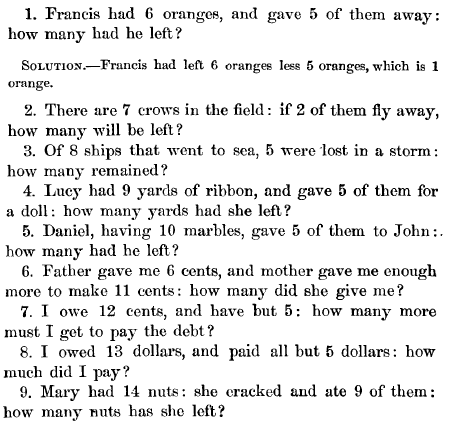
  • Assess mastery by reading aloud the word problems below and having the children mentally compute and recite the solutions. If children have difficulties, repeat the prior phases and then reassess.

Math:  Months of the Year

STEP 1

Review the months of the year with the children.

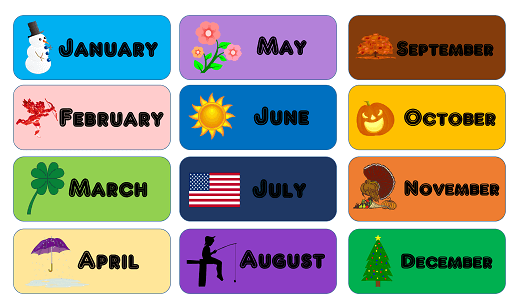
  • Show the image below and ask, ‘How many months are there in a year?’ Ask children to count the number of months.
  • Have children recite, ‘There are 12 months in one year.’ over several days until they memorize the fact.

STEP 2

  • Have children copy the names of the months from the table below, in order.

STEP 3

  • Write down the months of the year on strips of paper and have children put them in the proper order until they master the task.

STEP 4

  • Have children recite the months of the year over several days until they memorize their proper order.

Children should practice these exercises until they can recall the associated facts instantly.

STEP 1

Review the months of the year with the children.

  • Show the image below and ask, ‘How many months are there in a year?’ Ask children to count the number of months.
  • Have children recite, ‘There are 12 months in one year.’ over several days until they memorize the fact.

STEP 2

  • Have children copy the names of the months from the table below, in order.

STEP 3

  • Write down the months of the year on strips of paper and have children put them in the proper order until they master the task.

STEP 4

  • Have children recite the months of the year over several days until they memorize their proper order.

Children should practice these exercises until they can recall the associated facts instantly.

Subtract Numbers from Up to 15

STEP 1

  • Children separate a larger group of up to 15 objects into two smaller groups.
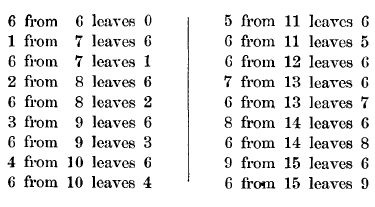
  • Repeatedly separate a group of objects into smaller groups per the table below. For example, 6 pencils from 6 pencils leaves 0 pencils, 8 coins from 14 coins leaves 6 coins, and 9 cars from 15 cars leaves 6 cars, etc.
  • When children are ready, have them separate the object groups themselves.
  • Children must perfectly master the operations listed in the table before proceeding to the next phase of the lesson.

STEP 2

  • Children separate groups of objects they can’t see, but can imagine (bears, mountains, trees).
  • Using the table above as a guide, ask children to call out the answer to questions such as, ‘How many are one shoe from seven shoes?’ and ‘How many are nine frogs from fifteen frogs?’
  • Give numerous exercises on each number, with constant reviews, until children can recite each operation in the table with great accuracy and rapidity.

STEP 3

  • In this phase, do not mention objects. Children subtract numbers directly.
  • Using the table above as a guide, ask children to call out the answer to questions such as, ‘How many are one from seven?’ and ‘How many are four from ten?’
  • Give numerous exercises on each number, with constant reviews, until children can perform each operation with great accuracy and rapidity.

STEP 4

  • Direct children to practice writing and reciting the subtraction problems listed in the table above. For example, they would write and then recite:
  • 6 from 15 leaves 9
  • 15 minus 6 is 9
  • 15 – 6 = 9
  • Repeat for each combination in the table until the children master the tasks.

STEP 5

Have children copy, solve, and recite the following table:

  • 14 + 1 or 1 + 14 = ; therefore 15 – 1 = ; 15 – 14 =
  • 13 + 2 or 2 + 13 = ; therefore 15 – 2 = ; 15 – 13 =
  • 12 + 3 or 3 + 12 = ; therefore 15 – 3 = ; 15 – 12 =
  • 11 + 4 or 4 + 11 = ; therefore 15 – 4 = ; 15 – 11 =
  • 10 + 5 or 5 + 10 = ; therefore 15 – 5 = ; 15 – 10 =
  • 9 + 6 or 6 + 9 = ; therefore 15 – 6 = ; 15 – 9 =
  • 8 + 7 or 7 + 8 = ; therefore 15 – 7 = ; 15 – 8 =

STEP 6

  • Assess mastery by reading aloud the word problems below and having the children mentally compute and recite the solutions. If children have difficulties, repeat the prior phases and then reassess.
Math: Days of the Week

STEP 1

Review the days of the week with the children.

  • Show the image below and ask, ‘How many days are there in one week?’ Ask children to count the number of days.
  • Have children recite, ‘There are 7 days in one week.’ over several days until they memorize the fact.

STEP 2

  • Have children copy the names of the days of the week from the table below, in order.

STEP 3

  • Write down the days of the week on strips of paper and have children put them in the proper order until they master the task.

STEP 4

  • Have children recite the days of the week over several days until they memorize the proper order.

Children should practice these exercises until they can recall the associated facts instantly.

Subtract Numbers from Up to 14

Steps

STEP 1

  • Children separate a larger group of up to 14 objects into two smaller groups.
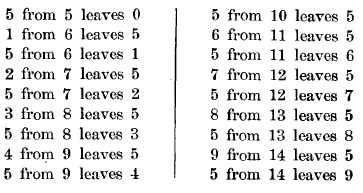
  • Repeatedly separate a group of objects into smaller groups per the table below. For example, 5 pencils from 5 pencils leaves 0 pencils, 8 coins from 13 coins leaves 5 coins, and 9 cars from 14 cars leaves 5 cars, etc.
  • When children are ready, have them separate the object groups themselves.
  • Children must perfectly master the operations listed in the table before proceeding to the next phase of the lesson.

STEP 2

  • Children separate groups of objects they can’t see, but can imagine (bears, mountains, trees).
  • Using the table above as a guide, ask children to call out the answer to questions such as, ‘How many are one shoe from six shoes?’ and ‘How many are nine frogs from fourteen frogs?’
  • Give numerous exercises on each number, with constant reviews, until children can recite each operation in the table with great accuracy and rapidity.

STEP 3

  • In this phase, do not mention objects. Children subtract numbers directly.
  • Using the table above as a guide, ask children to call out the answer to questions such as, ‘How many are one from six?’ and ‘How many are five from six?’
  • Give numerous exercises on each number, with constant reviews, until children can perform each operation with great accuracy and rapidity.

STEP 4

  • Direct children to practice writing and reciting the subtraction problems listed in the table above. For example, they would write and then recite:
  • 5 from 14 leaves 9
  • 14 minus 5 is 9
  • 14 – 5 = 9
  • Repeat for each combination in the table until the children master the tasks.

STEP 5

Have children copy, solve, and recite the following table:

  • 13 + 1 or 1 + 13 = ; therefore 14 – 1 = ; 14 – 13 =
  • 12 + 2 or 2 + 12 = ; therefore 14 – 2 = ; 14 – 12 =
  • 11 + 3 or 3 + 11 = ; therefore 14 – 3 = ; 14 – 11 =
  • 10 + 4 or 4 + 10 = ; therefore 14 – 4 = ; 14 – 10 =
  • 9 + 5 or 5 + 9 = ; therefore 14 – 5 = ; 14 – 9 =
  • 8 + 6 or 6 + 8 = ; therefore 14 – 6 = ; 14 – 8 =
  • 7 + 7 = ; therefore 14 – 7 =

STEP 6

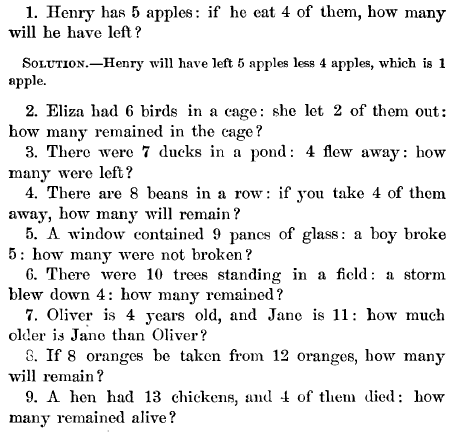
  • Assess mastery by reading aloud the word problems below and having the children mentally compute and recite the solutions. If children have difficulties, repeat the prior phases and then reassess.
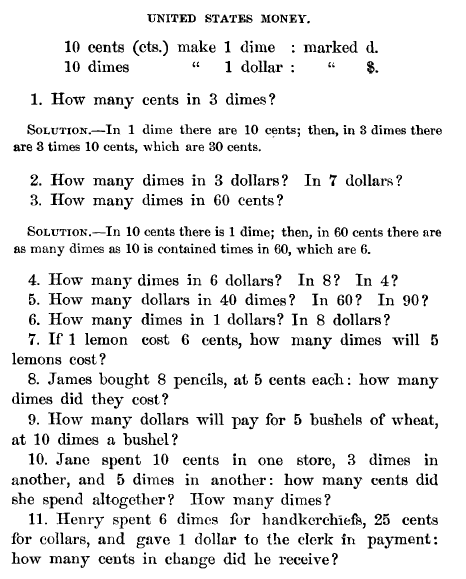
Math: Review – US Money

Directions

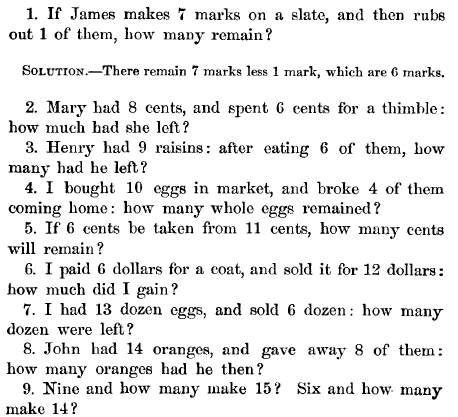
Have children complete the problems below.

Have children practice until they perfectly master the task.

Steps

STEP 1

  • Direct children to mentally compute and recite the solutions.

STEP 2

  • If children have difficulties, work with physical objects and then have children retry the mental computation.

Subtract Numbers from Up to 13

STEP 1

  • Children separate a larger group of up to 13 objects into two smaller groups.
  • Repeatedly separate a group of objects into smaller groups per the table below. For example, 4 pencils from 4 pencils leaves 0 pencils, 8 coins from 12 coins leaves 4 coins, and 9 cars from 13 cars leaves 4 cars, etc.
  • When children are ready, have them separate the object groups themselves.
  • Children must perfectly master the operations listed in the table before proceeding to the next phase of the lesson.

STEP 2

  • Children separate groups of objects they can’t see, but can imagine (bears, mountains, trees).
  • Using the table above as a guide, ask children to call out the answer to questions such as, ‘How many are one shoe from five shoes?’ and ‘How many are nine frogs from thirteen frogs?’
  • Give numerous exercises on each number, with constant reviews, until children can recite each operation in the table with great accuracy and rapidity.

STEP 3

  • In this phase, do not mention objects. Children subtract numbers directly.
  • Using the table above as a guide, ask children to call out the answer to questions such as, ‘How many are one from five?’ and ‘How many are four from six?’
  • Give numerous exercises on each number, with constant reviews, until children can perform each operation with great accuracy and rapidity.

STEP 4

  • Direct children to practice writing and reciting the subtraction problems listed in the table above. For example, they would write and then recite:
  • 4 from 13 leaves 9
  • 13 minus 4 is 9
  • 13 – 4 = 9
  • Repeat for each combination in the table until the children master the tasks.

STEP 5

Have children copy, solve, and recite the following table:

  • 12 + 1 or 1 + 12 = ; therefore 13 – 1 = ; 13 – 12 =
  • 11 + 2 or 2 + 11 = ; therefore 13 – 2 = ; 13 – 11 =
  • 10 + 3 or 3 + 10 = ; therefore 13 – 3 = ; 13 – 10 =
  • 9 + 4 or 4 + 9 = ; therefore 13 – 4 = ; 13 – 9 =
  • 8 + 5 or 5 + 8 = ; therefore 13 – 5 = ; 13 – 8 =
  • 7 + 6 or 6 + 7 = ; therefore 13 – 6 = ; 13 – 7 =

STEP 6

  • Assess mastery by reading aloud the word problems below and having the children mentally compute and recite the solutions. If children have difficulties, repeat the prior phases and then reassess.

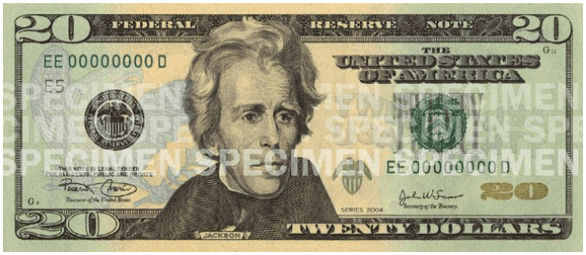
Math: US Money – The Twenty-Dollar Bill

Directions

Gather one twenty-dollar bill, two ten-dollar bills, four five-dollar bills, and four one-dollar bills per child. Children might create their own pretend paper money with paper, pens, and crayons or markers.

Have children complete the steps below.

Have children practice until they perfectly master each task.

STEP 1 – WHAT IS A TWENTY-DOLLAR BILL?

Children identify the twenty-dollar bill.

  • Direct the children to examine the front and back of the twenty-dollar bill. Ask the children to verbally describe what they see. Tell children there are also less common, larger denominations such as fifty-dollar bills, but we will not cover those.
  • Have children hold up the twenty-dollar bill and recite, ‘1 twenty-dollar bill is worth 20 one-dollar bills.’

STEP 2 – COMBINE AND SEPARATE

Children combine and separate groups of one, five, ten, and twenty-dollar bills.

  • Tell children to move 2 ten-dollar bills next to the twenty-dollar bill. Have them recite, ‘1 twenty-dollar bill is worth 2 ten-dollar bills.’
  • Tell children to move 4 five-dollar bills next to the twenty-dollar bill. Have them recite, ‘1 twenty-dollar bill is worth 4 five-dollar bills.’

STEP 3 – PLAY STORE

  • Give each child 1 twenty-dollar bill, 1 ten-dollar bill, 1 five-dollar bill, and 4 one-dollar bills. Say to children, ‘A hair dryer costs 38 dollars. Show me which bills you must give to the cashier to purchase the dryer.’
  • Give each child 1 twenty-dollar bill, 1 ten-dollar bill, 1 five-dollar bill, and 4 one-dollar bills. Say to children, ‘A garden hose costs 36 dollars. Show me which bills you must give to the cashier to purchase the hose.’
  • Give each child 1 twenty-dollar bill, 1 ten-dollar bill, 1 five-dollar bill, and 4 one-dollar bills. Say to children, ‘A small plastic pool costs 34 dollars. Show me which bills you must give to the cashier to purchase the pool.’

Subtract Numbers from Up to 12

STEP 1

  • Children separate a larger group of up to 12 objects into two smaller groups.
  • Repeatedly separate a group of objects into smaller groups per the table below. For example, 3 pencils from 4 pencils leaves 1 pencil, 8 coins from 11 coins leaves 3 coins, and 9 cars from 12 cars leaves 3 cars, etc.
  • When children are ready, have them separate the object groups themselves.
  • Children must perfectly master the operations listed in the table before proceeding to the next phase of the lesson.

STEP 2

  • Children separate groups of objects they can’t see, but can imagine (bears, mountains, trees).
  • Using the table above as a guide, ask children to call out the answer to questions such as, ‘How many are one shoe from four shoes?’ and ‘How many are nine frogs from twelve frogs?’
  • Give numerous exercises on each number, with constant reviews, until children can recite each operation in the table with great accuracy and rapidity.

STEP 3

  • In this phase, do not mention objects. Children subtract numbers directly.
  • Using the table above as a guide, ask children to call out the answer to questions such as, ‘How many are one from four?’ and ‘How many are four from seven?’
  • Give numerous exercises on each number, with constant reviews, until children can perform each operation with great accuracy and rapidity.

STEP 4

  • Direct children to practice writing and reciting the subtraction problems listed in the table above. For example, they would write and then recite:
  • 3 from 12 leaves 9
  • 12 minus 3 is 9
  • 12 – 3 = 9
  • Repeat for each combination in the table until the children master the tasks.

STEP 5

Have children copy, solve, and recite the following table:

  • 11 + 1 or 1 + 11 = ; therefore 12 – 1 = ; 12 – 11 =
  • 10 + 2 or 2 + 10 = ; therefore 12 – 2 = ; 12 – 10 =
  • 9 + 3 or 3 + 9 = ; therefore 12 – 3 = ; 12 – 9 =
  • 8 + 4 or 4 + 8 = ; therefore 12 – 4 = ; 12 – 8 =
  • 7 + 5 or 5 + 7 = ; therefore 12 – 5 = ; 12 – 7 =
  • 6 + 6 = ; therefore 12 – 6 = ;

STEP 6

  • Assess mastery by reading aloud the word problems below and having the children mentally compute and recite the solutions. If children have difficulties, repeat the prior phases and then reassess.
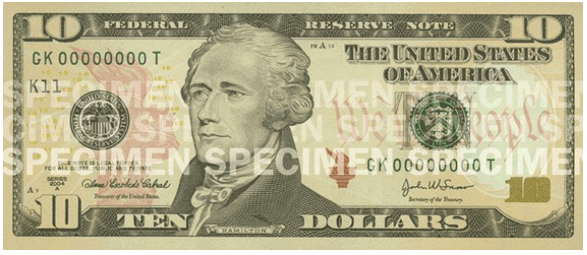
Math: US Money – The Ten-Dollar Bill

Directions

Gather one ten-dollar bill, one five-dollar bill, and ten one-dollar bills per child. Children might create their own pretend paper money with paper, pens, and crayons or markers.

Have children complete the steps below.

Have children practice until they perfectly master each task.

STEP 1 – WHAT IS A TEN-DOLLAR BILL?

Children identify the ten-dollar bill.

  • Direct the children to examine the front and back of the ten-dollar bill. Ask the children to verbally describe what they see.
  • Have children hold up the ten-dollar bill and recite, ‘1 ten-dollar bill is worth 10 one-dollar bills.’

STEP 2 – COMBINE AND SEPARATE

Children combine and separate groups of one, five, and ten-dollar bills.

  • Ask children to group 10 one-dollar bills together.
  • Tell children to move 1 ten-dollar bill next to the 10 one-dollar bills. Have them recite, ‘1 ten-dollar bill is worth 10 one-dollar bills.’
  • Tell children to remove the one-dollar bills and add two five-dollar bills next to the 1 ten-dollar bill. Have them recite, ‘1 ten-dollar bill is worth 2 five-dollar bills.’

STEP 3 – PLAY STORE

  • Give each child 1 ten-dollar bill, 1 five-dollar bill, and 4 one-dollar bills. Say to children, ‘A beach chair costs 18 dollars. Show me which bills you must give to the cashier to purchase the chair.’
  • Give each child 1 ten-dollar bill, 1 five-dollar bill, and 4 one-dollar bills. Say to children, ‘A Christmas wreath costs 16 dollars. Show me which bills you must give to the cashier to purchase the wreath.’
  • Give each child 1 ten-dollar bill, 1 five-dollar bill, and 4 one-dollar bills. Say to children, ‘A lawn gnome costs 14 dollars. Show me which bills you must give to the cashier to purchase the gnome.’