A place to grow your relationship with God

Archive for the ‘Education’ Category

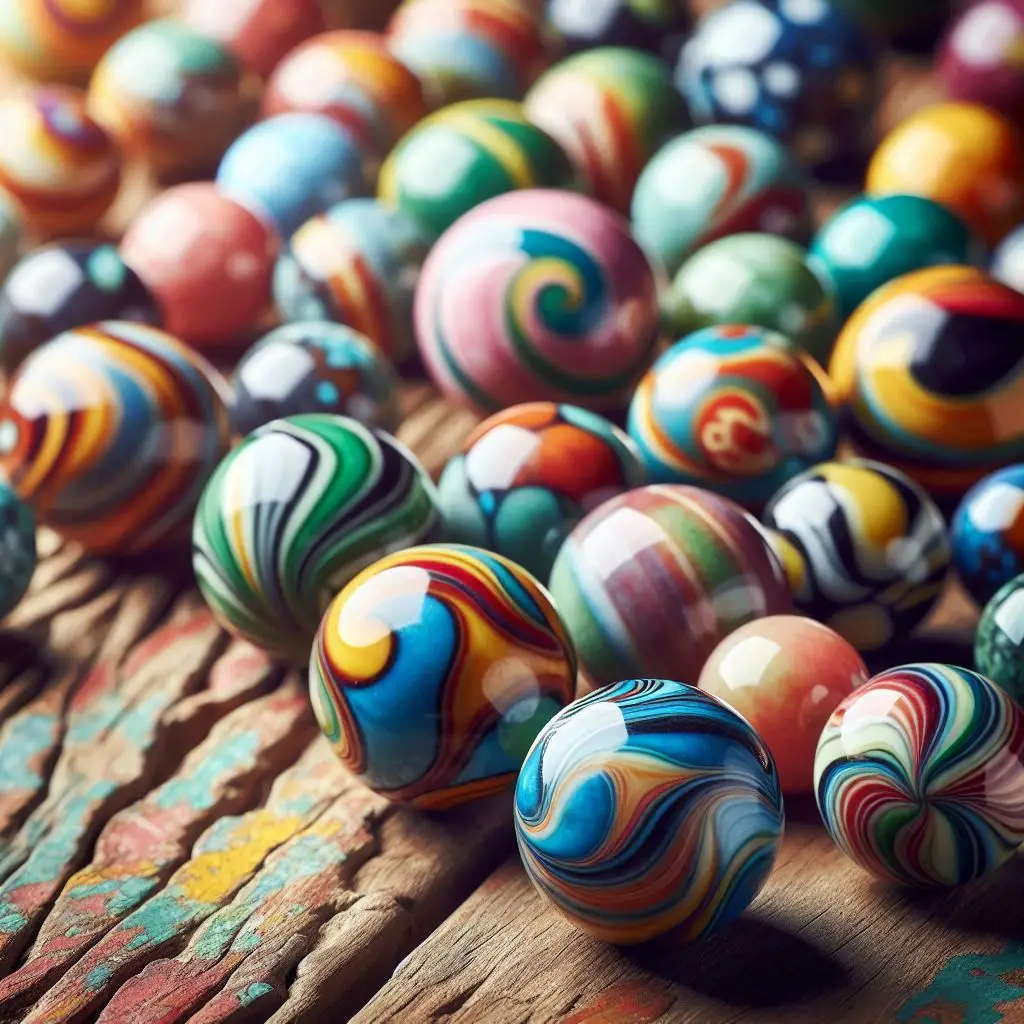
Marbles: From Ancient Play to Modern Collectibles and a Recipe for how to make Marbles
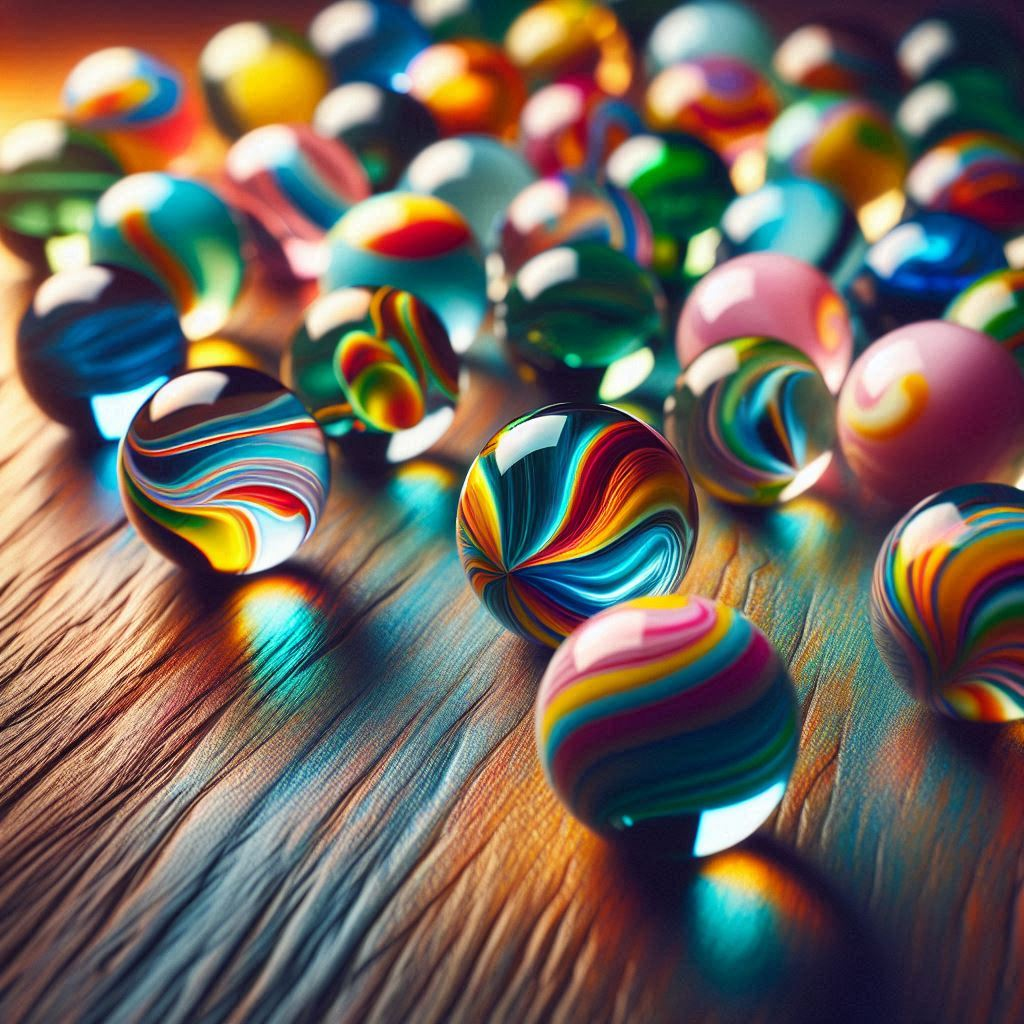
Glass Marbles

Ancient Origins of Marbles

  • Marbles have been found in archaeological sites worldwide, including the Indus Valley (Cira 2500 BC), ancient Egypt, Mesopotamia, Greece, and Rome, indicating their long- standing presence as a source of play.
  • Early marbles were made from stone, clay, nut, and fruit pits, polish or fired to create small spheres.
  • Roman children often played game with nuts, and references to this game appear in literature such as Ovid’s poem ‘nux”. Bas-reliefs from Roman times Depict children engaged in marbles game, and Early glass marbles have been found in Europe, though some may have originated as jewelry.

Medieval and Early Modern Europe

  • During the Middle Ages, marbles became popular in Europe. In Germany around 1503, authorities regulated marble games to specific areas, and marbles produced from marble, alabaster, agate, and limestone were polished for play.
  • Germany later became the center of marble craftsmanship, with water-powered stone mills turning raw marble and alabaster into perfectly shaped spheres by the 17th century Glass marbles emerged in Venice, Italy, and by the mid-19th century, German glassmakers invented marble scissors, allowing precise cutting of molten glass into uniform spheres.

Introduction to America and Industrialization

  • Marbles were brought to the United States by early settlers, and the first American mass-produced clay marbles were made by Samuel C. Dyke in Akron, Ohio, in the 1880s.
  • In the early 1900s, Martin Frederick Christensen invented machinery to produce glass marbles efficiently in Akron, marking the beginning of largescale U.S. glass marble production. His machinery could produce up to 10,000 marbles per day, creating more uniform and affordable marbles
  • The Akro Agate Company, founded in 1911 in West Virginia, quickly became a dominant manufacturer, controlling much of the U.S. market by the 1920s.

Golden Age and Global Expansion

  • The 1920s and 1930s are known as the “Golden Age of Marbles,” with marble games thriving as a popular children’s pastime. Companies like Peltier Glass, Christensen Agate, and Akro Agate produced colorful, decorative, and collectible marbles, including picture marbles showcasing comic-strip characters.
  • Post World 2, inexpensive Japanese cat’s eye marbles flooded Global markets, overtaking American production.

Modern Marbles and Collecting

  • Today, marbles are both games and collectibles, with art glass marbles created by artisans worldwide Machine-made marbles continue to be produced predominantly in Mexico and China for global distribution.
  • The British and World Marbles Championship in Tinsley Green, England, is still held annually since 1932, highlighting the enduring legacy of marble games.

Things to do with Marbles

Here are 25 Games with marbles that you can play. There are others game with Marbles like Chinese checkers

  • Classic Marbles [1]
  • Bullseye Marbles[2]
  • Mini Marble Golf [3]
  • Booby Trap [4]
  • Off The Wall [5]
  • What Decade? [6]
  • Color Match [7]
  • Bounce Eye [8]
  • The Conqueror [9]
  • Marble Obstacle Racing[10]
  • Marble Tilt [11]
  • Eggs in a Basket [12]
  • Thin Ice [13]
  • Marble Box [14]
  • Marble Skee Ball [15]
  • Marble Racetrack [16]
  • Pool Noodle Marble Race [17]
  • Newton’s Cradle [18]
  • Marble Cup [19]
  • Valentins Marble [20]
  • Guess How Many [21]
  • Marble Roll [22]
  • Pacman Marble [23]
  • Marble Painting [24]
  • Floating Marbles [25]
Clay marbles painted

Easy Homemade Marbles:

You can make homemade marbles using 2 cups of flour, 1 cup of salt, and 1 cup of water, adjusting slightly for texture as needed. Basic Ingredients and Ratio For a standard salt dough or homemade clay to form marbles:

Ingredients for a large batch (for large groups)

  • Oven
  • Wax paper
  • Baking sheet,
  • 2 1 teaspoons [To form the shooter]
  • 2 1/4 teaspoons [ To form the small Marbles]
  • 2 cups Flour
  • 1 cup Salt
  • 1 cup Water
  • Paints [for decoration]
  • Glitter [for decoration]

Ingredients for a small batch (for 1 person)

  • Oven
  • Wax paper
  • Baking sheet,
  • 2 1 teaspoons [To form the shooter]
  • 2 1/4 teaspoons [To form the small Marbles]
  • 1/2 cup Flour
  • 1/4 cup Salt
  • 1/4 cup Water
  • Paints [for decoration]
  • Glitter [for decoration]

What to do

  1. Cover: your workspace with wax paper.
  2. Combine Dry Ingredients: In a mixing bowl, mix the flour and salt thoroughly.
  3. Add Water: Gradually: Slowly pour in the water while stirring. Mix until a rough dough begins to form
  4. Knead the Dough: Place the dough on a lightly floured surface and knead for 5–10 minutes until it is smooth and pliable.
  5. If the dough: feels dry, add a tablespoon of water at a time; if too sticky, sprinkle in a little flour
  6. Form Marbles: Take small portions and roll them between your palms to form round marbles.
  7. To Ensure: they are smooth and even get two 1/4 teaspoons, put the small ball in them, and push them together. Then roll the ball around one more time in the palm of your hand. Do the same thing with two 1/2 teaspoons to make the shooter.
  8. Drying/Curing: You can either air dry the marbles for 24–48 hours or bake them in a low oven at around 200°F (93°C) for 2–3 hours, turning occasionally to prevent cracking
  9. Time to decoration: Decoration it will what you like .

Tips for Best Results

  • Use all-purpose flour for optimal texture; avoid self-rising flour.
  • Kneading well ensures a smooth, workable dough that holds its shape.
  • For firmer marbles, slightly increase the flour; for softer or more pliable dough, increase water slightly.
  • Store leftover dough in an airtight container in the fridge for a few days.
  • Optionally, you can paint or glaze baked marbles once fully hardened for decoration
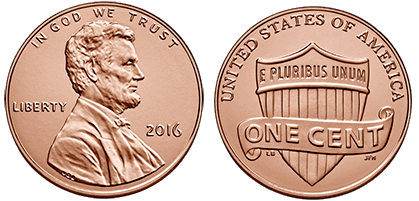
Math: US Money – The Penny

Yes, I am aware that the penny has been discontinued. However, I believe that the exercises will still benefit the child in learning to count and do math.

Directions

Gather 100 pennies per child. If need be, substitute another item for the penny

Have children complete the steps below.

Have children practice until they perfectly master each task.

STEP 1 – WHAT IS A PENNY?

Children identify the penny. This is a good time to explain that the penny was available in the US for many years. However, it has since been discontinued.

  • Direct the children to examine the front and back of a penny. Ask the children to verbally describe what they see.
  • Have children hold up a penny and recite, ‘1 penny is worth 1 cent.’

STEP 2 – COMBINE AND SEPARATE

Children combine and separate pennies.

  • Ask children to group 5 pennies together.
  • Have children group 10 pennies together.
  • Ask children to divide the 10 pennies into 2 groups of 5.
  • Have children group 25 pennies together.
  • Ask children to divide the 25 pennies into 5 groups of 5.
  • Have children group 100 pennies together.
  • Ask children to divide the 100 pennies into 10 groups of 10.
  • Ask children to divide the 100 pennies into 4 groups of 25.
  • Have children divide the 100 pennies into 5 groups of 20.
  • Ask children, ‘How many cents is one penny worth?’

STEP 3 – PLAY STORE

Play store with children, where children show the amount of money required to buy pretend items.

  • Say to children, ‘You decide to buy a toy boat for 51 cents. Show me how many pennies you must pay the cashier.’
  • Say to children, ‘You decide to buy an apple for 76 cents. Show me how many pennies you must pay the cashier.’
  • Say to children, ‘You decide to buy a cookie for 33 cents. Show me how many pennies you must pay the cashier.’

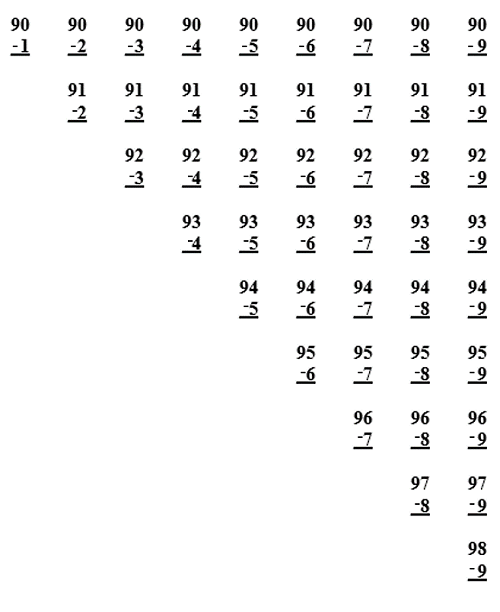
Math: Subtract Numbers Up to 100

STEP 1

  • Have the children write out and complete the subtraction exercises below on paper.

STEP 2

  • Assess mastery by reading aloud the listed problems and having the children mentally compute and recite the solutions.
  • If children have difficulties, have children redo their written practice with pencil and paper again and then reassess.

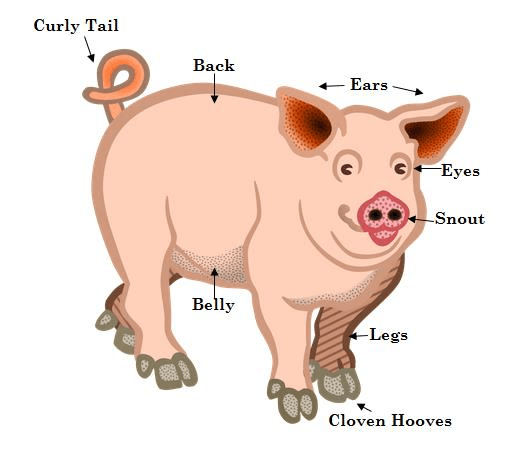
Understanding Pig Anatomy: Key Features Explained for Kids

Pigs, like all living things, have a specific anatomy, including an outside structure and internal workings.

Facts about a pig’s external anatomy:

  1. Pigs have rounded, triangular ears.
  2. Pigs have a snout.
  3. Pigs have a curly tail.
  4. Pigs have cloven hooves, which means their hoof is split into two parts.

Activity

  • Examine the labeled picture of the pig.
  • Recite aloud the labeled parts of the pig, including the ears, eyes, snout, legs, hooves, belly, back, and tail.
  • Sketch your own pig.
  • If you are able, draw the arrows and names of the body parts on your pig drawing.

Weekly Recap of Articles for Christians Jan 18th to Jan 24th

Bible

Education

Cooking/ House Keeping

Estudio Bíblico en Español

Math: Subtract Numbers Up to 90

STEP 1

  • Have the children write out and complete the subtraction exercises below on paper.

STEP 2

  • Assess mastery by reading aloud the listed problems and having the children mentally compute and recite the solutions.
  • If children have difficulties, have children redo their written practice with pencil and paper again and then reassess.

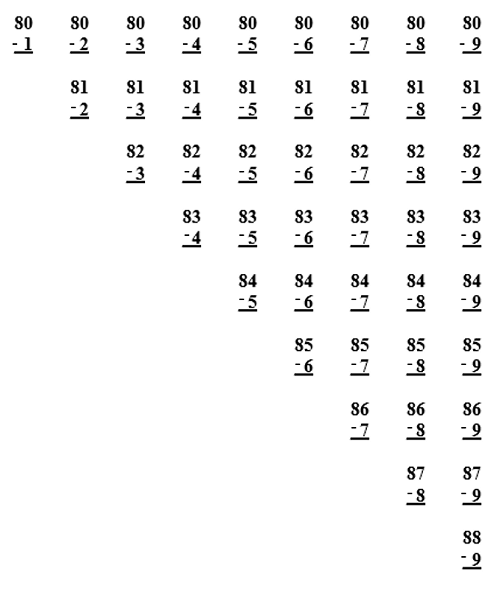
Math: Subtract Numbers Up to 80

STEP 1

  • Have the children write out and complete the subtraction exercises below on paper.

STEP 2

  • Assess mastery by reading aloud the listed problems and having the children mentally compute and recite the solutions.
  • If children have difficulties, have children redo their written practice with pencil and paper again and then reassess.

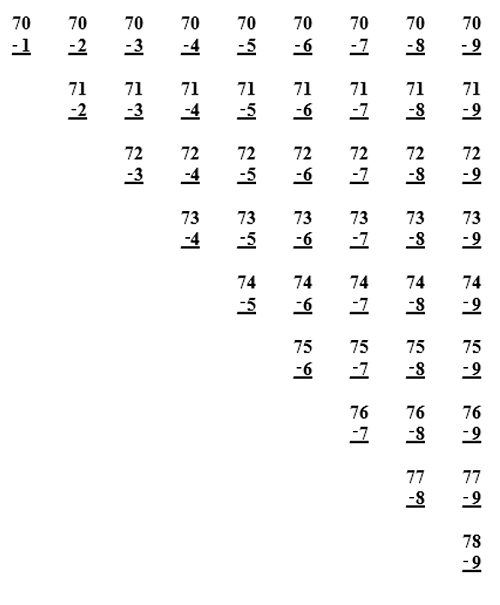
Math: Subtract Numbers Up to 70

STEP 1

  • Have the children write out and complete the subtraction exercises below on paper.

STEP 2

  • Assess mastery by reading aloud the listed problems and having the children mentally compute and recite the solutions.
  • If children have difficulties, have children redo their written practice with pencil and paper again and then reassess.

How to Subtract Positive and Negative Numbers: A Step-by-Step Guide

To Subtract a positive number from positive number:

Step 1: Subtract the smaller number from the bigger number.
Step 2: I f the 1st number is the bigger number; the answer is positive.

  • example: 7-(6) = 1

If the 1st number is smaller, the answer is negative.

  • example: (64) – (72) =-8


To Subtract a negative number from a positive number:

Step 1: Add the two numbers.
Step 2: Remember the answer will always be a negative number.

  • example: -72-(+64) =-136
  • example: -5-(+6) = -11

To Subtract a positive number from a negative number:

Step 1: Get rid of the double negatives by replacing the two negatives with a plus sign and rewrite the problem accordingly.

  • Example: 72 – (-64) = 72+64

Step 2: Simple add the numbers together as normal.

  • example: 72 + 64 = 136
  • example: 2- (- 5) = 2 + 5 = 7

To subtract a negative number from a negative number:

Step 1: Get rid of the double negatives by replacing the two negatives with a plus sign and rewrite the problem accordingly.

  • Example -72 – (-64) = -72 + 64 =

Step 2: Subtract the smaller number from the bigger number.

  • Example -72 – (-64) = -72 + 64 =
    • 72-64 = 8

Step 3: Determine if the answer is negative or positive:

  • -72 + 64 = -8

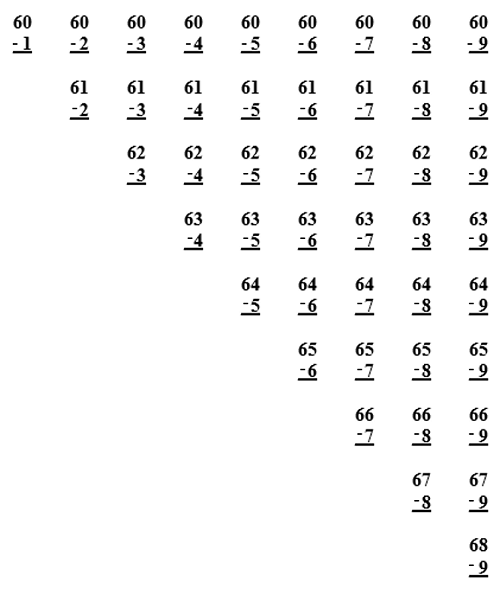
Math:  Subtract Numbers Up to 60

STEP 1

  • Have the children write out and complete the subtraction exercises below on paper.

STEP 2

  • Assess mastery by reading aloud the listed problems and having the children mentally compute and recite the solutions.
  • If children have difficulties, have children redo their written practice with pencil and paper again and then reassess.