Nuts are actually a type of fruit, defined as dry, single-seeded fruits with high oil content, usually encased in a leathery or hard outer shell. In botanical terms, a true nut has a single seed, a hard shell, and a protective husk—like chestnuts, hazelnuts, pecans, and walnuts. Peanuts and almonds, however, aren’t true nuts; peanuts are legumes, and almonds are surrounded by a fleshy coating similar to a plum. True nut or not, these tasty fruits are enjoyed by people all over the world.
Facts about nuts:
Types of nuts include hazelnuts, birch nuts, chestnuts, acorns, and hickory nuts.
Peanuts are not nuts. They are legumes, like peas and beans.
Coconuts, almonds, macadamia, pistachio, pecan, walnuts, and cashews are also not true nuts.
Acorns
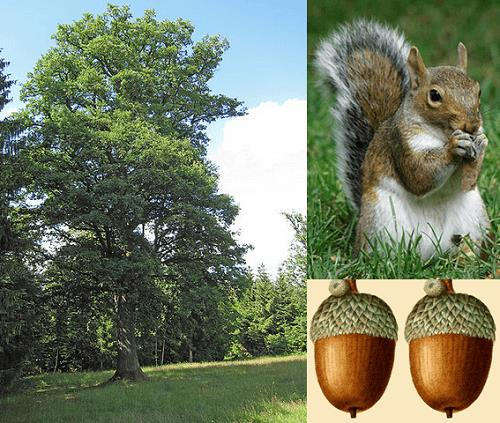
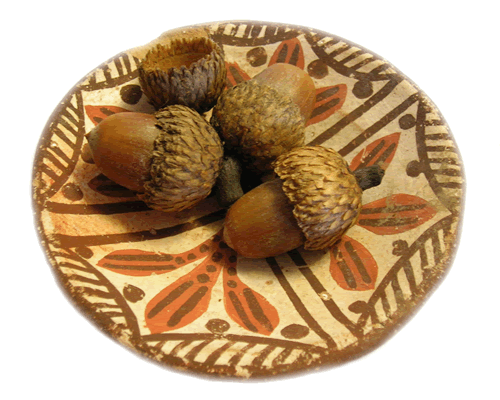
Acorns are the nuts that come from oak trees (Quercus spp.) and were once a staple food for many indigenous peoples of North America. They were especially important in California, where multiple oak species grow in the same areas.
Acorns were a great food source for Native Americans because they could be stored for many years. Photo by Teresa Prendusi.
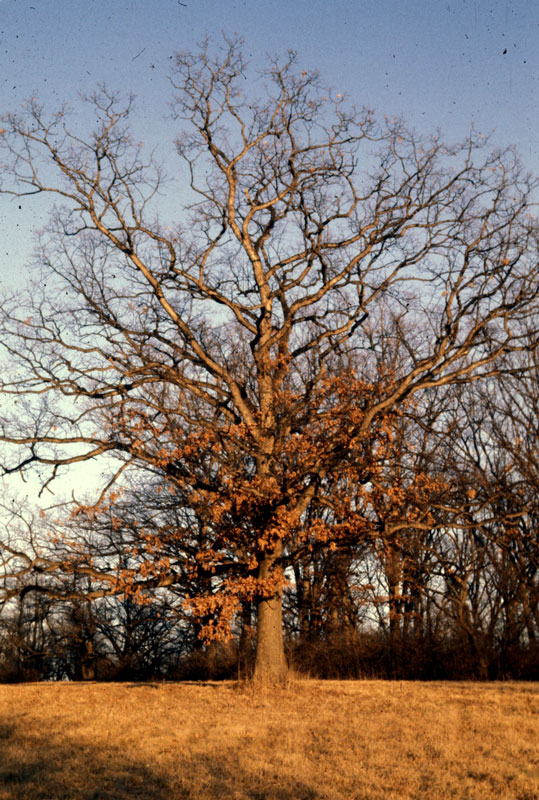
White Oak (Quercus alba). Photo by Larry Stritch.
These hard-shelled fruits were an important food source because if properly treated in the sun, they could be stored for several years and used when needed. Acorns were stored in caches or on tall poles to protect them from being eaten by squirrels. When prepared for use in foods the ground acorn flower was rinsed in a stream to remove bitter tasting tannins.
Native American tribes used fire to promote the production of acorns within oak groves.
Ground fires were used to kill the larvae of acorn moths and acorn weevils that can prove disastrous to the acorn crop.
Burning occurred during the dormancy period in the soil, and the fires released nutrients bound in dead leaves and other plant debris into the soil.
Most North American oaks tolerate light fires, especially when consistent burning has eliminated woody fuel accumulation around their trunks.
Black Walnuts
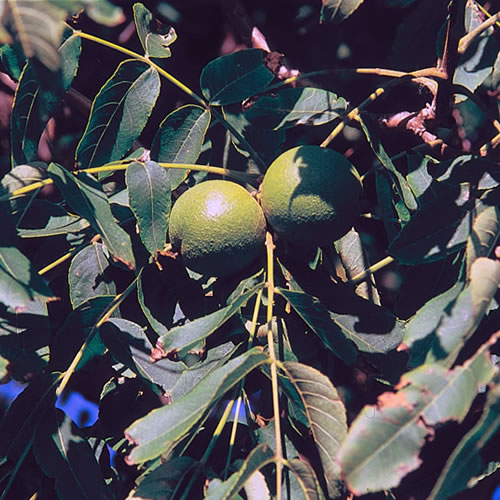
Black Walnuts (Juglans nigra) are native to North America. The nuts are primarily used in ice cream and candy.
Walnut trees are notorious for inhibiting growth of other plants around them. They produce chemicals in their leaves that are leached out by rain and soak into ground around the trunk.
Farmers planted these trees around farm animals to keep the flies away because they erroneously believed that the trees contained insecticides.
Black walnuts (Juglans nigra) have a strong taste and a very hard shell.
Pecans
Pecans (Carya illinoinensis) are a valuable nut species native to the American Southeast. Today, they’re widely cultivated across the southeastern United States and play a big role in the region’s cuisine.
In the past, native peoples and early American settlers enjoyed pecans because they were easy to find along major waterways and much simpler to shell than other North American nuts.
Pecan (Carya illinoinensis). Photo by Jerry A. Payne, USDA Agricultural Research Service, Bugwood.org.
Sicknesses are infectious when they spread from person to person.
Colds and flus are illnesses caused by viruses, which are so tiny that they can only be seen with special tools called microscopes.
Food poisoning and strep throat are illnesses caused by bacteria. While bacteria are bigger than viruses, they’re still tiny and can’t be seen without a microscope. Doctors might prescribe antibiotics to fight bacterial infections, but these medicines don’t work on viruses.
We can help to prevent sickness by washing our hands, especially after using the restroom.
Many bacteria are helpful to people. For example, we use bacteria to turn milk into yogurt and cheese.
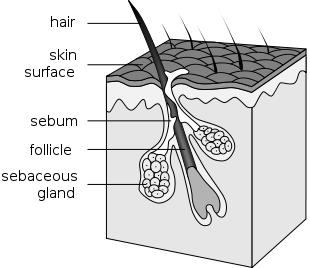
There are millions of benign (not harmful) and helpful bacteria living on your skin right now. Even more bacteria live inside you. But don’t worry. These bacteria are harmless and many are even helpful.
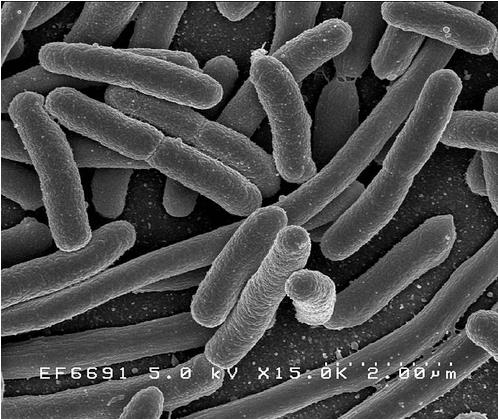
Look at the pictures below. One picture shows an example of bacteria. The other picture shows an example of viruses.
The picture shows many bacteria. It was taken using a special tool, an electron microscope.
Diagram of the families of viruses that include human, animal and zoonotic pathogens.
Would you like to see pictures of other viruses? Click here.
Frost is a lovely white layer of ice that appears on surfaces, looking like a soft, powdery covering. It forms when water vapor in the air changes directly into ice on cold surfaces, usually when the temperature drops below freezing.
Frost forms pretty patterns of ice crystals.
Frost can develop fractal patterns.
If frost comes too early or too late in the season, it can damage plants and reduce the number of crops that are grown.
How Frost Forms
Frost forms when a solid surface gets colder than the air around it. This surface also needs to be colder than the freezing point of water. If the air is humid (has lots of water vapor), ice will start to form on the cold surface.
Imagine this: the air contains tiny bits of water vapor. When that vapor hits a very cold surface, it skips turning into liquid water and goes straight to forming ice crystals. This is called desublimation. For it to occur, the surface needs to be colder than the air’s “frost point,” which is the temperature where water vapor becomes ice.
The size of ice crystals depends on a few factors, like the temperature, the amount of water vapor in the air, and how long they’ve been growing undisturbed.
Frost often forms when a surface is colder than the surrounding air. For instance, you might notice it near cracks in chilly sidewalks, where warm, moist air from the ground escapes and meets the cold surface. Things that lose heat quickly, like rusty nails, are also common spots for frost to appear.
Sometimes frost forms in one spot but not in another nearby. This can happen due to small differences in elevation, as lower areas tend to get colder on calm nights. The type of ground also plays a role in how cold the air above it becomes.
Types of Frost
There are many different kinds of frost. Here is a list of them
Hoar Frost
Hoar frost is made up of white ice crystals that appear on the ground or on surfaces like wires and leaves. It typically forms on cold, clear nights when heat escapes into the sky faster than it can be replaced, causing objects to cool below the freezing point of water.
Sometimes, hoar frost forms in “frost pockets.” These are low areas like valleys where cold air settles. Hoar frost can even form in these pockets when the air a few feet above the ground is warmer.
The word “hoar” comes from an old English word meaning “showing signs of old age.” It describes how the frost makes trees and bushes look like they have white hair.
Hoar frost has different names depending on where it grows:
Air hoar forms on things above the ground, like tree branches or plant stems.
Surface hoar forms directly on snow, ice, or already frozen surfaces.
Crevasse hoar grows inside cracks in glaciers where water vapor collects.
Depth hoar forms as large crystals deep within dry snowbanks. These crystals grow bigger by taking water from smaller nearby crystals.
Advection Frost
Advection frost, also known as wind frost, forms as tiny ice spikes when a very cold wind sweeps over objects like tree branches or poles. It often appears as a delicate rim of ice along the edges of flowers and leaves. This frost typically develops facing into the wind and can occur at any time, day or night.
Window Frost
Window frost, also called fern frost or ice flowers, appears on window panes when it’s freezing outside and warmer, slightly humid inside. If the window isn’t well insulated, the water vapor condenses and freezes into beautiful frost patterns on the glass.
White Frost
White frost is a thin, solid coating of ice that forms when water vapor in the air freezes directly onto surfaces.
Rime
Rime is a type of ice that forms quickly, often when the air is moist and windy. It’s different from frost because it usually involves supercooled water droplets—water that stays liquid even below freezing. Ships in Arctic waters can end up with thick layers of rime on their ropes and gear. Unlike the delicate, feathery look of hoar frost, rime tends to appear solid and icy.
Black Frost
Black frost isn’t really frost at all! It happens when the air is too dry for frost to form, but temperatures drop so low that plants freeze and die. The frozen plant tissues turn black, giving it the name “black frost.” It’s often called a “killing frost” because it’s usually much colder than white frost. Interestingly, white frost can actually help keep things slightly warmer due to the heat released when water freezes.
In daily life, we come across matter in three forms: solid, liquid, and gas. The state of matter partly depends on the temperature of the substance. Liquids like water is the only matter that can exist in all three states of matter.
Room Temperature
At room temperature, water is a liquid.
Liquids, such as water, oil, and soda, adapt to the shape of their containers. Under a microscope, you’d see that their particles are packed closely together but arranged randomly, with the molecules constantly moving around.
Freezing
When liquid water gets cold enough, it freezes and turns into solid ice. It becomes a solid. Solids, like your desk, your backpack and your pants, are firm and stable. Their molecules are grouped together in organized patterns. The molecules might vibrate slightly, but they don’t move around.
Boiling
When liquid water heats up to a certain point, it transforms into water vapor, a gaseous state.
Gases like air, steam, and helium flow freely, allowing you to pass your hand through them effortlessly. They adapt to the shape of their container and can fill it completely. Their molecules are widely spaced and constantly moving, wiggling and jiggling around. You can see the air, but you can see what happens when air gets trapped into things like a balloon.
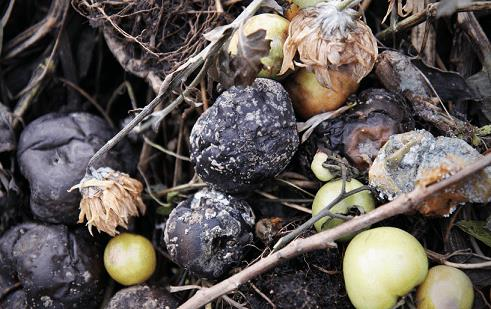
If you leave a piece of fruit or a vegetable on the counter for too long, it will change color and develop an unpleasant odor.
A fuzzy substance known as mold can grow on fruits or vegetables.
This process is called rotting.
Why do things rot?
When a farmer removes fruits or vegetables from their plants, they start to die immediately.
All living things are made of small units called cells. As the fruits and vegetables die, their cells start to break down.
Tiny microorganisms called bacteria, molds, and yeasts floating in the air land on the fruit and begin to further break down the fruit or vegetable.
Moisture (water), light, temperature, and microorganisms work together to speed spoiling process.
How can we prevent things from rotting?
Keeping foods in the refrigerator slows the spoiling process (less moisture, fewer microorganisms, less light, colder temperature), but food will eventually spoil.
Keeping foods in the freezer at even colder temperatures slows the spoiling process even more.
Never eat rotten food. It might make you sick. Rotten food may small bad, be a strange color, or have fuzzy mold spots on it.
Pee Yew! That’s Rotten!
Objective:
Observe the rotting process.
Materials:
Fruit, small dish
Procedure:
Leave a small chunk of fruit or vegetable out on the countertop in a small dish.
Observe the dish after a few hours and draw a picture of what you see.
Observe the dish after a day and draw a picture of what you see.
Observe the dish each subsequent day over the next week and draw a picture of what you see.
Results:
What changes did you observe over the week?
How long does it take for the fruit or vegetable to rot?
Fire is a reaction between oxygen, and a fuel, such as wood or gas, and it also needs heat to start. Most fires are combustion reactions, which occur when elements like carbon, hydrogen, and oxygen mix and react quickly. There are various types of fires, including wood fires, gas fires, and even metal fires, and they can be extremely dangerous if not managed properly.
Fire is a reaction that produces heat and light.
Fire produces red, orange, yellow, white, and blue flames that we can see, where red is the coolest and blue is the hottest.
Fire is very dangerous. Children should never play with fire and should only be around fires when responsible adults are present.
The Fire Triangle
Fire needs three things to burn: oxygen, fuel, and heat. This is often called the “fire triangle.”
Fuel: This is anything that can burn, like wood, coal, or oil.
Oxygen: Fire needs oxygen from the air to keep burning.
Heat: Once a fire starts, it creates its own heat, which helps it keep burning.
If you take away any one of these three things, the fire will stop.
Stopping a Fire
You can stop a fire in three main ways:
Remove the fuel: If a fire runs out of things to burn, it will stop. Firefighters sometimes remove trees or buildings in a fire’s path to stop it from spreading.
Remove the oxygen: This is called “smothering” a fire. If you cover a fire with something that blocks oxygen, like sand or a special blanket, it will go out. Fires cannot burn without oxygen.
Remove the heat: The most common way to do this is by using water. Water absorbs the heat, cooling the fire down until it stops burning.
However, some fires, like those involving certain metals, can be tricky. For example, magnesium fires can even burn in carbon dioxide, so they can’t be smothered with a regular fire extinguisher.
Humans and Fire
Learning to control fire was a huge step for early humans. It changed their lives in many ways:
Cooking: Fire allowed people to cook food. This made food safer to eat and easier to digest.
Warmth: Fire provided heat, helping people stay warm in cold weather. This meant they could live in cooler places.
Protection: Fire helped keep dangerous animals away at night.
Tools: Over time, humans learned to use fire to make charcoal and manage the land.
Fire in Farming
During the Neolithic Revolution, as people began farming, they used fire to manage the land. They conducted “controlled burns” or “cool fires,” which were unlike the destructive “hot fires” that ruin soil and plants. Cool fires were typically done in spring and autumn to clear small plants and dry leaves. This practice helped prevent large, dangerous fires and created diverse environments where plants and animals could thrive.
Farmers often use fire to clear land for planting in a method called “slash-and-burn” agriculture. They cut down vegetation and burn it, releasing nutrients into the soil to help new crops grow. While this can benefit small farmers, it also has downsides. With growing populations and a warming climate, these fires can become uncontrollable, harming nature, destroying buildings, and producing smoke that causes health issues and further warms the atmosphere. Each year, vast areas of land around the world are burned.
Modern Uses of Fire
Fire is still used in many important ways today.
Vehicles: Most cars and trucks use fire inside their engines to make them move. This happens in the internal combustion engine.
Electricity: Many power plants use fire to heat water and create steam, which then generates electricity for homes and businesses.





 articlesforchristians