A place to grow your relationship with God

Archive for the ‘Seasonal’ Category

Understanding Tu B’Shevat: Jewish New Year for Trees

When Is Tu B´Shevat?

Tu Bishvat: Tu B’Shevat (or Tu Bishvat) marks the “birthday of the fruit trees” under Jewish law, and is often celebrated by a symbolic meal and tree planting activities. This Jewish holiday occurrson the 15th day of the Hebrew month of Shevat. It is also called Rosh HaShanah La’Ilanot (ראש השנה לאילנות‎), literally “New Year to the Trees”. In contemporary Israel, the day is celebrated as an ecological awareness day, and trees are planted in celebration.

Fruit, Nuts and Planting

Some Jewish people gather with family and friends to celebrate Tu B´Shevat by serving a seder (holiday meal) of dried fruit and nuts, red wine and grape juice. Pickled etog, a type of citrus, is often a featured dish at these festivities.

Other Jewish people celebrate by planting trees or joining in on efforts to raise environmental awareness. To many, it is considered the Jewish equivalent of Arbor Day.

Background

In some interpretations of Jewish law, any fruit that grows in the first three years after a tree starts bearing is called orlah, meaning it’s not kosher and can’t be eaten. Tu B’Shevat celebrates the “new year” or “birthday” of trees, and fruit that ripens in the third year on or after the 15th of Shevat is considered kosher. Traditionally, fruit from the fourth year was brought to the temple as a tithe, but today this is done symbolically with coins.

  • Leviticus 19:23-25
    • ‘When you enter the land and plant all kinds of trees for food, then you shall consider their fruit forbidden. For three years the fruit shall be forbidden to you; it shall not be eaten.  In the fourth year all the fruit shall be holy, an offering of praise to the Lord.  In the fifth year you may eat the fruit [of the trees], this is so that their yield may increase for you; I am the Lord your God.

After 1600 CE, some Jewish communities began holding a symbolic seder on Tu B’Shevat, featuring various fruits and nuts, each with its own spiritual meaning. This tradition is still observed by certain Jewish groups today.

Tu B’Shevat is one of the four Jewish new years. Among the most well-known is Rosh Hashanah, celebrated on the first day of Tishrei. The New Year for kings and festivals falls on the first day of Nisan, and the New Year for animal tithes is observed on the first day of Elul.

Symbols

Important symbols of Tu B’Shevat include different types of dried fruit arranged on a platter, flowering almond trees and the “seven species”. These are:

  • Barley.
  • Dates.
  • Figs.
  • Grapes.
  • Olives.
  • Pomegranates.
  • Wheat.

The seven species are associated with the Land of Israel in the Torah so they have an important place in Jewish culture.

Green Day

In recent years,Tu B’Shevat has come to be primarily an environmental holiday. Many Jews use this day as an opportunity to remind themselves of their scriptural duty to care to be good stewards for God’s creation, or the natural world.

Many Jews honor the day by taking part in a tree-planting ceremony, or collecting and sending money to Israel for tree planting efforts there.

Others celebrate by picking fruits and vegetables at farms, starting herb gardens, building birdhouses, or organizing beach and park clean-up activities.

Candlemas Day

Candlemas Day, observed on February 2, is a Christian festival that celebrates the Presentation of the Lord, when baby Jesus was brought to the Temple by his parents in keeping with Jewish tradition. Falling 40 days after Christmas, it marks the close of the Christmas season.
Candlemas gets its name from the old tradition of blessing candles and handing them out to worshipers. The candles bring to mind the lights of Christmas and also represent Simeon’s words to Mary and Joseph in Luke 2:32, describing Jesus as “a light to lighten the Gentiles, and the glory of your people Israel.”
Candlemas Day was once a celebration of Mary’s purification following Jesus’ birth, but today the focus has shifted more toward honoring Jesus himself.

Luke 2:22-40

And when the days of her purification according to the law of Moses were accomplished, they brought him to Jerusalem, to present him to the Lord; (As it is written in the law of the Lord, Every male that openeth the womb shall be called holy to the Lord;) And to offer a sacrifice according to that which is said in the law of the Lord, A pair of turtledoves, or two young pigeons.

And, behold, there was a man in Jerusalem, whose name was Simeon; and the same man was just and devout, waiting for the consolation of Israel: and the Holy Ghost was upon him. And it was revealed unto him by the Holy Ghost, that he should not see death, before he had seen the Lord’s Christ. And he came by the Spirit into the temple: and when the parents brought in the child Jesus, to do for him after the custom of the law,

Then took he him up in his arms, and blessed God, and said,

  • Lord, now lettest thou thy servant depart in peace, according to thy word: For mine eyes have seen thy salvation, Which thou hast prepared before the face of all people; A light to lighten the Gentiles, and the glory of thy people Israel.

And Joseph and his mother marvelled at those things which were spoken of him. And Simeon blessed them,

  • and said unto Mary his mother, Behold, this child is set for the fall and rising again of many in Israel; and for a sign which shall be spoken against; (Yea, a sword shall pierce through thy own soul also,) that the thoughts of many hearts may be revealed.

And there was one Anna, a prophetess, the daughter of Phanuel, of the tribe of Aser: she was of a great age, and had lived with an husband seven years from her virginity; And she was a widow of about fourscore and four years, which departed not from the temple, but served God with fastings and prayers night and day.

And she coming in that instant gave thanks likewise unto the Lord,

  • and spake of him to all them that looked for redemption in Jerusalem.

And when they had performed all things according to the law of the Lord, they returned into Galilee, to their own city Nazareth. And the child grew, and waxed strong in spirit, filled with wisdom: and the grace of God was upon him.

Understanding Groundhog Day: History and Traditions

Groundhog Day comes from a tradition brought to America by people from Germany and Great Britain. They believed it was a time to predict the weather for the next six weeks. According to legend, the groundhog, or woodchuck, wakes from its long winter sleep on February 2 and pokes its head out of its burrow. If the sun is shining and it sees its shadow, it gets scared and retreats underground, meaning six more weeks of winter. But if it’s cloudy and there’s no shadow, it stays outside, signaling that spring is on its way. Science, however, hasn’t confirmed this belief.

In the United States as Ground-hog Day is more whimsical. On this day, everyone listens for reports of Punxsutawney Phil, the nation’s “official” groundhog.

Source: World Book Encyclopedia 1990

Events in February: Fun Days and Historical Remembrances

This page gives a list of some Holidays and other events that occur in February. Some of the events are fun days. Others are for remembering only. Information is attached to many of the events. Have fun reading, learning, and/ or celebrating.

February is the second month of the year in the Gregorian calendar, which is used almost everywhere today, and it’s also the shortest. Legend says the first Roman calendar had only 10 months, until ruler Numa Pompilius added January and February around 700 B.C., making February the last month of their year. Its name comes from the Latin word *februare*, meaning “to purify,” as Romans would cleanse themselves in preparation for festivals marking the new year. Eventually, the start of the year was moved from March to January, placing February second.

In Numa’s calendar, a regular year had 355 days, with February lasting 28 days. Every other year, an extra month was inserted between February 23 and 24 to keep the months in sync with the solar year. Then, in 46 B.C., Rome switched to a 365-day calendar, giving February 28 days in normal years and 29 days every fourth year. Today, we call that longer year a leap year.

National Freedom Day: is an observance in the United States that honors the signing of a resolution that proposed the 13th amendment of the nation’s constitution on February 1, 1865.
Candlemas: is a Christian holiday celebrated annually on February 2. It celebrates three occasions according to Christian belief: the presentation of the child Jesus; Jesus’ first entry into the temple; and it celebrates the Virgin Mary’s purification (mainly in Catholic churches).
World Cancer Day: is a global observance that helps raise people’s awareness of cancer and how to prevent, detect, or treat it. This event is held on February 4 each year.
World Radio Day: February 13 is World Radio Day, which celebrates the radio as a way of educating people, providing information, and promoting freedom of expression across cultures.
Presidents’ Day: The federal holiday on the third Monday of February is called Washington’s Birthday, while several US states celebrate it as “Presidents’ Day”. The holiday creates a long weekend.
Ash Wednesday: Many Christian Americans mark Ash Wednesday as the first day of Lent.
Feb. 1st is the First Day of Black History Month: Black History Month is an annual celebration in February that honors the achievements and contributions of African Americans throughout history.
World Wetlands Day: is annually held on February 2 to celebrate how wetlands, which are lands saturated by water, help maintain biodiversity on Earth.
Rosa Parks Day: Rosa Parks Day is an American observance to honor civil rights activist Rosa Parks, who was known for refusing to give up her seat on a bus. California, Missouri, and New York observance it on February 4th.
Valentine’s Day: is observed on February 14 as a time to acknowledge love and affection in many forms. The observance is widely celebrated with cards, gifts, and other thoughtful gestures.
Mardi Gras: Shrove Tuesday or Mardi Gras is the last day before the fasting period of Lent (for Western Christians), 47 days before Easter Sunday. Shrove Tuesday is also called Mardi Gras, Fat Tuesday, or Pancake Day.
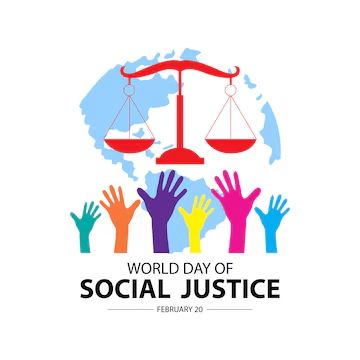
World Day of Social Justice: The United Nations’ (UN) World Day of Social Justice is annually observed on February 20 to encourage people to look at how social justice affects poverty eradication. It also focuses on the goal of achieving full employment and support for social integration.
Groundhog Day: falls on February 2 in the United States. It is a part of popular culture among many Americans, and it centers on the idea of the groundhog coming out of its home to “predict” the weather.
Tu Bishvat: marks the “birthday of the fruit trees” under Jewish law and is often celebrated by a symbolic meal and tree planting activities. This Jewish holiday occurs on the 15th day of the Hebrew month of Shevat.
International Day of Zero Tolerance for Female Genital Mutilation: The International Day of Zero Tolerance for Female Genital Mutilation is a United Nations (UN) campaign held on February 6 to stop genital mutilation to girls and women.
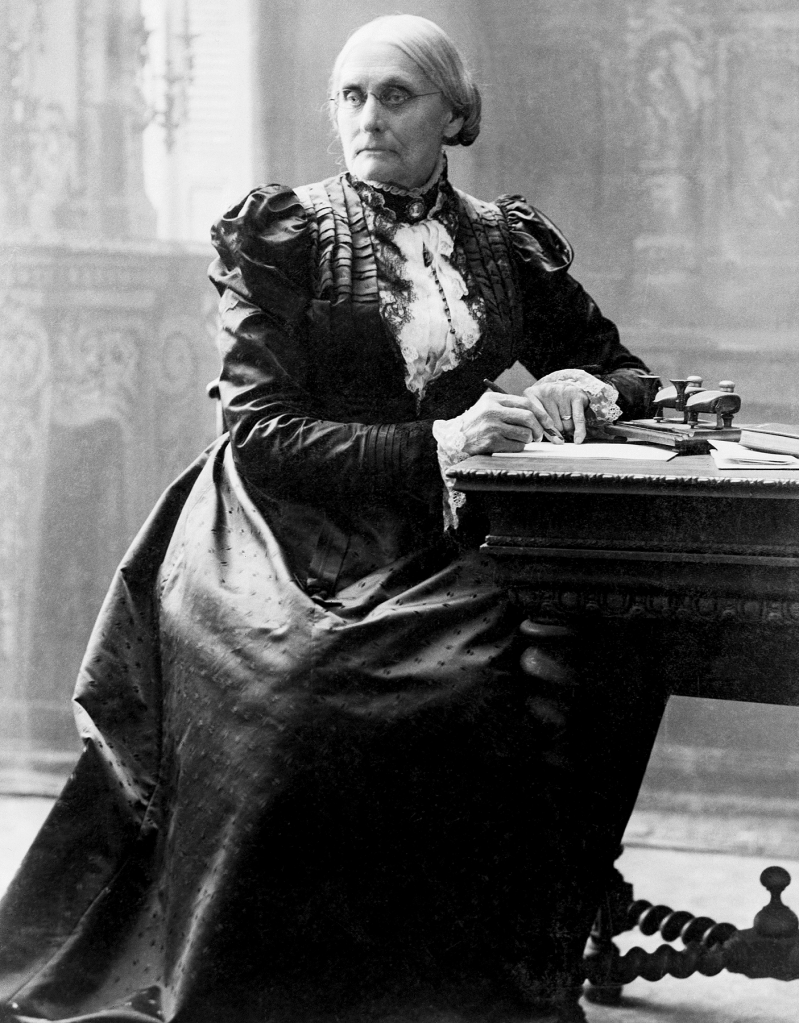
Susan B. Anthony’s Birthday: Celebrated on February 15, Susan B Anthony Day marks the birthday of one of the United States’ most prominent female civil rights leaders.
Lunar New Year: Many people in countries such as the United States celebrate Lunar New Year. It marks the first day of the New Year in the Chinese calendar. Why Is the Date Always Changing?  Read a news article on this very topic.
International Mother Language Day: The United Nations’ (UN) International Mother Language Day annually celebrates language diversity and variety worldwide on February 21. It also remembers events such as the killing of four students on February 21, 1952, because they campaigned to officially use their mother language, Bengali, in Bangladesh.

Celebrate Book Lovers Day: Key Dates for Readers

Jan:

  • Jan. 18 is National Winnie-the-Pooh Day! Did you know that Winnie-the-Pooh was inspired by Winnie, a black bear who lived at the London Zoo during World War I?
  • Jan. 16 is Book Publishers Day! Today we celebrate all the people who bring books to life. Editors, designers, printers, and distributors all help put books into your hands.
  • You read on Jan. 19, poet Edgar Allen Poe’s birthday! Check out some of his mysterious poems and short stories.
  • Jan. 26 is Library Shelfie Day! Snap a selfie of yourself in front of a bookshelf.
  • Jan. 2 is Science Fiction Day! Try a sci-fi saga for your next read.

Feb:

  • You read on Feb. 18, author Toni Morrison’s birthday! Crack open one of her many books to celebrate.
  • March 21 is World Poetry Day! Try reading some poetry or even writing prose of your own today.
  • You read on March 20! Reading boosts mental health, so it’s the perfect way to celebrate the

May:

  • May 6 is Free Comic Book Day! Find a super read at a comic store or library near you.

Jun:

  • You read on June 1, the first day of Audiobook Appreciation Month! Try an audiobook for your next read.
  • You read on June 23, which is the anniversary of the typewriter patent! Have you ever used a typewriter?

Aug:

  • You read on Aug. 2, author James Baldwin’s birthday!
  • Aug. 18 is Bad Poetry Day! Write one yourself!

Sep:

  • You read on Sep. 1, the first day of Library Card Sign-Up Month! Make sure your card is up to date!
  • You read on the first day of Hispanic Heritage Month! It’s a great time to find a new book by a Hispanic author.

Oct:

  • You read on Oct. 16, which is Dictionary Day. Look up a word you don’t know in the dictionary to celebrate!

Nov:

  • Nov. 18 is High Five a Librarian Day! It’s a great day to thank a librarian for their work!

Dec:

  • You read on Dec. 16! Today is author Jane Austen’s birthday, who’s famous for writing about women’s lives in books like “Pride and Prejudice” and “Emma.”

Other:

  • You read on World Athletics Day! Put down that book and move around for a bit!
  • You read on Madeline L’Engle’s birthday!
  • It’s read a new book month! Keep reading by finding a new book to love.
  • Reading, which builds empathy and understanding, is the perfect way to recognize the international Day of Peace!
  • You read on Coretta Scott King Award winning author Sharon Draper’s birthday!
  • You read on World Museum Day! Check out a museum this week!
  • You read on World Meditation Day! Breathe
  • You read on Sherlock Holmes Day! Try a mystery book this week!
  • You read on World Bicycle Day! Get out and ride!
  • You read on the day Nobel Prize-winning poet Pablo Neruda published his first work (he was just 13)!
  • You read on Friendship Day! Share a book with a friend.
  • You read on Malala Day! Reading is power!
  • You read on Fresh Veggies Day! Yummm!
  • You read on World Music Day! What will you listen to today?
  • You read on Jun. 25, author and illustrator Eric Carle’s birthday!
  • Keep reading! You already are on this International Literacy Day!

Understanding the Stations of the Cross

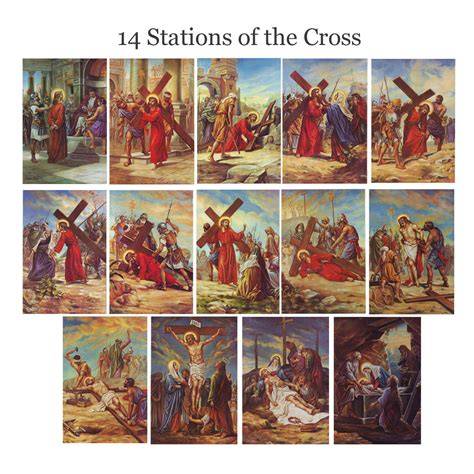
The Stations of the Cross, also called the Way of the Cross, Way of Suffering, or Via Dolorosa, is a series of fourteen images depicting scenes from the day of Jesus Christ’s crucifixion, each accompanied by prayers. It is inspired by the Via Dolorosa in Jerusalem, a traditional route symbolizing the path Jesus walked from the Lion’s Gate to Mount Calvary. Its purpose is to guide Christians on a spiritual journey through reflection on the Passion of Christ. This devotion is widely practiced and found in many Western Christian traditions, including the Roman Catholic, Lutheran, Anglican, and Methodist churches.

Typically, a set of fourteen images is arranged in numerical order along a path, where the faithful, alone or in procession, move from one station to the next, stopping at each one to pray and reflect on its meaning. These devotions are especially common during Lent, particularly on Good Friday, and express a spirit of reparation for the suffering and humiliations that Jesus endured during his Passion. As a physical act of devotion involving standing and kneeling, the Stations of the Cross are closely related to the Christian themes of repentance and self-denial.

The style, form, and location of the Stations of the Cross can vary considerably. Traditional versions typically consist of small plaques with reliefs or paintings arranged around the central part of a church. Modern, minimalist versions may be simple crosses with a number in the center. Sometimes, the Stations of the Cross are prayed without images, such as when the Pope leads the devotion around the Colosseum in Rome on Good Friday.

This devotion is not obligatory, but it is a good way to remember the supreme sacrifice Jesus made, offering his life to save us from our sins. This devotion helps foster gratitude for what Jesus did and encourages believers to carry their own crosses in life, enduring inevitable suffering.

Whether or not you participate in the Stations of the Cross, the Bible commands us to remember the Lord’s death until his return.

  • 1 Corintios 11:23-26
    • For I received from the Lord what I also passed on to you: The Lord Jesus, on the night he was betrayed, took bread,
    • and when he had given thanks, he broke it and said, “Take, eat; this is my body, which is broken for you; do this in remembrance of me.”
    • In the same way, after supper he took the cup, saying, “This cup is the new covenant in my blood; do this, whenever you drink it, in remembrance of me.”
    • For whenever you eat this bread and drink this cup, you proclaim the Lord’s death until he comes.

Here are the Stations of the Cross according to tradition. Biblical references are included whenever possible.

1. Jesus is condemned to death.

  • Luke 23:24-25
    • Then Pilate sentenced that their request should be granted; and he released to them the man who had been thrown into prison for sedition and murder, the one they had asked for; and he handed Jesus over to their will.

2. Jesus takes up his cross.

  • John 19:17
    • And he, carrying his cross, went out to the place called the Place of the Skull, which in Hebrew is called Golgotha;

3. Jesus falls for the first time (by inference from Stations 2 and 5).

4. Jesus meets his grieving mother (by inference from John 19:25-27).

  • John 19:25-27
    • Standing near the cross of Jesus were his mother, his mother’s sister, Mary the wife of Clopas, and Mary Magdalene.
    • When Jesus saw his mother and the disciple whom he loved standing nearby, he said to his mother, “Woman, here is your son.”
    • Then he said to the disciple, “Here is your mother.” From that hour on, the disciple took her into his home.

5. Simon of Cyrene helps carry the cross.

  • Matthew 27:32
    • As they were going out, they found a man from Cyrene named Simon, and they forced him to carry the cross.

6. Veronica wipes the face of Jesus (an episode not recorded in the Scriptures).

  • The Bible does not recount the story of Veronica wiping Jesus’ face on the way to Calvary. Instead, her story appears in a work called the “Acts of Pilate,” which identifies her as the woman who had suffered from hemorrhages for twelve years, approached Jesus from behind, touched the hem of his garment, and was healed (Matthew 9:20-22). This non-canonical text also claims that Jesus left the image of his face imprinted on the cloth she used. The story goes on to say that Veronica later traveled to Rome and healed Emperor Tiberius by showing him a painting of Christ that she had made after her own healing.

7. Jesus falls for the second time (this event is not recorded in the Scriptures).

8. Jesus meets the holy women of Jerusalem.

  • Luke 23:27-31
    • And a great multitude of the people followed him, and of women who were weeping and lamenting for him.
    • But Jesus, turning to them, said, “Daughters of Jerusalem, do not weep for me, but weep for yourselves and for your children.
    • For behold, the days are coming when they will say, ‘Blessed are the barren, and the wombs that never bore children, and the breasts that never nursed.’
    • Then they will begin to say to the mountains, ‘Fall on us!’ and to the hills, ‘Cover us!’
    • For if they do these things in the green wood, what will happen in the dry?”

9. Jesus falls for the third time (this event is not recorded in the Scriptures).

10. Jesus is stripped of his clothes.

  • John 19:23
    • When the soldiers had crucified Jesus, they took his clothes and divided them into four parts, one for each soldier. They also took his tunic, which was seamless, woven in one piece from top to bottom.

11. Jesus is nailed to the cross.

  • Mark 15:24
    • And when they had crucified him, they parted his garments, casting lots upon them, what every man should take.

12. Jesus dies on the cross.

  • Mark 15:37
    • And Jesus cried with a loud voice, and gave up the ghost.

13. Jesus’ body is taken down from the cross.

  • Luke 23:52-53
    • He went to Pilate and asked for the body of Jesus.
    • And taking it down, he wrapped it in a linen cloth and laid it in a tomb cut into the rock, where no one had yet been laid.

14. Jesus’ body is placed in the tomb.

  • Matthew 27:59-60
    • And Joseph took the body, wrapped it in a clean linen shroud,
    • and placed it in his own new tomb, which he had cut out of the rock; and after rolling a large stone to the entrance of the tomb, he went away.

Comprender las Estaciones de la Cruz

El Vía Crucis, también llamado Camino de la Cruz, Camino del Dolor o Vía Dolorosa, es una serie de catorce imágenes que representan escenas del día de la crucifixión de Jesucristo, cada una acompañada de oraciones. Se inspira en la Vía Dolorosa de Jerusalén, una ruta tradicional que simboliza el camino que Jesús recorrió desde la Puerta de los Leones hasta el Monte Calvario. Su propósito es guiar a los cristianos en un viaje espiritual a través de la reflexión sobre la Pasión de Cristo. Esta devoción es ampliamente practicada y se encuentra en muchas tradiciones cristianas occidentales, incluyendo las iglesias católica latina, luterana, anglicana y metodista.

Normalmente, un conjunto de catorce imágenes se dispone en orden numérico a lo largo de un camino, donde los fieles, solos o en procesión, se desplazan de una estación a otra, deteniéndose en cada una para orar y reflexionar sobre su significado. Estas devociones son especialmente comunes durante la Cuaresma, sobre todo el Viernes Santo, y expresan un espíritu de reparación por el sufrimiento y las humillaciones que Jesús padeció durante su pasión. Como acto físico de devoción que implica estar de pie y arrodillarse, el Vía Crucis está estrechamente relacionado con los temas cristianos del arrepentimiento y la abnegación.

El estilo, la forma y la ubicación de las estaciones pueden variar considerablemente. Las tradicionales suelen ser pequeñas placas con relieves o pinturas dispuestas alrededor de la parte central de una iglesia. Las versiones minimalistas modernas pueden ser simples cruces con un número en el centro. A veces, se reza el Vía Crucis sin imágenes, como cuando el Papa lo dirige alrededor del Coliseo en Roma el Viernes Santo.

Esta devoción no es obligatoria, pero es una buena manera de recordar el sacrificio supremo que hizo Jesús, ofreciendo su vida para salvarnos de nuestros pecados. Esta devoción ayuda a fomentar la gratitud por lo que Jesús hizo y anima a los creyentes a cargar con sus propias cruces en la vida, soportando el sufrimiento inevitable.

Ya sea que participes o no en el Vía Crucis, la Biblia nos manda recordar la muerte del Señor hasta su regreso.

  • 1 Corintios 11:23-26
    •  Porque yo recibí del Señor lo que también os he enseñado: Que el Señor Jesús, la noche que fue entregado, tomó pan; 
    • y habiendo dado gracias, lo partió, y dijo: Tomad, comed; esto es mi cuerpo que por vosotros es partido; haced esto en memoria de mí. 
    • Asimismo tomó también la copa, después de haber cenado, diciendo: Esta copa es el nuevo pacto en mi sangre; haced esto todas las veces que la bebiereis, en memoria de mí. 
    • Así, pues, todas las veces que comiereis este pan, y bebiereis esta copa, la muerte del Señor anunciáis hasta que él venga.

Aquí están las Estaciones de la Cruz según la tradición. Se incluyen las citas bíblicas siempre que es posible.

1. Jesús está condenado a muerte.

  • Lucas 23:24-25
    • Entonces Pilato sentenció que se hiciese lo que ellos pedían; y les soltó a aquel que había sido echado en la cárcel por sedición y homicidio, a quien habían pedido; y entregó a Jesús a la voluntad de ellos.

2. Jesús toma su cruz.

  • Juan 19:17
    • Y él, cargando su cruz, salió al lugar llamado de la Calavera, y en hebreo, Gólgota;

3. Jesús cae por primera vez (por inferencia de las Estaciones 2 y 5).

4. Jesús se encuentra con su madre afligida (por inferencia de Juan 19:25-27).

  •  Juan 19:25-27
    • Estaban junto a la cruz de Jesús su madre, y la hermana de su madre, María mujer de Cleofas, y María Magdalena. 
    • Cuando vio Jesús a su madre, y al discípulo a quien él amaba, que estaba presente, dijo a su madre: Mujer, he ahí tu hijo. 
    • Después dijo al discípulo: He ahí tu madre. Y desde aquella hora el discípulo la recibió en su casa.

5. Simón de Cirene ayuda a cargar la cruz.

  • Mateo 27:32
    • Cuando salían, hallaron a un hombre de Cirene que se llamaba Simón; a este obligaron a que llevase la cruz.

6. Verónica limpia el rostro de Jesús (episodio no recogido en las Escrituras).

  • La Biblia no narra la historia de Verónica secando el rostro de Jesús camino al Calvario. En cambio, su historia aparece en una obra llamada “Hechos de Pilato”, que la presenta como la mujer que había padecido hemorragias durante doce años, se acercó a Jesús por detrás, tocó el borde de su manto y fue sanada (Mateo 9:20-22). Este texto no canónico también afirma que Jesús dejó la imagen de su rostro impresa en el paño que ella usó. La historia continúa diciendo que Verónica viajó posteriormente a Roma y sanó al emperador Tiberio mostrándole una pintura de Cristo que había realizado después de su propia curación.

7. Jesús cae por segunda vez (este hecho no está registrado en las Escrituras).

8. Jesús se encuentra con las santas mujeres de Jerusalén.

  • Lucas 23:27-31
    • Y le seguía gran multitud del pueblo, y de mujeres que lloraban y hacían lamentación por él. 
    • Pero Jesús, vuelto hacia ellas, les dijo: Hijas de Jerusalén, no lloréis por mí, sino llorad por vosotras mismas y por vuestros hijos. 
    • Porque he aquí vendrán días en que dirán: Bienaventuradas las estériles, y los vientres que no concibieron, y los pechos que no criaron. 
    • Entonces comenzarán a decir a los montes: Caed sobre nosotros; y a los collados: Cubridnos. 
    • Porque si en el árbol verde hacen estas cosas, ¿en el seco, qué no se hará?

9. Jesús cae por tercera vez (este hecho no está registrado en las Escrituras).

10. Jesús es despojado de sus vestiduras.

  • Juan 19:23
    • Cuando los soldados hubieron crucificado a Jesús, tomaron sus vestidos, e hicieron cuatro partes, una para cada soldado. Tomaron también su túnica, la cual era sin costura, de un solo tejido de arriba abajo.

11. Jesus is nailed to the cross.

  • Mark 15:24
    • And when they had crucified him, they parted his garments, casting lots upon them, what every man should take.

12. Jesús muere en la cruz.

  • Marcos 15:37
    • Mas Jesús, dando una gran voz, expiró.

13. El cuerpo de Jesús es bajado de la cruz.

  • Lucas 23:52-53
    • fue a Pilato, y pidió el cuerpo de Jesús. 
    • Y quitándolo, lo envolvió en una sábana, y lo puso en un sepulcro abierto en una peña, en el cual aún no se había puesto a nadie.

14. El cuerpo de Jesús es depositado en la tumba.

  • Mateo 27:59-60
    • Y tomando José el cuerpo, lo envolvió en una sábana limpia, 
    • y lo puso en su sepulcro nuevo, que había labrado en la peña; y después de hacer rodar una gran piedra a la entrada del sepulcro, se fue.

George Washington Carver: Pioneer of Agricultural Innovation

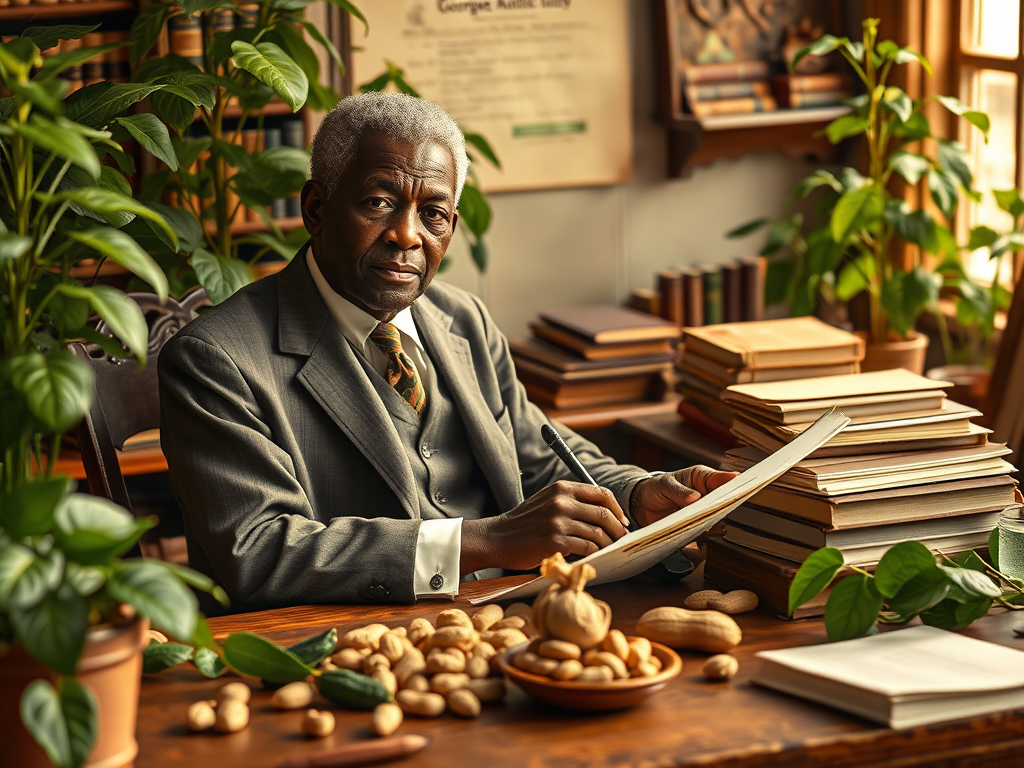
George Washington Carver (1864-1943) was a Black American scientist who gained worldwide recognition for his agricultural research, particularly with peanuts. He developed over 300 peanut-based products, such as a milk substitute, face powder, printer’s ink, and soap. Carver also dedicated himself to advancing the interests of Black people and fostering better relationships between Black and white communities.

Early years

Carver was born into slavery on a farm near Diamond, Missouri. Soon after his birth, his father died in an accident, and his mother was kidnapped by night raiders. He was raised by his owners, Moses and Susan Carver, until slavery was abolished in 1865.
As a young boy, George had a strong fascination with plants and a deep eagerness to learn. The Carvers taught him how to read and write, and around the age of 11, he moved to Neosho, Missouri, to attend a school for Black children.
Over the next 20 years, Carver took on various jobs to support himself and fund his education. In 1890, he enrolled at Simpson College in Indianola, Iowa, where he showed talent as a painter but ultimately chose to pursue agriculture. A year later, he transferred to Iowa State Agricultural College (now Iowa State University) in Ames, earning his bachelor’s degree in agriculture in 1894 and his master’s degree in 1896.

Tuskegee instructor and researcher

In 1896, Carver moved to Alabama to join the faculty at the Tuskegee Institute (now Tuskegee University), an industrial and agricultural school for Black students. He became head of the agricultural department and director of a state agricultural station. Initially, Carver continued his research on fungi, a subject he had specialized in while in Iowa. Over time, however, he shifted his focus to soil conservation and other methods to boost production. He also wrote and distributed pamphlets and bulletins on applied agriculture to farmers in Alabama and beyond. In addition, Carver worked to promote better farming practices among Southern farmers, especially Black farmers, through conferences, traveling exhibits, demonstrations, and public lectures.
In 1910, Carver became head of Tuskegee’s newly established Department of Research. By 1914, he turned his attention to studying peanuts. His big break came in 1921, when he testified before Congress about the many uses of peanuts, gaining national recognition. He went on to tour the country, promoting peanuts, and during the 1920s devoted much of his time to improving race relations. He was especially active with the Commission on Inter-Racial Cooperation and the Young Men’s Christian Association (YMCA).

Awards and honors

Carver received many awards for his accomplishments.

  • In 1916, he was named a fellow of the Royal Society of Arts of London.
  • In 1923, the National Association for the Advancement of Colored People (NAACP) awarded him the Spingarn Medal for distinguished service in agricultural chemistry.
  • In 1939, Carver received the Theodore Roosevelt Medal for his valuable contributions to science.
  • In 1951, the George Washington Carver National Monument was established on 210 acres (85 hectares) of the Missouri farm where Carver was born.

Understanding Black History Month: Significance and Milestones

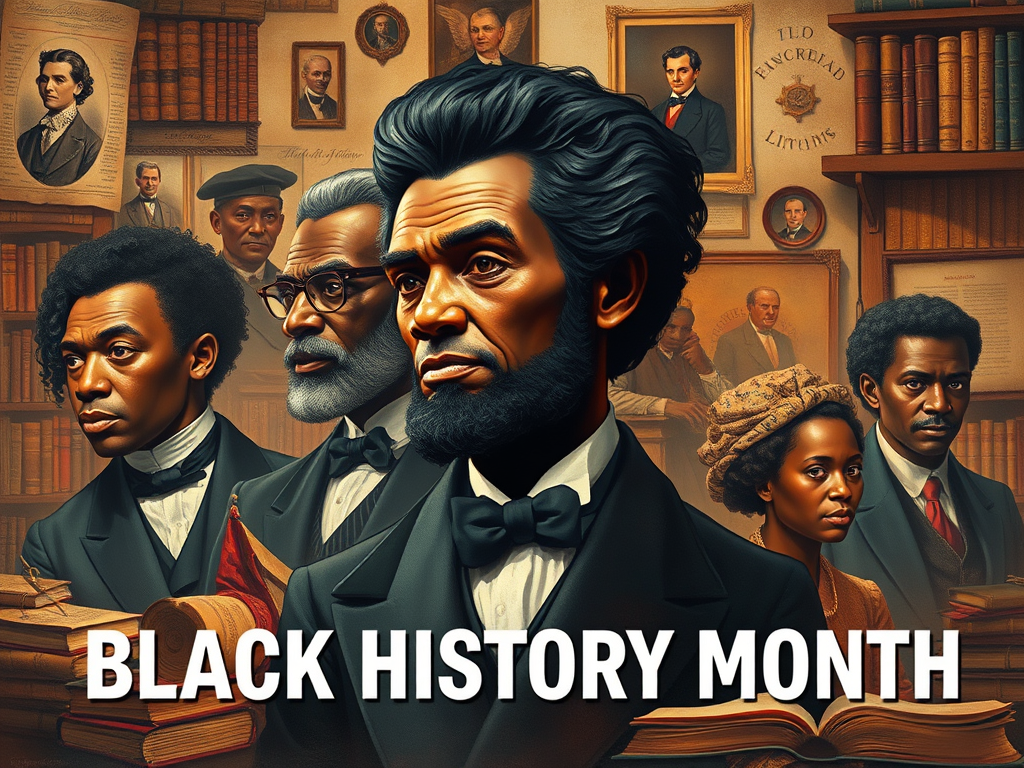
Feb. 1st is the First Day of Black History Month: Black History Month is an annual celebration in February that honors the achievements and contributions of African Americans throughout history.

Black History Month is an annual observance, in February, of the past achievements and current status of black Americans. It coincides with the birthdays of the great black leader Frederick Douglass (February 14th) and of Abraham Lincoln (February 12th).


The idea for an observance honoring the accomplishments of black Americans led to the establishment of
Negro History Week in 1926. It was proposed by Carter G. Woodson, a black historian known as the Father of Black History, and others. The observance became known as Black History Week during the early 1970’s and was established as Black History Month in 1976.


The celebration is sponsored by the Association for which Woodson founded in 1915. Each year,
the Study of Afro-American Life and History (ASALH), designates a theme for the observance. Special attention has also been paid to the growth of black studies courses at high schools and colleges in most parts of the country.

The ASALH produces Black History Month Study Kits to help schools, colleges, ASALH branches, and other
organizations celebrate the observance. The ASALH also provides information about Black History Month
through its publications.

Something about the Great Civil War

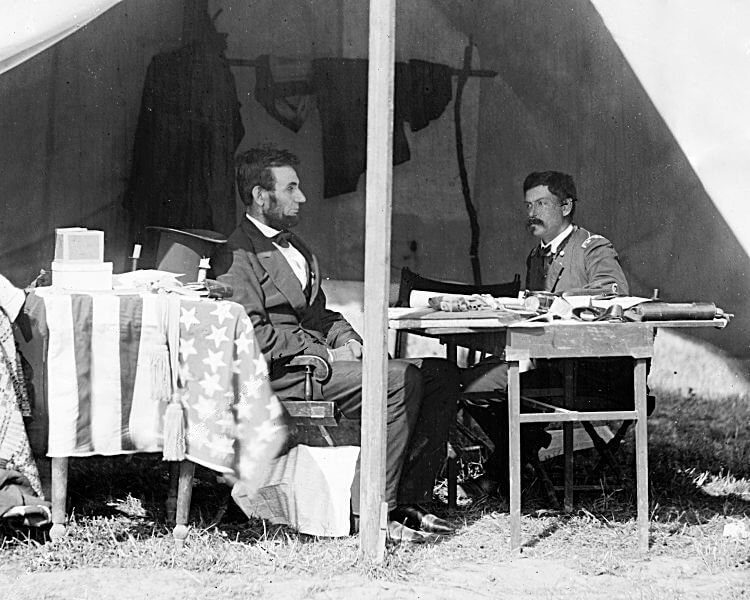
Soon after Abraham Lincoln became President, there broke out the civil war, which caused the death of many hundreds of thousands of brave men and brought sorrow to nearly every home in the United States. Perhaps none of those who study this book will ever see so sad a time. But it was also a brave time, when men gave their lives for the cause they believed to be right. Women, in those days, suffered in patience the loss of their husbands and sons, and very many of them went to nurse the wounded or toiled at home to gather supplies of nourishing food for sick soldiers in hospitals.

The war came about in this way: There had been almost from the foundation of the Government a rivalry between the Northern and Southern States. Long and angry debates took place about slavery, about the rights of the States and the government of the Territories. These had produced much bitter feeling. When a President opposed to slavery was elected, some of the Southern States claimed that they had a right to withdraw from the Union. This the Northern States denied, declaring that the Union could not be divided; but before Lincoln was inaugurated, seven States had declared themselves out of the Union. They formed a new government, which they called “the Confederate States of America,” and elected Jefferson Davis President.

President Lincoln refused to acknowledge that the Confederate States were a government. He refused to allow the United States fort in the harbor of Charleston, South Carolina, to be surrendered to the Confederates, and he sent ships with provisions for the small garrison of this fort. The Southern troops about Charleston refused to let these provisions be landed and at length opened fire on the fort. This began the war. Four other States now joined the Confederacy, making eleven in all.

It was a time of awful excitement in every part of the country. All winter long angry passions had been rising both in the North and in the South. When the first gun was fired at Sumter, in April, 1861, there was such a storm of fierce excitement as may never be seen again in America. At the North, a hundred thousand men were enlisted in three days. The excitement at the South was just as great, and a large portion of the Southern people rushed to arms. In those stormy times the drums were beating all day long in the streets; flags waved in every direction, and trains were thronged with armed men bidding farewell to friends and hastening forward to battle and death. Men and women wept in the streets as they cheered “the boys” who were hurrying away to the war. For a while, people hardly took time to sleep.

We cannot tell the story of the war here; you will study about it in larger histories. The armies on both sides became very large, and during the war there were some of the greatest conflicts ever seen in the world. The first great battle was fought at Shiloh, in Tennessee. Others took place at Murfreesboro [mur’-freze-bur’-ro], Chickamauga [chick-a-maw’-gah], and Nashville, in Tennessee; at Antietam [an-tee’-tam], in Maryland; and at Gettysburg, in Pennsylvania. Very many battles, great and small, were fought in Virginia, between Washington and Richmond.

On the side of the Union, the three most famous generals were U. S. Grant, W. T. Sherman, and Philip H. Sheridan. The three greatest generals on the Confederate side were Robert E. Lee, Joseph E. Johnston, and Thomas J. Jackson, commonly called “Stonewall Jackson.”

Both sides showed the greatest courage. The generals on both sides were very skillful. Victory was now with one party and now with the other; but, as the years passed on, the Union armies, being the stronger, gradually gained one advantage after another. By means of troops and gunboats sent down from the North under Grant and a fleet under Admiral Farragnt, which was sent around by sea to capture New Orleans, the whole of the Mississippi River was secured. Between Washington and Richmond, the Confederates won many victories, but they were at length compelled to fall back behind the fortifications of Richmond and Petersburg, where they were besieged by General Grant.

During the time of this siege, General Sherman marched directly into the heart of the Confederacy, where he was for weeks without any communication with the North. He marched across the great and fertile State of Georgia, from Atlanta to Savannah, on the sea coast, and then from Savannah northward toward Richmond. By destroying the railroads and the food by which General Lee’s army in Richmond was supplied, this march of Sherman’s made it impossible for the Confederates to continue the war.

Lee was forced to retreat from Richmond, and he surrendered his army on the 9th of April, 1865. All the other Confederate forces soon after laid down their arms. The war had lasted four years. As a result of the long struggle, slavery was abolished in all the territory of the United States.