A place to grow your relationship with God

La Maravillosa Pesca de Peces

Un día, mientras la multitud se agolpaba a su alrededor para escuchar la palabra de Dios, Jesús llegó al lago de Genesaret y vio dos barcas amarradas a la orilla. Una de ellas pertenecía a un hombre llamado Simón Pedro, que estaba a la orilla del agua lavando sus redes. Jesús subió a la barca y le pidió a Simón que la alejara un poco de la orilla. Luego se sentó y enseñó a la gente desde la barca. Cuando terminó de hablarles, le dijo a Simón: «Adéntrate en el lago y echa las redes para pescar». Simón le respondió: «Maestro, hemos trabajado toda la noche y no hemos pescado nada, pero como tú lo dices, echaré la red de nuevo». Y echaron la red al mar, pero recogieron tal cantidad de peces que no podían sacarlos, y la red se rompió. Entonces Simón hizo señas a sus compañeros, Santiago y Juan, que estaban en la otra barca, para que vinieran a ayudarlos. Ellos vinieron y llenaron ambas barcas de peces, de modo que empezaron a hundirse.

La Maravillosa Pesca de Peces

Cuando Simón Pedro lo vio, cayó de rodillas ante Jesús, diciendo: «Apártate de mí, Señor, porque soy un hombre pecador». Pues él y todos los que estaban con él se asombraron de la maravillosa pesca que habían logrado. Y Jesús le dijo a Simón: «No temas, Simón Pedro; de ahora en adelante serás pescador de hombres». Esto significaba que se dedicaría a ganar almas para Dios, en lugar de ser pescador de peces.

Y cuando hubieron llevado sus barcas a tierra, lo abandonaron todo y siguieron a Cristo.

Bible

Education

Cooking/ House Keeping

Estudio Bíblico en Español

2. ANDROMEDA (The Chained Woman)

The Redeemed in their Bondage and Affliction.

This is a peculiar picture to set in the heavens. A woman with chains fastened to her feet and arms, in misery and trouble; and bound, helpless, to the sky. Yet this is the ancient foreshowing of the truth.

In the Denderah Zodiac her name is Set, which means setset up as a queen. In Hebrew it is Sirrathe chained, and Perseathe stretched out.

Plate 22: ANDROMEDA (the Chained Woman)

There are 63 stars in this constellation, three of which are of the 2nd magnitude, two of the 3rd, twelve of the 4th, etc.

The brightest star, α (in the head), is called Al Phiratz (Arabic), the broken down. The star β (in the body) is called Mirach (Hebrew), the weak. The star γ (in the left foot) is called Al Maach, or Al Amak (Arabic), struck down.

The names of other stars, not identified, are Adhilthe afflictedMizarthe weakAl Mara (Arabic), the afflicted. Aratus speaks of Desma, which means the bound, and says—

“Her feet point to her bridegroom

Perseus, on whose shoulder they rest.”

Thus, with one voice, the stars of Andromeda speak to us of the captive daughter of Zion. And her coming Deliverer thus addresses her:—

“O thou afflicted, tossed with tempest, and not comforted,

Behold, … in righteousness shalt thou be established:

Thou shalt be far from oppression; for thou shalt not fear:

And from terror; for it shall not come nigh thee.”

(Isa. liv. 11-14.)

“Hear now this, thou afflicted….

Awake, awake; put on thy strength, O Zion;

Put on thy beautiful garments, O Jerusalem….

Shake thyself from the dust;

Arise, and sit down, O Jerusalem:

Loose thyself from the bands of thy neck, O captive daughter of Zion.

For thus saith the Lord, Ye have sold yourselves for nought;

And ye shall be redeemed without money.”

(Isa. li. 21-lii. 3.)

“The virgin daughter of My people is broken with a great breach, with a very grievous blow” (Jer. xiv. 17).

The picture which sets forth her deliverance is reserved for the next chapter (or Sign), where it comes in its proper place and order. We are first shown her glorious Deliverer; for we never, in the heavens or in the Word, have a reference to the sufferings without an immediate reference to the glory.

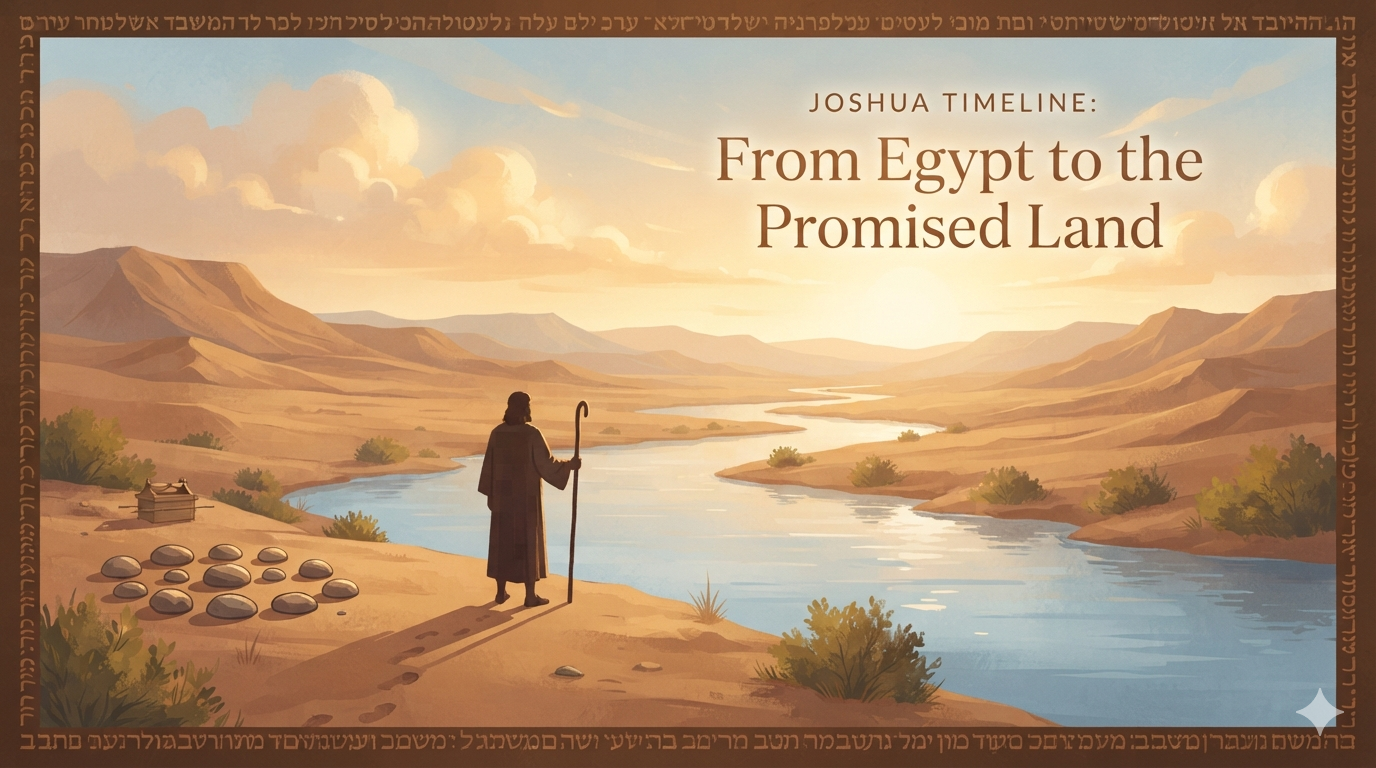
Exodus 12:40 Now the sojourning of the children of Israel, who dwelt in Egypt, was four hundred and thirty years.

This seems like a contradiction because the children of Israel only lived in Egypt for about 3 generations. However, it is helpful to look at the original prophecy of the 400 Years prediction.

And he said unto Abram, Know of a surety that thy seed shall be a stranger in a land that is not theirs, and shall serve them; and they shall afflict them four hundred years. (KJV, Genesis 15:13)

It basically says that the seed (descendants) of Abraham would be a stranger in a land that is not theirs and shall server them and afflicted them 400 years.

If we call the year of Ishma’el’s birth “0,” as he is Abram’s first seed, we can then use various passages to calculate how many years from then until Israel entered the land of Canaan.

Birth of Isaac: 

  • Abraham is 100 (Gen 17:17; 21:5)
  • Ishmael is 13 the year before Isaac’s birth (Gen 17:25)

Birth of Jacob: 

  • Isaac is 60 (Gen 25:26)

Birth of Joseph: 

  • Jacob is 91 – Jacob was 130 when entering Egypt (Gen 47:9)
    • Joseph was 30 when entering Pharoahs service (Gen 41:46)
    • 7 years of plenty (Gen 41:53,54)
    • 2 years of famine when Jacob came to Egypt (Gen 45:6)
    • Joseph was 39 (30+7+2) when Jacob entered Egypt
    • Jacob was 91 at birth of Joseph (130-39)
  • Birth of Levi: Jacob is 87
    • Jacob is 91 at birth of Joseph who was born in the 14 year of service to Laban (Gen 30:25,26)
    • Jacob is 77 when arrives at Labans (91-14)
    • Jacob serves 7 years and recieves Leah (Gen 29:27) who bears Levi, her third son approximately 3 years after being with Jacob.
    • Jacob is approximately 87 at birth of Levi (77+7+3).
  • The Children of Israel enter the land of Egypt 17 years before the death of Jacob (Gen 47:28) and when Levi is 87 years old.

Birth of Kohath: 

  • Levi is ~35 – Levi was younger than 40 when Kohath was born as Levi was 43 when he went to Egypt with his 3 sons (Gen 46:8,11)
    • if this is correct Kohath would be 8 when entering Egypt.
    • Birth of Amram: Kohath is ~40 (an average generaton)
    • Birth of Moses: Amram is ~40 (an average generaton)
    • Israel leaves Egypt when Moses is 80 years old.

The children of Israel enter the land of Israel after the 40 years of wandering, which is 400 years after the birth of Ishmael.

These numbers are approximate calculations. The other 30 years can be time getting to the promise land and how much time that it should have taken to take the land. Instead, they are wandering in the wilderness for 40 Years. They still were journeying in a land that was not their own.

This page gives a list of some Holidays and other events that occur in February. Some of the events are fun days. Others are for remembering only. Information is attached to many of the events. Have fun reading, learning, and/ or celebrating.

February is the second month of the year in the Gregorian calendar, which is used almost everywhere today, and it’s also the shortest. Legend says the first Roman calendar had only 10 months, until ruler Numa Pompilius added January and February around 700 B.C., making February the last month of their year. Its name comes from the Latin word *februare*, meaning “to purify,” as Romans would cleanse themselves in preparation for festivals marking the new year. Eventually, the start of the year was moved from March to January, placing February second.

In Numa’s calendar, a regular year had 355 days, with February lasting 28 days. Every other year, an extra month was inserted between February 23 and 24 to keep the months in sync with the solar year. Then, in 46 B.C., Rome switched to a 365-day calendar, giving February 28 days in normal years and 29 days every fourth year. Today, we call that longer year a leap year.

National Freedom Day: is an observance in the United States that honors the signing of a resolution that proposed the 13th amendment of the nation’s constitution on February 1, 1865.
Candlemas: is a Christian holiday celebrated annually on February 2. It celebrates three occasions according to Christian belief: the presentation of the child Jesus; Jesus’ first entry into the temple; and it celebrates the Virgin Mary’s purification (mainly in Catholic churches).
World Cancer Day: is a global observance that helps raise people’s awareness of cancer and how to prevent, detect, or treat it. This event is held on February 4 each year.
World Radio Day: February 13 is World Radio Day, which celebrates the radio as a way of educating people, providing information, and promoting freedom of expression across cultures.
Presidents’ Day: The federal holiday on the third Monday of February is called Washington’s Birthday, while several US states celebrate it as “Presidents’ Day”. The holiday creates a long weekend.
Ash Wednesday: Many Christian Americans mark Ash Wednesday as the first day of Lent.
Feb. 1st is the First Day of Black History Month: Black History Month is an annual celebration in February that honors the achievements and contributions of African Americans throughout history.
World Wetlands Day: is annually held on February 2 to celebrate how wetlands, which are lands saturated by water, help maintain biodiversity on Earth.
Rosa Parks Day: Rosa Parks Day is an American observance to honor civil rights activist Rosa Parks, who was known for refusing to give up her seat on a bus. California, Missouri, and New York observance it on February 4th.
Valentine’s Day: is observed on February 14 as a time to acknowledge love and affection in many forms. The observance is widely celebrated with cards, gifts, and other thoughtful gestures.
Mardi Gras: Shrove Tuesday or Mardi Gras is the last day before the fasting period of Lent (for Western Christians), 47 days before Easter Sunday. Shrove Tuesday is also called Mardi Gras, Fat Tuesday, or Pancake Day.
World Day of Social Justice: The United Nations’ (UN) World Day of Social Justice is annually observed on February 20 to encourage people to look at how social justice affects poverty eradication. It also focuses on the goal of achieving full employment and support for social integration.
Groundhog Day: falls on February 2 in the United States. It is a part of popular culture among many Americans, and it centers on the idea of the groundhog coming out of its home to “predict” the weather.
Tu Bishvat: marks the “birthday of the fruit trees” under Jewish law and is often celebrated by a symbolic meal and tree planting activities. This Jewish holiday occurs on the 15th day of the Hebrew month of Shevat.
International Day of Zero Tolerance for Female Genital Mutilation: The International Day of Zero Tolerance for Female Genital Mutilation is a United Nations (UN) campaign held on February 6 to stop genital mutilation to girls and women.
Susan B. Anthony’s Birthday: Celebrated on February 15, Susan B Anthony Day marks the birthday of one of the United States’ most prominent female civil rights leaders.
Lunar New Year: Many people in countries such as the United States celebrate Lunar New Year. It marks the first day of the New Year in the Chinese calendar. Why Is the Date Always Changing?  Read a news article on this very topic.
International Mother Language Day: The United Nations’ (UN) International Mother Language Day annually celebrates language diversity and variety worldwide on February 21. It also remembers events such as the killing of four students on February 21, 1952, because they campaigned to officially use their mother language, Bengali, in Bangladesh.

Los cereales son uno de los principales grupos de alimentos. Antiguamente, se ubicaban en la base de la Pirámide Alimenticia, ya que se recomendaba consumir más cereales que otros alimentos. Muchos de nuestros alimentos básicos de consumo diario provienen de este grupo. Según el diccionario, el pan es el “alimento básico; especialmente: el pan”. Así como el pan es importante hoy en día, era una fuente de alimento vital en tiempos de Jesús. Para la mayoría de las personas de aquella época, los cereales eran el alimento principal que consumían a diario. Jesús les dijo: «Yo soy el pan de vida; el que a mí viene, nunca tendrá hambre; y el que en mí cree, no tendrá sed jamás» (Juan 6:35). Esta fue una declaración trascendental.

Cuando los israelitas viajaban por el desierto, comieron maná del cielo. El maná era un tipo de pan que Dios les proporcionó. Lo recogían seis días a la semana. El sexto día recogían suficiente para el sábado, ya que no se les permitía trabajar en el día de reposo. Jesús dijo: «Yo soy el pan que descendió del cielo» (Juan 6:41).

Más tarde, Jesús dice: «Yo soy el pan vivo que descendió del cielo; si alguno come de este pan, vivirá para siempre; y el pan que yo daré es mi carne, la cual daré por la vida del mundo» (Juan 6:51). Aquí Jesús se refiere al pan espiritual. Una manera de comer este pan espiritual es leyendo la Biblia. «En el principio era el Verbo, y el Verbo estaba con Dios, y el Verbo era Dios» (Juan 1:1). En el libro de Marcos, «Jesús tomó pan, y lo bendijo, y lo partió, y les dio, y dijo: Tomad, comed; esto es mi cuerpo» (Marcos 14:22). Dado que Jesús es la Palabra, podemos “comer” su cuerpo estudiando su palabra y desarrollando una relación más cercana con Él. Es maravilloso saber que Jesús es nuestro pan de cada día. Él nos proveerá de pan físico y espiritual, porque Él es «el mismo ayer, y hoy, y por los siglos» (Hebreos 13:8).

Vocabulary

Dungeon: A strong underground prison cell, especially in a castle.
Invisible: Unable to be seen.
Latch-key: A key of an outer door of a house.
Ruse: A trick.
Mimic: To imitate the appearance, words, or actions of something or someone else.

Shamgar was the third judge of Israel. Shamgar was one of the “minor” judges. But the distinction between “major” and “minor” is due more to the lack of information about the “minor” judges than to the lesser importance of the individuals themselves.

Judges 3:31

  • He was succeeded by Shamgar, the son of Anath. He killed six hundred Philistines with an oxgoad, and he delivered Israel.

Shamgar killed more than 600 Philistines with an oxgoad. These Philistines were terrorizing the main travel routes. He did this with an oxgoad.

An oxgoad means an instrument of learning. It was used to teach the oxen where to go. It was long and pointed. Sometimes it had a metal tip. It was used to drive animals.

Shamgar is mentioned in the song of Deborah.

Judges 5:6-7

In the days of Shamgar, the son of Anath,
    in the days of Jael,
the highways were deserted,
    travelers took winding paths.
Village life ceased in Israel,
    it ceased until I, Deborah,
    until I rose up as mother in Israel.

Shamgar

  • Strong’s H8044 – šamgar
    • Outline of Biblical Usage 
      • Shamgar = “sword”
      • son of Anath and a judge of Israel; with an ox-goad he slew 600 Philistines and delivered Israel
    • Strong’s Definitions
      • שַׁמְגַּר Shamgar, sham-gar’; of uncertain derivation; Shamgar, an Israelite judge:—Shamgar.

Anath

  • Strong’s H6067 – ʿănāṯ
    • Outline of Biblical Usage
      • Anath = “answer”
      • father of Shamgar
    • Strong’s Definitions
      • עֲנָת ʻĂnâth, an-awth’; from H6030; answer; Anath, an Israelite:—Anath.
    • Gesenius’ Hebrew-Chaldee Lexicon

Directions

Gather one five-dollar bill and five one-dollar bills per child. Children might create their own pretend paper money with paper, pens, and crayons or markers.

Have children complete the steps below.

Have children practice until they perfectly master each task.

STEP 1 – WHAT IS A FIVE-DOLLAR BILL?

Children identify the five-dollar bill.

  • Direct the children to examine the front and back of the five-dollar bill. Ask the children to verbally describe what they see.
  • Have children hold up the five-dollar bill and recite, ‘1 five-dollar bill is worth 5 one-dollar bills.’

STEP 2 – COMBINE AND SEPARATE

Children combine and separate groups of one-dollar bills and a five-dollar bill.

  • Ask children to group five one-dollar bills together.
  • Tell children to move 1 five-dollar bill next to the 5 one-dollar bills. Have them recite, ‘1 five-dollar bill is worth 5 one-dollar bills.’

STEP 3 – PLAY STORE

  • Give each child 5 one-dollar bills and 1 five-dollar bill. Say to children, ‘A game costs 8 dollars. Show me which bills you must give to the cashier to purchase the game.’
  • Give each child 5 one-dollar bills and 1 five-dollar bill. Say to children, ‘A vase costs 6 dollars. Show me which bills you must give to the cashier to purchase the vase.’
  • Give each child 5 one-dollar bills and 1 five-dollar bill. Say to children, ‘A statue costs 9 dollars. Show me which bills you must give to the cashier to purchase the statue.’

Subscribe to continue reading

Subscribe to get access to the rest of this post and other subscriber-only content.