Kindergarten week 26 out of 36

Subscribe to continue reading
Subscribe to get access to the rest of this post and other subscriber-only content.
Subscribe to get access to the rest of this post and other subscriber-only content.
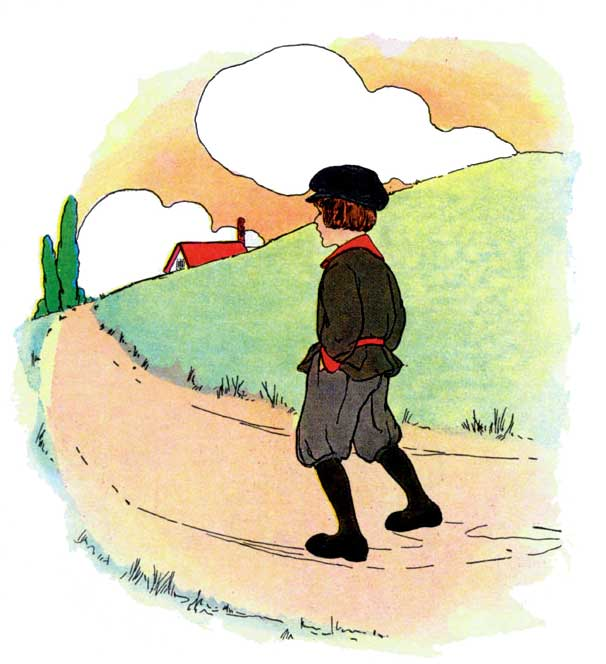
As I was going along, along,
A-singing a comical song, song, song,
The lane that I went was so long, long, long,
And the song that I sang was so long, long, long,
And so, I went singing along.
Jesus had been preaching to a crowd of publicans and sinners. The publicans of those days were the collectors of taxes for the Romans, and it was a constant complaint against them that they exacted more from the people than they had any right to do. So they were looked upon as wicked men, although they were not all bad. Now the Scribes and Pharisees, who made a great show of religion, so far as outward forms went, were greatly shocked at seeing Christ sitting with publicans, and said, “This man receiveth sinners and eateth with them.”
Then Jesus asked them, “What man of you, if he has a hundred sheep, and loses one of them, does not leave the ninety and nine in the wilderness, and go after the lost one, until he has found it? And when he has found it, he lays it upon his shoulders and takes it home, rejoicing; and calls together his friends and neighbours, saying unto them, ‘Rejoice with me, for I have found my sheep that was lost.’
“I say unto you, that likewise joy shall be in heaven over one sinner that repenteth, more than over ninety and nine just persons which need no repentance.
“Again, what woman if she has ten pieces of money, and loses one, does not light a candle, and sweep the house, and seek diligently until she finds it? And when she has found it, she calls together her friends and neighbours, saying, ‘Rejoice with me, for I have found the piece of money which I had lost.’
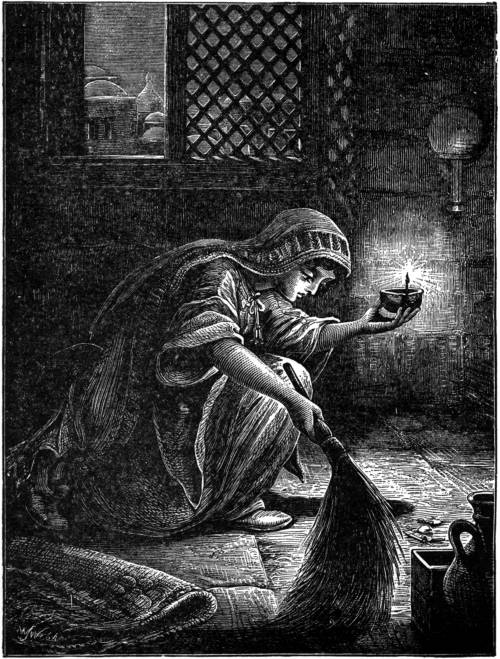
“Likewise, I say unto you, there is joy in the presence of God’s angels over one sinner that repenteth.”
Bara-ourou is not wicked, and I hope to succeed in touching his heart, enlightening his mind, and converting him to Christianity; his example would certainly be followed by the greatest part of his subjects, who are much attached to him. Your presence, and the name of God uttered by you, with the fervour and in the attitude of profound veneration and devotion, may aid this work of charity and love. Have you sufficient self-command to delay, for perhaps a few hours, the meeting with your family? Your wife and children, not expecting you, will not suffer from suspense. If you do not agree to this, I will conduct you to them, and return, I hope in time, to fulfil my duty. I wait your decision to reply to Parabery, who is already sufficiently acquainted with the truth, to desire that his king and his brethren should know it also.”
Such were the words of this true servant of God; but I cannot do justice to the expression of his heavenly countenance. Mr. Willis, for such was his name, was forty-five or fifty years of age, tall and thin; the labours and fatigues of his divine vocation had, more than years, left their traces on his noble figure and countenance; he stooped a little, his open and elevated forehead was slightly wrinkled, and his thin hair was prematurely grey; his clear blue eyes were full of intelligence and kindness, reading your thoughts, and showing you all his own. He usually kept his arms folded over his breast, and was very calm in speaking; but when his extended hand pointed to heaven, the effect was irresistible; one might have thought he saw the very glory he spoke of. His simple words to me seemed a message from God, and it would have been impossible to resist him. It was indeed a sacrifice; but I made it without hesitation. I glanced at my sons, who had their eyes cast down; but I saw Fritz knitting his brows. “I shall stay with you, father,” said I, “happy if I can assist you in fulfilling your sacred duties.”
“And you, young people,” said he, “are you of the same opinion?”
Fritz came forward, and frankly said, “Sir, it was, unfortunately, I who wounded my brother Jack; he has been generous enough to conceal this; you extracted the ball which I discharged into his shoulder; I owe his life to you, and mine is at your disposal; I can refuse you nothing; and, however impatient, I must remain with you.”
“I repeat the same,” said Ernest; “you protected our mother and brothers, and, by God’s permission, you restore them to us. We will all remain with you; you shall fix the time of our meeting, which will not, I trust, be long delayed.”
I signified my approbation, and the missionary gave them his hand, assuring them that their joy on meeting their friends would be greatly increased by the consciousness of this virtuous self-denial.
We soon experienced this. Mr. Willis learned from Parabery, that they were going to fetch their king in our pretty canoe when we saw it pass. The royal habitation was situated on the other side of the promontory, and we soon heard a joyful cry, that they saw the canoe coming. While the natives were engaged in preparing to meet their chief, I entered the pinnace, and descending beneath the deck, I took from the chest what I judged most fitting to present to his majesty. I chose an axe, a saw, a pretty, small, ornamented sabre, which could not do much harm, a packet of nails, and one of glass-beads. I had scarcely put aside these articles, when my sons rushed to me in great excitement.
“Oh! father,” cried they, at once, “look! look! summon all your fortitude; see! there is Francis himself in the canoe; oh! how curiously he is dressed!”

“Two natives took Francis on their shoulders,
and two others took the king in the same way.”
I looked, and saw, at some distance, our canoe ascending the strait; it was decorated with green branches, which the natives, who formed the king’s guard, held in their hand; others were rowing vigorously; and the chief, wearing a red and yellow handkerchief, which had belonged to my wife, as a turban, was seated at the stern, and a pretty, little, blooming, flaxen-haired boy was placed on his right shoulder. With what delight did I recognize my child. He was naked above the waist, and wore a little tunic of woven leaves, which reached to his knees, a necklace and bracelets of shells, and a variety of coloured feathers mingled with his bright curls; one of these fell over his face, and doubtless prevented him from seeing us. The chief seemed much engaged with him, and continually took some ornament from his own dress to decorate him. “It is my child!” said I, in great terror, to Mr. Willis, “my dearest and youngest! They have taken him from his mother. What must be her grief! He is her Benjamin the child of her love. Why have they taken him? Why have they adorned him in this manner? Why have they brought him here?”
“Have no fear,” said the missionary; “they will do him no harm. I promise you they shall restore him, and you shall take him back to his mother. Place yourselves at my side, with these branches in your hands.”
He took some from Parabery, who held a bundle of them, and gave us each one; each of the natives took one also. They were from a tree which had slender, elegant leaves, and rich scarlet flowers species of mimosa; the Indians call it the tree of peace. They carry a branch of it when they have no hostile intentions; in all their assemblies, when war is proclaimed, they make a fire of these branches, and if all are consumed, it is considered an omen of victory.
While Mr. Willis was explaining this to us, the canoe approached. Two natives took Francis on their shoulders, two others took the king in the same way, and advanced gravely towards us. What difficulty I had to restrain myself from snatching my child from his bearers, and embracing him! My sons were equally agitated; Fritz was darting forward, but the missionary restrained him. Francis, somewhat alarmed at his position, had his eyes cast down, and had not yet seen us. When the king was within twenty yards of us, they stopped, and all the natives prostrated themselves before him; we alone remained standing. Then Francis saw us, and uttered a piercing cry, calling out, “Papa! dear brothers!” He struggled to quit the shoulders of his bearers, but they held him too firmly. It was impossible to restrain ourselves longer; we all cried out, and mingled our tears and lamentations. I said to the good missionary, a little too harshly, perhaps, “Ah! if you were a father!”
“I am,” said he, “the father of all this flock, and your children are mine; I am answerable for all. Command your sons to be silent; request the child to be composed, and leave the rest to me.”
I immediately took advantage of the permission to speak. “Dear Francis,” said I, holding out my arms, “we are come to seek you and your mother; after all our dangers, we shall soon meet again, to part no more. But be composed, my child, and do not risk the happiness of that moment by any impatience. Trust in God, and in this good friend that He has given us, and who has restored to me the treasures without which I could not live.” We then waved our hands to him, and he remained still, but wept quietly, murmuring our names: “Papa, Fritz, Ernest, tell me about mamma,” said he, at last, in an inquiring tone.
“She does not know we are so near her,” said I. “How did you leave her?”
“Very much grieved,” said he, “that they brought me away; but they have not done me any harm, they are so kind; and we shall soon all go back to her. Oh! what joy for her and our friends!”
“One word about Jack,” said Fritz; “how does his wound go on?”
“Oh, pretty well,” answered he; “he has no pain now, and Sophia nurses him and amuses him. How little Matilda would weep when the natives carried me off! If you knew, papa, how kind and good she is!”
I had no time to ask who Sophia and Matilda were. They had allowed me to speak to my son to tranquillize him, but the king now commanded silence, and, still elevated on the shoulders of his people, began to harangue the assembly. He was a middle-aged man, with striking features; his thick lips, his hair tinged with red paint, his dark brown face, which, as well as his body, was tattooed with white, gave him a formidable aspect; yet his countenance was not unpleasant, and announced no ferocity. In general, these natives have enormous mouths, with long white teeth; they wear a tunic of reeds or leaves from the waist to the knees. My wife’s handkerchief, which I had recognized at first, was gracefully twisted round the head of the king; his hair was fastened up high, and ornamented with feathers, but he had nearly removed them all to deck my boy. He placed him at his side, and frequently pointed him out during his speech. I was on thorns. As soon as he had concluded, the natives shouted, clapped their hands, and surrounded my child, dancing, and presenting him fruit, flowers, and shells, crying out, Ouraki! a cry in which the king, who was now standing, joined also.
“What does the word Ouraki mean?” said I to the missionary.
“It is the new name of your son,” answered he; “or rather of the son of Bara-ourou, who has just adopted him.”
“Never!” cried I, darting forward. “Boys, let us rescue your brother from these barbarians!” We all three rushed towards Francis, who, weeping, extended his arms to us. The natives attempted to repulse us; but at that moment the missionary pronounced some words in a loud voice; they immediately prostrated themselves on their faces, and we had no difficulty in securing the child. We brought him to our protector, who still remained in the same attitude in which he had spoken, with his eyes and his right hand raised towards heaven. He made a sign for the natives to rise, and afterwards spoke for some time to them. What would I have given to have understood him! But I formed some idea from the effect of his words. He frequently pointed to us, pronouncing the word eroue, and particularly addressed the king, who listened motionless to him. At the conclusion of his speech, Bara-ourou approached, and attempted to take hold of Francis, who threw himself into my arms, where I firmly held him.
“Let him now go,” said Mr. Willis, “and fear nothing.”
I released the child; the king lifted him up, pressed his own nose to his; then, placing him on the ground, took away the feathers and necklace with which he had decked him, and replaced him in my arms, rubbing my nose also, and repeating several words. In my first emotion, I threw myself on my knees, and was imitated by my two sons.
“It is well!” cried the missionary, again raising his eyes and hands. “Thus should you offer thanks to heaven. The king, convinced it is the will of God, restores your child, and wishes to become your friend: he is worthy to be so, for he adores and fears your God. May he soon learn to know and believe all the truths of Christianity! Let us pray together that the time may come when, on these shores, where paternal love has triumphed, I may see a temple rise to the Father of all, the God of peace and love.”
He kneeled down, and the king and all his people followed his example. Without understanding the words of his prayer, I joined in the spirit of it with all my heart and soul.
I then presented my offerings to the king, increasing them considerably. I would willingly have given all my treasures in exchange for him he had restored to me. My sons also gave something to each of the natives, who incessantly cried tayo, tayo. I begged Mr. Willis to tell the king I gave him my canoe, and hoped he would use it to visit us in our island, to which we were returning. He appeared pleased, and wished to accompany us in our pinnace, which he seemed greatly to admire; some of his people followed him on board to row, the rest placed themselves in the canoes. We soon entered the sea again, and, doubling the second point, we came to an arm of the sea much wider, and deep enough for our pinnace, and which conducted us to the object of our dearest hopes.
Ancient History is a fascinating subject. Here is a timeline of many of the major events that happened in History. An approximate date is also given next to the event. With the list of events will be links to articles giving more information about the event. Some of the resources are from secular sources such as The Story of Mankind.
Subscribe to get access to the rest of this post and other subscriber-only content.
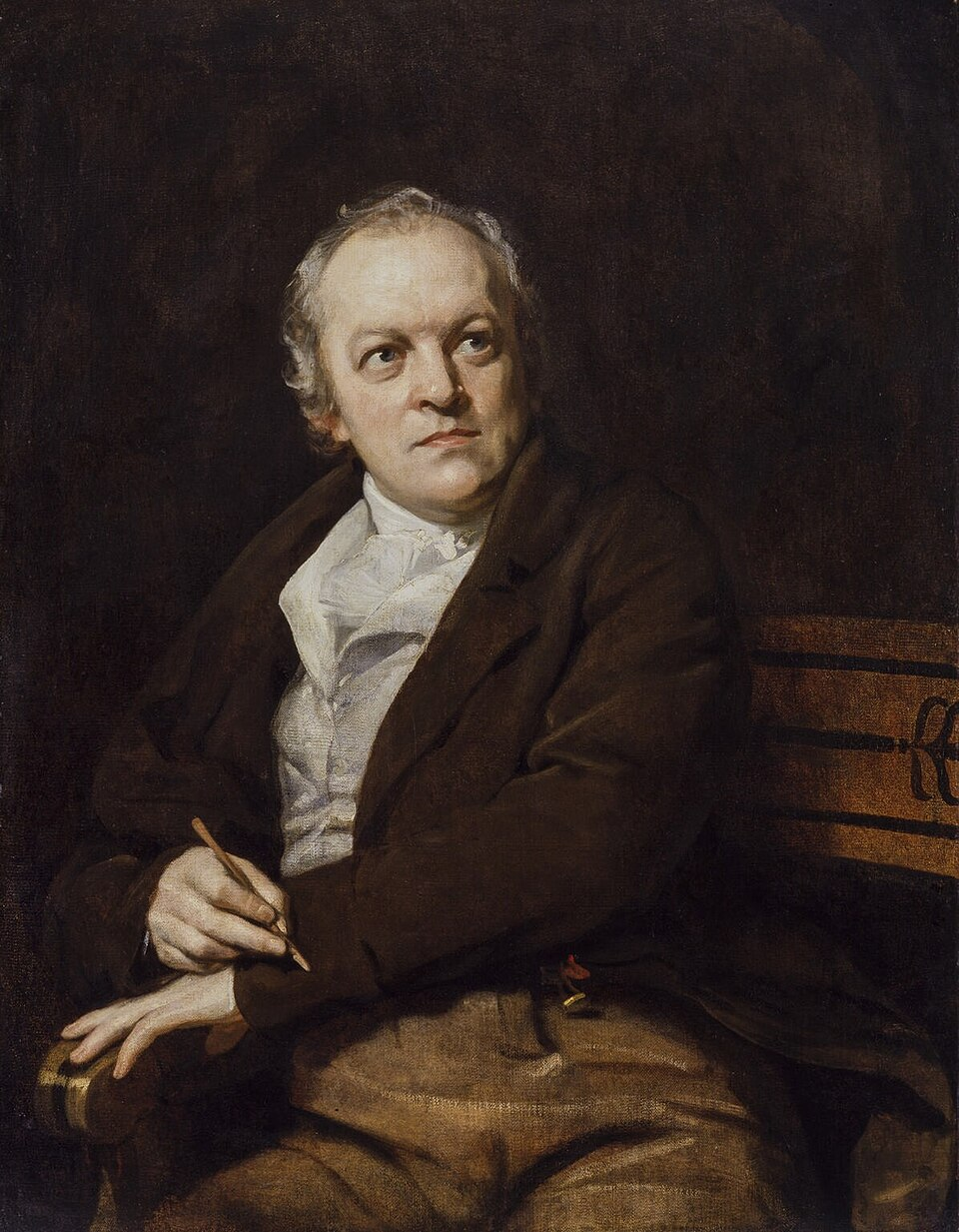
William Blake was born in London on November 28, 1757, the third of seven children. His father, James, worked as a hosier, selling socks and stockings. Blake attended school just long enough to learn to read and write before continuing his education at home under the guidance of his mother, Catherine Blake.
In 1781, William Blake met Catherine Boucher, who was five years younger than him. They married on August 18, 1782. At the time, Catherine couldn’t read or write and signed their marriage certificate with an “X.” The original document can still be seen at St Mary’s Church in Battersea.
William later taught Catherine to read and write, and trained her as an engraver. She was a constant support, helping him produce his special illustrated books and lifting his spirits during hard times. Their marriage was loving and close until William’s death on August 12, 1827. In his final years, Blake lived in Fountain Court, London. After his passing, Catherine moved in with a friend, convinced that William’s spirit visited her often. She kept selling his art and books, always “consulting Mr. Blake” before making deals. Catherine died in October 1831, as calm and content as her husband had been.
Poems:
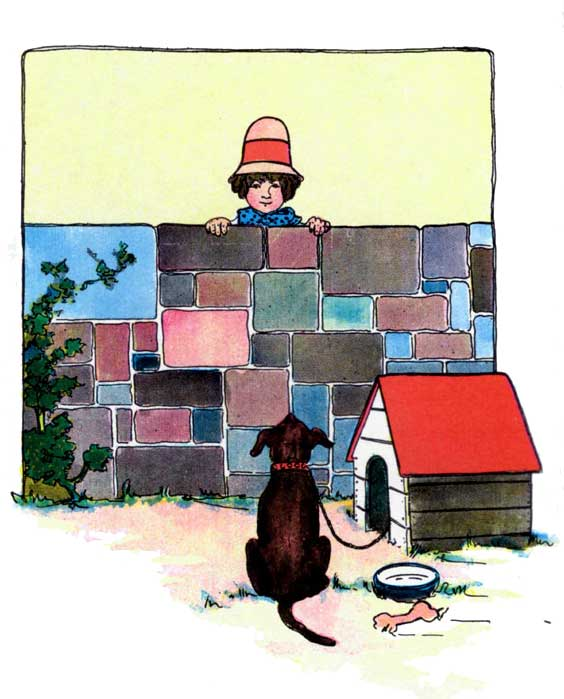
CAESAR’S SONG
Bow-wow-wow!
Whose dog art thou?
Little Tom Tinker’s dog,
Bow-wow-wow!
Retaliation
Early the next morning the doctor climbed up the mountain in company with Peter and his goats. The friendly gentleman made several attempts to start a conversation with the boy, but as answer to his questions he got nothing more than monosyllables. When they arrived on top, they found Heidi already waiting, fresh and rosy as the early dawn.
“Are you coming?” asked Peter as usual.
“Of course I shall, if the doctor comes with us,” replied the child.
The grandfather, coming out of the hut, greeted the newcomer with great respect. Then he went up to Peter, and hung on his shoulder the sack, which seemed to contain more than usual that day.
When they had started on their way, Heidi kept urging forward the goats, which were crowding about her. When at last she was walking peacefully by the doctor’s side, she began to relate to him many things about the goats and all their strange pranks, and about the flowers, rocks and birds they saw. When they arrived at their destination, time seemed to have flown. Peter all the time was sending many an angry glance at the unconscious doctor, who never even noticed it.
Heidi now took the doctor to her favorite spot. From there they could hear the peaceful-sounding bells of the grazing cattle below. The sky was deep blue, and above their heads the eagle was circling with outstretched wings. Everything was luminous and bright about them, but the doctor had been silent. Suddenly looking up, he beheld Heidi’s radiant eyes.
“Heidi, it is beautiful up here,” he said. “But how can anybody with a heavy heart enjoy the beauty? Tell me!”
“Oh,” exclaimed Heidi, “one never has a sad heart here. One only gets unhappy in Frankfurt.”
A faint smile passed over the doctor’s face. Then he began: “But if somebody has brought his sorrow away with him, how would you comfort him?”
“God in Heaven alone can help him.”
“That is true, child,” remarked the doctor. “But what can we do when God Himself has sent us the affliction?”
After meditating a moment, Heidi replied: “One must wait patiently, for God knows how to turn the saddest things to something happy in the end. God will show us what He has meant to do for us. But He will only do so if we pray to Him patiently.”
“I hope you will always keep this beautiful belief, Heidi,” said the doctor. Then looking up at the mighty cliffs above, he continued: “Think how sad it would make us not to be able to see all these beautiful things. Wouldn’t that make us doubly sad? Can you understand me, child?”
A great pain shot through Heidi’s breast. She had to think of the poor grandmother. Her blindness was always a great sorrow to the child, and she had been struck with it anew. Seriously she replied:
“Oh yes, I can understand it. But then we can read grandmother’s songs; they make us happy and bright again.”
“Which songs, Heidi?”
“Oh, those of the sun, and of the beautiful garden, and then the last verses of the long one. Grandmother loves them so that I always have to read them over three times,” said Heidi.
“I wish you would say them to me, child, for I should like to hear them,” said the doctor.
Heidi, folding her hands, began the consoling verses. She stopped suddenly, however, for the doctor did not seem to listen. He was sitting motionless, holding his hand before his eyes. Thinking that he had fallen asleep, she remained silent. But the verses had recalled his childhood days; he seemed to hear his mother and see her loving eyes, for when he was a little boy she had sung this song to him. A long time he sat there, till he discovered that Heidi was watching him.
“Heidi, your song was lovely,” he said with a more joyful voice. “We must come here another day and then you can recite it to me again.”
During all this time Peter had been boiling with anger. Now that Heidi had come again to the pasture with him, she did nothing but talk to the old gentleman. It made him very cross that he was not even able to get near her. Standing a little distance behind Heidi’s friend, he shook his fist at him, and soon afterwards both fists, finally raising them up to the sky, as Heidi and the doctor remained together.
When the sun stood in its zenith and Peter knew that it was noon, he called over to them with all his might: “Time to eat.”
When Heidi was getting up to fetch their dinner, the doctor just asked for a glass of milk, which was all he wanted. The child also decided to make the milk her sole repast, running over to Peter and informing him of their resolution.
When the boy found that the whole contents of the bag was his, he hurried with his task as never in his life before. But he felt guilty on account of his former anger at the kind gentleman. To show his repentance he held his hands up flat to the sky, indicating by his action that his fists did not mean anything any more. Only after that did he start with his feast.
Heidi and the doctor had wandered about the pasture till the gentleman had found it time to go. He wanted Heidi to remain where she was, but she insisted on accompanying him. All the way down she showed him many places where the pretty mountain flowers grew, all of whose names she could tell him. When they parted at last, Heidi waved to him. From time to time he turned about, and seeing the child still standing there, he had to think of his own little daughter who used to wave to him like that when he went away from home.
The weather was warm and sunny that month. Every morning the doctor came up to the Alp, spending his day very often with the old man. Many a climb they had together that took them far up, to the bare cliffs near the eagle’s haunt. The uncle would show his guest all the herbs that grew on hidden places and were strengthening and healing. He could tell many strange things of the beasts that lived in holes in rock or earth, or in the high tops of trees.
In the evening they would part, and the doctor would exclaim: “My dear friend, I never leave you without having learned something.”
But most of his days he spent with Heidi. Then the two would sit together on the child’s favorite spot, and Peter, quite subdued, behind them. Heidi had to recite the verses, as she had done the first day, and entertain him with all the things she knew.
At last the beautiful month of September was over. One morning the doctor came up with a sadder face than usual. The time had come for him to go back to Frankfurt, and great was the uncle’s sadness at that news. Heidi herself could hardly realize that her loving friend, whom she had been seeing every day, was really leaving. The doctor himself was loath to go, for the Alp had become as a home to him. But it was necessary for him to go, and shaking hands with the grandfather, he said good-bye, Heidi going along with him a little way.
Hand in hand they wandered down, till the doctor stood still. Then caressing Heidi’s curly hair, he said: “Now I must go, Heidi! I wish I could take you along with me to Frankfurt; then I could keep you.”
At those words, all the rows and rows of houses and streets, Miss Rottenmeier and Tinette rose before Heidi’s eyes. Hesitating a little, she said: “I should like it better if you would come to see us again.”
“I believe that will be better. Now farewell!” said the friendly gentleman. When they shook hands his eyes filled with tears. Turning quickly he hurried off.
Heidi, standing on the same spot, looked after him. What kind eyes he had! But they had been full of tears. All of a sudden she began to cry bitterly, and ran after her friend, calling with all her might, but interrupted by her sobs:
“Oh doctor, doctor!”
Looking round he stood still and waited till the child had reached him. Her tears came rolling down her cheeks while she sobbed: “I’ll come with you to Frankfurt and I’ll stay as long as ever you want me to. But first I must see grandfather.”
“No, no, dear child,” he said affectionately, “not at once. You must remain here, I don’t want you to get ill again. But if I should get sick and lonely and ask you to come to me, would you come and stay with me? Can I go away and think that somebody in this world still cares for me and loves me?”
“Yes, I shall come to you the same day, for I really love you as much as grandfather,” Heidi assured him, crying all the time.
Shaking hands again, they parted. Heidi stayed on the same spot, waving her hand and looking after her departing friend till he seemed no bigger than a little dot. Then he looked back a last time at Heidi and the sunny Alp, muttering to himself: “It is beautiful up there. Body and soul get strengthened in that place and life seems worth living again.”
I want to tell you to-day about two “Hims.” The first is a man “Him.” The second is a song “Hymn.”
The man “him” is Phillips Brooks. He was born in 1835 and died in 1893. He never married, so he had no girls and boys of his own. But he loved all children. He had a great, warm heart, and in that heart was a big corner for all young people. He became a minister. His first church was in Philadelphia. Later he moved to Boston. He had not been in Boston very long when, one night, about midnight, the people saw flames breaking out through the roof of the church. A sorrowing congregation, with their pastor, watched their loved church as it burned to the ground.
When, after the fire, they came together, they inquired, “What shall we do? Shall we rebuild here or shall we take another location?” Finally, it was decided to build a new church on Copley Square. That was many years ago. They built a beautiful temple of worship. It is still known everywhere as “Phillips Brooks’ Church,” so wonderfully did his personality enter into the project.
Now the second “hymn.” When Phillips Brooks was a young man in Philadelphia he made a trip to the Holy Land. As Christmas drew near he wrote and sent back to the girls and boys of his Sunday School, a Christmas poem. The organist of his church composed music for the words, and this hymn was sung for the first time in Trinity church, Philadelphia. It is a beautiful Christmas hymn. Yes, it is my favorite.
“Oh, little town of Bethlehem, How still we see thee lie.”
MEMORY VERSE, Matthew 2: 6
“Thou, Bethlehem, in the land of Juda, art not the least among the princes of Juda: For out of thee shall come a Governor that shall rule my people Israel.”
MEMORY HYMN
“O little town of Bethlehem.”
 articlesforchristians
