A place to grow your relationship with God

Posts tagged ‘homeschool’

The Wind in the Willows Chapter 2: The Open Road

Chapter 2: The Open Road

Ratty,’ said the Mole suddenly, one bright summer morning, ‘if you please, I want to ask you a favour.’

The Rat was sitting on the river bank, singing a little song. He had just composed it himself, so he was very taken up with it, and would not pay proper attention to Mole or anything else. Since early morning he had been swimming in the river, in company with his friends the ducks. And when the ducks stood on their heads suddenly, as ducks will, he would dive down and tickle their necks, just under where their chins would be if ducks had chins, till they were forced to come to the surface again in a hurry, spluttering and angry and shaking their feathers at him, for it is impossible to say quite ALL you feel when your head is under water. At last they implored him to go away and attend to his own affairs and leave them to mind theirs. So the Rat went away, and sat on the river bank in the sun, and made up a song about them, which he called

‘THE DUCKS’ DITTY.’

All along the backwater,

Through the rushes tall,

Ducks are a-dabbling,

Up tails all!

Ducks’ tails, drakes’ tails,

Yellow feet a-quiver,

Yellow beaks all out of sight

Busy in the river!

Slushy green undergrowth

Where the roach swim-

Here we keep our larder,

Cool and full and dim.

Everyone for what he likes!

We like to be

Heads down, tails up,

Dabbling free!

High in the blue above

Swifts whirl and call-

We are down a-dabbling

Uptails all!

‘I don’t know that I think so VERY much of that little song, Rat,’ observed the Mole cautiously. He was no poet himself and didn’t care who knew it; and he had a candid nature.

‘Nor don’t the ducks neither,’ replied the Rat cheerfully. ‘They say, “WHY can’t fellows be allowed to do what they like WHEN they like and AS they like, instead of other fellows sitting on banks and watching them all the time and making remarks and poetry and things about them? What NONSENSE it all is!” That’s what the ducks say.’

‘So it is, so it is,’ said the Mole, with great heartiness.

‘No, it isn’t!’ cried the Rat indignantly.

‘Well then, it isn’t, it isn’t,’ replied the Mole soothingly. ‘But what I wanted to ask you was, wouldn’t you take me to call on Mr. Toad? I’ve heard so much about him, and I do so want to make his acquaintance.’

‘Why, certainly,’ said the good-natured Rat, jumping to his feet and dismissing poetry from his mind for the day. ‘Get the boat out, and we’ll paddle up there at once. It’s never the wrong time to call on Toad. Early or late he’s always the same fellow. Always good-tempered, always glad to see you, always sorry when you go!’

‘He must be a very nice animal,’ observed the Mole, as he got into the boat and took the sculls, while the Rat settled himself comfortably in the stern.

‘He is indeed the best of animals,’ replied the Rat. ‘So simple, and so good-natured, and so affectionate. Perhaps he’s not very clever-we can’t all be geniuses; and it may be that he is both boastful and conceited. But he has got some very great qualities, has Toady.’

Rounding a bend in the river, they came in sight of a handsome, dignified old house of mellowed red brick, with well-kept lawns reaching down to the water’s edge.

‘That’s Toad Hall,’ said the Rat; ‘and that creek on the left, where the notice-board says, “Private. No landing allowed,” leads to his boat-house, where we’ll leave the boat. The stables are over there to the right. That’s the banqueting-hall you’re looking at now-very old, it is. Toad is rather rich, you know, and this is really one of the nicest houses in these parts, though we never admit as much to Toad.’

They glided up the creek, and the Mole shipped his sculls as they passed into the shadow of a large boat-house. Here they saw many handsome boats, slung from the cross beams or hauled up on a slip, but none in the water; and the place had an unused and a deserted air.

The Rat looked around him. ‘I understand,’ said he. ‘Boating is played out. He’s tired of it, and done with it. I wonder what new fad he has taken up now? Come along, let’s look him up. We shall hear all about it quite soon enough.’

They disembarked, and strolled across the gay flower-decked lawns in search of Toad, whom they presently happened upon resting in a wicker garden-chair, with a pre-occupied expression of face, and a large map spread out on his knees.

‘Hooray!’ he cried, jumping up on seeing them both, ‘this is splendid!’ He shook the paws of both of them warmly, never waiting for an introduction to the Mole. ‘How KIND of you!’ he went on, dancing round them. ‘I was just going to send a boat down the river for you, Ratty, with strict orders that you were to be fetched up here at once, whatever you were doing. I want to see you badly-both of you. Now what will you take? Come inside and have something! You don’t know how lucky it is, your turning up just now!’

‘Let’s just sit quiet a bit, Toady!’ said the Rat, throwing himself into an easy chair, while the Mole took another by the side of him and made some civil remark about the Toad’s ‘delightful residence.’

‘Finest house on the whole river,’ cried Toad boisterously. ‘Or anywhere else, for that matter,’ he could not help adding.

Here the Rat nudged the Mole. Unfortunately the Toad saw him do it, and turned very red. There was a moment’s painful silence. Then Toad burst out laughing. ‘All right, Ratty,’ he said. ‘It’s only my way, you know. And it’s not such a very bad house, is it? You know you rather like it yourself. Now, look here. Let’s be sensible. You are the very animals I wanted. You’ve got to help me. It’s most important!’

‘It’s about your rowing, I suppose,’ said the Rat, with an innocent air. ‘You’re getting on fairly well, though you splash a good bit still. With a great deal of patience, and any quantity of coaching, you may–‘

‘O, pooh! boating!’ interrupted the Toad, in great disgust. ‘Silly boyish amusement. I’ve given that up LONG ago. Sheer waste of time, that’s what it is. It makes me downright sorry to see you fellows, who ought to know better, spending all your energies in that aimless manner. No, I’ve discovered the real thing, the only genuine occupation for a life time. I propose to devote the remainder of mine to it, and can only regret the wasted years that lie behind me, squandered in trivialities. Come with me, my dear Ratty, and your amiable friend also, if he will be so very good, just as far as the stable-yard, and you shall see what you shall see!’

He led the way to the stable-yard accordingly, the Rat following with a most mistrustful expression; and there, drawn out of the coach house into the open, they saw a gypsy caravan, shining with newness, painted a canary-yellow picked out with green, and red wheels.

‘There you are!’ cried the Toad, straddling and expanding himself. ‘There’s real life for you, embodied in that little cart. The open road, the dusty highway, the heath, the common, the hedgerows, the rolling downs! Camps, villages, towns, cities! Here today, up and off to somewhere else tomorrow! Travel, change, interest, excitement! The whole world before you, and a horizon that’s always changing! And mind! this is the very finest cart of its sort that was ever built, without any exception. Come inside and look at the arrangements. Planned ’em all myself, I did!’

The Mole was tremendously interested and excited, and followed him eagerly up the steps and into the interior of the caravan. The Rat only snorted and thrust his hands deep into his pockets, remaining where he was.

It was indeed very compact and comfortable. Little sleeping bunks-a little table that folded up against the wall-a cooking-stove, lockers, bookshelves, a bird-cage with a bird in it; and pots, pans, jugs and kettles of every size and variety.

‘All complete!’ said the Toad triumphantly, pulling open a locker. ‘You see-biscuits, potted lobster, sardines-everything you can possibly want. Soda-water here-baccy there-letter-paper, bacon, jam, cards and dominoes-you’ll find,’ he continued, as they descended the steps again, ‘you’ll find that nothing whatsoever has been forgotten, when we make our start this afternoon.’

‘I beg your pardon,’ said the Rat slowly, as he chewed a straw, ‘but did I overhear you say something about “WE,” and “START,” and “THIS AFTERNOON?”‘

‘Now, you dear good old Ratty,’ said Toad, imploringly, ‘don’t begin talking in that stiff and sniffy sort of way, because you know you’ve GOT to come. I can’t possibly manage without you, so please consider it settled, and don’t argue-it’s the one thing I can’t stand. You surely don’t mean to stick to your dull fusty old river all your life, and just live in a hole in a bank, and BOAT? I want to show you the world! I’m going to make an ANIMAL of you, my boy!’

‘I don’t care,’ said the Rat, doggedly. ‘I’m not coming, and that’s flat. And I AM going to stick to my old river, AND live in a hole, AND boat, as I’ve always done. And what’s more, Mole’s going to stick to me and do as I do, aren’t you, Mole?’

‘Of course I am,’ said the Mole, loyally. ‘I’ll always stick to you, Rat, and what you say is to be-has got to be. All the same, it sounds as if it might have been-well, rather fun, you know!’ he added, wistfully. Poor Mole! The Life Adventurous was so new a thing to him, and so thrilling; and this fresh aspect of it was so tempting; and he had fallen in love at first sight with the canary-colored cart and all its little fitments.

The Rat saw what was passing in his mind, and wavered. He hated disappointing people, and he was fond of the Mole, and would do almost anything to oblige him. Toad was watching both of them closely.

‘Come along in, and have some lunch,’ he said, diplomatically, ‘and we’ll talk it over. We needn’t decide anything in a hurry. Of course, I don’t really care. I only want to give pleasure to you fellows. “Live for others!” That’s my motto in life.’

During luncheon-which was excellent, of course, as everything at Toad Hall always was-the Toad simply let himself go. Disregarding the Rat, he proceeded to play upon the inexperienced Mole as on a harp. Naturally a voluble animal, and always mastered by his imagination, he painted the prospects of the trip and the joys of the open life and the roadside in such glowing colors that the Mole could hardly sit in his chair for excitement. Somehow, it soon seemed taken for granted by all three of them that the trip was a settled thing; and the Rat, though still unconvinced in his mind, allowed his good-nature to over-ride his personal objections. He could not bear to disappoint his two friends, who were already deep in schemes and anticipations, planning out each day’s separate occupation for several weeks ahead.

When they were quite ready, the now triumphant Toad led his companions to the paddock and set them to capture the old grey horse, who, without having been consulted, and to his own extreme annoyance, had been told off by Toad for the dustiest job in this dusty expedition. He frankly preferred the paddock, and took a deal of catching. Meantime Toad packed the lockers still tighter with necessaries, and hung nosebags, nets of onions, bundles of hay, and baskets from the bottom of the cart. At last the horse was caught and harnessed, and they set off, all talking at once, each animal either trudging by the side of the cart or sitting on the shaft, as the humor took him. It was a golden afternoon. The smell of the dust they kicked up was rich and satisfying; out of thick orchards on either side the road, birds called and whistled to them cheerily; good-natured wayfarers, passing them, gave them ‘Good-day,’ or stopped to say nice things about their beautiful cart; and rabbits, sitting at their front doors in the hedgerows, held up their fore-paws, and said, ‘O my! O my! O my!’

Late in the evening, tired and happy and miles from home, they drew up on a remote common far from habitations, turned the horse loose to graze, and ate their simple supper sitting on the grass by the side of the cart. Toad talked big about all he was going to do in the days to come, while stars grew fuller and larger all around them, and a yellow moon, appearing suddenly and silently from nowhere in particular, came to keep them company and listen to their talk. At last they turned in to their little bunks in the cart; and Toad, kicking out his legs, sleepily said, ‘Well, good night, you fellows! This is the real life for a gentleman! Talk about your old river!’

‘I DON’T talk about my river,’ replied the patient Rat. ‘You KNOW I don’t, Toad. But I THINK about it,’ he added rather pathetically, in a lower tone: ‘I think about it-all the time!’

The Mole reached out from under his blanket, felt for the Rat’s paw in the darkness, and gave it a squeeze. ‘I’ll do whatever you like, Ratty,’ he whispered. ‘Shall we run away tomorrow morning, quite early-VERY early-and go back to our dear old hole on the river?’

‘No, no, we’ll see it out,’ whispered back the Rat. ‘Thanks awfully, but I ought to stick by Toad till this trip is ended. It wouldn’t be safe for him to be left to himself. It won’t take very long. His fads never do. Now good night!’

The end was indeed nearer than even the Rat suspected.

After so much open air and excitement the Toad slept very soundly, and no amount of shaking could rouse him out of bed the next morning. So the Mole and Rat turned to, quietly and manfully, and while the Rat saw to the horse, and lit a fire, and cleaned up last night’s cups and platters, and got things ready for breakfast, the Mole trudged off to the nearest village, a long way off, for milk and eggs and various necessaries the Toad had, of course, forgotten to provide. The hard work had all been done, and the two animals were resting, thoroughly exhausted, by the time Toad appeared on the scene, fresh and gay, remarking what a pleasant easy life it was they were all leading now, after the cares and worries and fatigues of housekeeping at home.

They had a pleasant ramble that day over grassy downs and along narrow by-lanes, and camped as before, on a common, only this time the two guests took care that Toad should do his fair share of work. In consequence, when the time came for starting next morning, Toad was by no means so rapturous about the simplicity of the primitive life, and indeed attempted to resume his place in his bunk, whence he was hauled by force. Their way lay, as before, across country by narrow lanes, and it was not till the afternoon that they came out on the high-road, their first high-road; and there disaster, fleet and unforeseen, sprang upon them-disaster momentous indeed to their expedition, but simply overwhelming in its effect on the after-career of Toad.

They were strolling along the high-road easily, the Mole by the horse’s head, talking to him, since the horse had complained that he was being frightfully left out of it all, and no one considered him in the least; the Toad and the Water Rat walking behind the cart talking together-at least Toad was talking, and Rat was saying at intervals, ‘Oh yes, precisely; and what did YOU say to HIM?’-and thinking all the time of something very different, when far behind them they heard a faint warning hum; like the drone of a distant bee. Glancing back, they saw a small cloud of dust, with a dark center of energy, advancing on them at incredible speed, while from out the dust a faint ‘Poop-poop!’ wailed like an uneasy animal in pain. Hardly regarding it, they turned to resume their conversation, when in an instant (as it seemed) the peaceful scene was changed, and with a blast of air and a whirl of sound that made them jump for the nearest ditch, It was on them! The ‘Poop-poop’ rang with a brazen shout in their ears, they had a moment’s glimpse of an interior of glittering plate-glass and rich morocco, and the magnificent motorcar, immense, breath-snatching, passionate, with its pilot tense and hugging his wheel, possessed all earth and air for the fraction of a second, flung an enveloping cloud of dust that blinded and enwrapped them utterly, and then dwindled to a speck in the far distance, changed back into a droning bee once more.

The old grey horse, dreaming, as he plodded along, of his quiet paddock, in a new raw situation such as this simply abandoned himself to his natural emotions. Rearing, plunging, backing steadily, in spite of all the Mole’s efforts at his head, and all the Mole’s lively language directed at his better feelings, he drove the cart backwards towards the deep ditch at the side of the road. It wavered an instant-then there was a heartrending crash-and the canary-colored cart, their pride and joy, lay on its side in the ditch, an irredeemable wreck.

The Rat danced up and down in the road, simply transported with passion. ‘You villains!’ he shouted, shaking both fists, ‘You scoundrels, you highwaymen, you-you-roadhogs!-I’ll have the law of you! I’ll report you! I’ll take you through all the Courts!’ His home-sickness had quite slipped away from him, and for the moment he was the skipper of the canary-colored vessel driven on a shoal by the reckless jockeying of rival mariners, and he was trying to recollect all the fine and biting things he used to say to masters of steam-launches when their wash, as they drove too near the bank, used to flood his parlor-carpet at home.

Toad sat straight down in the middle of the dusty road, his legs stretched out before him, and stared fixedly in the direction of the disappearing motorcar. He breathed short, his face wore a placid satisfied expression, and at intervals he faintly murmured ‘Poop-poop!’

The Mole was busy trying to quiet the horse, which he succeeded in doing after a time. Then he went to look at the cart, on its side in the ditch. It was indeed a sorry sight. Panels and windows smashed, the axles hopelessly bent, one wheel off, sardine-tins scattered over the wide world, and the bird in the bird-cage sobbing pitifully and calling to be let out.

The Rat came to help him, but their united efforts were not sufficient to right the cart. ‘Hi! Toad!’ they cried. ‘Come and bear a hand, can’t you!’

The Toad never answered a word, or budged from his seat in the road; so they went to see what was the matter with him. They found him in a sort of a trance, a happy smile on his face, his eyes still fixed on the dusty wake of their destroyer. At intervals he was still heard to murmur ‘Poop-poop!’

The Rat shook him by the shoulder. ‘Are you coming to help us, Toad?’ he demanded sternly.

‘Glorious, stirring sight!’ murmured Toad, never offering to move. ‘The poetry of motion! The REAL way to travel! The ONLY way to travel! Here today-in next week tomorrow! Villages skipped, towns and cities jumped-always someone else’s horizon! O bliss! O poop-poop! O my! O my!’

‘O STOP being an ass, Toad!’ cried the Mole despairingly.

‘And to think I never KNEW!’ went on the Toad in a dreamy monotone. ‘All those wasted years that lie behind me, I never knew, never even DREAMT! But NOW-but now that I know, now that I fully realise! O what a flowery track lies spread before me, henceforth! What dusty-clouds shall spring up behind me as I speed on my reckless way! What carts I shall fling carelessly into the ditch in the wake of my magnificent onset! Horrid little carts-common carts-canary-colored carts!’

‘What are we to do with him?’ asked the Mole of the Water Rat.

‘Nothing at all,’ replied the Rat firmly. ‘Because there is really nothing to be done. You see, I know him from of old. He is now possessed. He has got a new craze, and it always takes him that way, in its first stage. He’ll continue like that for days now, like an animal walking in a happy dream, quite useless for all practical purposes. Never mind him. Let’s go and see what there is to be done about the cart.’

A careful inspection showed them that, even if they succeeded in righting it by themselves, the cart would travel no longer. The axles were in a hopeless state, and the missing wheel was shattered into pieces.

The Rat knotted the horse’s reins over his back and took him by the head, carrying the bird cage and its hysterical occupant in the other hand. ‘Come on!’ he said grimly to the Mole. ‘It’s five or six miles to the nearest town, and we shall have to walk it. The sooner we make a start the better.’

‘But what about Toad?’ asked the Mole anxiously, as they set off together. ‘We can’t leave him here, sitting in the middle of the road by himself, in the distracted state he’s in! It’s not safe. Supposing another Thing were to come along?’

‘O, BOTHER Toad,’ said the Rat savagely; ‘I’ve done with him!’

They had not proceeded very far on their way, however, when there was a pattering of feet behind them, and Toad caught them up and thrust a paw inside the elbow of each of them; still breathing short and staring into vacancy.

‘Now, look here, Toad!’ said the Rat sharply: ‘as soon as we get to the town, you’ll have to go straight to the police-station, and see if they know anything about that motorcar and who it belongs to, and lodge a complaint against it. And then you’ll have to go to a blacksmith’s or a wheelwright’s and arrange for the cart to be fetched and mended and put to rights. It’ll take time, but it’s not quite a hopeless smash. Meanwhile, the Mole and I will go to an inn and find comfortable rooms where we can stay till the cart’s ready, and till your nerves have recovered their shock.’

‘Police-station! Complaint!’ murmured Toad dreamily. ‘Me COMPLAIN of that beautiful, that heavenly vision that has been vouchsafed me! MEND THE CART! I’ve done with carts forever. I never want to see the cart, or to hear of it, again. O, Ratty! You can’t think how obliged I am to you for consenting to come on this trip! I wouldn’t have gone without you, and then I might never have seen that-that swan, that sunbeam, that thunderbolt! I might never have heard that entrancing sound, or smelt that bewitching smell! I owe it all to you, my best of friends!’

The Rat turned from him in despair. ‘You see what it is?’ he said to the Mole, addressing him across Toad’s head: ‘He’s quite hopeless. I give it up-when we get to the town we’ll go to the railway station, and with luck we may pick up a train there that’ll get us back to riverbank tonight. And if ever you catch me going a-pleasuring with this provoking animal again!’-He snorted, and during the rest of that weary trudge addressed his remarks exclusively to Mole.

On reaching the town they went straight to the station and deposited Toad in the second-class waiting-room, giving a porter twopence to keep a strict eye on him. They then left the horse at an inn stable, and gave what directions they could about the cart and its contents. Eventually, a slow train having landed them at a station not very far from Toad Hall, they escorted the spell-bound, sleep-walking Toad to his door, put him inside it, and instructed his housekeeper to feed him, undress him, and put him to bed. Then they got out their boat from the boat-house, sculled down the river home, and at a very late hour sat down to supper in their own cozy riverside parlor, to the Rat’s great joy and contentment.

The following evening the Mole, who had risen late and taken things very easy all day, was sitting on the riverbank, when the Rat, who had been looking up his friends and gossiping, came strolling along to find him. ‘Heard the news?’ he said. ‘There’s nothing else being talked about, all along the river bank. Toad went up to Town by an early train this morning. And he has ordered a large and very expensive motorcar.’
The Story of Mankind: The Norsemen

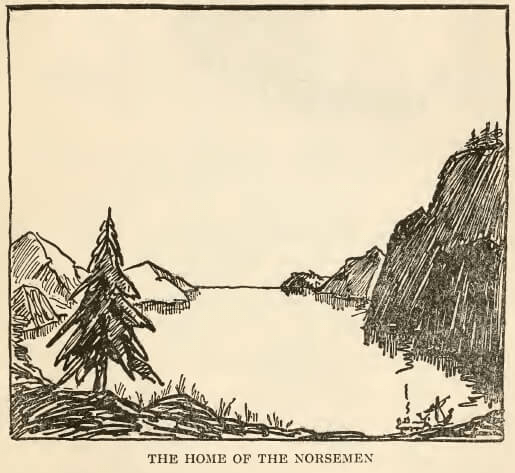
In the third and fourth centuries, the Germanic tribes of central Europe had broken through the defenses of the Empire that they might plunder Rome and live on the fat of the land. In the eighth century it became the turn of the Germans to be the “plundered-ones.” They did not like this at all, even if their enemies were their first cousins, the Norsemen, who lived in Denmark and Sweden and Norway.

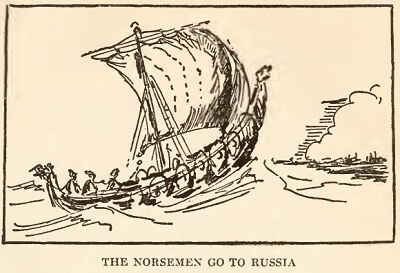
What forced these hardy sailors to turn pirate we do not know, but once they had discovered the advantages and pleasures of a buccaneering career there was no one who could stop them. They would suddenly descend upon a peaceful Frankish or Frisian village, situated on the mouth of a river. They would kill all the men and steal all the women. Then they would sail away in their fast-sailing ships and when the soldiers of the king or emperor arrived upon the scene, the robbers were gone and nothing remained but a few smoldering ruins.

During the days of disorder which followed the death of Charlemagne, the Northmen developed great activity. Their fleets made raids upon every country and their sailors established small independent kingdoms along the coast of Holland and France and England and Germany, and they even found their way into Italy. The Northmen were very intelligent. They soon learned to speak the language of their subjects and gave up the uncivilized ways of the early Vikings (or Sea-Kings) who had been very picturesque but also very unwashed and terribly cruel.

Early in the tenth century a Viking by the name of Rollo had repeatedly attacked the coast of France. The king of France, too weak to resist these northern robbers, tried to bribe them into “being good.” He offered them the province of Normandy, if they would promise to stop bothering the rest of his domains. Rollo accepted this bargain and became “Duke of Normandy.”

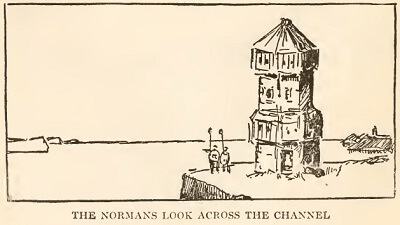
But the passion of conquest was strong in the blood of his children. Across the channel, only a few hours away from the European mainland, they could see the white cliffs and the green fields of England. Poor England had passed through difficult days. For two hundred years it had been a Roman colony.

After the Romans left, it had been conquered by the Angles and the Saxons, two German tribes from Schleswig. Next the Danes had taken the greater part of the country and had established the kingdom of Cnut. The Danes had been driven away and now (it was early in the eleventh century) another Saxon king, Edward the Confessor, was on the throne. But Edward was not expected to live long and he had no children. The circumstances favored the ambitious dukes of Normandy.

In 1066 Edward died. Immediately William of Normandy crossed the channel, defeated and killed Harold of Wessex (who had taken the crown) at the battle of Hastings, and proclaimed himself king of England.

In another chapter I have told you how in the year 800 a German chieftain had become a Roman Emperor. Now in the year 1066 the grandson of a Norse pirate was recognized as King of England.

Why should we ever read fairy stories, when the truth of history is so much more interesting and entertaining?

Math: Subtract Numbers Up to 80

STEP 1

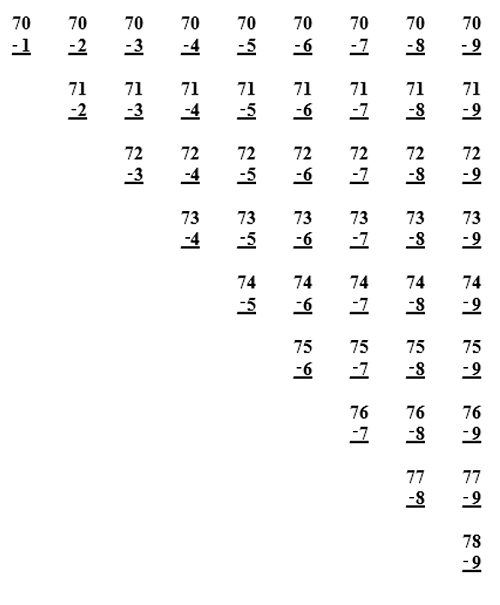
  • Have the children write out and complete the subtraction exercises below on paper.

STEP 2

  • Assess mastery by reading aloud the listed problems and having the children mentally compute and recite the solutions.
  • If children have difficulties, have children redo their written practice with pencil and paper again and then reassess.

The Story of Doctor Dolittle Chapter 1: Puddleby Vocabulary Words

The Story of Doctor Dolittle by Hugh Lofting     

Chapter 1: Puddleby Vocabulary Words

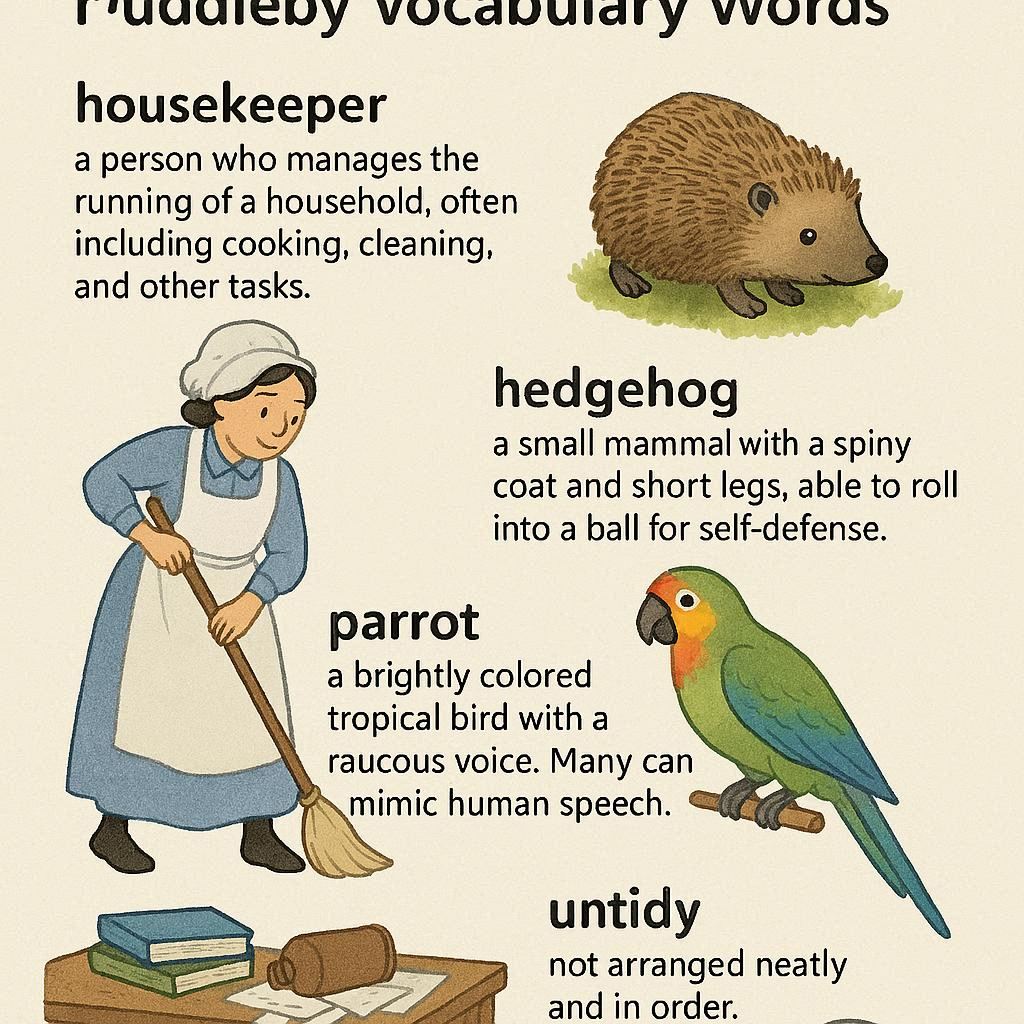
Housekeeper: A person who manages the running of a household, often including cooking, cleaning, and other tasks.
Hedgehog: A small mammal with a spiny coat and short legs, able to roll into a ball for self-defense.
Parrot: A brightly colored tropical bird with a raucous voice. Many can mimic human speech.
Untidy: Arranged neatly and in order.
Sixpence: An old British coin, last minted in the 1970s.
Bureau: A chest of drawers.

The Wind in the Willows Chapter 1 Vocabulary Words

Chapter 1: The Riverbank

Vocabulary

Wind: The perceptible natural movement of the air, especially in the form of a current of air blowing from a particular direction.
Willows: A tree or shrub of temperate climates that typically has narrow leaves, bears catkins, and grows near water.
Cellarage: Cellars collectively.
Bijou: Small and elegant (residence).
Sculls: A pair of small oars used by a single rower.
Backwater: 1) An isolated or peaceful place, 2) A part of a river not reached by the current.
Punting: Travel in a punt (flat-bottomed ferryboat).
Weir: A low dam built across a river to raise the level of water upstream or regulate its flow.

Timeline of Key Events in Early Christianity

This timeline goes from the Disciples gathering to meet in the upper room through the writing of the Book of Revelations. A few other historical events will be added as additional information. There are some secular resources that links to other websites.

All Dates are Approximate.

  • 30 AD Matthias Chosen by Lot
    • Acts 1:12
  • 30 AD The Holy Spirit Comes at Pentecost
  • 30 AD Peter Heals and Preaches Acts 3
  • 30 AD Peter and John Arrested and Released
    • Acts 4
  • 30 AD Believers Share All
    • Acts 4:32
  • 30 AD Deaths of Ananias and Sapphira
    • Acts 5
  • 30 AD Apostles Preach and Heal
    • Acts 5:11
  • 31 AD Stephen’s Speech, Stoning and Death Acts 6, 7
  • 31 AD Saul Persecutes the Church
    • Acts 8
  • 31 AD Philip in Samaria
    • Acts 8:3
  • 31 AD Simon the Sorcerer
    • Acts 8:9
  • 31 AD Philip and the Ethiopian
    • Acts 8:26
  • 32 AD Birth of the Emperor Otho in the city of Ferentium.
  • 34 AD Saul’s Conversion
    • Acts 9
  • 37 AD Death of Tiberius on the island of Capri. Caligula ascends to the throne.
  • 37 AD Birth of the historian Flavius Josephus, in Jerusalem. Birth of the Emperor Nero, in the town of Antium.
  • 37 AD Peter Preaches to the Gentiles
    • Acts 10, 11
  • 39 AD Caligula marches with the legions to Germania in a ‘mock’ campaign.
  • 39 AD Caligula bridges the Bay of Naples with boats from Baiae to Puteoli
  • 40 AD Caligula marches to the English Channel with the intention of invading Britain. Instead, the legions collect seashells, and he returns to Rome to celebrate a fabricated triumph.
  • 40 AD Birth of the Emperor Titus. Birth of the Roman general Gn. Julius Agricola, in the province of Gallia Narbonesis.
  • 40 AD Emperor Caligula orders that a statue of himself is to be erected in the temple at Jerusalem. Herod delays implementation long enough to prevent wide-spread revolt in Judaea.
  • 41 AD Caligula is assassinated by the Praetorian Guard. Claudius, supposedly found hiding in the curtains of the palace is hailed the new Caesar.
  • 41 AD The Roman writer Seneca is banished to the island of Corsica after he is accused of committing adultery with Claudius’s niece Livilla.
  • 41 AD Livia, the wife of Augustus, is finally deified by the senate.
  • 42 AD Barnabas Sent to Antioch
    • Acts 11:22
  • 42 AD Peter Led from Prison by the Angel
    • Acts 12
  • 43 AD Claudius begins the first large-scale Roman invasion of Britain, at first under the command of general A. Plautius.
  • 43 AD Lycia is annexed into the empire.
  • 44 AD Herod Agrippa Dies
    • Acts 12:20
  • 44 AD Judaea is annexed as a Roman province after the death of Herod Agrippa.
  • 45 AD James Writes his Letter
    • James 1 – 5
  • 46 AD The client kingdom of Thrace is annexed into the empire as a province.
  • 47 AD The Roman general Gn. Domitius Corbulo defeats the Frisii.
  • 47 AD Claudius celebrates the Secular Games, as Rome celebrates the 800th anniversary of the founding of the city.
  • 48 AD Paul’s First Missionary Journey
    • Acts 13
  • 48 AD Paul preaches in Pisidian Antioch
    • Acts 13:14
  • 48 AD Paul and Barnabas in Iconium
    • Acts 14
  • 48 AD Paul and Barnabas in Lystra and Derbe
    • Acts 14:8
  • 48 AD Paul and Barnabas Return to Syrian Antioch
    • Acts 14:21
  • 48 AD Return to Syrian Antioch
    • Acts 14:24
  • 48 AD The Council at Jerusalem
    • Acts 15
  • 49 AD Claudius passes an edict expelling all Jews from Rome.
    • Acts 18:1-3 mentions this edict.
  • 49 AD Paul’s Second Missionary Journey
    • Acts 15:36
  • 49 AD Paul in Philippi
    • Acts 16
  • 49 AD Paul in Thessalonica, Berea, Athens
    • Acts 17
  • 50 AD Claudius adopts Nero as heir.
  • 51 AD Birth of the Emperor Domitian in Rome.
  • 51 AD Paul in Corinth
    • Acts 18
  • 51 AD Paul Writes to the Thessalonians
    • 1 Thess. 1 – 5
  • 52 AD Paul Writes again to the Thessalonians
    • 2 Thess. 1 – 3
  • 54 AD Death and deification of Claudius. Nero ascends to the throne.
  • 54 AD Paul in Ephesus
    • Acts 19
  • 54 AD Paul Writes to the Corinthians
    • 1 Corinthians 1 – 16
  • 54 AD Paul Writes to the Galatians
    • Galatians 1 – 6
  • 56 AD Birth of the great Roman historian Tacitus, probably in Rome.
  • 56 – 57 AD Nero expels actors from Rome and dictates reforms of circuses and festivals.
  • 57 AD Paul in Macedonia and Greece
    • Acts 20
  • 57 AD Paul Writes to the Romans
    • Romans 1 – 16
  • 57 AD Paul Writes again to the Corinthians
    • 2 Corinthians 1 – 13
  • 58 AD The Roman general Gn. Domitius Corbulo conquers Armenia, after the capture of the capital Artaxata.
  • 59 AD Paul Returns to Jerusalem
    • Acts 21 – 23
  • 60 AD Paul imprisoned in Caesarea
    • Acts 24
  • 61 AD In BritainBoudicca, the queen of the Iceni tribe, leads a revolt against Roman occupation.
  • 62 AD Birth of the Roman historian Pliny the Younger in Italy.
  • 62 AD Suetonius Paullus defeats the Iceni revolt of Boudicca, who commits suicide.
  • 62 AD Lucius Caesennius Paetus in Armenia surrenders to invading Parthians after a defeat at Rhandeia. Gn. Domitius Corbulo returns and invades Parthia.
  • 62 AD Nero divorces his wife Octavia and marries his mistress Poppaea Sabina.
  • 62 AD The first signs of volcanic activity are recorded in Mt. Vesuvius, when an earthquake damages some nearby Campanian towns. (Much of which damage would never be repaired prior to its eruption some 18 years later.)
  • 62 AD Paul Before Festus
    • Acts 25
  • 62 AD Paul Before Agrippa
    • Acts 26
  • 62 AD Paul Sails for Rome
    • Acts 27
  • 62 AD The Shipwreck
    • Acts 27:13
  • 62 AD Paul Ashore at Malta
    • Acts 28
  • 62 AD Paul Preaches at Rome
    • Acts 28:11
  • 62 AD Paul Writes to the Ephesians
    • Ephesians 1 – 6
  • 62 AD Paul Writes to the Philippians
    • Philippians 1 – 4
  • 62 AD Paul Writes to the Colossians
    • Colossians 1 – 4
  • 62 AD Paul Writes to Philemon
    • Philemon 1
  • 63 AD Paul Writes to Timothy
  • 64 AD The Great Fire of Rome, speculated to have been started by Nero to make room for his palace. Christians Persecuted as scapegoats. Nero begins construction of the domus aurea (the Golden House).
  • 64 AD Peter Writes his First Letter
    • 1 Peter 1 – 5
  • 65 AD A plot against the Emperor Nero, known as the ‘Pisonian Conspiracy’, led by G. Calpurnius Piso. Nineteen men are executed or forced to commit suicide.
  • 65 AD Death of Nero’s wife, Poppaea, whom he kicked to death after an argument.
  • 66 AD Paul Writes to Titus
    • Titus 1 – 3
  • 67 AD The future Emperor Vespasian is sent to Judaea to put down a Jewish revolt.
  • 67 AD Nero enters the Olympic games and is named the winner of every he event he enters.
  • 67 AD Paul Writes Again to Timothy
    • 2 Timothy 1 – 4
  • 67 AD Peter Writes his Second Letter
    • 2 Peter 1 – 3
  • 67 AD Letter to the Hebrews
    • Hebrews 1 – 13
  • 67 AD Death of Paul the Apostle.
  • 68 AD Widespread revolt forces Nero to commit suicide, sparking civil war.
  • 68 – 69 AD Year of the four emperors.
  • 68 AD Jude Writes his Letter
    • Jude 1
  • 69 AD Death of the Emperor Galba. Executed by members of the Praetorian Guard.
  • 69 AD
  • The German legions proclaim Vitellius as emperor. He defeats rival Otho at Bedriacum and is victorious. Otho commits suicide.
  • 69 AD A fire breaks out on the Capitoline Hill, destroying much of Rome’s archives.
  • 69 AD Battle of Cremona, in which Emperor Vitellius is defeated (killed) by one of the armies of Vespasian.
  • 69 AD Birth of the Roman historian Suetonius, in Rome.
  • 69 AD Vespasian proclaimed emperor, and while consolidation would take another 6 months his reign marked the end of the civil wars.
  • 70 AD Titus, the son of Emperor Vespasian, captures Jerusalem after a four-month siege.
  • 71 – 74 AD Petilius Cerealis conquers the Brigantes in modern Yorkshire.
  • 73 AD The final Jewish stronghold, Masada, is captured after a long seige.
  • 73 AD The nomadic Sarmatians, the Alans, invade Parthia and Armenia.
  • 74 – 78 AD The governor of Britain, Julius Frontinus, defeats the Silures in modern South Wales.
  • 75 AD The construction of the Temple of Peace is completed. The temple of Jupiter Capitolinus is rebuilt.
  • 76 AD Parthian invasion of Syria is repulsed.
  • 76 AD Birth of the Emperor Hadrian, in Rome.
  • 77 – 84 AD Final conquest of Britain by Gn. Julius Agricola.
  • 77 AD The Roman writer Pliny the Elder completes his work Naturalis Historia (Natural History).
  • 79 AD Death of Vespasian. Ascension of his son, Titus.
  • 79 AD Mt. Vesuvius erupts burying the towns of Pompeii and Herculaneum. Pliny the Elder suffocates by getting too close in order to record the event.
  • 80 AD The Flavian Ampitheatre (Colosseum), begun by Vespasian, is completed by the Emperor Titus.
  • 80 AD Destruction of the Capitoline temple. The dedication of the Baths of Titus.
  • 81 AD Arch of Titus is constructed in Rome.
  • 81 AD Death of Titus, possibly at the hands of his brother Domitian. Domitian succeeds Titus as Emperor.
  • 81 AD The Roman general Gn. Julius Agricola campaigns in Caledonia.
  • 82 AD The Capitoline temple is restored and dedicated.
  • 83 AD Domitian campaigns in Germania.
  • 84 AD The Roman general Gn. Julius Agricola defeats the Caledonians under Calgacus at the battle of Mons Graupius.
  • 85 AD Invasion of Moesia by the Dacians under Decebalus.
  • 86 AD Emperor Antoninus Pius is born in the town of Lanuvium.
  • 87 AD Gn. Julius Agricola is recalled to Rome by Emperor Domitian, who seemed to be jealous of Agricola’s victories.
  • 88 AD Tettius Julianus defeats the Dacians at Tapae.
  • 89 AD A short-lived peace treaty is signed between Rome and Dacia by Emperor Domitian and King Decebalus.
  • 89 AD Domitian campaigns aganst the Chatti.
  • 90 AD The head of the Vestal Virgins, Cornelia, is buried alive as punishment for promiscuity. Her lovers are beaten to death.
  • 90 AD John Writes his First Letter
    • 1 John 1 – 5
  • 92 AD John Writes his Second Letter
    • 2 John 1
  • 93 AD Death of the Roman general Gn. Julius Agricola.
  • 93 – 96 AD ‘Reign of Terror’ of Domitian.
  • 94 AD John Writes his Third Letter
    • 3 John 1
  • 95 AD John’s Revelation on Patmos
    • Revelation 1 – 22
  • 96 AD Assassination of the Emperor Domitian.
  • 96 AD With the ascension of Nerva, the era of the “Five Good Emperors” begins.
  • 97 AD The future emperor Trajan is made governor in Germania and adopted as ‘Caesar’ or heir by Nerva.
  • 97 AD The alimenta (a form of social welfare for poor children and aid for farmers) is instituted.
  • 97 AD A Chinese embassy en route to Rome is perhaps turned back in Mesopotamia by the Parthians.
  • 98 AD Death of the Emperor Nerva who is succeeded by Trajan.
  • 98 AD Tacitus finishes two of his books, the Agricola and the Germania.
  • 98 AD Trajan defeats the Bructeri in Germania and returns to Rome as a hero.

The Story of Mankind: Charlemagne

The battle of Poitiers had saved Europe from the Muslims. But the enemy within—the hopeless disorder which had followed the disappearance of the Roman police officer—that enemy remained. It is true that the new converts of the Christian faith in Northern Europe felt a deep respect for the mighty Bishop of Rome. But that poor bishop did not feel any too safe when he looked toward the distant mountains. Heaven knew what fresh hordes of barbarians were ready to cross the Alps and begin a new attack on Rome. It was necessary—very necessary—for the spiritual head of the world to find an ally with a strong sword and a powerful fist who was willing to defend His Holiness in case of danger.


And so, the Popes, who were not only very holy but also very practical, cast about for a friend, and presently they made overtures to the most promising of the Germanic tribes who had occupied north-western Europe after the fall of Rome. They were called the Franks. One of their earliest kings, called Merovech, had helped the Romans in the battle of the Catalaunian fields in the year 451 when they defeated the Huns. His descendants, the Merovingians, had continued to take little bits of imperial territory until the year 486 when king Clovis (the old French word for “Louis”) felt himself strong enough to beat the Romans in the open. But his descendants were weak men who left the affairs of state to their Prime minister, the “Major Domus” or Master of the Palace.

Frankish Pepin the Short, the son of the famous Charles Martel, who succeeded his father as Master of the Palace, hardly knew how to handle the situation. His royal master was a devout theologian, without any interest in politics. Pepin asked the Pope for advice. The Pope, who was a practical person, answered that the “power in the state belonged to him who was actually possessed of it.” Pepin took the hint. He persuaded Childeric, the last of the Merovingians to become a monk and then made himself king with the approval of the other Germanic chieftains. But this did not satisfy the shrewd Pepin. He wanted to be something more than a barbarian chieftain. He staged an elaborate ceremony at which Boniface, the great missionary of the European northwest, anointed him and made him a “King by the grace of God.” It was easy to slip those words, “Del gratia,” into the coronation service. It took almost fifteen hundred years to get them out again.

Pepin was sincerely grateful for this kindness on the part of the church. He made two expeditions to Italy to defend the Pope against his enemies. He took Ravenna and several other cities away from the Longobards and presented them to His Holiness, who incorporated these new domains into the so-called Papal State, which remained an independent country until half a century ago.

After Pepin’s death, the relations between Rome and Aix-la-Chapelle or Nymwegen or Ingelheim, (the Frankish Kings did not have one official residence, but travelled from place to place with all their ministers and court officers,) became more and more cordial. Finally, the Pope and the King took a step which was to influence the history of Europe in a most profound way.

Charles, commonly known as Carolus Magnus or Charlemagne, succeeded Pepin in the year 768. He had conquered the land of the Saxons in eastern Germany and had built towns and monasteries all over the greater part of northern Europe. At the request of certain enemies of Abd-ar-Rahman, he had invaded Spain to fight the Moors. But in the Pyrenees he had been attacked by the wild Basques and had been forced to retire. It was upon this occasion that Roland, the great Margrave of Breton, showed what a Frankish chieftain of those early days meant when he promised to be faithful to his King, and gave his life and that of his trusted followers to safeguard the retreat of the royal army.

During the last ten years of the eighth century, however, Charles was obliged to devote himself exclusively to affairs of the South. The Pope, Leo III, had been attacked by a band of Roman rowdies and had been left for dead in the street. Some kind people had bandaged his wounds and had helped him to escape to the camp of Charles, where he asked for help. An army of Franks soon restored quiet and carried Leo back to the Lateran Palace which ever since the days of Constantine, had been the home of the Pope. That was in December of the year 799. On Christmas day of the next year, Charlemagne, who was staying in Rome, attended the service in the ancient church of St. Peter. When he arose from prayer, the Pope placed a crown upon his head, called him Emperor of the Romans and hailed him once more with the title of “Augustus” which had not been heard for hundreds of years.

Once more Northern Europe was part of a Roman Empire, but the dignity was held by a German chieftain who could read just a little and never learned to write. But he could fight and for a short while there was order and even the rival emperor in Constantinople sent a letter of approval to his “dear Brother.”

Unfortunately, this splendid old man died in the year 814. His sons and his grandsons at once began to fight for the largest share of the imperial inheritance. Twice the Carolingian lands were divided, by the treaties of Verdun in the year 843 and by the treaty of Mersen-on-the-Meuse in the year 870. The latter treaty divided the entire Frankish Kingdom into two parts. Charles the Bold received the western half. It contained the old Roman province called Gaul where the language of the people had become thoroughly Romanized. The Franks soon learned to speak this language, and this accounts for the strange fact that a purely Germanic land like France should speak a Latin tongue.

The other grandson got the eastern part, the land which the Romans had called Germania. Those inhospitable regions had never been part of the old Empire. Augustus had tried to conquer this “far east,” but his legions had been annihilated in the Teutoburg Wood in the year 9 and the people had never been influenced by the higher Roman civilization. They spoke the popular Germanic tongue. The Teuton word for “people” was “thiot.” The Christian missionaries therefore called the German language the “lingua theotisca” or the “lingua teutisca,” the “popular dialect” and this word “teutisca” was changed into “Deutsch” which accounts for the name “Deutschland.”

As for the famous Imperial Crown, it very soon slipped off the heads of the Carolingian successors and rolled back onto the Italian plain, where it became a sort of plaything of a number of little potentates who stole the crown from each other amidst much bloodshed and wore it (with or without the permission of the Pope) until it was the turn of some more ambitious neighbor. The Pope, once more sorely beset by his enemies, sent north for help. He did not appeal to the ruler of the west-Frankish kingdom, this time. His messengers crossed the Alps and addressed themselves to Otto, a Saxon Prince who was recognized as the greatest chieftain of the different Germanic tribes.

Otto, who shared his people’s affection for the blue skies and the gay and beautiful people of the Italian peninsula, hastened to the rescue. In return for his services, the Pope, Leo VIII, made Otto “Emperor,” and the eastern half of Charles’ old kingdom was henceforth known as the “Holy Roman Empire of the German Nation.”

This strange political creation managed to live to the ripe old age of eight hundred and thirty-nine years. In the year 1801, (during the presidency of Thomas Jefferson,) it was most unceremoniously relegated to the historical scrapheap. The brutal fellow who destroyed the old Germanic Empire was the son of a Corsican notary-public who had made a brilliant career in the service of the French Republic. He was ruler of Europe by the grace of his famous Guard Regiments, but he desired to be something more. He sent to Rome for the Pope and the Pope came and stood by while General Napoleon placed the imperial crown upon his own head and proclaimed himself heir to the tradition of Charlemagne. For history is like life. The more things change, the more they remain the same.

The Star-Spangled Banner

O say can you see, by the dawn’s early light,
What so proudly we hail’d at the twilight’s last gleaming,
Whose broad stripes and bright stars through the perilous fight
O’er the ramparts we watch’d were so gallantly streaming?
And the rocket’s red glare, the bombs bursting in air,
Gave proof through the night that our flag was still there,
O say does that star-spangled banner yet wave
O’er the land of the free and the home of the brave?

On the shore dimly seen through the mists of the deep
Where the foe’s haughty host in dread silence reposes,
What is that which the breeze, o’er the towering steep,
As it fitfully blows, half conceals, half discloses?
Now it catches the gleam of the morning’s first beam,
In full glory reflected now shines in the stream,
’Tis the star-spangled banner – O long may it wave
O’er the land of the free and the home of the brave!

And where is that band who so vauntingly swore,
That the havoc of war and the battle’s confusion
A home and a Country should leave us no more?
Their blood has wash’d out their foul footstep’s pollution.
No refuge could save the hireling and slave
From the terror of flight or the gloom of the grave,
And the star-spangled banner in triumph doth wave
O’er the land of the free and the home of the brave.

O thus be it ever when freemen shall stand
Between their lov’d home and the war’s desolation!
Blest with vict’ry and peace may the heav’n rescued land
Praise the power that hath made and preserv’d us a nation!
Then conquer we must, when our cause it is just,
And this be our motto – “In God is our trust,”
And the star-spangled banner in triumph shall wave
O’er the land of the free and the home of the brave.

Written by Frances Scott Key

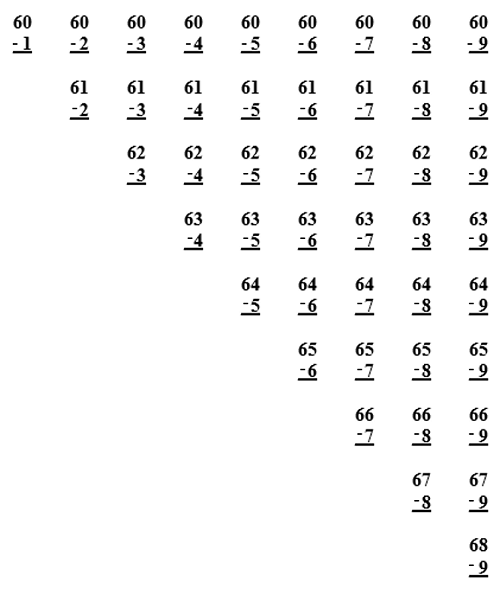
Math: Subtract Numbers Up to 70

STEP 1

  • Have the children write out and complete the subtraction exercises below on paper.

STEP 2

  • Assess mastery by reading aloud the listed problems and having the children mentally compute and recite the solutions.
  • If children have difficulties, have children redo their written practice with pencil and paper again and then reassess.

The Story of Doctor Dolittle Chapter 1: Puddleby

Chapter 1: Puddleby

Once upon a time, many years ago-when our grandfathers were little children-there was a doctor; and his name was Dolittle-John Dolittle, M.D. “M.D.” means that he was a proper doctor and knew a whole lot.

He lived in a little town called, Puddleby-on-the-Marsh. All the folks, young and old, knew him well by sight. And whenever he walked down the street in his high hat everyone would say, “There goes the Doctor!-He’s a clever man.” And the dogs and the children would all run up and follow behind him; and even the crows that lived in the church-tower would caw and nod their heads.

The house he lived in, on the edge of the town, was quite small; but his garden was very large and had a wide lawn and stone seats and weeping-willows hanging over. His sister, Sarah Dolittle, was housekeeper for him; but the Doctor looked after the garden himself.

He was very fond of animals and kept many kinds of pets. Besides the gold-fish in the pond at the bottom of his garden, he had rabbits in the pantry, white mice in his piano, a squirrel in the linen closet and a hedgehog in the cellar. He had a cow with a calf too, and an old lame horse-twenty-five years of age-and chickens, and pigeons, and two lambs, and many other animals. But his favorite pets were Dab-Dab the duck, Jip the dog, Gub-Gub the baby pig, Polynesia the parrot, and the owl Too-Too.

His sister used to grumble about all these animals and said they made the house untidy. And one day when an old lady with rheumatism came to see the Doctor, she sat on the hedgehog who was sleeping on the sofa and never came to see him anymore, but drove every Saturday all the way to Oxenthorpe, another town ten miles off, to see a different doctor.

Then his sister, Sarah Dolittle, came to him and said,

“John, how can you expect sick people to come and see you when you keep all these animals in the house? It’s a fine doctor would have his parlor full of hedgehogs and mice! That’s the fourth personage these animals have driven away. Squire Jenkins and the Parson say they wouldn’t come near your house again-no matter how sick they are. We are getting poorer every day. If you go on like this, none of the best people will have you for a doctor.”

“But I like the animals better than the ‘best people’,” said the Doctor.

“You are ridiculous,” said his sister, and walked out of the room.

So, as time went on, the Doctor got more and more animals; and the people who came to see him got less and less. Till at last he had no one left-except the Cat’s-meat-Man, who didn’t mind any kind of animals. But the Cat’s-meat-Man wasn’t very rich and he only got sick once a year-at Christmas-time, when he used to give the Doctor sixpence for a bottle of medicine.

Sixpence a year wasn’t enough to live on-even in those days, long ago; and if the Doctor hadn’t had some money saved up in his money-box, no one knows what would have happened.

And he kept on getting still more pets; and of course it cost a lot to feed them. And the money he had saved up grew littler and littler.

Then he sold his piano and let the mice live in a bureau-drawer. But the money he got for that too began to go, so he sold the brown suit he wore on Sundays and went on becoming poorer and poorer.

And now, when he walked down the street in his high hat, people would say to one another, “There goes John Dolittle, M.D.! There was a time when he was the best known doctor in the West Country-Look at him now-He hasn’t any money and his stockings are full of holes!”

But the dogs and the cats and the children still ran up and followed him through the town-the same as they had done when he was rich.