A place to grow your relationship with God

Posts tagged ‘homeschooling’

The Story of Doctor Dolittle Chapter 4: A Message from Africa

Chapter 4: A Message from Africa

That winter was a very cold one. And one night in December, when they were all sitting round the warm fire in the kitchen, and the Doctor was reading aloud to them out of books he had written himself in animal-language, the owl, Too-Too, suddenly said,

“Sh! What’s that noise outside?”

They all listened; and presently they heard the sound of someone running. Then the door flew open and the monkey, Chee-Chee, ran in, badly out of breath.

“Doctor!” he cried, “I’ve just had a message from a cousin of mine in Africa. There is a terrible sickness among the monkeys out there. They are all catching it-and they are dying in hundreds. They have heard of you, and beg you to come to Africa to stop the sickness.”

“Who brought the message?” asked the Doctor, taking off his spectacles and laying down his book.

“A swallow,” said Chee-Chee. “She is outside on the rain-butt.”

“Bring her in by the fire,” said the Doctor. “She must be perished with the cold. The swallows flew South six weeks ago!”

So the swallow was brought in, all huddled and shivering; and although she was a little afraid at first, she soon got warmed up and sat on the edge of the mantelpiece and began to talk.

When she had finished the Doctor said,

“I would gladly go to Africa-especially in this bitter weather. But I’m afraid we haven’t money enough to buy the tickets. Get me the money-box, Chee-Chee.”

So the monkey climbed up and got it off the top shelf of the dresser.

There was nothing in it-not a single penny!
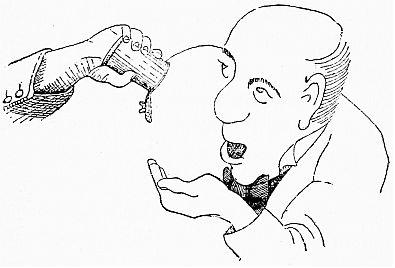
“I felt sure there was twopence left,” said the Doctor.

“There was” said the owl. “But you spent it on a rattle for that badger’s baby when he was teething.”

“Did I?” said the Doctor-“dear me, dear me! What a nuisance money is, to be sure! Well, never mind. Perhaps if I go down to the seaside I shall be able to borrow a boat that will take us to Africa. I knew a seaman once who brought his baby to me with measles. Maybe he’ll lend us his boat-the baby got well.”

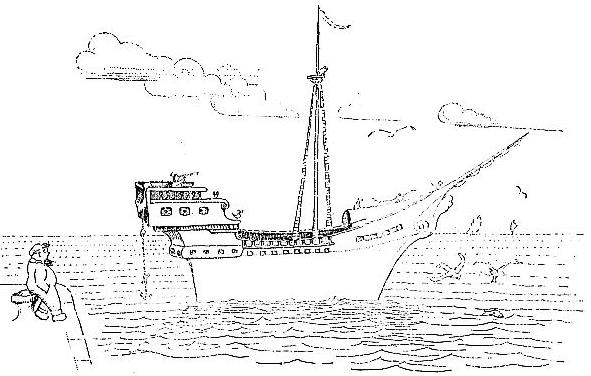
So early the next morning the Doctor went down to the sea-shore. And when he came back he told the animals it was all right-the sailor was going to lend them the boat.

Then the crocodile and the monkey and the parrot were very glad and began to sing, because they were going back to Africa, their real home. And the Doctor said,

“I shall only be able to take you three-with Jip the dog, Dab-Dab the duck, Gub-Gub the pig and the owl, Too-Too. The rest of the animals, like the dormice and the water-voles and the bats, they will have to go back and live in the fields where they were born till we come home again. But as most of them sleep through the Winter, they won’t mind that-and besides, it wouldn’t be good for them to go to Africa.”

So then the parrot, who had been on long sea-voyages before, began telling the Doctor all the things he would have to take with him on the ship.

“You must have plenty of pilot-bread,” she said-“‘hardtack’ they call it. And you must have beef in cans-and an anchor.”

“I expect the ship will have its own anchor,” said the Doctor.

“Well, make sure,” said Polynesia. “Because it’s very important. You can’t stop if you haven’t got an anchor. And you’ll need a bell.”

“What’s that for?” asked the Doctor.

“To tell the time by,” said the parrot. “You go and ring it every half-hour and then you know what time it is. And bring a whole lot of rope-it always comes in handy on voyages.”

Then they began to wonder where they were going to get the money from to buy all the things they needed.

“Oh, bother it! Money again,” cried the Doctor. “Goodness! I shall be glad to get to Africa where we don’t have to have any! I’ll go and ask the grocer if he will wait for his money till I get back-No, I’ll send the sailor to ask him.”

So the sailor went to see the grocer. And presently he came back with all the things they wanted.

Then the animals packed up; and after they had turned off the water so the pipes wouldn’t freeze, and put up the shutters, they closed the house and gave the key to the old horse who lived in the stable. And when they had seen that there was plenty of hay in the loft to last the horse through the Winter, they carried all their luggage down to the seashore and got on to the boat.

The Cat’s-meat-Man was there to see them off; and he brought a large suet-pudding as a present for the Doctor because, he said he had been told, you couldn’t get suet-puddings in foreign parts.

As soon as they were on the ship, Gub-Gub, the pig, asked where the beds were, for it was four o’clock in the afternoon and he wanted his nap. So Polynesia took him downstairs into the inside of the ship and showed him the beds, set all on top of one another like book-shelves against a wall.

“Why, that’s not a bed!” cried Gub-Gub. “That’s a shelf!”

“Beds are always like that on ships,” said the parrot. “It isn’t a shelf. Climb up into it and go to sleep. That’s what you call ‘a bunk.'”

“I don’t think I’ll go to bed yet,” said Gub-Gub. “I’m too excited. I want to go upstairs again and see them start.”

“Well, this is your first trip,” said Polynesia. “You will get used to the life after a while.” And she went back up the stairs of the ship, humming this song to herself,

I’ve seen the Black Sea and the Red Sea;

I rounded the Isle of Wight;

I discovered the Yellow River,

And the Orange too-by night.

Now Greenland drops behind again,

And I sail the ocean Blue.

I’m tired of all these colors, Jane,

So I’m coming back to you.

They were just going to start on their journey, when the Doctor said he would have to go back and ask the sailor the way to Africa.

But the swallow said she had been to that country many times and would show them how to get there.

So, the Doctor told Chee-Chee to pull up the anchor and the voyage began.
Math: US Money – The Nickel

Directions

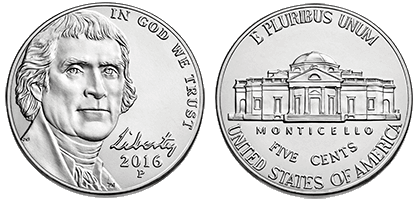
Gather 20 nickels and 100 pennies per child.

Have children complete the steps below.

Have children practice until they perfectly master each task.

STEP 1 – WHAT IS A NICKEL?

Children identify the nickel.

  • Direct the children to examine the front and back of a nickel. Ask the children to verbally describe what they see.
  • Have children hold up a nickel and recite, ‘1 nickel is worth 5 cents.’

STEP 2 – COMBINE AND SEPARATE

Children combine and separate groups of pennies and nickels.

  • Ask children to group 5 pennies together.
  • Tell children to move 1 nickel next to the 5 pennies. Have them recite, ‘1 nickel is worth 5 pennies.’
  • Ask children to group 10 pennies together.
  • Tell children to move 2 nickels next to the 10 pennies. Have them recite, ‘2 nickels are worth 10 pennies.’
  • Ask children to group 25 pennies together.
  • Tell children to move 5 nickels next to the 25 pennies. Have them recite, ‘5 nickels are worth 25 pennies.’
  • Ask children to group 100 pennies together.
  • Ask children to divide the 100 pennies into 4 groups of 25.
  • Tell children to move 20 nickels next to the 100 pennies. Have them recite, ’20 nickels are worth 100 pennies.’

STEP 3 – PLAY STORE

Play store with children, where children show the amount of money required to buy pretend items.

  • Give each child 2 nickels and 5 pennies. Say to children, ‘A toy ring costs 8 cents. Show me how many nickels and pennies must you give to the cashier.’
  • Give each child 5 nickels and 5 pennies. Say to children, ‘A toy monkey costs 24 cents. Show me how many nickels and pennies must you give to the cashier.’
  • Give each child 10 nickels and 5 pennies. Say to children, ‘A banana costs 42 cents. Show me how many nickels and pennies must you give to the cashier.’
  • Give each child 2 nickels. Say to children, ‘A piece of candy costs 9 cents. Show me how many nickels you must pay to the cashier. How many pennies should the cashier give to you as change?’
  • Give each child 5 nickels. Say to children, ‘A piece of candy costs 21 cents. Show me how many nickels you must pay to the cashier. How many pennies should the cashier give to you as change?’
  • Give each child 10 nickels. Say to children, ‘A piece of candy costs 47 cents. Show me how many nickels you must pay to the cashier. How many pennies should the cashier give to you as change?’
  • Give each child 20 nickels. Say to children, ‘A peach costs 87 cents. Show me how many nickels you must pay to the cashier. How many pennies should the cashier give to you as change?’

The Story of Dr. Dolittle: The Great Journey Supplemental Map

 Map the Story

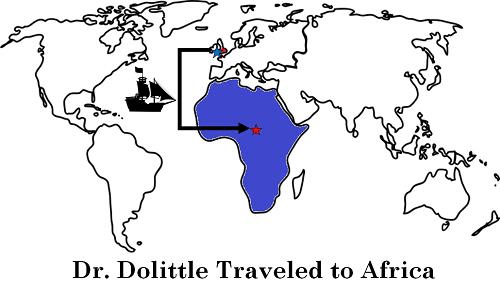
  • Look at the map below to get a rough idea of the voyage that Dr. Dolittle and the animals took to Africa.
  • Although we don’t know the exact location of the imaginary town of Puddleby, we know Puddleby is somewhere in England.
  • Although we don’t know the exact location of the imaginary kingdom of Jolliginki, we know Jolliginki is somewhere in Africa.
  • Trace the path from England to Africa with your finger. Remember, Dr. Dolittle and the animals travel by ship, so they do not cross any land.
  • Would you like to go on a sea voyage someday?

The Story of Mankind: Chivalry

It was quite natural that the professional fighting-men of the Middle Ages should try to establish some sort of organization for their mutual benefit and protection. Out of this need for close organization, Knighthood or Chivalry was born.

We know very little about the origins of Knighthood. But as the system developed, it gave the world something which it needed very badly—a definite rule of conduct which softened the barbarous customs of that day and made life more livable than it had been during the five hundred years of the Dark Ages. It was not an easy task to civilize the rough frontiersmen who had spent most of their time fighting Muslims and Huns and Norsemen. Often, they were guilty of backsliding and having vowed all sorts of oaths about mercy and charity in the morning, they would murder all their prisoners before evening. But progress is ever the result of slow and ceaseless labor, and finally the most unscrupulous of knights was forced to obey the rules of his “class” or suffer the consequences.

These rules were different in the various parts of Europe, but they all made much of “service” and “loyalty to duty.” The Middle Ages regarded service as something very noble and beautiful. It was no disgrace to be a servant, provided you were a good servant and did not slacken on the job. As for loyalty, at a time when life depended upon the faithful performance of many unpleasant duties, it was the chief virtue of the fighting man.

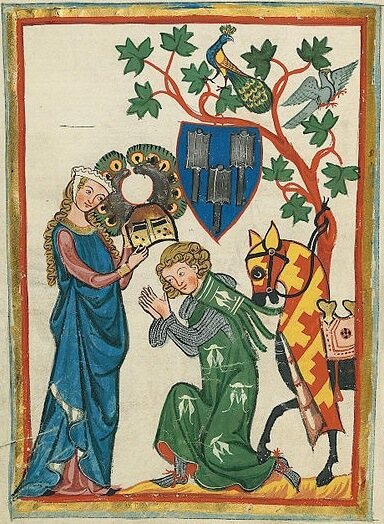
A young knight therefore was asked to swear that he would be faithful as a servant to God and as a servant to his King. Furthermore, he promised to be generous to those whose need was greater than his own. He pledged his word that he would be humble in his personal behavior and would never boast of his own accomplishments and that he would be a friend of all those who suffered, (with the exception of the Muslims, whom he was expected to kill on sight).

Around these vows, which were merely the Ten Commandments expressed in terms which the people of the Middle Ages could understand, there developed a complicated system of manners and outward behavior. The knights tried to model their own lives after the example of those heroes of Arthur’s Round Table and Charlemagne’s court of whom the troubadours had told them and of whom you may read in many delightful books which are enumerated at the end of this volume. They hoped that they might prove as brave as Lancelot and as faithful as Roland. They carried themselves with dignity and they spoke careful and gracious words that they might be known as True Knights, however humble the cut of their coat or the size of their purse.

In this way the order of Knighthood became a school of those good manners which are the oil of the social machinery. Chivalry came to mean courtesy and the feudal castle showed the rest of the world what clothes to wear, how to eat, how to ask a lady for a dance and the thousand and one little things of every-day behavior which help to make life interesting and agreeable.

Like all human institutions, Knighthood was doomed to perish as soon as it had outlived its usefulness.

The crusades, about which one of the next chapters tells, were followed by a great revival of trade. Cities grew overnight. The townspeople became rich, hired good school teachers and soon were the equals of the knights. The invention of gunpowder deprived the heavily armed “Chevalier” of his former advantage and the use of mercenaries made it impossible to conduct a battle with the delicate niceties of a chess tournament. The knight became superfluous. Soon he became a ridiculous figure, with his devotion to ideals that had no longer any practical value. It was said that the literary character of the noble Don Quixote de la Mancha represented the last of the true knights. In the story, after his death, his trusted sword and his armor were sold to pay his debts.

But somehow or other that sword seems to have fallen into the hands of a number of real men in history. General George Washington carried it during the hopeless days of Valley Forge amid the American Revolution. It was the only defense of British Army officer Major-General Charles George Gordon, when he had refused to desert the people who had been entrusted to his care, and stayed to meet his death in the besieged fortress of Khartoum in Sudan.

And I am not quite sure but that it proved of invaluable strength in winning the Great War.

The Story of Doctor Dolittle Chapter 3: More Money Troubles Vocabulary

Chapter 3: More Money Troubles

Vocabulary

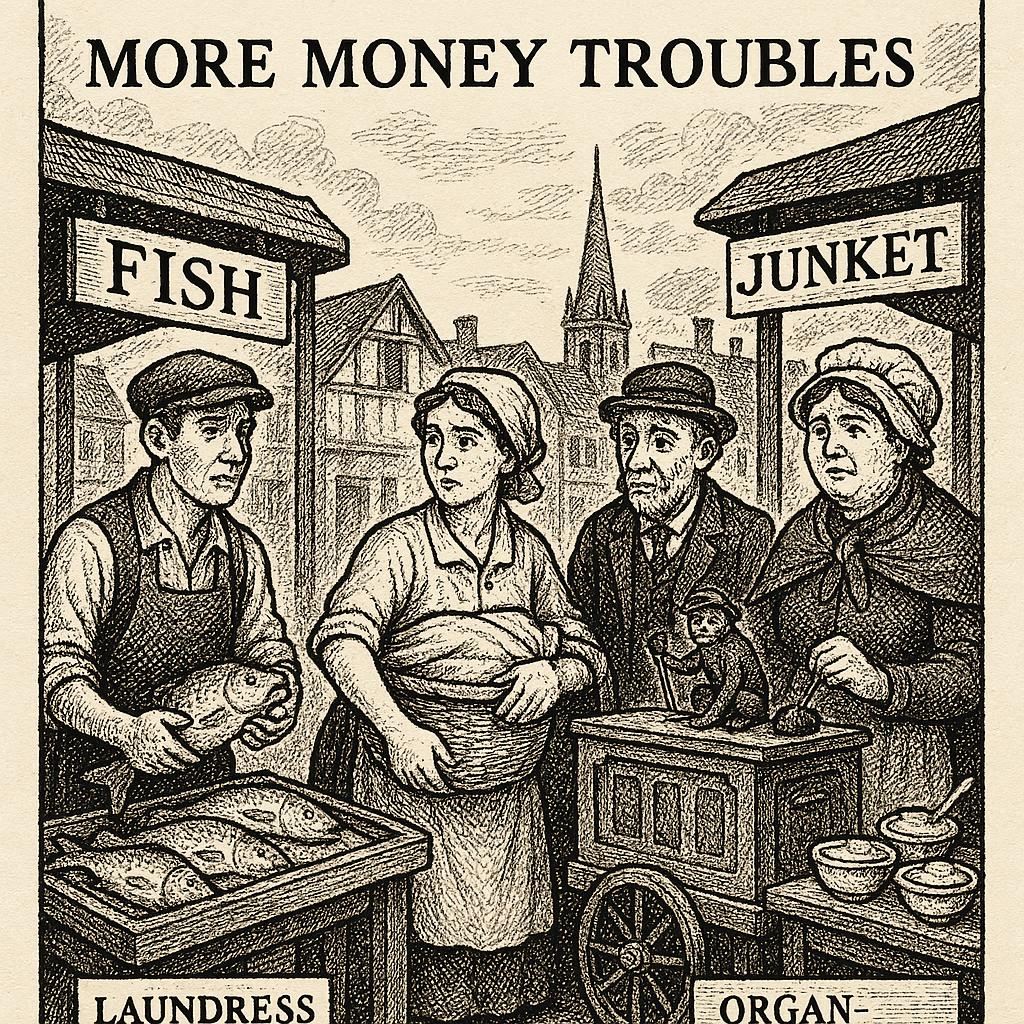
Stall: A stand or booth for the sale of goods.
Laundress: A woman who washes laundry for a living.
Fishmonger: A person who sells fish for a living.
Junket: A dish of sweetened and flavored curds of milk, often served with fruit.
Organ-grinder: A street musician who plays a type of organ.

The Story of Doctor Dolittle Chapter 3: More Money Troubles

Chapter 3: More Money Troubles

And soon now the Doctor began to make money again; and his sister, Sarah, bought a new dress and was happy.

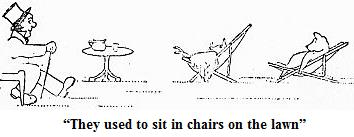
Some of the animals who came to see him were so sick that they had to stay at the Doctor’s house for a week. And when they were getting better they used to sit in chairs on the lawn.

And often even after they got well, they did not want to go away-they liked the Doctor and his house very much. And he never had the heart to refuse them when they asked if they could stay with him. So in this way he went on getting more and more pets.

Once when he was sitting on his garden wall, smoking a pipe in the evening, an Italian organ-grinder came round with a monkey on a string. The Doctor saw at once that the monkey’s collar was too tight and that he was dirty and unhappy. So he took the monkey away from the Italian, gave the man a shilling and told him to go. The organ-grinder got awfully angry and said that he wanted to keep the monkey. But the Doctor told him that if he didn’t go away he would punch him on the nose. John Dolittle was a strong man, though he wasn’t very tall. So the Italian went away saying rude things and the monkey stayed with Doctor Dolittle and had a good home. The other animals in the house called him “Chee-Chee”-which is a common word in monkey-language, meaning “ginger.”

And another time, when the circus came to Puddleby, the crocodile who had a bad toothache escaped at night and came into the Doctor’s garden. The Doctor talked to him in crocodile-language and took him into the house and made his tooth better. But when the crocodile saw what a nice house it was-with all the different places for the different kinds of animals-he too wanted to live with the Doctor. He asked couldn’t he sleep in the fish-pond at the bottom of the garden, if he promised not to eat the fish. When the circus-men came to take him back he got so wild and savage that he frightened them away. But to everyone in the house he was always as gentle as a kitten.

But now the old ladies grew afraid to send their lap-dogs to Doctor Dolittle because of the crocodile; and the farmers wouldn’t believe that he would not eat the lambs and sick calves they brought to be cured. So the Doctor went to the crocodile and told him he must go back to his circus. But he wept such big tears, and begged so hard to be allowed to stay, that the Doctor hadn’t the heart to turn him out.

So then the Doctor’s sister came to him and said,

“John, you must send that creature away. Now the farmers and the old ladies are afraid to send their animals to you-just as we were beginning to be well off again. Now we shall be ruined entirely. This is the last straw. I will no longer be housekeeper for you if you don’t send away that alligator.”

“It isn’t an alligator,” said the Doctor-“it’s a crocodile.”

“I don’t care what you call it,” said his sister. “It’s a nasty thing to find under the bed. I won’t have it in the house.”

“But he has promised me,” the Doctor answered, “that he will not bite any one. He doesn’t like the circus; and I haven’t the money to send him back to Africa where he comes from. He minds his own business and on the whole is very well behaved. Don’t be so fussy.”

“I tell you I will not have him around,” said Sarah. “He eats the linoleum. If you don’t send him away this minute I’ll-I’ll go and get married!”

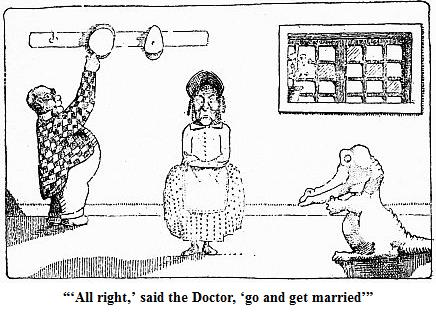
“All right,” said the Doctor, “go and get married. It can’t be helped.” And he took down his hat and went out into the garden.

So, Sarah Dolittle packed up her things and went off; and the Doctor was left all alone with his animal family.

And very soon he was poorer than he had ever been before. With all these mouths to feed, and the house to look after, and no one to do the mending, and no money coming in to pay the butcher’s bill, things began to look very difficult. But the Doctor didn’t worry at all.

“Money is a nuisance,” he used to say. “We’d all be much better off if it had never been invented. What does money matter, so long as we are happy?”

But soon the animals themselves began to get worried. And one evening when the Doctor was asleep in his chair before the kitchen-fire they began talking it over among themselves in whispers. And the owl, Too-Too, who was good at arithmetic, figured it out that there was only money enough left to last another week-if they each had one meal a day and no more.

Then the parrot said, “I think we all ought to do the housework ourselves. At least we can do that much. After all, it is for our sakes that the old man finds himself so lonely and so poor.”

So it was agreed that the monkey, Chee-Chee, was to do the cooking and mending; the dog was to sweep the floors; the duck was to dust and make the beds; the owl, Too-Too, was to keep the accounts, and the pig was to do the gardening. They made Polynesia, the parrot, housekeeper and laundress, because she was the oldest.

Of course at first they all found their new jobs very hard to do-all except Chee-Chee, who had hands, and could do things like a man. But they soon got used to it; and they used to think it great fun to watch Jip, the dog, sweeping his tail over the floor with a rag tied onto it for a broom. After a little they got to do the work so well that the Doctor said that he had never had his house kept so tidy or so clean before.

In this way things went along all right for a while; but without money they found it very hard.

Then the animals made a vegetable and flower stall outside the garden-gate and sold radishes and roses to the people that passed by along the road.

But still they didn’t seem to make enough money to pay all the bills-and still the Doctor wouldn’t worry. When the parrot came to him and told him that the fishmonger wouldn’t give them anymore fish, he said,

“Never mind. So long as the hens lay eggs and the cow gives milk we can have omelettes and junket. And there are plenty of vegetables left in the garden. The Winter is still a long way off. Don’t fuss. That was the trouble with Sarah-she would fuss. I wonder how Sarah’s getting on-an excellent woman-in some ways-Well, well!”

But the snow came earlier than usual that year; and although the old lame horse hauled in plenty of wood from the forest outside the town, so they could have a big fire in the kitchen, most of the vegetables in the garden were gone, and the rest were covered with snow; and many of the animals were really hungry.

Math: US Money – The Penny

Yes, I am aware that the penny has been discontinued. However, I believe that the exercises will still benefit the child in learning to count and do math.

Directions

Gather 100 pennies per child. If need be, substitute another item for the penny

Have children complete the steps below.

Have children practice until they perfectly master each task.

STEP 1 – WHAT IS A PENNY?

Children identify the penny. This is a good time to explain that the penny was available in the US for many years. However, it has since been discontinued.

  • Direct the children to examine the front and back of a penny. Ask the children to verbally describe what they see.
  • Have children hold up a penny and recite, ‘1 penny is worth 1 cent.’

STEP 2 – COMBINE AND SEPARATE

Children combine and separate pennies.

  • Ask children to group 5 pennies together.
  • Have children group 10 pennies together.
  • Ask children to divide the 10 pennies into 2 groups of 5.
  • Have children group 25 pennies together.
  • Ask children to divide the 25 pennies into 5 groups of 5.
  • Have children group 100 pennies together.
  • Ask children to divide the 100 pennies into 10 groups of 10.
  • Ask children to divide the 100 pennies into 4 groups of 25.
  • Have children divide the 100 pennies into 5 groups of 20.
  • Ask children, ‘How many cents is one penny worth?’

STEP 3 – PLAY STORE

Play store with children, where children show the amount of money required to buy pretend items.

  • Say to children, ‘You decide to buy a toy boat for 51 cents. Show me how many pennies you must pay the cashier.’
  • Say to children, ‘You decide to buy an apple for 76 cents. Show me how many pennies you must pay the cashier.’
  • Say to children, ‘You decide to buy a cookie for 33 cents. Show me how many pennies you must pay the cashier.’

Math: Subtract Numbers Up to 100

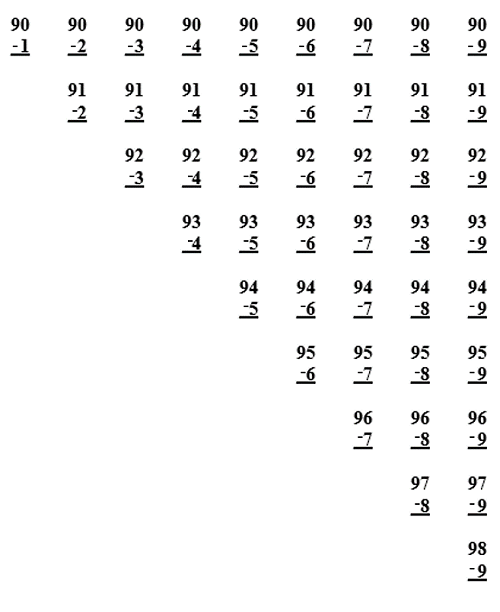
STEP 1

  • Have the children write out and complete the subtraction exercises below on paper.

STEP 2

  • Assess mastery by reading aloud the listed problems and having the children mentally compute and recite the solutions.
  • If children have difficulties, have children redo their written practice with pencil and paper again and then reassess.

The Story of Doctor Dolittle Chapter 2 Vocabulary    

Chapter 2: Animal Language

Vocabulary

Veterinarian: A person qualified to treat diseased or injured animals.
Spectacles: Glasses.
Plow-horse: A horse used to pull a plow, a large bladed farming implement used to turn soil over in preparation for the planting of seeds.
Polynesia: A subregion containing 1000 southern Pacific Ocean islands.
Acre: A unit of land area.

Chapter 2: The Open Road Vocabulary Words

The Wind in the Willows by Kenneth Grahame     

Chapter 2: The Open Road Vocabulary Words

Fitments: Fixed item of furniture.
Voluble: Talkative.
Paddock: A small field or enclosure where horses are kept.
Nosebags: A strong canvas or leather bag containing grain, fastened over a horse’s muzzle for feeding.
Wayfarers: A person who travels on foot.
Henceforth: From this time on.