A place to grow your relationship with God

Posts tagged ‘Jesus’

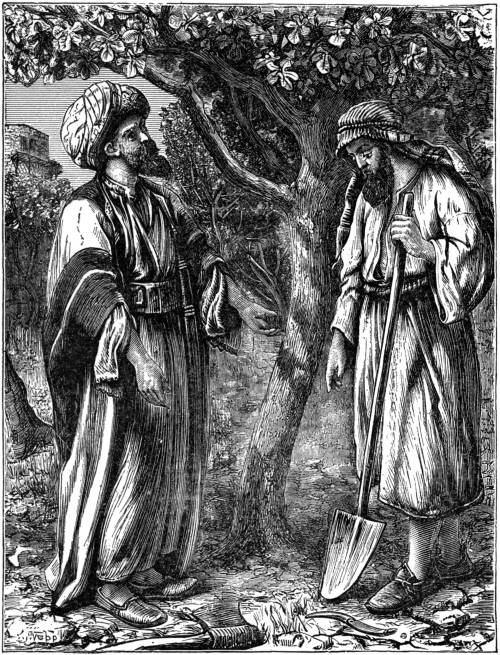
THE UNFRUITFUL TREE

THE UNFRUITFUL TREE

A certain man had a fig-tree planted in his vineyard, and he came and sought fruit thereon, but found none. Then he called to the gardener who attended to his vineyard, and said to him, “Behold these three years I come seeking fruit on this fig-tree, and find none. Cut it down. Why does it encumber the ground?”

The gardener answered him and said, “Lord, let it alone this year also, till I shall dig about it and manure it. And if it bear fruit then, it is well; but if not, then, after that, thou shalt cut it down.”

In this parable the vineyard means the world, and the fig-tree ungodly people whose lives do not produce good works—do not produce fruit in the service of God. The Lord of the vineyard, that is, God, would destroy such people, but Christ intercedes in their behalf, that time for repentance may be given. “He is not willing that any should perish, but that all should come to repentance.” Christ came and sought to change men’s hearts, and make their lives fruitful for God. The warning has been given, and when the Lord of the vineyard comes again to seek good fruit the unfruitful trees shall be destroyed.

Am I a barren tree, dear Lord? A cumberer of the ground. OH! give me grace to fruitful be, And in Thy work abound.
THE UNFRUITFUL TREE

Paul’s Missionary Journeys: From Thessalonica to Athens

Paul was a chosen vessel (Acts9:15). His mission was to bear the name of the Lord before the Gentiles, kings, and Israelites. Paul took three missionary journeys: Thessalonica, Berea, and then Athens. In Acts 17, Paul preached in Thessalonica and Berea, and then Athens.

Paul on Mar’s Hill

  • Mar’s Hill: Strong’s G697 – areios pagos
    • Ἄρειος Πάγος Áreios Págos, ar’-i-os pag’-os; from Ἄρης Árēs (the name of the Greek deity of war) and a derivative of G4078; rock of Ares, a place in Athens:—Areopagus, Mars’ Hill.
  • His discussions were with the philosophers of Athens.
    • Acts 17:18-19 Then certain philosophers of the Epicureans, and of the Stoicks, encountered him. And some said, What will this babbler say? other some, He seemeth to be a setter forth of strange gods: because he preached unto them Jesus, and the resurrection. And they took him, and brought him unto Areopagus, saying, May we know what this new doctrine, whereof thou speakest, is?
  • Paul preached to the Athenians about their altar with the dedication to the unknown god.
    •  Acts 17:22 Then Paul stood in the midst of Mars’ hill, and said, Ye men of Athens, I perceive that in all things ye are too superstitious. For as I passed by, and beheld your devotions, I found an altar with this inscription, To The Unknown God. Whom therefore ye ignorantly worship, him declare I unto you.
    • Notice that he started with something that they knew about and then explained things from that starting point.
  • Paul preached the message of one God who is self-existing, the giver and supported of life.
    • Acts 17:24-26 God that made the world and all things therein, seeing that he is Lord of heaven and earth, dwelleth not in temples made with hands; Neither is worshipped with men’s hands, as though he needed any thing, seeing he giveth to all life, and breath, and all things; And hath made of one blood all nations of men for to dwell on all the face of the earth, and hath determined the times before appointed, and the bounds of their habitation;
  • He explained that everyone could find the Lord.
    • Acts 17:27 That they should seek the Lord, if haply they might feel after him, and find him, though he be not far from every one of us:
    • Jeremiah 29:13 And ye shall seek me, and find me, when ye shall search for me with all your heart.
  • Paul declared that God tolerated the foolishness of people for a while, but not anymore.
    •  Acts 17:30 And the times of this ignorance God winked at; but now commandeth all men every where to repent:
  • Paul explained that judgement would come by Jesus, who rose from the dead.
    • Acts 17:31 Because he hath appointed a day, in the which he will judge the world in righteousness by that man whom he hath ordained; whereof he hath given assurance unto all men, in that he hath raised him from the dead.
  • Some mocked Paul, some wanted to hear more about it, and others believed.
    • Acts 17:32-34 And when they heard of the resurrection of the dead, some mocked: and others said, “We will hear thee again of this matter“. So Paul departed from among them. Howbeit certain men clave unto him, and believed: among the which was Dionysius the Areopagite, and a woman named Damaris, and others with them.

Paul in Prison writing Epistles

  • An important part of Paul’s ministry was writing letters (Epistles) of instructions to the various churches.
  • Paul wrote some of them while in prison and awaiting trial.
  • While imprisoned, Paul witnessed to many of the guards and visitors.
  • Paul was finally put to death.
    • 2 Timothy 4:6-8 For I am now ready to be offered, and the time of my departure is at hand. I have fought a good fight, I have finished my course, I have kept the faith: Henceforth there is laid up for me a crown of righteousness, which the Lord, the righteous judge, shall give me at that day: and not to me only, but unto all them also that love his appearing.

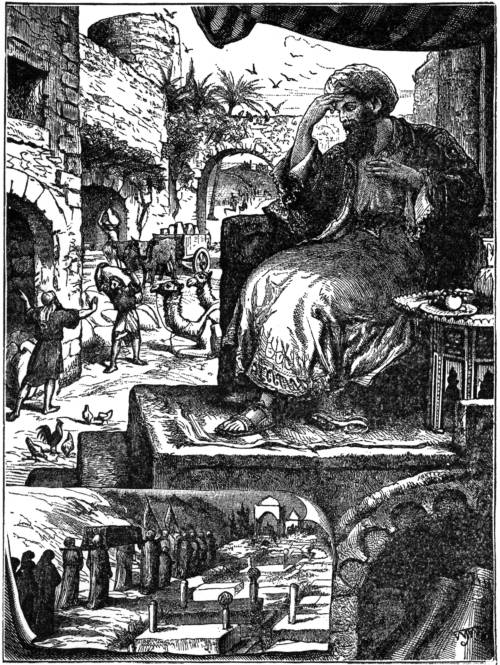
The Rich Fool

THE RICH FOOL

There was a certain rich man who owned much land. And his fields and vineyards were so productive that when the time of harvest came, he had not room enough to store his corn and fruits. So, after much thought he said, “This will I do. I will pull down my barns and build greater ones, and there will I store all my fruits and my goods. Then I can say to myself, ‘I have great store of goods laid up, enough for many years; now I can take mine ease, eat, drink, and be merry.'”

THE RICH FOOL

But God said unto him, “Thou fool, this night thy soul shall be required of thee; then whose shall those things be which thou hast hoarded?”

Jesus says it shall be so with all those who set their minds upon storing up riches in this world, rather than laying up treasures in heaven by pleasing God and working in His service. Death will come when they least expect it, and they will have to leave all their earthly riches, and go where no treasure has been laid up for them.

And He said unto His disciples, “Take no thought for your life, what ye shall eat; neither for the body, what ye shall put on; for the life is more than meat, and the body more than raiment. For all these things do the nations of the world seek after, and your Father knoweth that ye have need of these things. But rather seek ye the kingdom of God; and all these things shall be added unto you. Fear not, for it is the Father’s good pleasure to give you the kingdom. Sell what ye have and give alms; provide yourselves a treasure in the heavens that faileth not, where no thief approacheth, or moth corrupteth.”

The Children’s Six Minutes: The Human Kodak

THE HUMAN KODAK

I wonder how many of you have a kodak. Yes, many of you own one. What a wonderful little machine a kodak is! First we buy a film, then we open the kodak and place the film. Now pull the paper over to the empty roll and fasten, close the kodak and begin to wind. Oh, here you are, No. 1. The day is clear, for we must have a clear day to get the best picture. We hold the kodak very steady, then snap, we have it. Next we pull a little slide in the back, take a pencil and write down the date and name. Let me see, what was that picture? Oh, yes, “Chrysanthemum (is that the way to spell it?) exhibition.” Next the films are developed, and the kodak pictures are complete, all but pasting them in a big book.

For all that the kodak is a whole lot of fuss, isn’t it? But, do you know, each one of us has a kodak God has given him which works itself. We have the open circle through which the pictures are taken, our eyes, and beyond the eyes, in the brain, are thousands of films. We start out in the morning and the moment we open our eyes we begin exposing those films. We do not have to do any clicking for these pictures, one after another, click, click, click, and they are developed as fast as they are taken.

If you should say to a man who has reached three score years and ten, “Tell me the clearest picture you can remember,” he would not show a picture that was taken yesterday, or last week, or last year. He would turn back the pages of his memory book fifty, sixty years. The clearest pictures he possesses are those that were snapped in his boyhood. Every day you are taking pictures that are going to remain with you as long as you live. Let us resolve, girls and boys, that as we go out each morning and our human kodak begins clicking, we shall take only pictures that are true, pure and clean.

MEMORY VERSE, Proverbs 4: 25

“Let thine eyes look right on, and let thine eyelids look straight before thee.”

MEMORY HYMN

“O for a thousand tongues to sing My great Redeemer’s praise.”

The Red Heifer Sacrifice Compared to Jesus’ Sacrifice

THE ASHES OF THE RED HEIFER
One of the most intriguing symbols of the coming Messiah is the unique sacrifice of a red heifer, as described in Numbers chapter 19. Every detail of this special offering, both in Scripture and Jewish tradition, beautifully illustrates the suffering of the Messiah and the cleansing power of His death to purify the unclean.

First, all other sacrifices were male, and this was a female offering. Second, the color is specific.
The sacrifice of the red heifer, called in Hebrew the Parah Adumah, is perhaps the most unusual of all the required sacrifices. The Scripture emphasizes that the red heifer must be without spot or blemish and must never have worn a yoke. This entire offering is a detailed type and shadow of the future crucifixion of Christ.

  • The offering was a female sacrifice (Num. 19:2)
    • This was significant because it represents the church. Remember that Christ died and redeemed a Bride
      •  Ephesians 5:25-27Husbands, love your wives, even as Christ also loved the church, and gave himself for it; That he might sanctify and cleanse it with the washing of water by the word, That he might present it to himself a glorious church, not having spot, or wrinkle, or any such thing; but that it should be holy and without blemish.
  • The heifer was without blemish (Num, 19:2)
    • Christ was without blemish
      • 1 Peter 1:19 But with the precious blood of Christ, as of a lamb without blemish and without spot:
  • The heifer was offered (outside) the camp (Num. 19:3)
    • Christ was crucified (outside) the gate.
      • Heb. 13:11-12 For the bodies of those beasts, whose blood is brought into the sanctuary by the high priest for sin, are burned without the camp. Wherefore Jesus also, that he might sanctify the people with his own blood, suffered without the gate.
  • The priest watched while others slew it (Num. 19:3)
    • The priests looked on at the crucifixion.
      • Matthew 27:41-42 Likewise also the chief priests mocking him, with the scribes and elders, said, He saved others; himself he cannot save. If he be the King of Israel, let him now come down from the cross, and we will believe him.
  • The blood was sprinkled seven times (Num. 19:4)
    • The seven places where Christ shed His blood are:
      • On His head with the crown of thorns.
        • Matthew 27:29 And when they had platted a crown of thorns, they put it upon his head, and a reed in his right hand: and they bowed the knee before him, and mocked him, saying, Hail, King of the Jews!
      • On His back when He was scourged.
        • Mark 15:15 And so Pilate, willing to content the people, released Barabbas unto them, and delivered Jesus, when he had scourged him, to be crucified.
      • On His left hand where He was crucified.
        • John 20:27 Then saith he to Thomas, Reach hither thy finger, and behold my hands; and reach hither thy hand, and thrust it into my side: and be not faithless, but believing.
      • On His right hand where He was crucified.
        • John 20:27 Then saith he to Thomas, Reach hither thy finger, and behold my hands; and reach hither thy hand, and thrust it into my side: and be not faithless, but believing.
      • On His left foot where He was crucified.
        • Luke 24:39-40 Behold my hands and my feet, that it is I myself: handle me, and see; for a spirit hath not flesh and bones, as ye see me have. And when he had thus spoken, he shewed them his hands and his feet.
      • On His right foot where He was crucified.
        • Luke 24:39-40 Behold my hands and my feet, that it is I myself: handle me, and see; for a spirit hath not flesh and bones, as ye see me have. And when he had thus spoken, he shewed them his hands and his feet.
      • On His side after His death.
        • John 19:34 But one of the soldiers with a spear pierced his side, and forthwith came there out blood and water.
  • The entire offering was burned (Num. 19:5)
    • It is prophesied that Jesus’s body would not see corruption. It also says that his soul will not stay in Hell.
      • Palms 16:10 For thou wilt not leave my soul in hell; neither wilt thou suffer thine Holy One to see corruption.
    • Jesus taught that those in hell was tormented in flame.
      • Luke 16:22-26 And it came to pass, that the beggar died, and was carried by the angels into Abraham’s bosom: the rich man also died, and was buried; And in hell he lift up his eyes, being in torments, and seeth Abraham afar off, and Lazarus in his bosom. And he cried and said, Father Abraham, have mercy on me, and send Lazarus, that he may dip the tip of his finger in water, and cool my tongue; for I am tormented in this flame. But Abraham said, Son, remember that thou in thy lifetime receivedst thy good things, and likewise Lazarus evil things: but now he is comforted, and thou art tormented. And beside all this, between us and you there is a great gulf fixed: so that they which would pass from hence to you cannot; neither can they pass to us, that would come from thence.
    • Christ’s body was the final offering.
      • Hebrews 10:8-10 Above when he said, Sacrifice and offering and burnt offerings and offering for sin thou wouldest not, neither hadst pleasure therein; which are offered by the law; Then said he, Lo, I come to do thy will, O God. He taketh away the first, that he may establish the second. By the which will we are sanctified through the offering of the body of Jesus Christ once for all.
  • Scarlet was placed into the fire. (Num. 19.6)
    • A scarlet robe was placed on Christ.
      • Matt. 27:27-28 Then the soldiers of the governor took Jesus into the common hall, and gathered unto him the whole band of soldiers. And they stripped him, and put on him a scarlet robe.
  • Wood was placed into the fire. (Num. 19:6)
    • Christ was crucified on a wooden cross.
      • 1 Peter 2:24 Who his own self bare our sins in his own body on the tree, that we, being dead to sins, should live unto righteousness: by whose stripes ye were healed.
  • Hyssop was placed into the fire (Num. 19:6).
    • Hyssop was placed to Christ’s lips.
      • John 19:28-30 After this, Jesus knowing that all things were now accomplished, that the scripture might be fulfilled, saith, I thirst. Now there was set a vessel full of vinegar: and they filled a spunge with vinegar, and put it upon hyssop, and put it to his mouth. When Jesus therefore had received the vinegar, he said, It is finished: and he bowed his head, and gave up the ghost.
  • The ashes were for water of separation (Num. 19.9).
    • Jesus is the Word (click to learn more)
      • John 1:1 In the beginning was the Word, and the Word was with God, and the Word was God.
    • We are washed by the water of the word.
      • Ephesians 5:25-27Husbands, love your wives, even as Christ also loved the church, and gave himself for it; That he might sanctify and cleanse it with the washing of water by the word, That he might present it to himself a glorious church, not having spot, or wrinkle, or any such thing; but that it should be holy and without blemish.
    • Christ’s blood brings separation from sin.
      • 1 John 1:7 But if we walk in the light, as he is in the light, we have fellowship one with another, and the blood of Jesus Christ his Son cleanseth us from all sin.
  • The unclean were purified on the third day (Num. 19:12)
    • Christ arose victorious on the third day.
      • Matthew 16:21 From that time forth began Jesus to shew unto his disciples, how that he must go unto Jerusalem, and suffer many things of the elders and chief priests and scribes, and be killed, and be raised again the third day.
      • Matthew 28:6 He is not here: for he is risen, as he said. Come, see the place where the Lord lay.

After Christ declared, “It is finished,” the centurion pierced His side, and blood and water flowed out (John 19:34). This event holds deep significance, as these two elements were essential in the tabernacle (and later the temple) for purification. The blood from the sacrificial brass altar symbolized forgiveness and the removal of sin, while the water from the laver represented the purification or sanctification of the priest. Today, through the blood of Christ, we are both forgiven and sanctified. (See 1 Cor. 6:11 and Eph. 1:7)

Hebrews 9:11-15 But Christ being come an high priest of good things to come, by a greater and more perfect tabernacle, not made with hands, that is to say, not of this building; Neither by the blood of goats and calves, but by his own blood he entered in once into the holy place, having obtained eternal redemption for us. For if the blood of bulls and of goats, and the ashes of an heifer sprinkling the unclean, sanctifieth to the purifying of the flesh: How much more shall the blood of Christ, who through the eternal Spirit offered himself without spot to God, purge your conscience from dead works to serve the living God? And for this cause he is the mediator of the new testament, that by means of death, for the redemption of the transgressions that were under the first testament, they which are called might receive the promise of eternal inheritance.


Opinions differ on how many red heifers were sacrificed between the time of Moses and the destruction of the Second Temple in AD 70. Jewish tradition suggests that nine to twelve red heifers were offered, while the Mishnah Parah (Mishna Parah 3:4) specifically counts eight.

  • Moses as offering the first
  • Ezra offering the second,
  • Simon the just and Yochanan the High Priest offering two each
  • Elichonnai ben Hakka and Hanameel the Egyptian preparing one each

Weekly Recap of Articles for Christians posted Nov 2nd through Nov 8th

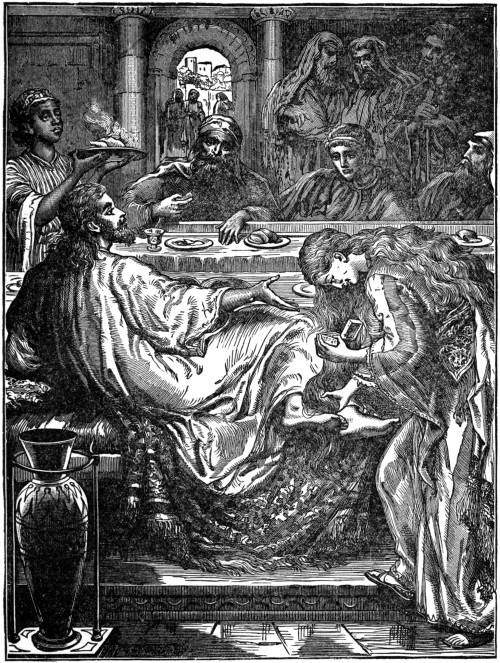
ANOINTING THE FEET OF JESUS

ANOINTING THE FEET OF JESUS

On one occasion, a proud Pharisee, whose name was Simon, invited Jesus to eat with him. But the invitation was a cold one. There was no kiss of welcome, no water to bathe His hot and dusty feet, no perfumed ointment for His head: nothing but a bare admission to a vacant place at the table was granted to Jesus. But there He reclined, His left elbow resting on a cushion, and His feet projecting beyond the edge of the couch.

Now it happened that a poor, sinful woman was passing, who, discovering that Jesus was in the house, timidly entered, and stood behind Him. She had an alabaster box of ointment, and, as she looked on Jesus, she wept. Her tears fell upon His feet; so, stooping down, she tenderly wiped them away with her long hair; then she kissed the Saviour’s feet, and anointed them with the fragrant ointment. This was done as a token of respect and love.

But an evil eye had noted the kindly act; and the proud Pharisee thought within himself, if Jesus were the prophet He professes to be, He would certainly have known that the woman was a great sinner, and would not have allowed her to touch Him. But Jesus came to save sinners. He loves them, though He hates their sins. He rebuked the haughty Simon; and showed him how he had neglected the commonest rites of hospitality towards his guest, while this poor woman had treated Jesus with the greatest reverence. Then Jesus said, “Her sins which are many are forgiven, for she loved much”; and He bade her go in peace.

ANOINTING THE FEET OF JESUS

Understanding Psalm 37:3-4 Trust and Delight in the Lord

Trust in the Lord, and do good; so shalt thou dwell in the land, and verily thou shalt be fed. Delight thyself also in the Lord: and he shall give thee the desires of thine heart Psalm 37:3-4

What does it say?

  • It says that we should trust in the Lord, do good and delight our self in the Lord.

What does it mean?

  • God is the provider
  • It means we should trust in the Lord and do good if we do this, he will give us what we need, and if we delight our self in him, he will give us our desires of our heart.

Key Words

  • Shalt
    • Will, Willing
  • Dwell: H7931
    • שָׁכַן shâkan, shaw-kan’; a primitive root (apparently akin (by transmission) to H7901 through the idea of lodging; compare H5531H7925); to reside or permanently stay (literally or figuratively):—abide, continue, (cause to, make to) dwell(-er), have habitation, inhabit, lay, place, (cause to) remain, rest, set (up).
  • Verily: H530
    • אֱמוּנָה ʼĕmûwnâh, em-oo-naw’; or (shortened) אֱמֻנָה ʼĕmunâh; feminine of H529; literally firmness; figuratively security; morally fidelity:—faith(-ful, -ly, -ness, (man)), set office, stability, steady, truly, truth, verily.
  • Fed: H7462
    • רָעָה râʻâh, raw-aw’; a primitive root; to tend a flock; i.e. pasture it; intransitively, to graze (literally or figuratively); generally to rule; by extension, to associate with (as a friend):—× break, companion, keep company with, devour, eat up, evil entreat, feed, use as a friend, make friendship with, herdman, keep (sheep) (-er), pastor, shearing house, shepherd, wander, waste.
  • Delight: H6026
    • עָנַג ʻânag, aw-nag’; a primitive root; to be soft or pliable, i.e. (figuratively) effeminate or luxurious:—delicate(-ness), (have) delight (self), sport self.
  • Desire: H4862
    • מִשְׁאָלָה mishʼâlâh, mish-aw-law’; from H7592; a request:—desire, petition.

CONTEXT

AuthorDate Who the audience Purpose
David 100 B.C.IsraelitesTo encourage the Israelites to follow God

Translations

  • Amplified Holy Bible
    • Trust [rely on and have confidence] in the Lord and do good; Dwell in the land and feed [securely] on His faithfulness. Delight yourself in the Lord, And He will give you the desires and petitions of your heart. Psalm 37 :3-4
  • Holman Holy Bible
    • Trust in the Lord and do good so shall thou dwell in the land and verily thou shalt be fed. Delight thyself also in the Lord; and he shall give thee the desire of thine heart. Psalm 37: 3-4

What going on in the verses?

The before these two verses are explaining to you that you do not need to fret or worry about wrong doers. God in his time will take care of them. In these two verses it is telling you what to do instead. You are supposed to just trust in God and do what is right in his sight.

Cross References

  • Isaiah 58:14
    • Then shalt thou delight thyself in the Lord; and I will cause thee to ride upon the high places of the earth, and feed thee with the heritage of Jacob thy father: for the mouth of the Lord hath spoken it.
  • Song of Solomon 2:3
    • As the apple tree among the trees of the wood, so is my beloved among the sons. I sat down under his shadow with great delight, and his fruit was sweet to my taste.

Los acontecimientos de la Semana Santa: un viaje al Calvario

El Camino al Calvario: La última semana de la vida de Cristo se cumplieron muchas profecías y se demostró la compasión de Jesús por sus amigos y enemigos.

  1. La entrada triunfal
    • Al acercarse Jesús y sus discípulos a Jerusalén, envió a dos de ellos a una aldea cercana con instrucciones de regresar con un pollino que encontrarían.
    • Jesús les indicó qué decir.
    • Una gran multitud lo recibió, tendiendo mantos en el camino del burro.
    • Cumpliendo Zacarías 9:9
      • Zacarías 9:9 Alégrate mucho, hija de Sión; da voces de júbilo, hija de Jerusalén: he aquí, tu Rey viene a ti, justo y salvador, humilde, y montado sobre un asno, sobre un pollino hijo de asna.
      • Mateo 21:1-5 Cuando se acercaron a Jerusalén y llegaron a Betfagé, junto al monte de los Olivos, Jesús envió a dos discípulos, diciéndoles: «Id a la aldea que está enfrente de vosotros, y enseguida encontraréis una asna atada y un pollino con ella; desatadlos y traédmelos». Y si alguien os dice algo, decidle: «El Señor los necesita; y enseguida los enviará». Todo esto se hizo para que se cumpliera lo dicho por el profeta: «Decid a la hija de Sión: «He aquí, tu Rey viene a ti, manso, sentado sobre un asno, sobre un pollino hijo de asna».
    • Las multitudes gritaron:
      • Y la multitud que iba delante, y la que iba detrás, aclamaba, diciendo: ¡Hosanna al Hijo de David! ¡Bendito el que viene en el nombre del Señor! ¡Hosanna en las alturas!
    • En unos días estas mismas personas estarían gritando: “¡Crucifícalo!”
  2. La última cena
    • El siguiente evento que ocurrió durante la semana anterior a la crucifixión se conoce como la Última Cena: Mateo 26:17-29
    • Cada año, los judíos celebraban la Fiesta de la Pascua en memoria de su liberación de la esclavitud egipcia.
    • Durante la semana anterior a la crucifixión de Jesús, en la cena de Pascua, Jesús instituyó algo nuevo para los discípulos y dijo:
      • Mateo 26:26-28 Y mientras comían, Jesús tomó el pan, y lo bendijo, y lo partió, y lo dio a los discípulos, y dijo: Tomad, comed; esto es mi cuerpo. Y tomando la copa, y habiendo dado gracias, se la dio, diciendo: Bebed de ella todos; porque esto es mi sangre del nuevo pacto, que por muchos es derramada para remisión de los pecados.
    • Jesús reveló a sus discípulos que esta comida tendría un nuevo significado especial. Se llama la Cena del Señor y significa que Cristo, nuestra Pascua, fue sacrificado por nosotros.
      • 1 Corintios 5:7 Limpiaos, pues, de la vieja levadura, para que seáis masa nueva, sin levadura como sois. Porque Cristo, nuestra Pascua, fue sacrificado por nosotros.
      • 1 Corintios 11:23-25 ​​Porque yo recibí del Señor lo que también os he enseñado: Que el Señor Jesús, la noche que fue entregado, tomó pan; y habiendo dado gracias, lo partió y dijo: Tomad, comed; esto es mi cuerpo que por vosotros es partido; haced esto en memoria de mí. De la misma manera tomó también la copa, después de cenar, diciendo: Esta copa es el nuevo pacto en mi sangre; haced esto todas las veces que la bebáis, en memoria de mí.
    • Pablo explicó el significado de la Escritura de la siguiente manera:
      • El pan representa el cuerpo de Cristo.
      • El fruto del vino simboliza su sangre.
      • Esta ordenanza debe observarse.
      • Esta ordenanza debe continuar hasta el regreso del Señor.
        • 1 Corintios 11:26 Porque todas las veces que comáis este pan y bebáis esta copa, anunciáis la muerte del Señor hasta que él venga.
      • Antes de instituir esta cena, Jesús dijo:
        • Mateo 26:20-25 Al atardecer, se sentó a la mesa con los doce. Y mientras comían, dijo: «De cierto os digo que uno de vosotros me va a entregar». Y se entristecieron mucho, y cada uno de ellos comenzó a decirle: «¿Soy yo, Señor?». Él respondió: «El que mete la mano conmigo en el plato, ése me va a entregar». El Hijo del Hombre va, según está escrito de él; pero ¡ay de aquel hombre por quien el Hijo del Hombre es entregado! Bueno le fuera a ese hombre no haber nacido. Entonces Judas, el que lo entregaba, respondió: «¿Soy yo, Maestro?». Él le dijo: «Tú lo has dicho».
  3. GETSEMANÍ
    • Después de la cena, Jesús y sus discípulos llegaron al Huerto de Getsemaní. Les dijo a ocho de ellos que se quedaran mientras él iba a orar.
    • Llevó consigo a Pedro, Santiago y Juan.
    • Se sintió muy triste y afligido ante la perspectiva de su traición y crucifixión.
    • Comenzó a orar.
      • Mateo 26:40-41 Vino a los discípulos, los halló durmiendo, y le dijo a Pedro: «¿Cómo? ¿No habéis podido velar conmigo una hora? Velad y orad, para que no entréis en tentación; el espíritu a la verdad está dispuesto, pero la carne es débil».
  4. TRAICIONADO
    • Algún tiempo después, despertó a los discípulos y dijo:
      • Mateo 26:46 Levantaos, vamos; he aquí se acerca el que me entrega.
    • Mientras Jesús aún hablaba, Judas llegó con una multitud armada con espadas y garrotes.
    • Judas se acercó a Jesús y le dijo:
    • Mateo 26-49 Y al instante se acercó a Jesús y le dijo: «¡Salve, Maestro!», y lo besó.
    • Esta fue la señal preestablecida para que la multitud identificara a Cristo.
  5. EL JUICIO
    • El juicio de Jesús fue una burla.
    • Se habían hecho arreglos para que testigos falsos testificaran en su contra para que Jesús fuera condenado a muerte.
    • Escupieron en la cara de Jesús.
    • Lo golpearon con las manos.
      • Mateo 26:57-60 Los que habían prendido a Jesús lo llevaron ante Caifás, el sumo sacerdote, donde estaban reunidos los escribas y los ancianos. Pero Pedro lo siguió de lejos hasta el palacio del sumo sacerdote; entró y se sentó con los sirvientes para ver el fin. Los principales sacerdotes, los ancianos y todo el concilio buscaron falso testimonio contra Jesús para condenarlo a muerte, pero no lo hallaron. Y aunque vinieron muchos testigos falsos, no hallaron ninguno. Finalmente vinieron dos testigos falsos y dijeron: «Este dijo: Puedo destruir el templo de Dios y reedificarlo en tres días». Y el sumo sacerdote se levantó y le dijo: «¿No respondes nada?». ¿Qué testifican estos contra ti? Pero Jesús guardó silencio. Y el sumo sacerdote respondió y le dijo: «Te conjuro por el Dios viviente que nos digas si eres el Cristo, el Hijo de Dios». Jesús le dijo: «Lo has dicho; sin embargo, os digo que de aquí en adelante veréis al Hijo del Hombre sentado a la diestra del poder, y viniendo en las nubes del cielo». Entonces el sumo sacerdote rasgó sus vestiduras, diciendo: «Ha blasfemado; ¿qué más necesidad tenemos de testigos? He aquí, ahora habéis oído su blasfemia. ¿Qué os parece?». Respondieron y dijeron: «Es reo de muerte». Entonces le escupieron en la cara y le dieron de puñetazos; y otros le abofeteaban, diciendo: «Profetízanos, Cristo, ¿quién es el que te golpeó?». Pedro estaba sentado fuera en el palacio, y una criada se le acercó y le dijo: «Tú también estabas con Jesús el galileo».
    • Tras estos trágicos acontecimientos, Jesús fue llevado de Caifás ante Pilato. Pilato era el gobernador de Judea y responsable de ejecutar la pena de muerte contra los criminales.
    • Tras interrogar a Jesús, Pilato dijo a los judíos:
      • Lucas 23:14 Les dijo: «Me habéis presentado a este hombre como uno que pervierte al pueblo; y he aquí, habiéndolo interrogado ante vosotros, no he hallado en él falta alguna de las cosas de que le acusáis.»
      • Juan 18:39-40 «Pero tenéis la costumbre de que os suelte a uno en la Pascua. ¿Queréis, pues, que os suelte al Rey de los judíos?». Entonces todos volvieron a gritar, diciendo: «No a este hombre, sino a Barrabás». Barrabás era un ladrón.
    • En su frenesí rechazaron al Hijo de Dios y eligieron a un criminal.
  6. JESÚS ES GOLPEADO
    • Lo que no sabían es que la profecía estaba siendo cumplida por hombres de Dios años antes.
      • Isaías 53:5 Mas él herido fue por nuestras rebeliones, molido por nuestros pecados; el castigo de nuestra paz fue sobre él, y por su llaga fuimos nosotros curados.
    • Las llagas que Jesús recibió en su cuerpo fueron el precio pagado por nuestra sanidad.
    • Muchos años después, Pedro dijo:
      • 1 Pedro 2:24 Quien llevó él mismo nuestros pecados en su cuerpo sobre el madero, para que nosotros, estando muertos a los pecados, vivamos a la justicia; y por cuya llaga fuisteis sanados.
    • La curación de los enfermos es una de las señales que siguen a los creyentes, Jesús dijo:
      • Marcos 16:17-18 Y estas señales seguirán a los que creen: En mi nombre echarán fuera demonios; hablarán nuevas lenguas; 18 tomarán en las manos serpientes, y si bebieren cosa mortífera, no les dañará; sobre los enfermos pondrán sus manos, y sanarán.

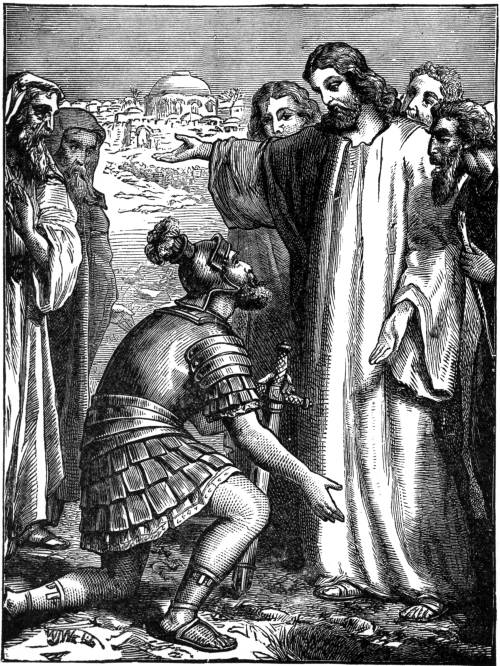
HEALING THE CENTURION’S SERVANT

HEALING THE CENTURION’S SERVANT

Jesus entered into Capernaum, a city by the Sea of Galilee, and while He was there a certain Centurion, or captain in the Roman army, had a favourite servant who was sick of the palsy and in great pain. When this Roman heard of Jesus, he sought the Jewish elders and implored them to go to Christ and beseech Him to cure the sick servant. And the elders came to Jesus and besought Him urgently to do this miracle, saying, “He is a worthy man, this Roman captain, for he loveth the Jews and hath built us a synagogue.”

So Jesus went with them, and when He had come near the house, the Centurion himself came to meet Him, saying, “Lord, trouble not Thyself, for I am not worthy that Thou shouldest enter my house. Speak the word only, and this sickness shall depart and my servant be made whole. For I am a man under authority of the Emperor, having many soldiers under me, and I say unto this man, ‘Go,’ and he goeth; to another, ‘Come,’ and he cometh, and to my servant, ‘Do this,’ and he doeth it. Wherefore, if I can so readily command my servants to do my bidding, I know that if Thou biddest this sickness to go out from my servant it will surely go.”

CHRIST AND THE CENTURION

Jesus marveled at the man’s words, and said to His followers, “Verily, I say unto you, I have not found so great faith, no, not in all Israel.” And to the Centurion He said, “Go thy way; and as thou hast believed, so be it done unto thee.” And his servant was healed in the selfsame hour, and when those that had been sent returned to the house, they found the servant whole that had been sick.