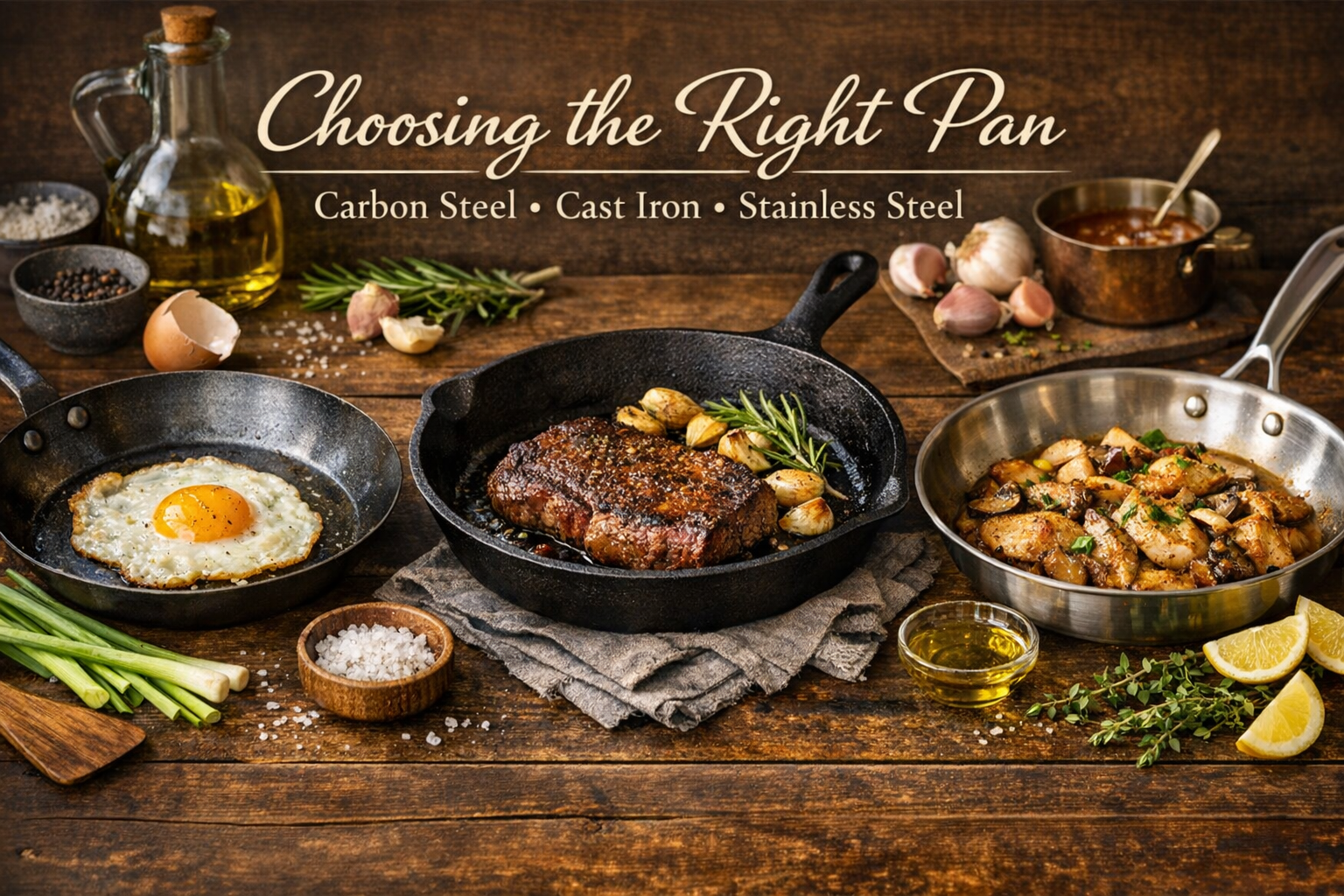
In every kitchen, the pans we reach for most often become quiet partners in the meals we create. Some hold heat like a steady heartbeat, others respond instantly to a change in flame, and still others shine with the easy reliability of everyday cooking. Carbon steel, cast iron, and stainless steel each bring their own strengths to the stovetop, shaped by the way they’re made and the stories they carry.
Understanding these differences doesn’t just help you choose the right pan for a recipe—it helps you cook with confidence, knowing why a skillet browns so beautifully, why a wok leaps to life over high heat, or why a stainless pan makes the perfect pan sauce.
This comparison is designed to guide home cooks, families, and curious beginners through the unique character of each material. Whether you’re searing, sautéing, baking, or building flavor from the fond left behind, these three tools offer different paths to delicious results.
Let’s explore what makes each one special, and how they can serve you well in your kitchen.
⭐ Quick Takeaway
- Carbon steel — light, fast, responsive; seasons like cast iron.
- Cast iron — heavy, slow, unbeatable heat retention; classic for browning and baking.
- Stainless steel — bright, non‑reactive, low‑maintenance; best for searing + pan sauces.
🧲 What They’re Made Of
- Carbon Steel — ~99% iron + ~1% carbon; rolled into thin sheets.
- Cast Iron — 96–98% iron + 2–4% carbon; poured into molds.
- Stainless Steel — iron alloy with 10.5%+ chromium (forms a protective oxide layer), often with nickel or molybdenum for extra corrosion resistance. vmtcnc.com
Why it matters:
- Carbon steel is ductile, so it can be thin and light.
- Cast iron is brittle, so it must be thick and heavy.
- Stainless steel is corrosion‑resistant, smooth, and doesn’t need seasoning.
⚖️ Weight & Handling
- Carbon Steel: Light–medium weight; easy to maneuver.
- Cast Iron: Heavy; excellent stability but harder on wrists.
- Stainless Steel: Medium weight; balanced and comfortable for everyday cooking.
🔥 Heat Behavior
Heat Retention
- Cast Iron: Excellent—best for deep browning, frying, and baking.
- Carbon Steel: Good—holds heat well but not as powerfully as cast iron.
- Stainless Steel: Moderate—loses heat faster, but heats evenly with multi‑ply construction.
Responsiveness
- Carbon Steel: Very responsive—great for delicate foods.
- Cast Iron: Slow to heat and slow to cool.
- Stainless Steel: Highly responsive—ideal for sautéing and pan sauces.
🍳 Cooking Surface & Performance
- Carbon Steel: Smooth; becomes naturally nonstick with seasoning.
- Cast Iron: Rougher at first; becomes slick with repeated seasoning.
- Stainless Steel: Smooth, bright, non‑reactive; no seasoning required but not naturally nonstick.
🧼 Maintenance & Durability
- Carbon Steel: Needs seasoning; can rust; may warp under extreme heat.
- Cast Iron: Needs seasoning; nearly indestructible; can rust.
- Stainless Steel: Most corrosion‑resistant thanks to chromium oxide layer; no seasoning; dishwasher‑safe depending on brand. vmtcnc.com
🔥 Versatility
- Carbon Steel: Excellent for high‑heat searing, woks, crepes, eggs.
- Cast Iron: Best for baking, frying, cornbread, steaks, campfire cooking.
- Stainless Steel: Best for sautéing, searing + deglazing, acidic foods, everyday cooking.
📚 Cookbook‑Friendly Summary Table
| Feature | Carbon Steel | Cast Iron | Stainless Steel |
|---|---|---|---|
| Weight | Light | Heavy | Medium |
| Heat Retention | Moderate | Excellent | Moderate |
| Responsiveness | Fast | Slow | Fast |
| Surface | Smooth; seasons | Textured; seasons | Smooth; no seasoning |
| Corrosion Resistance | Low | Low–Moderate | Excellent |
| Best For | Eggs, fish, stir‑fries | Steaks, cornbread, frying | Searing, sauces, acidic foods |
| Durability | Can warp | Nearly indestructible | Very durable |
| Ease of Use | High | Medium | High |
More information
- Essential Cookware Checklist for Every Kitchen
- How to Properly Season Your New Skillet
- Top Tips for Caring for Cast Iron Cookware
