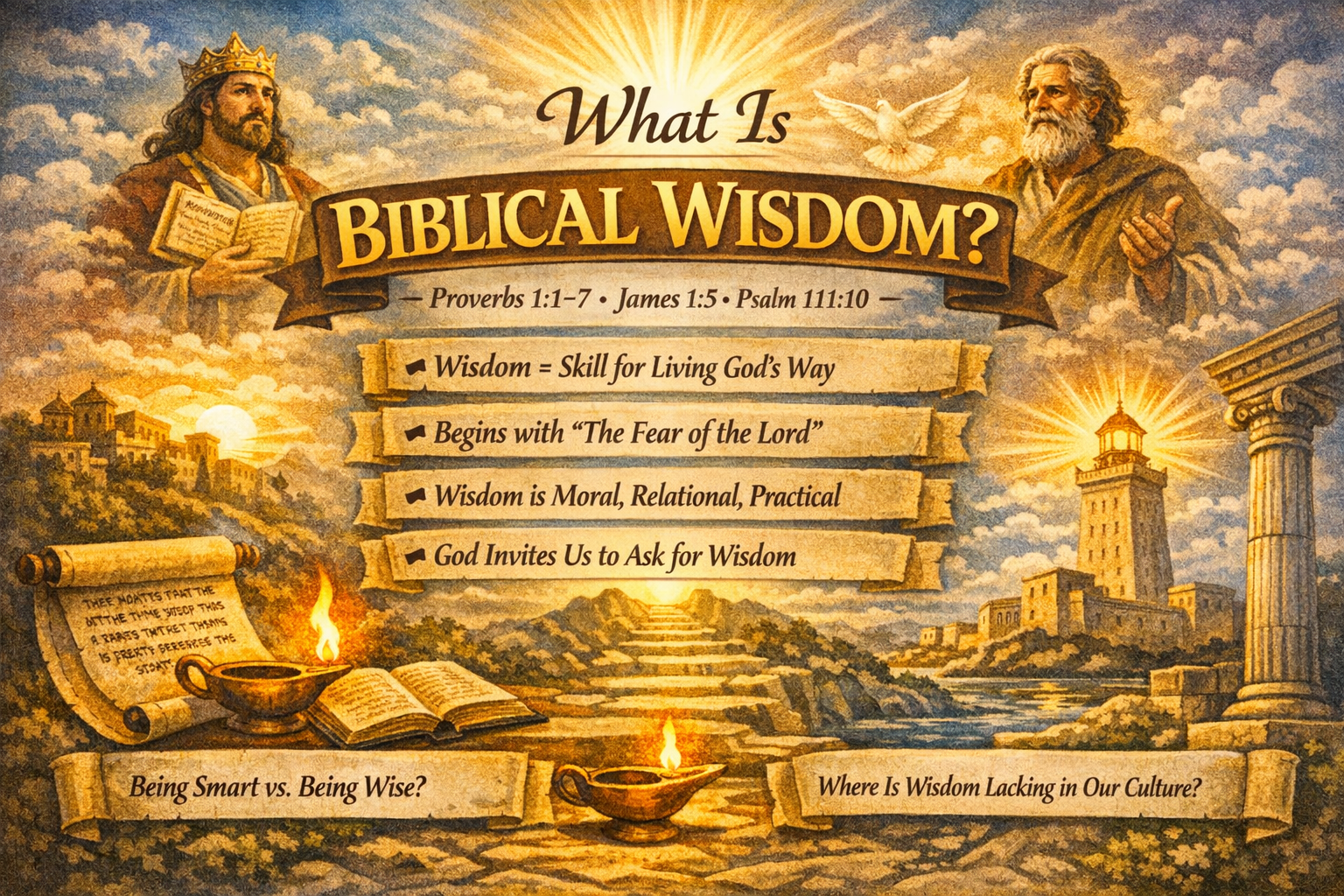
Core Scriptures
Proverbs 1:1–7 — “The fear of the Lord is the beginning of knowledge, but fools despise wisdom and instruction.”
James 1:5 — “If any of you lacks wisdom, let him ask of God, who gives to all liberally and without reproach, and it will be given to him.”
Psalm 111:10 — “The fear of the Lord is the beginning of wisdom; a good understanding have all those who do His commandments.”
🌿 Goals
- Define wisdom biblically
- Distinguish wisdom from knowledge
- Introduce the series and its sources
📖 Teaching Commentary
1. Wisdom Defined
In Scripture, wisdom is not mere intelligence or cleverness — it is skill for living God’s way.
The Hebrew word for wisdom is ḥokmah. It means practical skill, whether in craftsmanship or conduct.
To be wise is to align your choices with God’s truth so that your life reflects His order and peace.
Key insight: Wisdom is not about knowing more; it’s about living rightly.
2. The Fear of the Lord
Both Proverbs 1:7 and Psalm 111:10 anchor wisdom in reverence.
“The fear of the Lord” means awe, respect, and surrender — recognizing God’s holiness and authority.
It’s the posture that opens the heart to instruction.
Without reverence, knowledge becomes pride; with reverence, knowledge becomes understanding.
Application: Begin every pursuit of wisdom with worship, not curiosity.
3. Wisdom vs. Knowledge
- Knowledge gathers facts.
- Wisdom applies truth.
- Understanding connects the two.
Knowledge can exist without obedience; wisdom cannot.
A person may know Scripture yet live foolishly if they ignore its call to righteousness.
Wisdom transforms information into godly action.
Example: Knowing that “a soft answer turns away wrath” (Prov 15:1) is knowledge; choosing gentleness in conflict is wisdom.
4. God Invites Us to Ask
James 1:5 reveals the generosity of God’s heart: He wants His people to be wise.
Wisdom is not earned by intellect or age — it is given by grace to those who ask in faith.
This verse bridges Old and New Testament wisdom: the same God who spoke through Solomon now speaks through Christ, offering wisdom freely.
Encouragement: Every believer can pray, “Lord, teach me to see life as You see it.”
💬 Discussion Prompts
- What’s the difference between being smart and being wise?
- Where do you see wisdom lacking in our culture — and how can the church model it?
- How does reverence for God change the way we make decisions?
- What practical step can you take this week to “ask of God” for wisdom?
🌾 Key Takeaways
- Wisdom begins with reverence, not reasoning.
- It is moral, relational, and practical — lived out in daily obedience.
- God’s wisdom is accessible to all who ask.
- The wise life reflects God’s character and blesses others.
