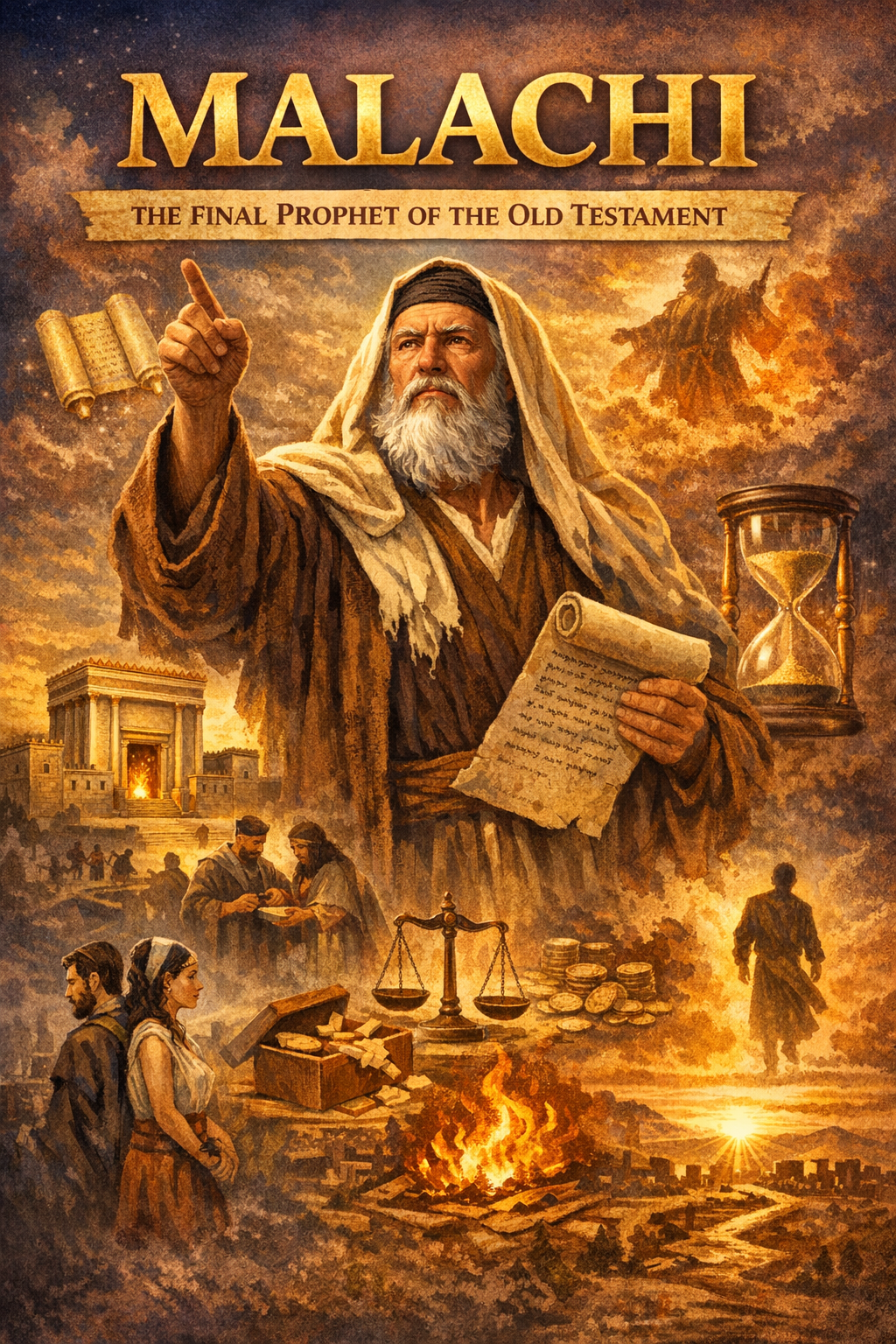
🧩 Identity and Name
Malachi was the final prophet of the Old Testament era, serving in Judah about a century after the return from Babylonian exile. The book itself is the only place Malachi is mentioned, and it gives no biographical details. The name, Malachi, likely means “my messenger”, and some ancient Jewish traditions even suggest it may have been a title rather than a personal name. Some traditions (such as in the Talmud) propose that the book may have been written by Ezra the scribe, though this is not certain.
🕰️ Historical Setting
Malachi ministered in the post‑exilic period, around the mid‑5th century BC, during the same general era as Nehemiah. The Temple had been rebuilt, but the people had grown spiritually apathetic. His message addresses:
- Corrupt priests
- Neglect of tithes
- Mixed marriages
- Social injustice
- Half‑hearted worship
📜 Message and Themes
Malachi uses a question‑and‑answer disputation style, where God confronts the people and they respond with objections. Key themes include:
- Priestly corruption and improper sacrifices
- Covenant unfaithfulness, especially in marriage
- Neglect of tithes and care for the poor
- The coming “messenger” who will prepare the way for the Lord
- The Day of the LORD—a future time of judgment and purification
🔗 Bridge to the New Testament
Malachi is the last prophetic voice before the 400‑year intertestamental period. His prophecy about the coming “messenger” and “Elijah” becomes foundational for the New Testament’s understanding of John the Baptist.
🌟 In Summary
Malachi was a post‑exilic prophet whose role was to call Israel back to covenant faithfulness at a time of spiritual decline. His book closes the Old Testament with both rebuke and hope, pointing forward to the coming of the Messiah’s forerunner.
