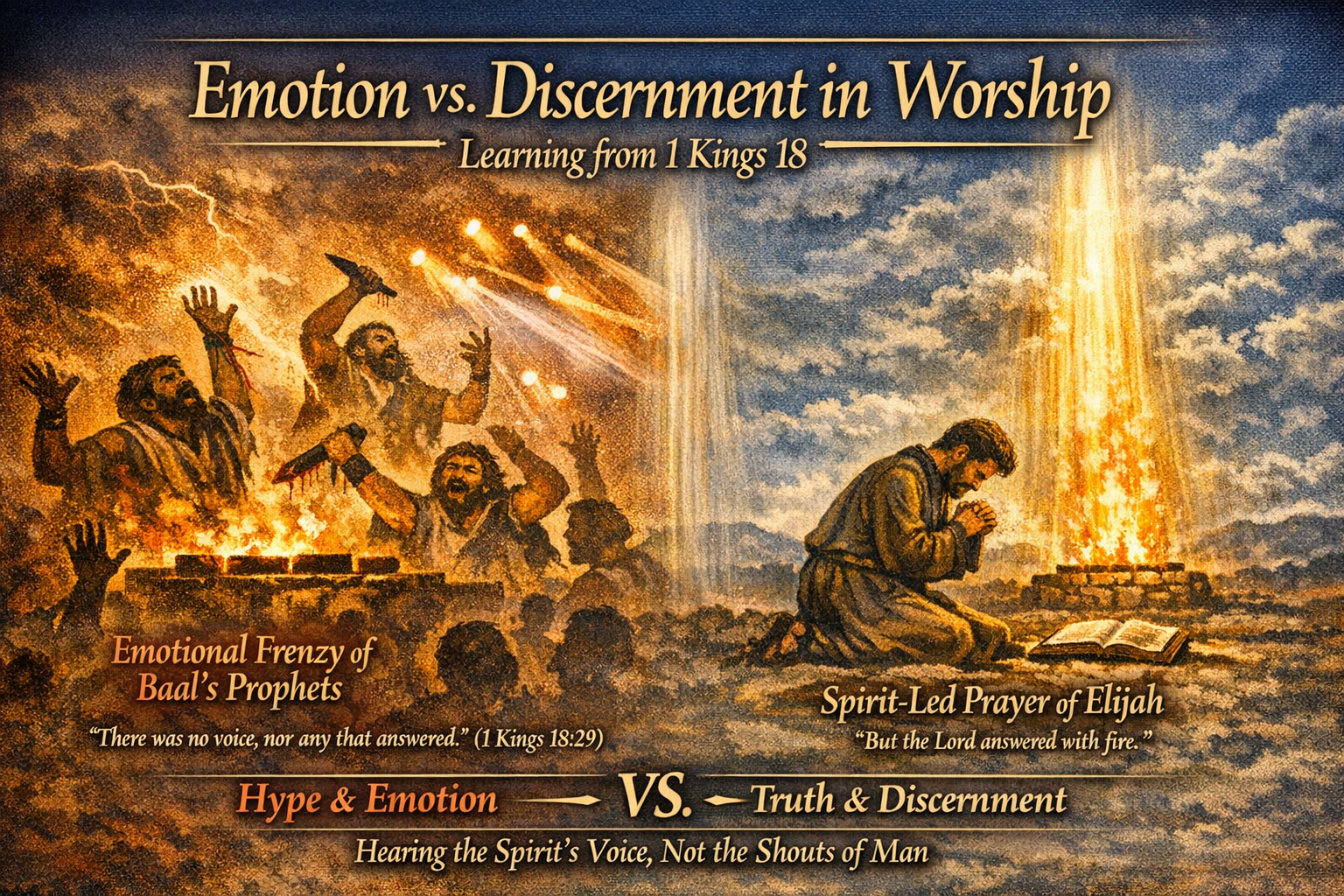
This teaching session explores how emotional expression in worship can either reflect genuine devotion or drift into performance. Using 1 Kings 18 as a biblical anchor, we examine the difference between Elijah’s Spirit-led prayer and the prophets of Baal’s emotional frenzy. The goal is to help believers recognize the Spirit’s voice through truth and discernment rather than atmosphere or intensity.
I. Setting the Scene: 1 Kings 18
- Prophets of Baal: Shouted, danced, cut themselves, and repeated phrases, believing their god would respond to emotional intensity.
- Elijah: Prayed a simple, reverent prayer. God answered immediately with fire.
Key Verse: “There was no voice, nor any that answered.” (1 Kings 18:29)
Contrast: Baal’s prophets relied on emotion; Elijah relied on truth.
II. The Modern Parallel
Many churches today equate emotional atmosphere with the Spirit’s presence. Lights, volume, and passion can be beautiful expressions of worship—but they are not proof of God’s movement.
Common Misunderstandings:
- “If we sing louder, God will move.”
- “If we stay longer, His presence will come.”
- “If we create the right atmosphere, miracles will happen.”
Biblical Reality: God is already present. He moves by His will, not our performance.
III. The Spirit’s True Indicators
1. Truth over Emotion
“When He, the Spirit of truth, is come, He will guide you into all truth.” (John 16:13)
The Spirit’s presence is known by truth, not sensation.
2. Fruit over Frenzy
“The fruit of the Spirit is love, joy, peace, patience…” (Galatians 5:22–23)
The Spirit’s fruit is steady and peaceful, not frantic or pressured.
3. Stillness over Striving
“The Lord will fight for you; you need only to be still.” (Exodus 14:14)
Stillness is not passivity—it’s trust.
IV. Teaching Points
- Emotion is not evil—but it must be anchored in truth.
- The Spirit’s fire purifies, not performs.
- Discernment grows through Scripture, not atmosphere.
- True worship rests in God’s nearness, not in our effort.
V. Discussion Questions
- How can we tell when worship has crossed from expression into performance?
- What does Elijah’s prayer teach us about the posture of true worship?
- How can churches cultivate discernment without losing passion?
- What practical steps can worship leaders take to keep emotion anchored in truth?
VI. Reflection and Application
Encourage participants to examine their own worship habits:
- Do I equate emotional highs with spiritual depth?
- Do I feel pressure to “make something happen” in worship?
- Do I trust that God is already near, even in silence?
Invite a moment of quiet prayer, asking the Spirit to teach stillness and truth.
VII. Closing Prayer
Lord, teach us to worship You in spirit and in truth. Guard us from striving and show us the beauty of resting in Your presence. May our songs rise from faith, not frenzy, and may our hearts be steady in Your peace. Amen.
