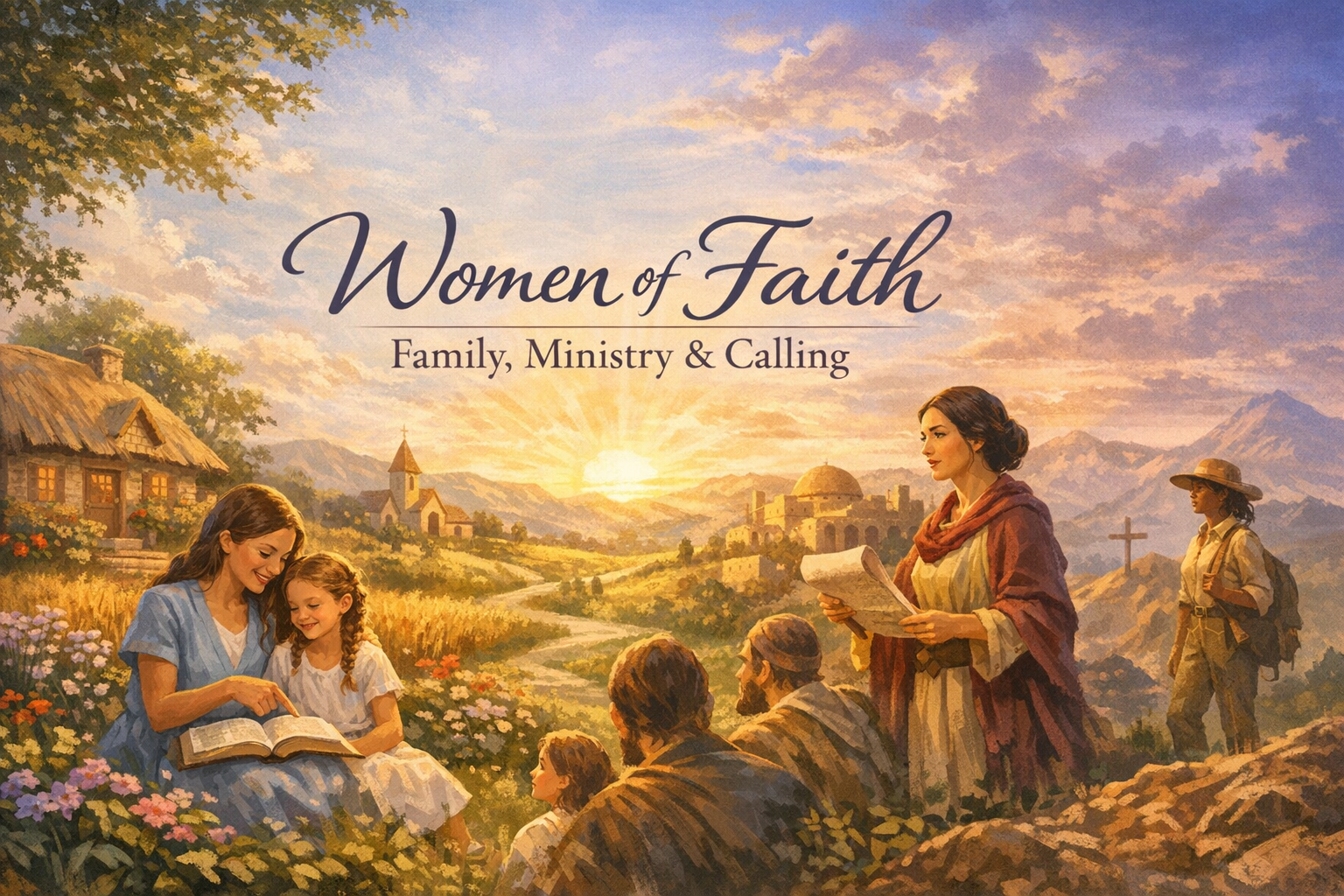
Balancing Creation Design, Biblical Freedom, and Faithful Womanhood
I. Opening Aim
To understand what Scripture teaches about the calling of women, especially regarding marriage, motherhood, and the home — without adding burdens Scripture does not place.
Key truth:
The Bible honors family as a central calling for many women, but it never teaches that all women must marry or have children to be faithful.
II. The Beauty of Family in God’s Design
A. Creation Order (Genesis 1–2)
- Woman created as ezer kenegdo — a strong, corresponding partner.
- Marriage and family established before the Fall.
- The home becomes the first place of discipleship and stewardship.
B. Scripture’s High View of Family
- Proverbs 31 — a woman whose household flourishes under her care.
- Psalm 128 — family life as a picture of God’s blessing.
- Titus 2:3–5 — women discipling women in home-centered wisdom.
- 1 Timothy 5:14 — Paul encourages younger widows to marry and build households.
Teaching Point:
Family is not a “lesser” calling. It is honored, dignified, and central for many women.
III. The Bible Does Not Require All Women to Marry or Have Children
A. Singleness as a Gift (1 Corinthians 7)
- Paul calls singleness “good” and “advantageous” for undivided devotion.
- Jesus Himself lived single — the highest example of human flourishing.
B. Faithful Women Without Children
- Hannah before Samuel
- Elizabeth before John
- The Shunammite woman
- Many faithful women in Scripture whose stories do not include motherhood
C. Women Serving Beyond the Home
- Deborah — judge and prophetess
- Huldah — prophetess consulted by kings
- Priscilla — teacher and church planter
- Phoebe — deacon and patron
- Lydia — businesswoman and church host
Teaching Point:
Faithfulness is not measured by marital status or motherhood, but by obedience, holiness, and love.
IV. Understanding 1 Timothy 2:12–15 in This Context
A. Paul’s Point Is Not “All Women Must Have Children”
- “Saved through childbearing” is a synecdoche — a part representing the whole of womanhood.
- Paul is contrasting Eve’s deception with redeemed womanhood lived in faith.
B. The Real Emphasis (v. 15)
“If they continue in faith and love and holiness with self-control.”
This is the measure of a faithful woman — not whether she bears children.
C. The Sphere, Not the Script
Paul affirms:
- Women have a God-given sphere that often includes the home.
- Women are not given a single identical script.
V. A Biblical Vision of Womanhood
A. Equal Worth, Distinct Design
- Equal image-bearers (Gen 1:27)
- Equal heirs of salvation (Gal 3:28)
- Distinct roles in home and church (Eph 5; 1 Tim 2–3)
B. The Home as a Primary Sphere for Many Women
- A place of discipleship
- A place of hospitality
- A place of generational impact
- A place where spiritual gifts flourish
C. The Freedom of Diverse Callings
- Ministry
- Marketplace work
- Missions
- Teaching
- Service
- Leadership within biblical boundaries
Teaching Point:
God calls women to faithfulness, not uniformity.
VI. Practical Applications
A. For Married Women
- Embrace the home as a ministry center.
- Cultivate discipleship, hospitality, and peace.
- Walk in faith, love, holiness, and self-control.
B. For Single Women
- Serve with undivided devotion.
- Use gifts freely in the body of Christ.
- Build spiritual family and community.
C. For the Church
- Honor motherhood without idolizing it.
- Support single women without pitying them.
- Celebrate diverse gifts while upholding biblical order.
VII. Gentle Summary for Teaching
Family is a beautiful and honored calling for many women, but Scripture never teaches that all women must marry or have children. God calls women to walk in faith, love, holiness, and self-control — whether in the home, in ministry, or in singleness. Faithfulness, not a specific life path, is the measure of biblical womanhood.
