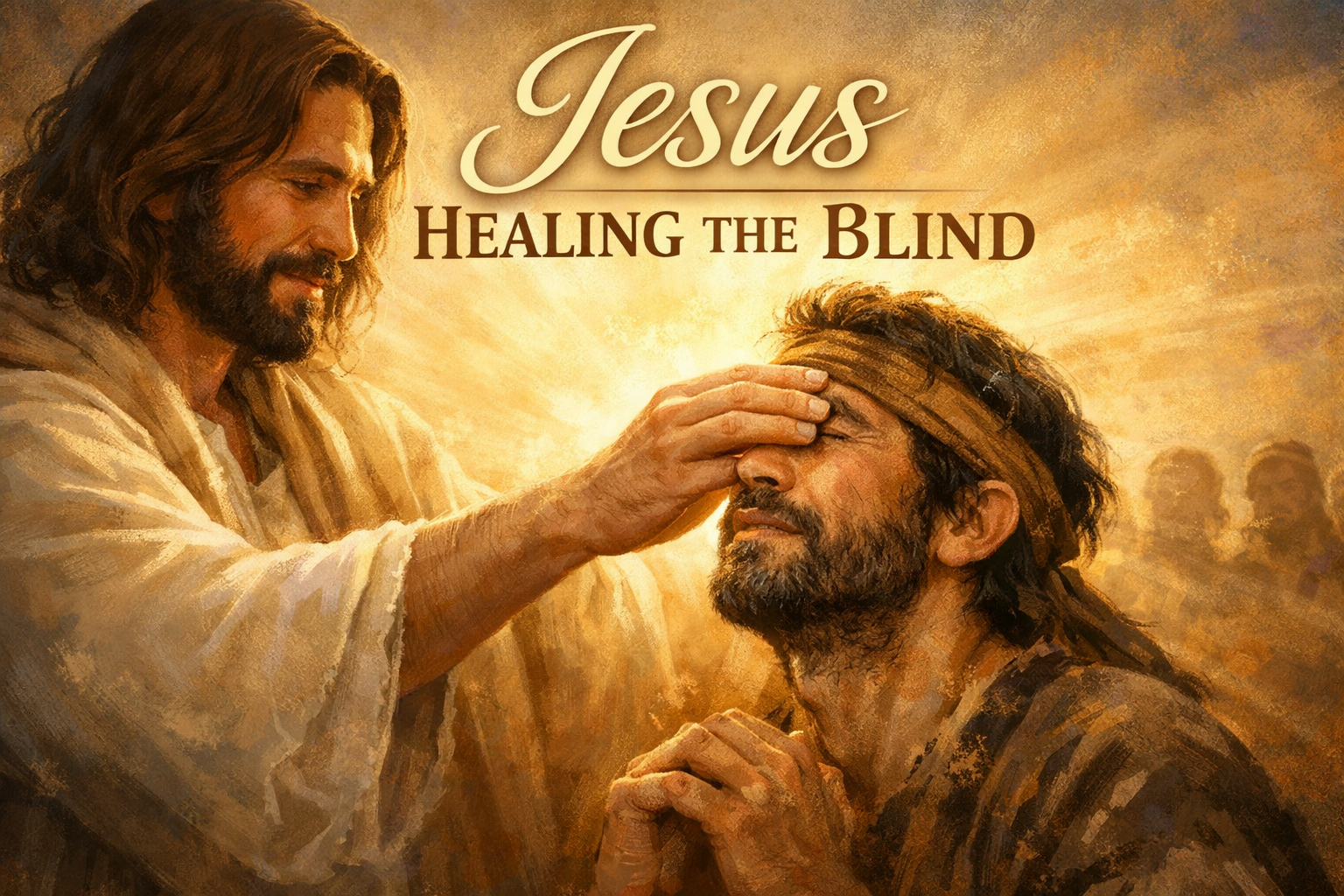
1. The Messianic Promise: Only the Messiah Opens Blind Eyes
- Isaiah 35:5–6 foretells that when the Messiah comes, “the eyes of the blind shall be opened.”
- Isaiah 61:1 declares that the Anointed One brings deliverance, healing, and restoration.
- No prophet, priest, king, or apostle in the Old Testament or New Testament is ever recorded as healing physical blindness.
- This miracle is unique to Jesus, marking Him unmistakably as the promised Messiah.
Teaching emphasis:
Healing the blind is not just compassion — it is identity revelation.
2. Jesus Points to Blind-Eye Miracles as Proof of His Identity
- When John the Baptist’s disciples asked if He was the One, Jesus answered:
“The blind receive their sight…” (Matthew 11:4–5). - Jesus didn’t give a title — He gave evidence.
- The miracles fulfilled Isaiah’s prophecy and authenticated His divine mission.
Teaching emphasis:
Jesus uses Scripture-fulfilled signs to reveal who He is.
3. Recorded Healings of the Blind in the Gospels
At least eight specific individuals are healed, plus two group healings:
- Two blind men — Matthew 9:27–31
- Blind man at Bethsaida — Mark 8:22–26
- Blind and mute, demon‑possessed man — Matthew 12:22–23
- Blind man near Jericho — Luke 18:35–43
- Two blind men leaving Jericho (including Bartimaeus) — Matthew 20:29–34; Mark 10:46–52
- Man blind from birth — John 9:1–41
Group healings:
- Many blind healed — Matthew 15:29–31
- Blind and lame healed in the Temple — Matthew 21:14
Teaching emphasis:
Jesus heals the blind repeatedly, publicly, and in varied ways — demonstrating absolute authority.
4. How Jesus Healed the Blind: The Methods Reveal the Message
Jesus never healed blindness the same way twice. Each method teaches something:
- Touch — Matthew 9:29
“According to your faith be it unto you.” - Spoken word — Luke 18:42
“Receive your sight.” - Spit and clay — John 9:6–7
Symbolic of creation and re‑creation. - Progressive healing — Mark 8:24–25
Demonstrates spiritual growth and clarity.
Teaching emphasis:
Jesus is not limited by method. The power is in who He is, not how He heals.
5. Blindness as a Symbol of Spiritual Condition
Scripture uses blindness to describe spiritual realities:
- Israel’s leaders were spiritually blind — Matthew 15:14
- The Pharisees rejected the Light — John 9:39–41
- Satan blinds the minds of unbelievers — 2 Corinthians 4:4
Teaching emphasis:
Physical blindness points to the deeper need: spiritual sight.
6. Jesus Is the Light of the World
- John 8:12 — “I am the light of the world.”
- John 9 connects the miracle of sight to the identity of Jesus as Light.
- Healing the blind is a living parable of salvation.
Teaching emphasis:
Where Jesus shines, blindness ends.
7. The Response of Faith
Every healing of blindness includes a response:
- Crying out — “Son of David, have mercy on us!”
- Following Jesus — healed men became disciples
- Worship — John 9:38, the man born blind worshiped Him
Teaching emphasis:
True sight leads to worship, obedience, and testimony.
8. Application for Today
- Jesus still opens blind eyes — physically, spiritually, emotionally.
- The church is called to shine His light, not obscure it.
- Believers must guard against spiritual blindness: pride, tradition, fear, and unbelief.
- The healed man’s testimony is our model:
“One thing I know: I was blind, now I see.” (John 9:25)
Teaching emphasis:
Sight is a gift — but walking in the Light is a choice.
9. Teaching Conclusion
Jesus healing the blind is not just a miracle story — it is a Messianic declaration, a prophetic fulfillment, a spiritual metaphor, and a call to faith.
Only Jesus opens blind eyes.
Only Jesus fulfills the Messianic signs.
Only Jesus is the Light of the world.
