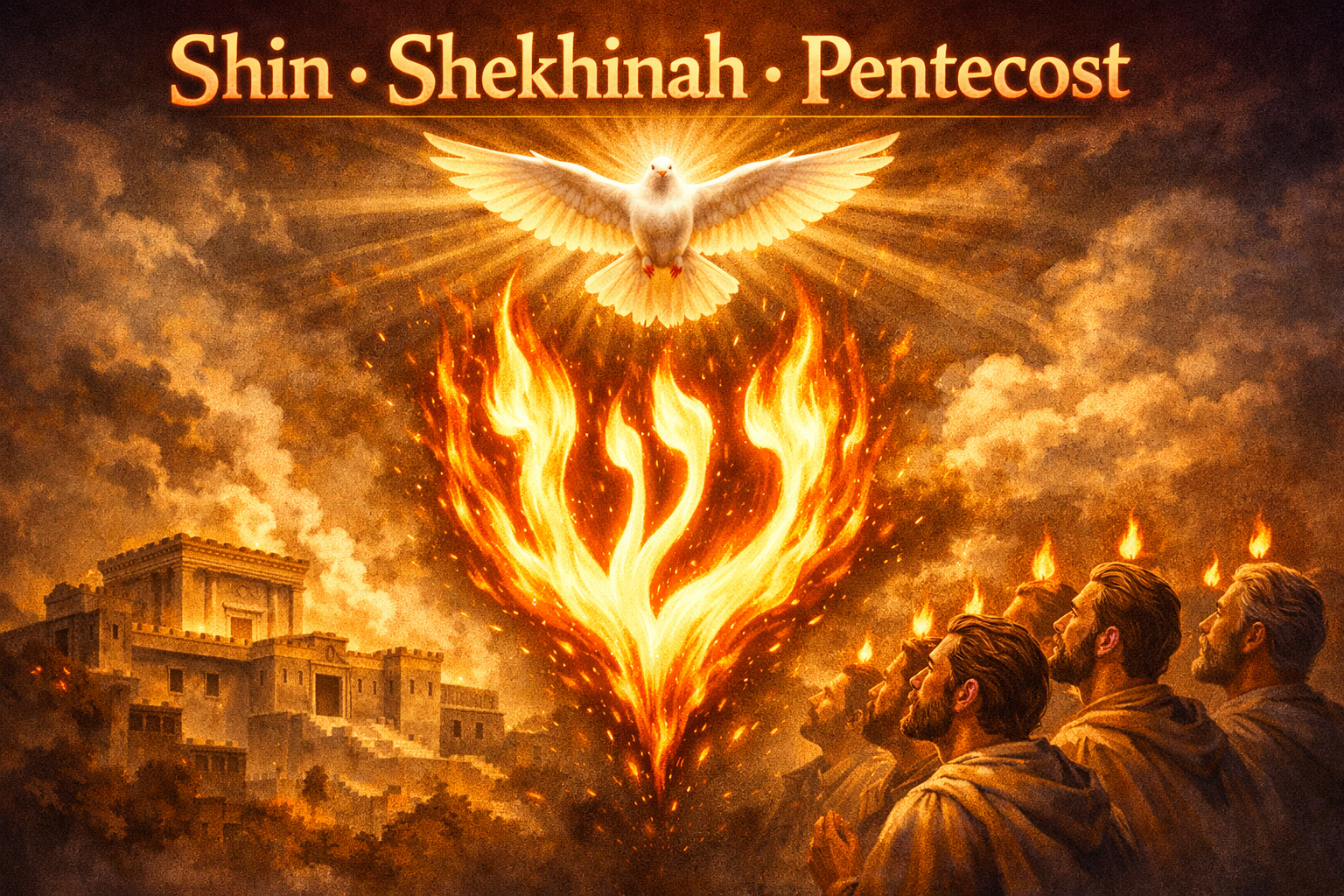
1. Shin (ש): the letter of divine flame
The Hebrew letter shin visually resembles three flames rising from one base.
Because of this shape and its linguistic associations, shin symbolizes:
- Divine fire
- The Name of God (as in Shaddai and HaShem)
- God’s active presence
- Unity with diversity — one flame branching into three
This makes shin a natural symbol for the Spirit’s fiery presence.
| Symbol | Meaning | Connection to Acts 2 |
|---|---|---|
| Shin (ש) | Flame, divine presence, the Name of God | The Spirit descends as flame, marking God’s presence |
| Three branches | Unity with diversity | One Spirit, many tongues; one flame, many disciples |
| Placed on the “temple” | God dwelling with His people | The Spirit rests on each believer as a new temple |
| Fire symbolism | Revelation, purification | Acts 2 fire purifies and empowers for witness |
2. Shekhinah: God’s dwelling presence
The word Shekhinah comes from the root shakan — “to dwell.”
It refers to the manifest presence of God dwelling among His people.
In the Old Testament, the Shekhinah appears as:
- Fire (burning bush, pillar of fire)
- Glory-cloud (Tabernacle, Temple)
- Resting presence that fills sacred space
The Shekhinah is God’s nearness, His indwelling, His resting glory.
3. How shin and Shekhinah connect
Shin is the first letter of Shekhinah, and its flame‑shaped form visually expresses the fiery presence that the Shekhinah represents.
Together they communicate:
- Flame + dwelling
- Presence + power
- Fire that rests
- God who comes near
Shin is the symbol; Shekhinah is the reality.
4. Pentecost: the Shekhinah becomes personal
In Acts 2, the Holy Spirit descends as:
- Wind (Spirit-breath)
- Fire (Shekhinah-glory)
- Cloven tongues (divided flames)
This moment fulfills the Shekhinah imagery:
- The Temple’s fire now rests on people
- God’s presence moves from a building to believers
- Each disciple becomes a dwelling place of God
Paul later confirms this:
“You are the temple of the Holy Spirit.”
5. The shin shape in Pentecost imagery
The “cloven tongues of fire” resemble the three‑branched flame of shin:
- One flame → many tips
- One Spirit → many tongues
- One presence → many believers
This makes shin a fitting visual symbol for Pentecost, even though the New Testament does not explicitly name the letter.
6. The unified meaning
When you put it all together:
- Shin = the shape of divine flame
- Shekhinah = the presence of divine flame
- Pentecost = the indwelling of divine flame
Pentecost is the moment the Shekhinah-fire becomes internal, not external —
God dwelling in His people, not just among them.
Theological summary
| Symbol | Old Testament | New Testament |
|---|---|---|
| Shekhinah | Dwelling glory in the Temple | Indwelling Spirit in believers |
| Fire | Consuming presence on altar | Empowering presence on disciples |
| Shin (ש) | Flame of divine Name | Flame of divine indwelling |
| Dwelling place | Physical sanctuary | Human heart |

Leave a Reply