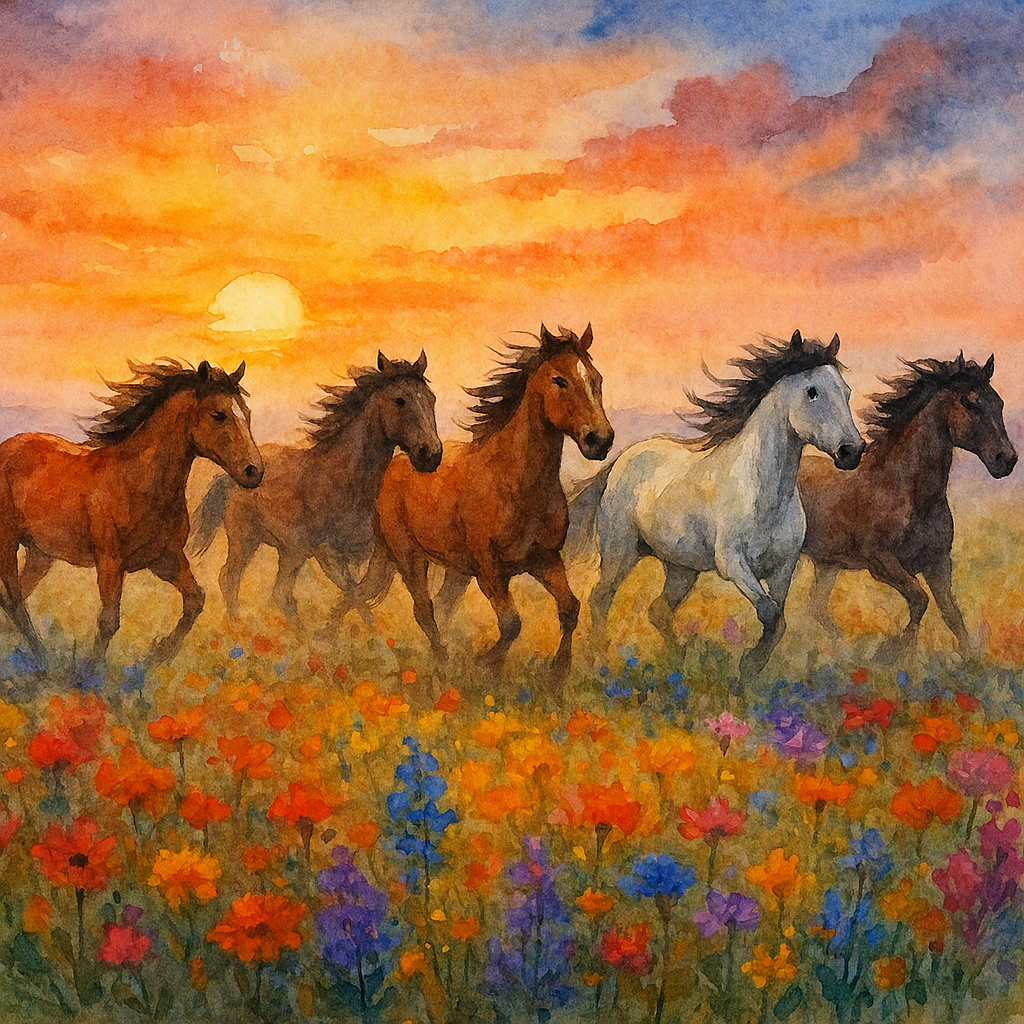
Mustangs are one of the richest, most misunderstood horse groups in the world.
Identity & Appearance
Mustangs don’t have a single “breed type” because they descend from many bloodlines. This creates huge variety:
- Some have refined Spanish features — straight or convex profiles, expressive eyes, and compact bodies.
- Others look more like ranch horses, draft‑influenced horses, or stocky ponies.
- Many have short backs, deep chests, and strong hindquarters, making them powerful and agile.
- Average height is 14–15 hands, but some herds produce horses as small as 13 hands or as tall as 16.
Their hooves are famously tough — often stronger than domestic horses — because generations of living on rock and desert shaped them.
Colors & Markings
Mustangs come in every color:
- Solid colors
- Roans
- Pintos
- Buckskins
- Grullos
- Palominos
- Appaloosa patterns
- Duns with primitive markings (leg bars, dorsal stripes)
This variety comes from the many breeds that contributed to Mustang bloodlines over centuries.
🌾 Behavior & Temperament
Mustangs are known for:
- High intelligence — they learn fast and remember everything.
- Strong survival instincts — they’re alert, cautious, and quick to react.
- Loyalty once bonded — a gentled Mustang becomes deeply attached to its handler.
- Herd awareness — they read body language extremely well.
- Surefootedness — they navigate rocks, cliffs, and uneven terrain with ease.
💞 Maternal Instincts
- Protective behavior: Mustang mares are fiercely protective. They’ll place themselves between danger and their foal, and the whole herd helps guard newborns.
- Gentle teaching: The mare teaches her foal how to graze, follow the herd, and recognize signals from other horses.
- Strong bonding: The bond forms within minutes after birth — the foal learns its mother’s scent and voice right away.

🌾 Herd Support
- Mustangs live in family bands led by a stallion and a dominant mare. The stallion defends the group, while the mares cooperate to raise and watch over the foals.
- Older mares often act like “aunties,” helping babysit while mothers graze or rest.
🧬 Survival Traits
- Foals stand and nurse within an hour of birth — a survival necessity in the wild.
- Mustang mothers produce rich milk and encourage movement early, helping the foal grow strong legs and stamina.
🐴 What They’re Good At
Trail riding
Mustangs grow up navigating rocks, cliffs, canyons, and uneven ground. They learn balance and caution from birth, so on the trail they feel steady, safe, and sure‑footed.
Endurance competitions
Wild Mustangs travel 20–30 miles a day looking for food and water. That natural stamina makes them perfect for long‑distance riding and endurance races.
Ranch work & cow pony jobs
They’re:
- Quick
- Agile
- Smart
- Able to turn sharply
- Brave around cattle
Once trained, they work cattle as well as many registered stock breeds.
Mounted search‑and‑rescue
Mustangs handle:
- Steep terrain
- Dense brush
- Rocky ground
- Long hours
Their calm thinking and strong hooves make them reliable partners for SAR riders.
Rodeo bucking stock (historically & today)
Before modern breeding programs, many rodeo bucking horses were Mustangs because they were:
- Strong
- Athletic
- Spirited
- Tough enough to handle the job
Some still serve in rodeos today.
Family riding horses once trained
Mustangs bond deeply with their humans. Once they trust you, they become:
- Gentle
- Loyal
- Safe
- Very dependable
They make wonderful family horses after proper training.
Stamina & Tough hooves
This part is absolutely true — Mustang hooves are famously hard, often stronger than domestic horses. They rarely need shoes and can travel long distances without soreness.

🌍 Where They Come From
The word mustang comes from Spanish mesteno — “stray” or “ownerless horse.”
Mustangs are feral, not truly wild. Their ancestors were:
- Spanish conquistador horses
- Ranch horses
- Cavalry horses
- Pioneer horses
- Escaped or released domestic horses
🌍 Where Mustangs Live Today
Mustangs live on public rangelands in the western United States, mostly in areas managed by the Bureau of Land Management (BLM). They are found in 10 states, but most live in just a few of them.
Main Mustang States (largest populations)
- Nevada — home to the largest Mustang population in America
- Wyoming
- Oregon
- Utah
- Colorado
Other states with Mustang herds
- California
- Idaho
- Montana
- Arizona
- New Mexico
These herds live in:
- High desert
- Sagebrush plains
- Mountain foothills
- Grasslands
- Canyon country
They survive on natural forage like grasses, shrubs, and seasonal plants.
🐎 How Many Mustangs Live Wild Today?
Around 40,000–50,000 Mustangs still roam free on public lands. Another 50,000+ live in off‑range holding facilities waiting for adoption.
🏞️ Special Mustang Herds
Some herds are famous for their unique traits:
- Kiger Mustangs (Oregon) — strong Spanish features
- Pryor Mountain Mustangs (Montana/Wyoming) — small, tough, colorful
- Sand Wash Basin Mustangs (Colorado) — known for variety of colors
- Virginia Range Mustangs (Nevada) — often seen near towns
📚 Did You Know?
- 6,000–7,000 Mustangs are adopted each year through the BLM’s Wild Horse & Burro Program.
- Some herds, like the Kiger Mustangs, preserve strong Spanish traits and are highly prized.
- Mustangs can survive on very little forage, making them one of the hardiest horse populations in the world.
- They form tight family bands led by a stallion and a dominant mare.
- A Mustang’s first year of training is often harder than domestic horses, but afterward they become extremely reliable.

Leave a Reply