I. The Bible Never Commands Full Immersion as the Only Valid Method
Key truth: The New Testament word baptizō has a wide range of meanings. It can mean to wash, to cleanse, to dip, to pour, to apply water, or to overwhelm. It does not exclusively mean “to dunk under.”
Biblical emphasis: Baptism is about identification with Christ, not the depth of water.
II. The Bible Shows Multiple Valid Forms of Baptism
A. Pouring
- Acts 2:17–18 — Spirit poured out
- Acts 10:44–48 — Spirit poured on Cornelius’s household
B. Sprinkling
- Hebrews 10:22 — hearts sprinkled, bodies washed
- Old Testament cleansing rituals
C. Washing
- Acts 22:16 — “wash away your sins”
D. Immersion
- Acts 8:38 — possible, but not required
E. Early Church Practice
The early church baptized:
- in rivers
- in baths
- in fountains
- in homes
- by pouring
- by sprinkling
- by immersion
Conclusion: The method was never the point — the heart was.
III. Old Testament Foundations for Baptism
The Old Testament repeatedly uses water rituals that the New Testament later calls “baptisms.” Almost none involve immersion.
Examples
- Hebrews 9:10 — “various baptisms” = sprinklings, washings, pourings
- Hebrews 10:22 — hearts sprinkled, bodies washed
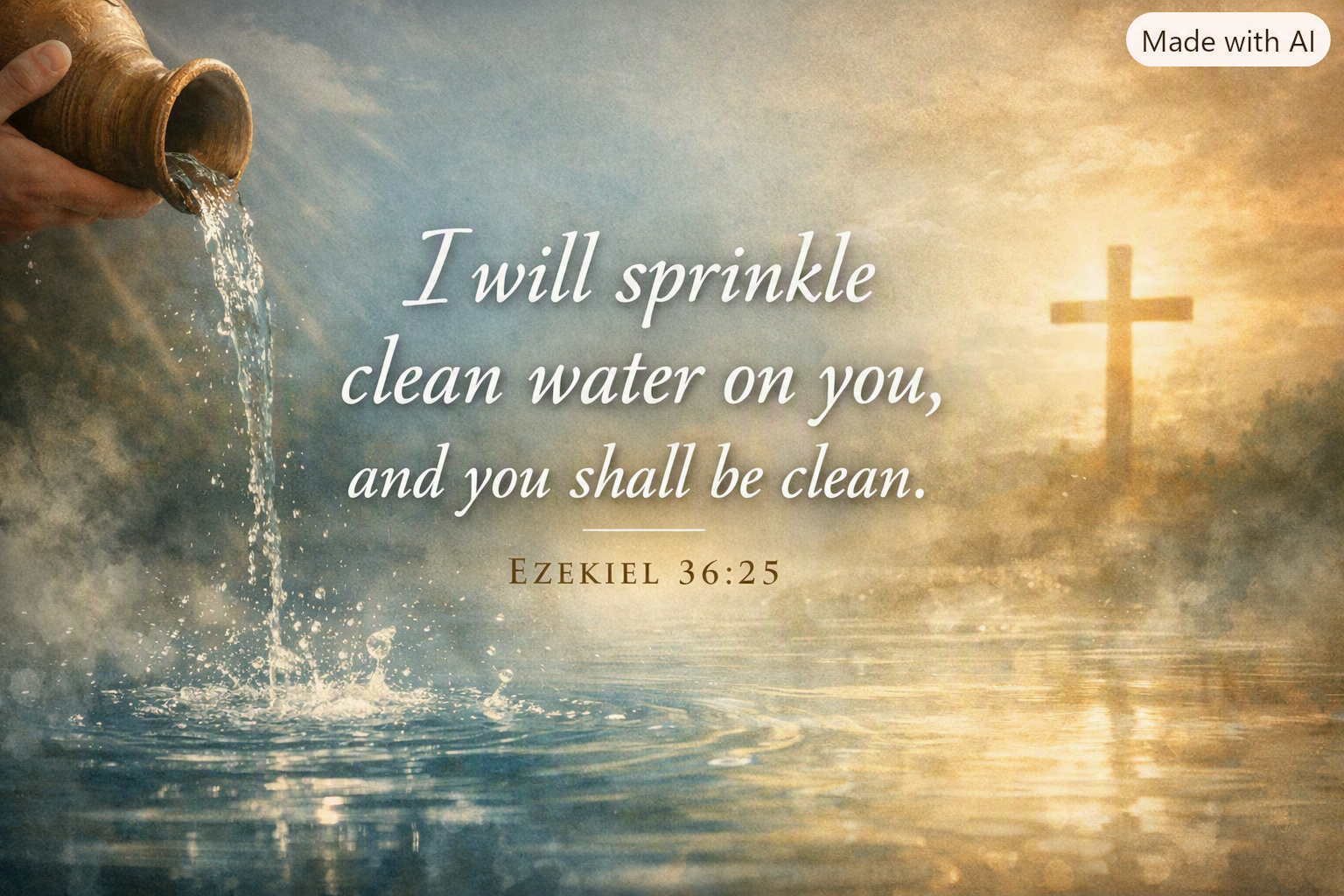
- Ezekiel 36:25 — “I will sprinkle clean water on you…”
- Numbers 19 — purification by sprinkling
- Exodus 24:8 — Moses sprinkled the covenant water/blood mixture
These are all considered baptisms in Jewish tradition and New Testament commentary.
IV. The New Testament Connects Christian Baptism to These Old Testament Forms
A. Hebrews 9:10
Old Testament sprinklings and washings are explicitly called “baptisms.”
B. Hebrews 10:22
Sprinkling + washing imagery used to explain Christian cleansing.
C. 1 Peter 3:21
Baptism is not about physical water removing dirt — meaning method is not the point.
D. Acts 2:17–18
Spirit poured out — imagery connected to baptism.
E. Acts 10:44–48
Spirit poured on Cornelius’s household; baptism follows.
F. Early Church Acceptance
The early church used:
- immersion
- pouring
- sprinkling
All three were accepted.
V. Immersion Is Beautiful — But Not Required
A. Symbolism of Immersion
- Burial and resurrection
B. Symbolism of Pouring
- Spirit poured out
C. Symbolism of Sprinkling
- Cleansing
- Covenant
- Purification
All three are biblical. None are forbidden. The Bible never says: “You must go fully under the water.” That is denominational tradition, not biblical command.
VI. Ezekiel 36:25 — The Old Testament “Baptism” That Is Not Immersion
“I will sprinkle clean water on you, and you shall be clean.”
This verse describes God’s cleansing, and the New Testament writers use this imagery to explain Christian baptism.
A. Ezekiel’s Sprinkling Becomes a Foundation
The New Testament repeatedly connects baptism to Old Testament cleansing rituals:
- sprinkling
- pouring
- washing Never immersion.
B. Supporting Passages
- Hebrews 10:22 — hearts sprinkled, bodies washed
- Hebrews 9:10 — washings and sprinklings = baptisms
- 1 Peter 3:21 — method not the point
The New Testament uses Ezekiel’s imagery to explain meaning, not water depth.
VII. Who Can Baptize? The Bible’s Answer
A. Jesus Gave the Great Commission to Disciples, Not Clergy
Matthew 28:19 — “Go… baptizing them…” No pastors existed yet. No clergy. Just disciples.
B. In Acts, Many People Baptize — Not Just Leaders
- Ananias baptizes Paul — a disciple, not clergy
- Philip baptizes the Ethiopian — a deacon, not clergy
- Acts 2:41 — 3,000 baptized; believers baptized one another
- Household baptisms — no pastor required
The New Testament never says: “Only ordained ministers may baptize.”
C. Early Church Practice
Historical records show:
- Fathers baptized children
- Believers baptized friends and relatives
- Baptisms happened in homes, rivers, baths, courtyards
- No clergy requirement
- No immersion requirement
- No church building requirement
Clergy‑only baptism is a later tradition, not a biblical rule.
VIII. The Heart of Baptism
The New Testament emphasizes:
- the believer’s faith
- the believer’s confession
- the believer’s union with Christ
- the believer’s obedience
Not:
- the baptizer
- the location
- the amount of water
- the method
IX. Summary
- The Bible never commands immersion as the only valid method.
- Scripture affirms pouring, sprinkling, washing, and immersion.
- Old Testament “baptisms” were almost never immersion.
- New Testament writers use those forms to explain Christian baptism.
- Early Christians baptized in many ways, in many places, by many people.
- The heart — not the method — is the focus of Scripture.
